
Executive Summary
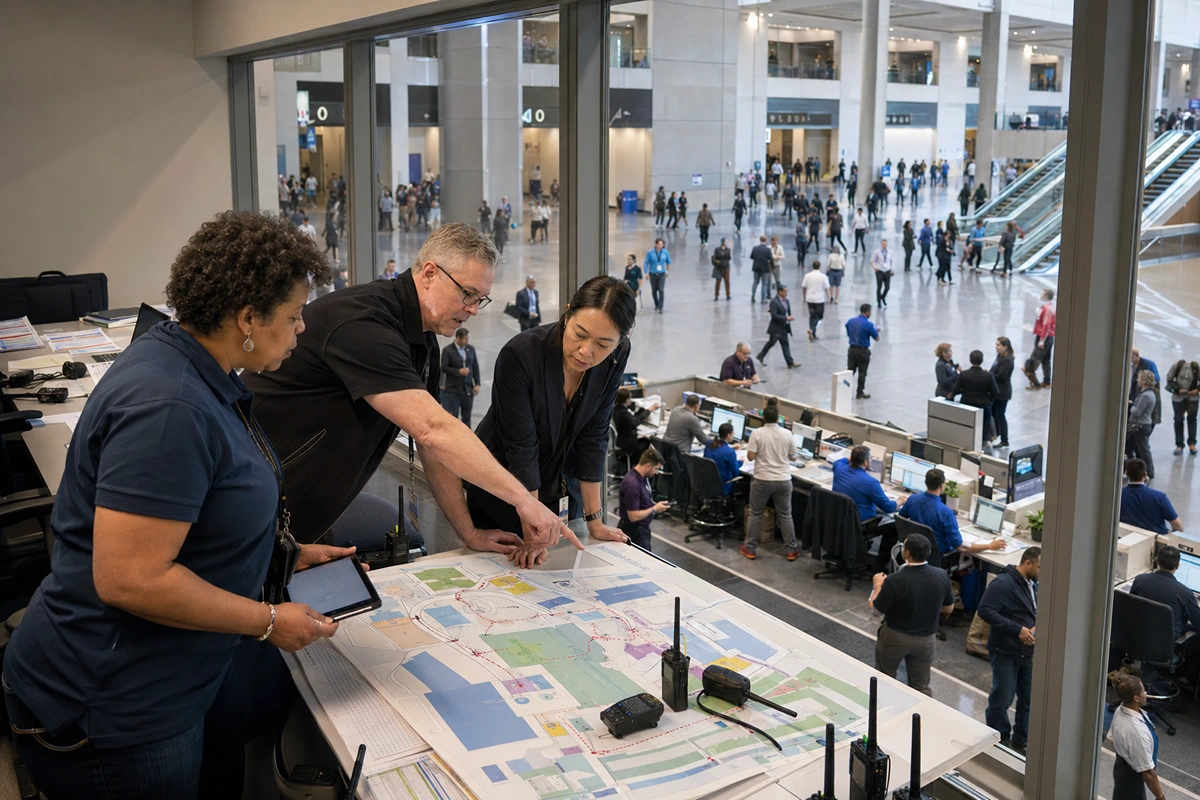
Vendor on premise staffing is a recurring on site staffing solution that helps operations manage daily coverage, role consistency, and service reliability without repeated last-minute staffing requests. This guide explains how it works, which on site staff roles are included, what affects pricing, and how to set up a program that supports smoother daily operations.
Introduction
Running daily operations with inconsistent staffing is one of the fastest ways to lose control of service quality.
If your team is constantly filling last-minute shifts, dealing with no-shows, or retraining new staff every week, the issue is not just staffing. It is the model you are using.
Vendor on premise staffing offers a more structured approach. Instead of reacting to daily gaps, it builds staffing directly into your operations with consistent coverage, trained teams, and predictable execution. This makes it one of the most effective on site staffing solutions for teams managing recurring demand.
So, is vendor on premise staffing the best model for daily operations?
The answer depends on how often you need staff, how critical consistency is to your service, and how much time your team spends coordinating shifts. For operations with steady event flow, frequent service cycles, or ongoing staffing gaps, this model often delivers better control, stronger performance, and less daily pressure.
In this guide, you will learn how vendor on-premises staffing works, when on-site staffing solutions make the most sense, and how to evaluate if this model fits your operation.
CEO Excerpt
“Most teams don’t have a staffing problem; they have a staffing model problem. Vendor on-premises staffing works because it removes daily uncertainty and replaces it with structure, consistency, and accountability. That is what keeps high-volume operations running smoothly.” — Daniel Meursing, CEO of Event Staff
Vendor on premise staffing and what it means day to day
Vendor on premise staffing means a staffing partner supports your operation continuously, not just for isolated shifts. It focuses on repeat scheduling, consistent role coverage, and site-specific staffing alignment across daily operations.
That includes ongoing shift planning based on event calendars and service demand, faster staffing because the provider understands your workflow, consistent role expectations across shifts, and optional on-site coordination for higher-volume programs. With leisure and hospitality averaging a 5.6 percent monthly separation rate in 2024, the highest of any U.S. sector according to the Bureau of Labor Statistics, this model is built for operations that need stable, repeatable staffing, not one-time support.
Industry Stat
Hospitality turnover runs 70–80% annually, nearly double the national average of 30–35%. For operations running weekly events, that means potentially replacing most of your service team every year without an embedded staffing model.
On site staffing solutions vs one-off staffing
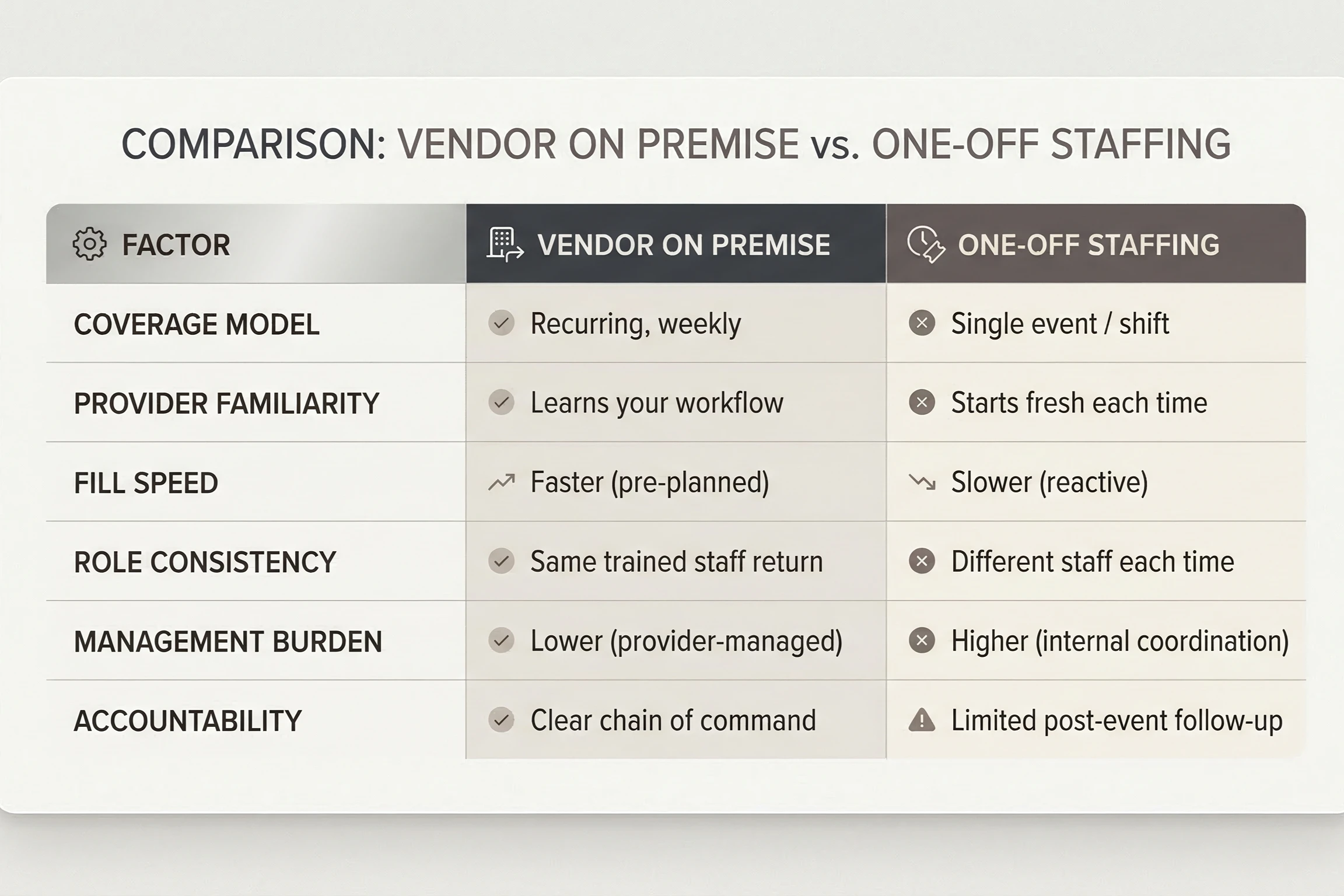
On site staffing solutions are designed for recurring operational coverage, while one-off staffing supports single events or short-term gaps. Vendor on premise staffing provides continuity, while one-off models focus on immediate needs.
On site staffing solutions fit recurring events and ongoing service demand, while one-off staffing fits isolated, high-pressure dates. The embedded model reduces repeated booking effort and inconsistency while building familiarity with roles, flow, and expectations. Operations that rely on high-performing booth teams or recurring banquet support benefit the most from this structure, because the provider already understands how shifts run and what each role requires. If staffing gaps happen regularly, on site staffing solutions provide more stability and control.
Side-by-Side Comparison
On site staff roles commonly included
On site staff typically include roles that keep daily operations running smoothly and prevent service delays. Vendor on premise staffing focuses on placing the right roles consistently across shifts.
Guest-facing roles include servers, bartenders, hosts, and check-in staff. Support roles include runners, bussers, setup crew, and floaters. Coordination roles like shift leads or on-site supervisors are added for larger programs. Teams managing event hospitality strategies across conferences and festivals often build recurring role templates that the provider fills week over week. The role mix should match the operation, whether it is banquet service, venue flow, or recurring event support.
On Site Staff Role Mix
How the daily workflow works
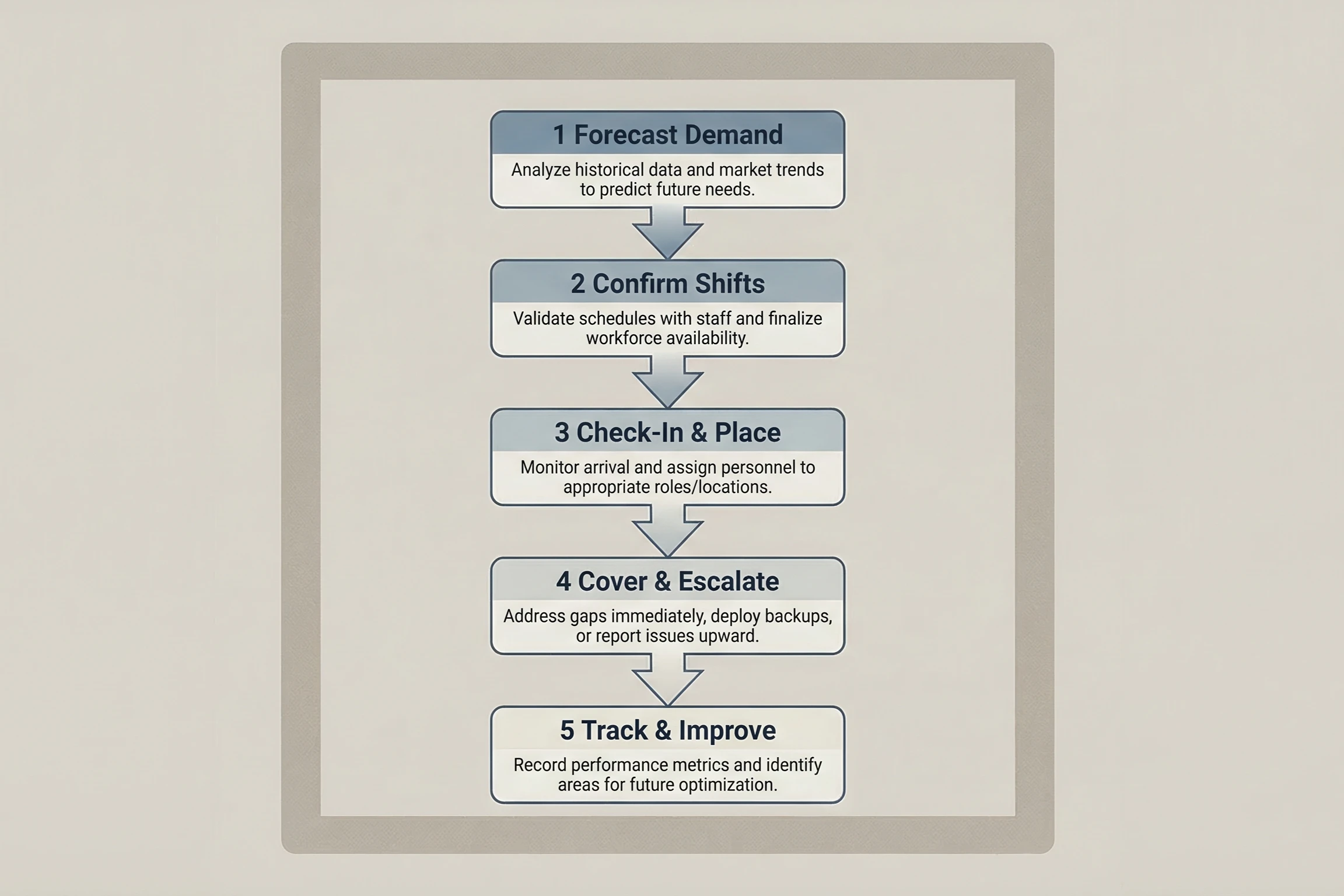
Vendor on premise staffing works through a structured weekly process that keeps coverage consistent and predictable across daily operations.
Daily Workflow Flowchart
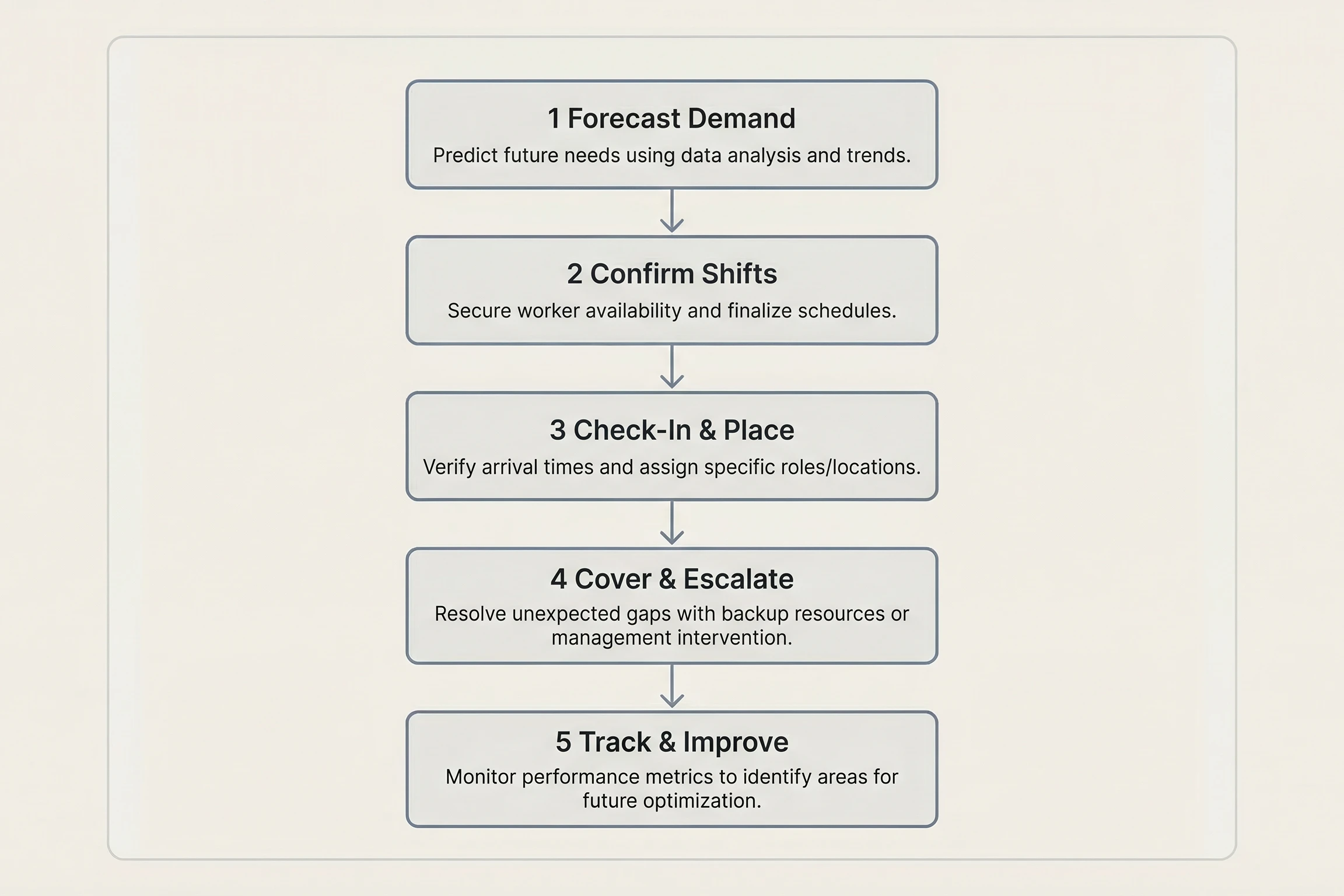
This kind of structured daily loop is especially important given that the U.S. staffing industry is valued at roughly $184 billion and projected to grow steadily through 2030, with temporary and flexible staffing models driving much of that momentum. Operations that formalize their staffing workflows now are better positioned to attract and retain stronger provider partnerships.
Staffing Stability Formula
Staffing Stability = (Consistent Role Coverage + Provider Site Familiarity + Structured Escalation) ÷ Daily Coordination Effort. When the numerator grows through embedded vendor on premise staffing, the denominator shrinks, meaning your internal team spends less time managing gaps and more time on service delivery.
Vendor on premise staffing benefits for busy operations
Vendor on premise staffing improves operational stability by reducing staffing gaps and creating consistent coverage across daily shifts. It allows teams to focus on service delivery instead of constant coordination.
The model produces fewer last-minute staffing issues and no-show disruptions, more consistent service standards across shifts, faster onboarding as staff learn your operation, and reduced management time spent scheduling and fixing gaps. Operations that have already worked through staffing cost protection challenges know that this kind of embedded consistency is what separates smooth service from repeated scrambling. This leads to better guest experience and less pressure on core teams.
Problems vendor on premise staffing helps prevent in daily operations
Vendor on premise staffing helps prevent small operational issues from turning into visible service problems during daily execution. It creates structure and accountability across shifts.
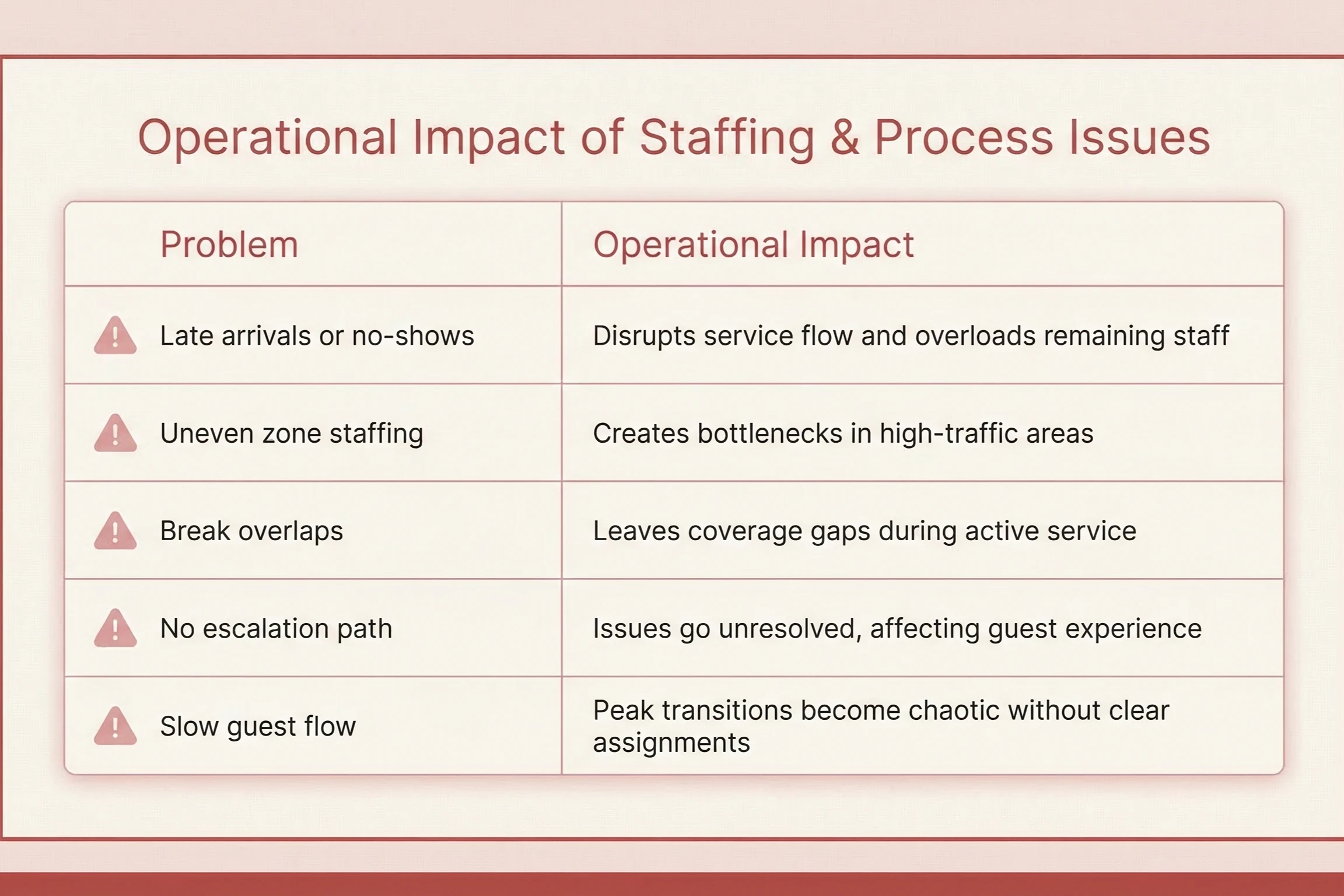
Using defined roles, zone assignments, and a clear chain of command reduces these risks significantly.
How to evaluate on site staffing solutions providers
Evaluate on site staffing solutions based on operational reliability, not just availability. Vendor on premise staffing depends on consistent execution, clear processes, and strong coordination.
Ask how weekly coverage is forecasted and confirmed. Understand the replacement process for callouts or gaps. Check who manages check-in, attendance, and redeployment. Confirm the ability to staff by role and service zone. Review how performance and consistency are tracked. Red flags include vague answers about replacements, no defined check-in process, and no clear chain of command. Strong providers explain their process clearly and show how daily operations stay covered.
✅ Provider Evaluation Quick Check
• Can they explain their weekly coverage process in detail?
• Do they have a defined replacement protocol for callouts?
• Can they staff by role AND zone, not just headcount?
• Do they track attendance and performance after every shift?
• Is there a clear on-site chain of command?
Vendor on premise staffing pricing factors and what changes cost
Vendor on premise staffing pricing depends on how your operation is structured and how often coverage is needed. On site staffing solutions are typically priced based on role mix, frequency, and program complexity.
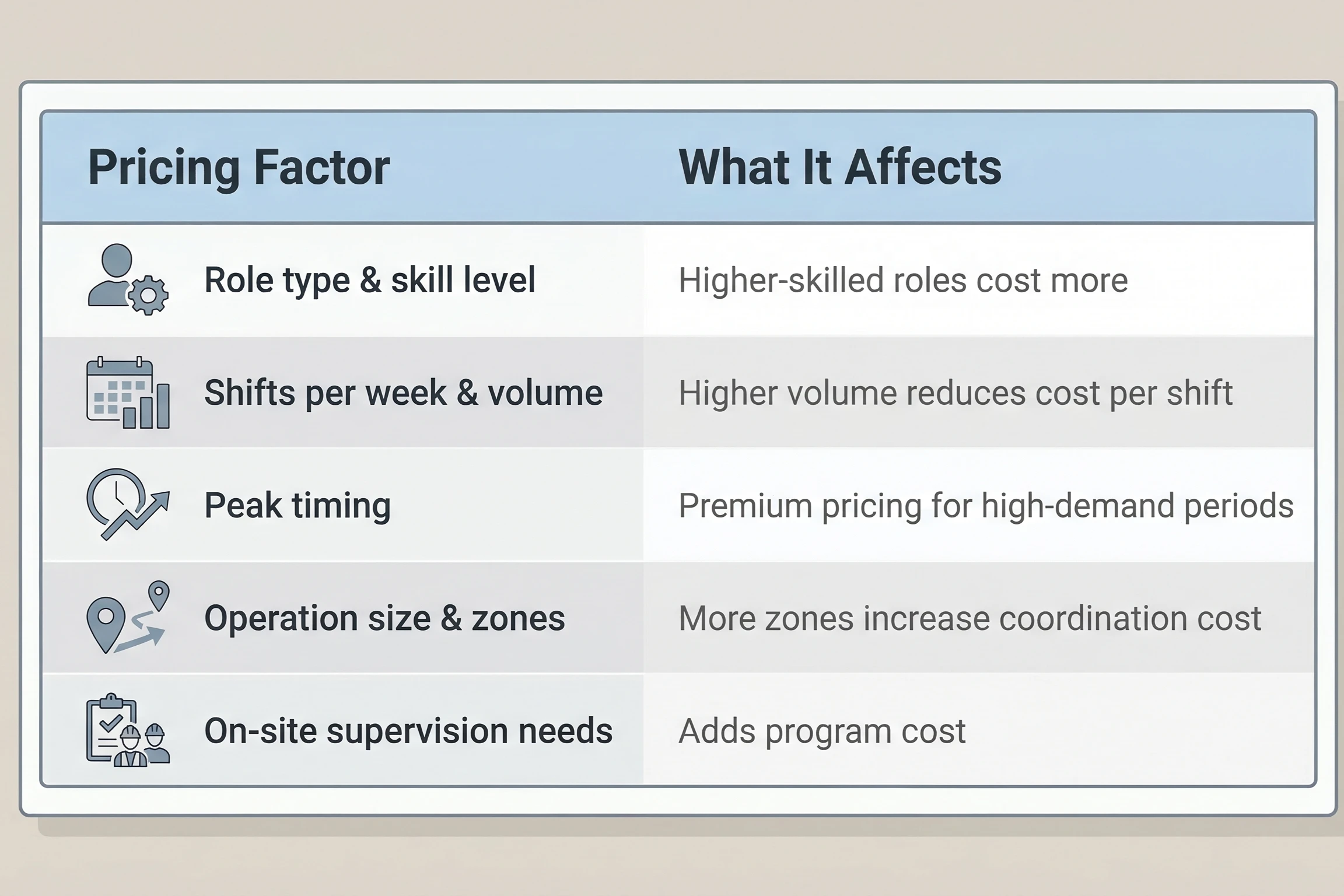
Clear scope and consistent demand often lead to more stable pricing.
Vendor on premise staffing setup checklist for a smooth launch
Vendor on premise staffing requires a clear setup to ensure daily operations run without disruption from the first shift. On site staffing solutions perform best when expectations are defined early.
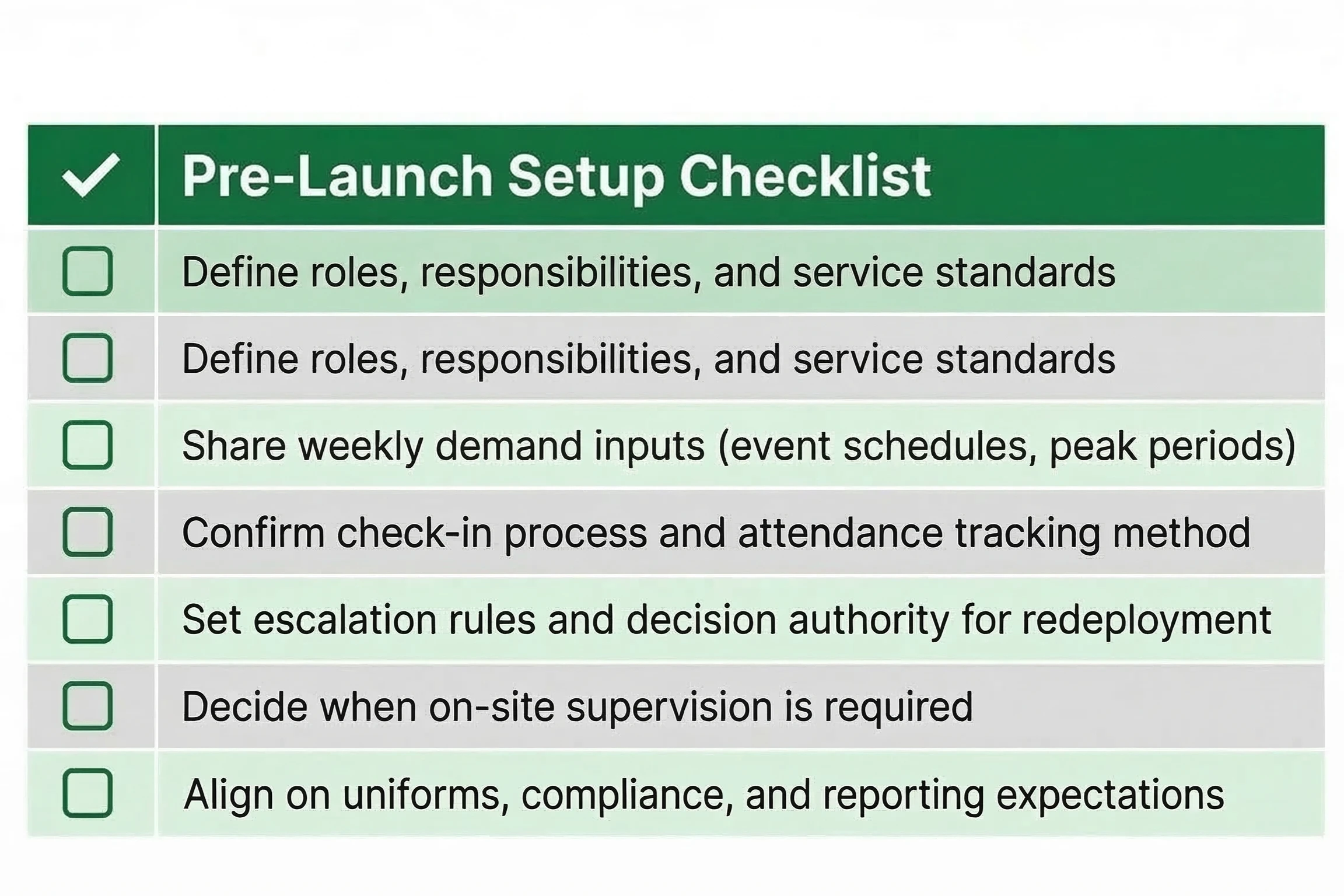
A structured setup ensures consistent execution from day one.
Need a more reliable way to manage daily staffing coverage?
Vendor on premise staffing works best when your coverage needs are predictable and recurring. If your team is managing frequent service demands, steady event flow, or ongoing staffing gaps, the right on site staffing solutions can improve consistency and reduce daily pressure. Share your weekly shift schedule, role requirements, and peak periods to get a tailored staffing plan that fits your operation. Get a quote. Stop managing staffing gaps every day. If your operation runs on recurring shifts, steady event flow, or high-volume service, vendor on-premises staffing can give you consistent coverage without constant coordination. Share your weekly schedule, role requirements, and peak periods. You will get a structured staffing plan designed to stabilize your daily operations and reduce internal workload.
Ready to elevate your next event?
Join thousands of event planners who trust EventStaff.com for reliable, professional staffing solutions.
Trusted by event professionals nationwide
1k+
Events Staffed
2 million+
Guests Served
97%
Positive reviews