
Executive Summary
Mobile experiential activations allow brands to bring experiences directly to audiences across multiple locations, combining speed, flexibility, and repeatable engagement. This guide outlines proven formats, route planning strategies, staffing structures, and measurement methods that ensure smooth operations, prevent long lines, and maintain brand consistency. By standardizing processes and leveraging simple tech solutions, teams can scale activations efficiently while maximizing both reach and impact.
Introduction
Mobile experiential activations are one of the most effective ways for brands to engage audiences directly, delivering fast, repeatable experiences that drive participation and awareness without the limitations of a fixed venue. These activations allow your brand to meet people where they already are while maintaining consistent messaging and operational efficiency across multiple stops.
Unlike on-site activations that focus on controlled environments, mobile activations prioritize scale, flexibility, and repeatable success. The numbers back this up: global spending on experiential marketing is projected to hit $128.4 billion in 2024, surpassing pre-pandemic levels for the first time, signaling that brands are doubling down on direct audience engagement at scale.
In this guide, we break down formats that scale, the differences between mobile experiential activations and on site activations, and the operational steps needed to prevent downtime, long lines, and inconsistent experiences.
CEO Excerpt
"Mobile experiential activations deliver measurable engagement, consistent brand messaging, and scalable reach across multiple locations without operational bottlenecks. When executed correctly, these activations maximize audience exposure while protecting staff efficiency and data quality." — Daniel Meursing, CEO of Event Staff
Mobile Experiential Activations and What Makes Them Effective
Mobile experiential activations are effective because they allow brands to engage audiences in the locations they already frequent, reducing reliance on a single venue's foot traffic. Success comes from creating fast, repeatable interactions that deliver consistent experiences and measurable outcomes at every stop.
85% of customers are more likely to buy after participating in events and experiences, and 91% of consumers believe participating in experiential marketing makes them more likely to buy from a brand. That purchasing intent only holds when the execution is tight enough to actually deliver the experience at every stop.
Key elements that make them effective:
Repeatable Execution: Each stop follows the same operational steps, so staff know exactly what to do, guests know what to expect, and data capture is consistent.
Three Essential Elements for Every Stop:
- Attract: Use visual cues, signage, or small activations to draw attention without creating congestion.
- Engage: Provide a short, interactive experience that communicates the brand story clearly and memorably.
- Capture: Include a simple way to collect leads, trial sign-ups, or feedback without slowing the flow.
Defining Success Per Stop: Measure throughput, engagement rate, and captured data. A stop is effective when it meets target metrics without creating long queues or guest frustration.
For a deeper look at how brand activation staffing shapes what these activations actually deliver, that context is useful before committing to a format.
Example Use Case: A beverage brand running a campus tour used a 3-minute demo loop with sampling. Each station captured leads through QR codes and maintained a consistent flow, resulting in a 25% higher conversion per stop compared to previous non-standardized activations.
Experiential Mobile Activations vs On Site Activations
Experiential mobile activations are ideal for campaigns that need to reach audiences across multiple neighborhoods or cities, while on site activations are better suited for controlled environments where timing, production, and immersive experiences matter. Choosing the right model depends on whether the goal is scale or control.
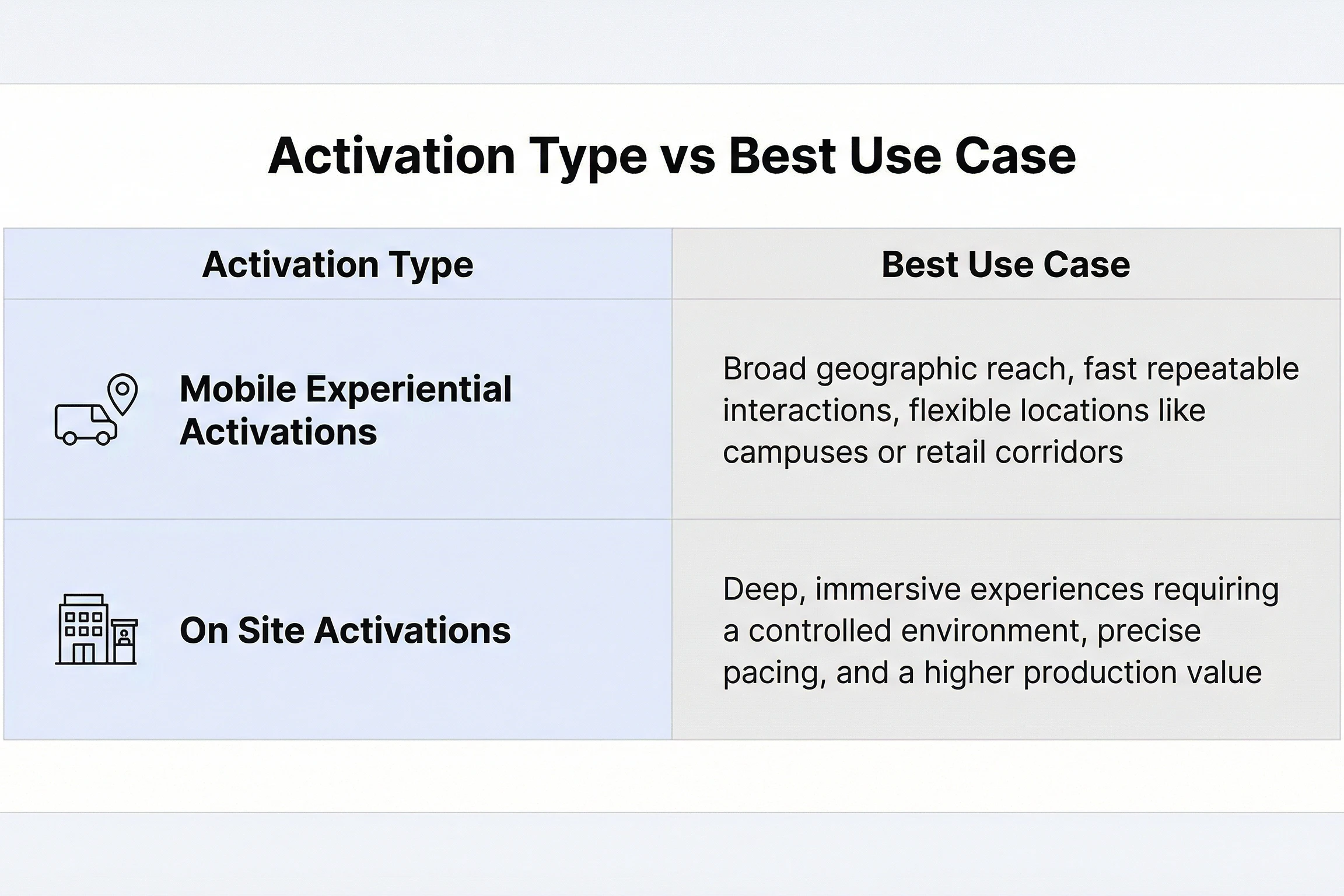
Quick Decision Rule:
- Need scale and flexibility? Choose mobile experiential activations
- Need control and depth? Choose on-site activations
92% of consumers prefer in-person events to virtual (within an hour's travel), highlighting the opportunity for localized experiential activations. Kande mobile formats are precisely positioned to capitalize on that preference at scale.
Example: A beauty brand ran a multi-stop city activation with mobile pop-up vans, reaching over 10,000 attendees in a week. In contrast, an on site flagship launch achieved deeper engagement but only reached 500 participants in a single location.
Mobile Experiential Activations Formats That Are Easy To Run
Mobile experiential activations perform best when the format is short, repeatable, and easy to reset between waves. Scalable formats reduce setup time, minimize tech dependence, and maintain a consistent guest experience even during peak traffic. If you want to see how these formats play out at fixed retail locations, retail activation ideas that drive conversions cover many of the same operational principles applied to in-store settings.
High-Performing Formats:
- Guided Demo Loop (2–3 Minutes): Staff leads a fast, hands-on demonstration of the product or service.
- Sampling: Offer product samples or trial experiences with a single, clear use case. Free samples, swag, and discounts or special offers are the top three reasons consumers engage with brands at events, according to EventTrack 2025.
- Mini Consultation: Provide a brief, personalized recommendation to match the right product or service to each participant.
- Gamified Moment: Small games, quizzes, or challenges that provide instant rewards or recognition.
- Content Moment: Branded photo booths, AR filters, or short video captures that let participants generate shareable content. 98% of consumers create digital or social content at experiences and events, with 100% sharing that content online.
- Two-Speed Setup: Offer a "fast lane" for quick participants and a "deep dive" lane for guests who want more interaction.
Example Use Case: A technology brand used a two-speed setup at a retail corridor stop, allowing 60 participants per hour through the fast lane and 20 participants through the deep dive lane. This approach maintained throughput while providing meaningful engagement for those who wanted more in-depth interaction.
Experiential Mobile Activations Route Planning That Protects Turnout
Route planning is critical for mobile experiential activations. Success depends not only on geographic location but also on timing, audience behavior, and operational feasibility at each stop. The same workforce planning discipline that defines trade show success applies directly here, the structure built before the first stop determines how every subsequent stop performs.
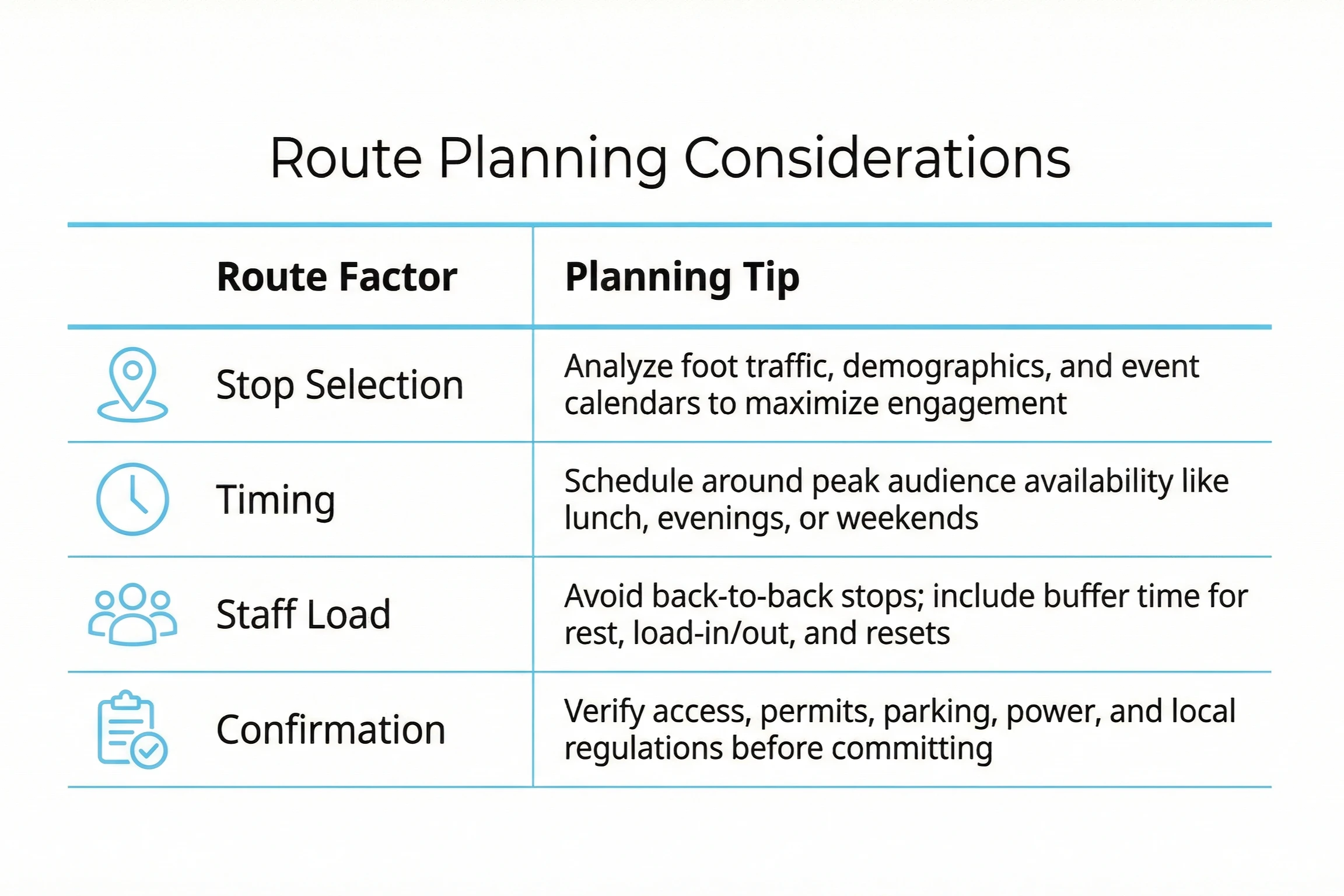
Example Use Case: A snack brand mapped out a multi-stop campus tour and scheduled activations around class schedules and lunch periods. Buffer times between stops allowed staff to reset stations and restock supplies, resulting in consistent engagement and no bottlenecks throughout the day.
Mobile Experiential Activations Site Setup Checklist
A standardized site setup ensures every stop runs smoothly and consistently. Mobile experiential activations fail when setup is assumed rather than planned.
Checklist for Every Stop:
- Arrival and Load-In Access Details
- Exact Footprint Size and Queue Placement
- Power Plan and Offline Fallback
- Signage Placement Rules
- Inventory and Restock Plan
- Staff Positions by Zone
- Reset Plan Between Waves
- Close-Down and Departure Timing
Example Use Case: A beverage brand used this checklist across a five-stop city tour. Standardized setup and queue zones allowed each team to be fully operational within 15 minutes of arrival, minimizing downtime and keeping throughput consistent.
On Site Activations Flow Rules You Should Copy For Mobile
Flow design is the backbone of a successful activation. Mobile experiential activations benefit from adopting deliberate flow strategies used in on-site activations. Understanding how experiential marketing technology enhances live event flow gives useful context for applying these same rules to a mobile footprint where you have less environmental control.
Flow Rules to Implement:
- Attract → Engage → Convert → Exit Model
- Queue Placement Rules
- Overflow Plan for Spikes
- Keep the "Hero Moment" Visible
- Use Signage to Reduce Staff Bottlenecks
Example Use Case: A consumer electronics brand replicated their on site flow for a mobile activation at a university event. Using clearly marked queues and designated overflow areas, they maintained a 90% throughput rate with minimal wait times.
Mobile Experiential Activations Staffing Roles That Prevent Downtime
Staffing is a critical factor in ensuring mobile experiential activations run smoothly. The right roles maintain consistent messaging, manage flow, and handle resets quietly, protecting both throughput and data quality.
Essential Staffing Roles:
- Greeter: Welcomes guests, qualifies participants quickly, and sets expectations for the experience.
- Station Lead: Manages the core activation moment, ensuring demonstrations or interactions are delivered consistently.
- Capture Support: Handles data collection, lead capture, or registration without slowing guest flow.
- Floater: Assists with restocking, troubleshooting, and resetting stations between waves.
- Queue Support: Manages lines during traffic spikes to maintain smooth throughput and guest satisfaction.
- Lead/Supervisor: Oversees all operations, redeploys staff as needed, and ensures consistent quality across stops.
For a full breakdown of how these roles map to different activation types, the experiential staffing services page covers experiential staff, pop-up staff, booth staff, and street teams that fit directly into mobile setups.
Example Use Case: A snack brand deployed a five-person team for a multi-stop city activation. Greeter and queue support maintained flow, station leads delivered consistent demos, and floaters handled restock and tech resets. This structure allowed the team to serve over 300 participants per hour with minimal downtime.
Experiential Mobile Activations: Tech Choices and Offline Fallback
Key Tech Considerations:
- Tech That Usually Works on the Road: Offline-capable tablets, QR-based lead capture, pre-loaded content, battery packs with redundancy plans.
- Tech That Often Creates Bottlenecks: App downloads required at the point of interaction, cloud-dependent syncing without offline fallback, and multi-device setups with no reset protocol.
- Offline Capture Options: Paper fallback forms, manual badge scanning, simplified single-field capture.
- Battery, Charging, and Device Redundancy Plan: At a minimum, two backup devices per station, portable charging banks, and a pre-briefed swap protocol.
- Simple "Keep It Running" Version: A stripped-down version of the activation that staff can run manually if the primary tech fails.
85% of marketers use technology to help enhance their experiential marketing campaigns, but the strongest mobile activations are those that plan for tech failure from day one rather than assuming connectivity.
Example Use Case: A beverage brand equipped each mobile activation van with tablets that could operate offline, syncing data at the end of each stop. Redundant devices and preloaded content allowed the activation to continue even when cellular networks were inconsistent.
Mobile Experiential Activations Measurement That Stays Simple
Measurement Best Practices:
- Metrics by Goal: awareness (impressions, foot traffic), trial (demo completion rate, sample requests), lead capture (contacts collected, data quality), sales (on-site conversions, coupon redemption).
- Track Peak vs. Off-Peak Performance: Separate your hourly data to identify which time windows drive the most qualified engagement.
- Log Per Stop: Each stop should produce its own mini-report so you can compare locations, not just aggregate totals.
- Avoid Vanity Metrics: Total badge scans and raw foot traffic tell you something happened, not what it was worth.
- Daily Scorecard Template: A simple sheet logging throughput, leads captured per hour, demo completions, and any operational issues per stop.
Event ROI typically ranges between 25% and 34%; according to a survey of over 200 marketing professional teams, those that track per-stop performance and reallocate staff accordingly are the ones reaching the upper end of that range.
Example Use Case: A technology brand used a daily scorecard to compare engagement across three city stops. By tracking leads captured per hour and demo participation rates, they identified peak times for each location and redeployed staff to optimize throughput, resulting in a 20% increase in total engagement by the end of the week.
Mobile Experiential Activations: Common Mistakes and Fixes
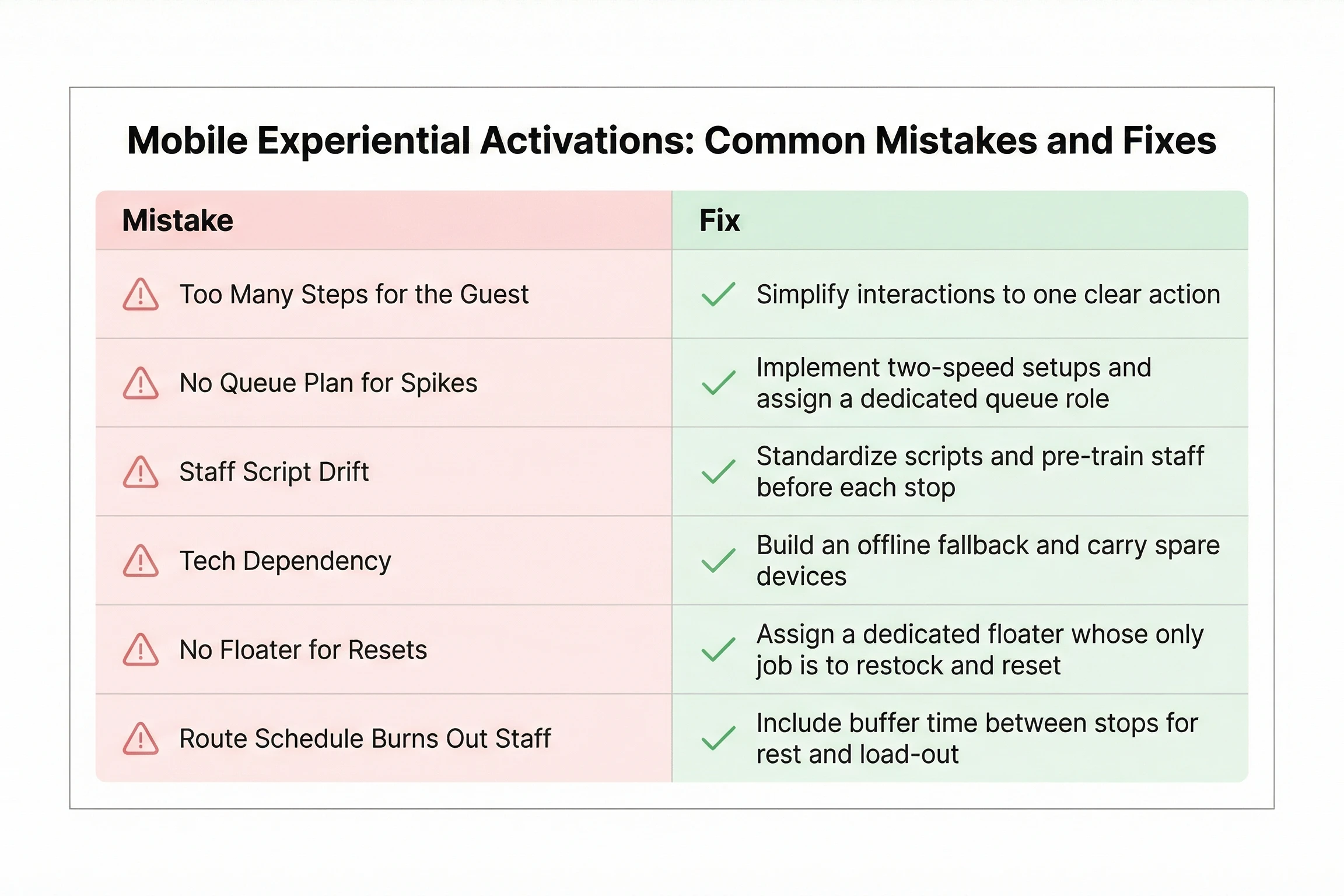
Example Use Case: A snack brand initially experienced slow throughput due to unstandardized scripts and no floater support. Implementing standardized scripts, assigning floaters, and creating a clear queue plan reduced wait times by 40% and improved engagement.
Mobile Experiential Activations Examples That Show What Works
Successful mobile experiential activations align format, staffing, route timing, and measurement to deliver consistent, high-quality experiences. In 2024, over 5.3 million brand activation events were conducted globally, spanning product launches, exhibitions, trade shows, and experiential pop-up installations. and the ones that delivered repeatable results shared the same operational traits. Here are three outcome-focused examples:
- Campus Stop: A technology brand ran a fast demo loop with assisted lead capture. Each participant experienced the core product in under three minutes, maintaining high throughput while capturing qualified leads efficiently.
- Retail Corridor Stop: A beverage brand offered product sampling with a clear queue pacing system. Floaters managed restocks and resets, ensuring smooth flow even during peak foot traffic hours.
- Multi-Stop City Day: A lifestyle brand executed a full-day, multi-stop activation with standardized scripts and floater-led resets. Offline backup tech ensured consistent data capture, and staff redeployment maintained flow across diverse locations.
Key Takeaway: Standardized operations, clearly defined roles, and adaptable formats create repeatable success across mobile experiential activations.
Conclusion
Mobile experiential activations offer brands a powerful way to engage audiences directly, delivering fast, repeatable experiences across multiple locations. 74% of consumers say that engaging with branded event marketing experiences makes them more likely to buy the promoted products, and that conversion potential is only realized when the operational foundation is strong enough to support it at scale. By standardizing setup, optimizing flow, defining staffing roles, choosing reliable tech, and measuring consistently, brands can scale reach without creating chaos or long wait times. From fast demo loops to gamified moments and multi-stop city tours, the key to success lies in repeatable processes, clear roles, and smart route planning. Whether your goal is broad geographic reach or high-quality engagement, following these operational strategies ensures each stop delivers a consistent, memorable experience while protecting staff efficiency and data integrity. Get a staffing and flow plan for mobile experiential activations to ensure every stop runs smoothly and maximizes audience engagement.
Ready to elevate your next event?
Join thousands of event planners who trust EventStaff.com for reliable, professional staffing solutions.
Trusted by event professionals nationwide
1k+
Events Staffed
2 million+
Guests Served
97%
Positive reviews