
CEO Excerpt
“I believe event runners are one of the highest leverage decisions in live logistics. When leads and supervisors start doing errands, you lose focus where it matters most, and delays show up everywhere. My preferred structure is simple. We assign runners to zones, run tasks through a single dispatch desk, and add one to two floaters for peaks and breaks. That system keeps response time predictable and keeps production stable during tight transitions." - CEO Event Staff
Most event delays are not caused by big failures. They come from small problems that take too long to solve. The moment a supervisor has to leave their post to grab a cable, find signage, print a badge, or escort someone across the venue, you lose leadership where it matters most. Multiply that across multiple zones, and your schedule becomes fragile.
Event runners are the simplest way to add logistics speed without adding management complexity. They act as the real-time link between production, registration, VIP, and operations. Instead of requests bouncing across radios and chat threads, runners provide a clear pathway for pickups, deliveries, and urgent fixes.
In this guide, you will learn when event runners are essential, how many to book based on footprint and complexity, and how to structure zones and dispatch so runners are fast, accountable, and consistent. If your goal is flawless execution in 2026, this is one of the highest impact systems you can build.
Executive Summary
Hire event runners when your venue is bigger than 10,000 sq ft, you have multiple teams working at once, or your schedule is tight and changing. Use staffing ratios based on footprint, assign runners to zones, run tasks through a dispatch desk, and add 1 to 2 floaters for peak moments. This structure prevents delays, prevents supervisors from running errands, and keeps logistics fast.
What Event Runners Do and What They Prevent

Event runners are the real-time logistics layer of an event. They move supplies, solve urgent problems, deliver items between zones, and keep specialized staff in place. If you hire event runners, you prevent delays from missing items, prevent stage interruptions, and prevent zone communication breakdowns. They operate like a rapid-response unit that keeps event operations smooth.
Core event runner responsibilities
Event runners typically handle four types of work:
- Logistics runs: Cables, batteries, signage, gaff tape, adapters, radios, printouts
- Operations support: Moving supplies between zones, restocking, quick pickups from dock/ops storage
- Admin & comms: Last-minute credentials, printing, paperwork handoffs, messages between teams
- VIP / talent support: Escorts, call-time reminders, green room requests, last-minute change support
What runners prevent (the real value)
Event staffing agencies don’t just “carry things”, they prevent small issues from turning into show-impacting delays:
- Delays from missing items (a cable, mic battery, signage, badge stock, etc.)
- Stage and session interruptions caused by slow response or misrouted requests
- Zone communication breakdowns between VIP, backstage, registration, production, and floor teams
- Supervisor distraction when leads become errand-runners instead of decision-makers
If your team keeps asking, “Who can run this?” you should hire event staffing agencies. Need a runner plan for your venue layout? Request a staffing quote and we’ll map zones, suggested headcount, and a dispatch workflow.
When Events Fail Without Runners
Events fail without runners because small issues become big delays. Teams leave posts to grab items, supervisors get distracted, and response time slows. If you hire event runners, you keep specialists where they belong and solve issues before they impact show flow. This is why event runner staffing is a high-impact decision in 2026.
Events typically break down when:
- The venue footprint is large
- Multiple teams work simultaneously
- Schedules are tight, changing, or dependent on fast transitions
Warning signs you need to hire event runners:
- Staff frequently leaving post
- Supervisors doing errands
- Slow response to small issues
- Miscommunication between zones
Gartner identifies that regrettable retention is emerging as the primary productivity barrier for 2026. That matters for events because overloaded leads burn out and performance drops. The fastest operational fix is to hire event runners so supervisors stay focused and logistics problems do not interrupt execution.
Runner Staffing Ratios by Event Size and Venue Footprint
If you are asking “how many event runners do I need,” start with venue square footage and adjust for complexity. These baseline staffing ratios help you estimate event logistics runner staff fast. If you hire event staffing agencies using these ratios, you will reduce bottlenecks, improve turnaround times, and keep transitions clean.
Event staffing pressure is reinforced by real labor-market data. The U.S. Bureau of Labor Statistics tracks leisure and hospitality workforce conditions, a sector closely tied to live event operations. You can also see job openings for leisure and hospitality tracked through official public data. This is why planners should hire event runners early and avoid understaffing onsite logistics.
.webp)
Baseline event runner staffing ratios (2026)
The number of runners you need depends on the overall size and footprint of the event. Small events under 10,000 square feet usually require around two to four runners to handle basic tasks. Medium-sized events between 10,000 and 30,000 square feet typically need six to ten runners to keep operations running smoothly. Large events covering 30,000 to 60,000 square feet often require twelve to eighteen runners to manage higher activity levels. Mega events or stadium-sized venues usually need anywhere from twenty to thirty-five runners to support complex logistics and constant movement across the site.
Increase runner count if you have:
- Long walking distances or multiple floors
- Multi-stage production
- High VIP and talent activity
- Tight schedules with rapid session turnover
- Heavy vendor and sponsor setup needs
Fast rule: If it takes more than 3 minutes to walk between key areas, hire event runners above baseline.
Fast rule for real-world layouts
Suppose it takes more than 3 minutes to walk between key zones such as the dock, backstage, stage, registration, and VIP, plan above the baseline. Walking time is the most common hidden driver of delays.
A simple way to sanity check your number
Use this quick structure, then compare it to the table above:
- One runner per critical zone you must protect
- One additional runner per active stage area
- One to two floaters for peaks and breaks
Runner Task Categories and Dispatch Setup
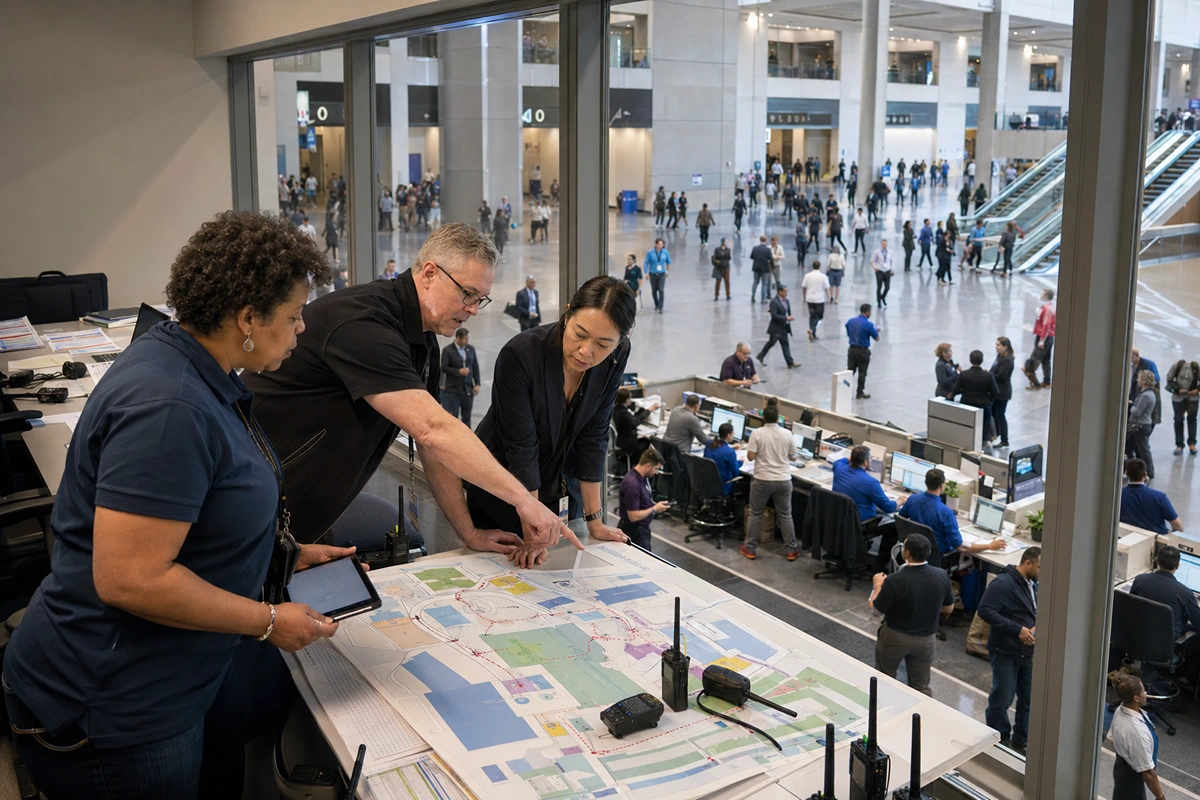
The fastest way to manage event runners is to route all requests through one dispatch point. Without dispatch, tasks get duplicated, priorities get missed, and supervisors lose time repeating requests. With dispatch, you get speed, clarity, and accountability.
Step 1. Define runner task categories
Using clear task categories makes requests easier to assign, track, and complete on time. Logistics tasks usually include items like cables, batteries, signage, radios, tools, and supply runs that keep operations moving. Hospitality requests focus on water, meals, green room needs, and crew support items to ensure comfort on-site. Admin tasks cover printing, paperwork delivery, credentials, and wristbands, which help with coordination and access control. Talent and VIP tasks involve escorts, call time reminders, and support for special requests, ensuring a smooth experience for key participants.
Step 2. Set up a single dispatch desk
A dispatch desk can be a table at ops, a lead with a clipboard, or a dedicated radio channel owner. The format matters less than having one intake point.
Dispatch best practices:
- Use one central ops desk for all runner requests
- Assign every task to one runner with one owner
- Track time assigned and time completed
- Mark tasks by priority level, such as urgent, normal, low
- Log peak demand times to improve future staffing plans
Step 3. Use a simple workflow for speed
A basic dispatch flow keeps runners moving and keeps leads focused:
- Request comes in
- Dispatcher confirms location and urgency
- The dispatcher assigns runner and confirms handoff details
- Runner completes the task and reports completion
- Dispatcher closes the task and updates the log
This dispatch setup is the backbone of reliable runner staffing because it prevents confusion and protects response time.
Zone Assignments and Route Planning
Avoid free-floating runners. Assign runners to zones or loops so response time is predictable and work is not duplicated. When you hire event runners and give them fixed coverage areas, logistics stay fast, and supervisors stop chasing issues. Use 1 to 2 floaters only for surge coverage and breaks.
Best structure:
- Assign runners to zones (stage, floor, backstage, VIP, admin)
- Create consistent routes and loops
- Add 1 to 2 floating runners to support peaks
This system cuts response time and increases reliability.
Zone and Route Planning Checklist (Event Runner Checklist)
Use this event runner checklist to set runner coverage in minutes. If you hire event runners and follow this checklist, you reduce confusion, improve turnaround times, and keep every zone protected.
- Divide the venue into operational zones such as stage, floor, backstage, admin, VIP
- Assign at least one runner to each critical zone
- Define walking loops and preferred routes for each zone
- Choose supply pickup points for common items such as radios, batteries, printouts, and signage
- Set one dispatch desk or dispatcher as the single intake point for all runner tasks
- Decide on your communication protocol, such as one radio channel or one messaging thread for runner requests
- Define task priority levels, such as urgent, normal, and low
- Assign one to two floaters for peak surges and break coverage
- Confirm where completed deliveries should be dropped and who signs off
- Run a short pre-show briefing so runners understand zones, routes, and escalation steps
If you follow this checklist, supervisors stay in position, runners stay efficient, and issues get solved before they reach the stage or audience.
Shift Planning and Break Coverage
Runners burn out quickly because they are constantly moving, solving urgent needs, and switching contexts. If you ignore breaks and shift design, speed drops, mistakes increase, and response time becomes inconsistent.
Why shift planning matters
Without planned rotation:
- Runners slow down late in the day
- Tasks take longer and get missed
- Teams stop trusting the runner system and go back to doing errands themselves
Shift planning best practices
Use these practices to keep performance steady across the full show day:
- Rotate runners across high demand zones so the same person is not stuck in the busiest loop all day
- Overlap shifts during peak moments such as doors, session changeovers, and VIP arrivals
- Use floaters to cover breaks so zone coverage does not disappear
- Schedule short breaks and water resets to prevent performance drop
- Confirm who takes dispatch when the dispatcher breaks, so intake never pauses
Simple rule
If you have a tight run of show, plan overlap around the two most intense blocks of the day. That is usually doors and the first major transition wave, then late afternoon transitions.
Example Runner Plan: Conference Floor
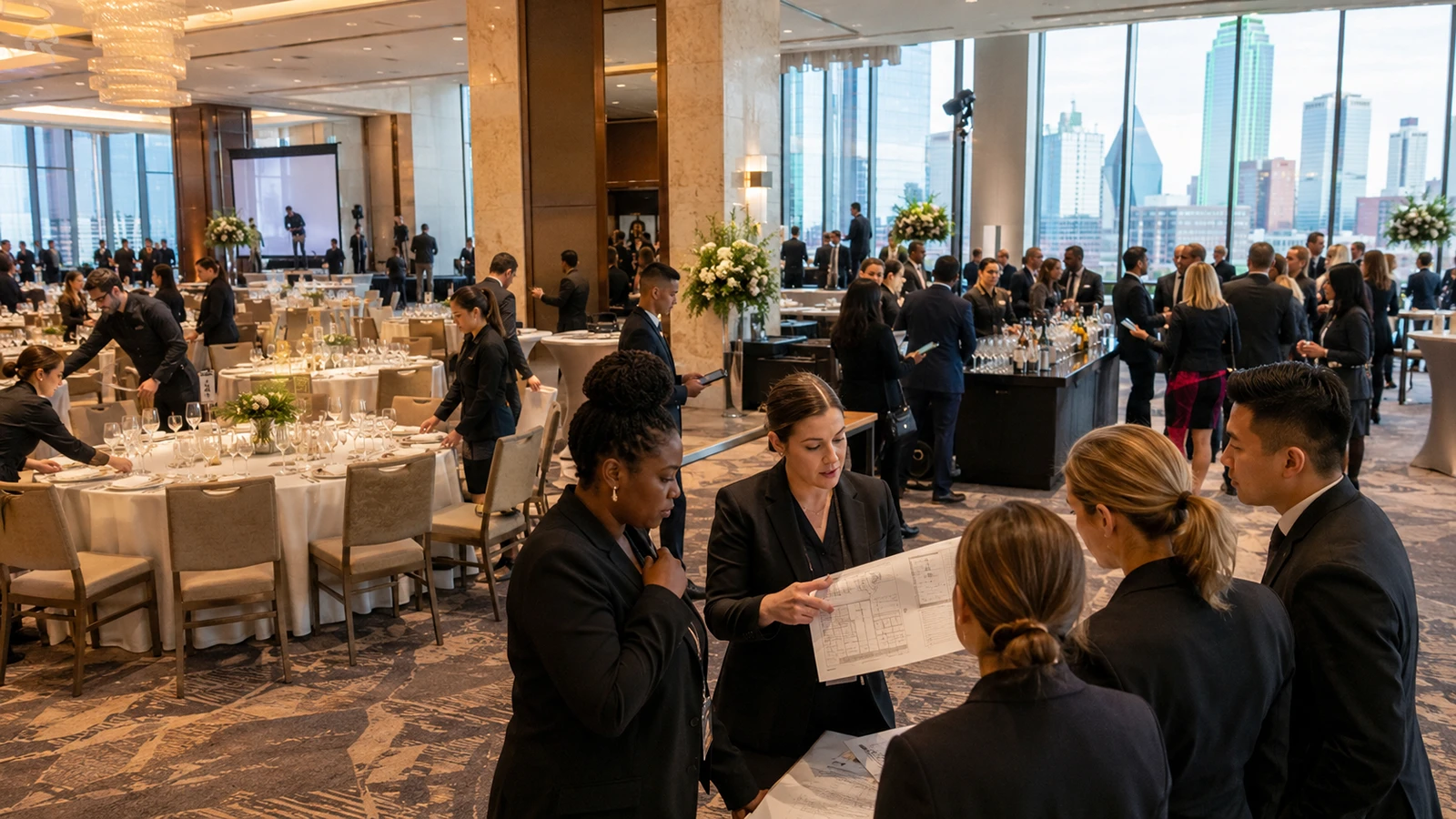
For a 25,000 sq ft conference with 3 stages, hire event runners using a zone-based plan with stage coverage, floor support, hospitality, and floaters. This is a practical event logistics runner staff setup that prevents delays during session changes and keeps production stable.
Scenario: 25,000 sq ft conference, 3 stages.
Runner roles are usually split based on where support is needed most during the event. Stage runners often form the largest group, with around four people handling stage-related requests and quick turnarounds. Floor runners typically include about three runners who manage tasks across the event floor and vendor areas. Hospitality usually needs one dedicated runner to support food, water, and guest comfort. In addition, having two floaters helps cover peak times, urgent requests, or gaps wherever extra support is needed.
Why this works
- Corporate event staffing runners protect the show flow and reduce last-minute scramble during transitions
- Floor runners prevent vendor needs from pulling ops leads away from priorities
- Hospitality coverage keeps crew and talent supported without distracting production
- Floaters absorb spikes and keep zones covered when runners are on break
How to run requests in this setup
Route all runner requests through dispatch, then dispatch assigns by zone first. Use floaters only when zone coverage is overloaded or a task is time-critical.
Hire Event Runners in 2026 and Secure Flawless Execution
If you want flawless logistics in 2026, hire event runners. Event runners protect schedules, keep supervisors focused, and stop small problems from turning into major delays. The most reliable structure is zone-based runner coverage, central dispatch, and 1 to 2 floaters for peaks. This is the simplest logistics system that delivers calm, professional execution in any venue footprint.If you want smoother transitions, fewer interruptions, and faster issue resolution, hire event runners early. Use the ratios in this guide and structure runner zones and dispatch before production is finalized. Need exact staffing for your venue? Get a quote for event runner staffing and receive a runner zone map, dispatch template, and printable event runner checklist so your team runs faster from day one.
Ready to elevate your next event?
Join thousands of event planners who trust EventStaff.com for reliable, professional staffing solutions.
Trusted by event professionals nationwide
1k+
Events Staffed
2 million+
Guests Served
97%
Positive reviews