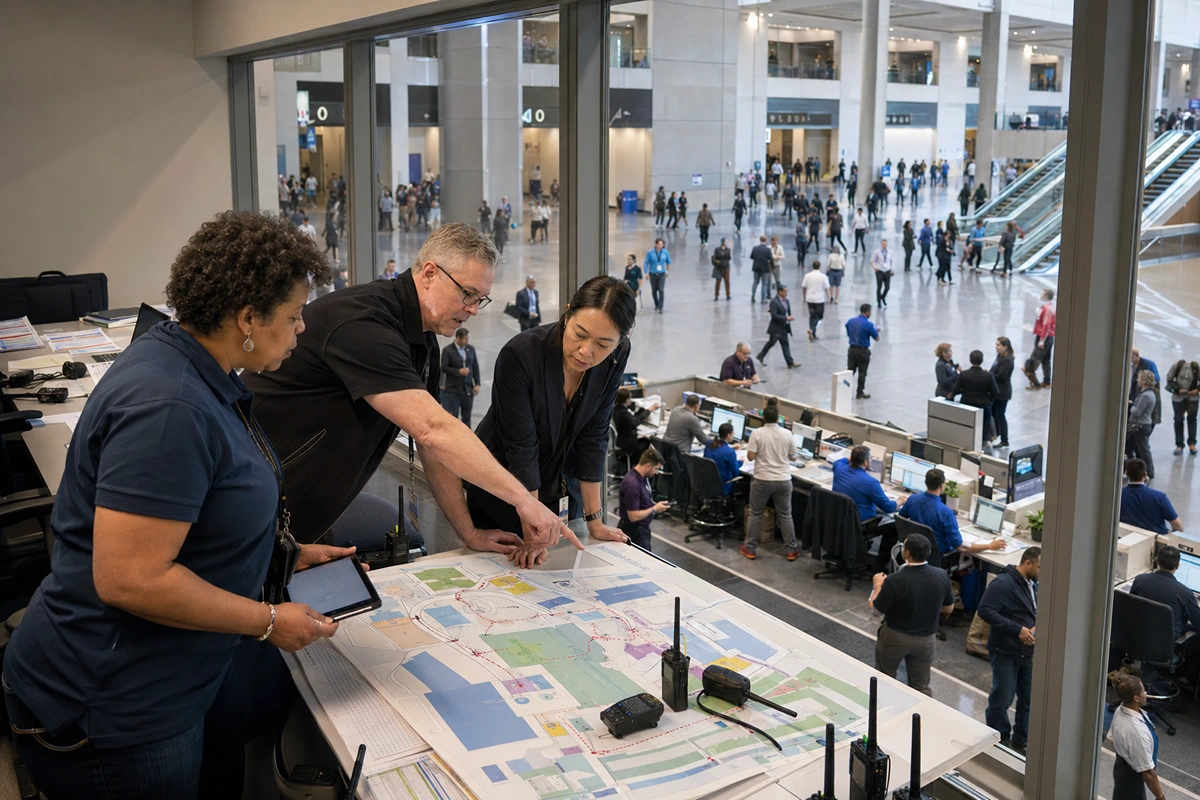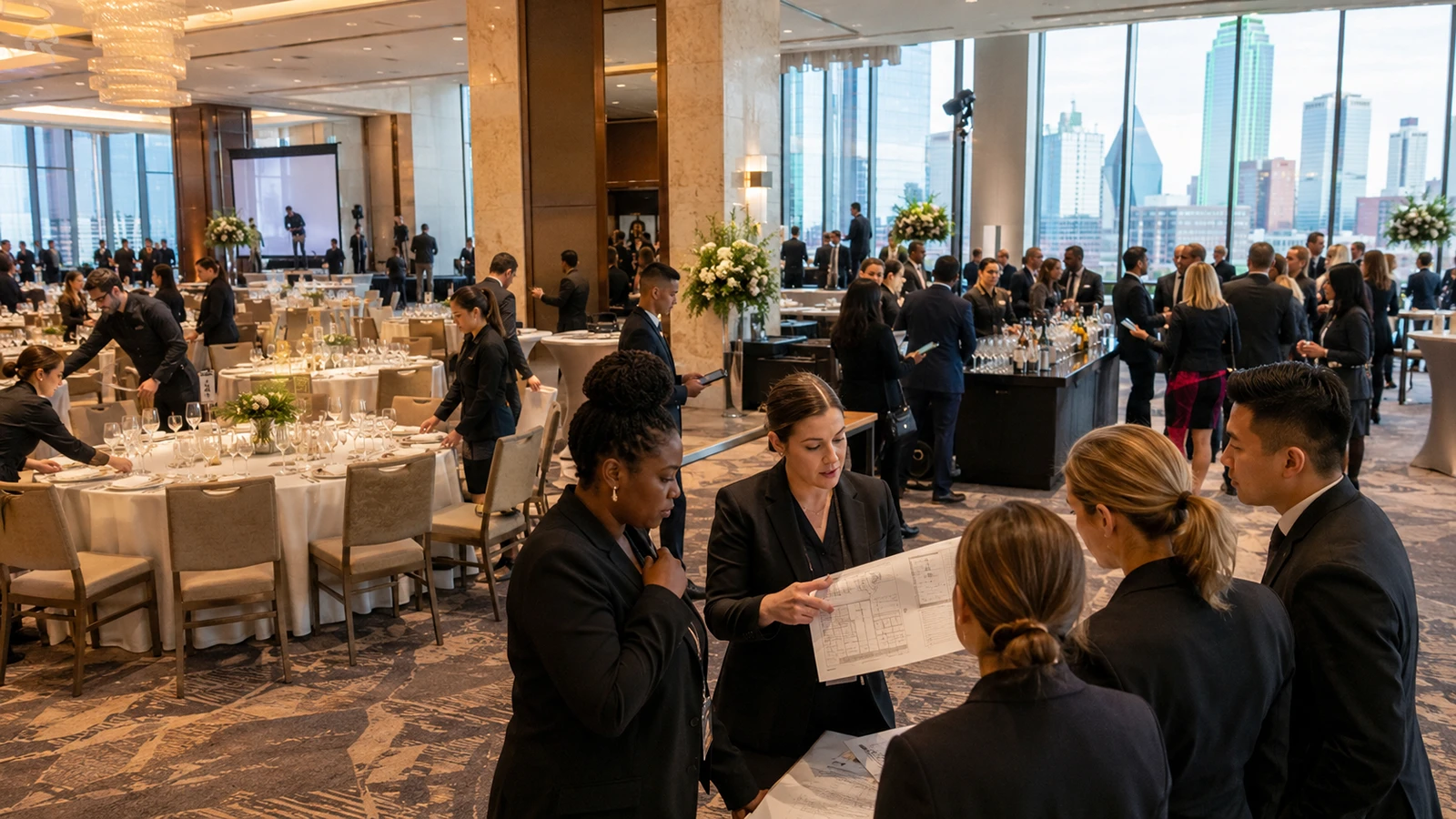

Crowd control staffing requirements for a 1,000-person event typically fall between 1 staffer per 50–75 attendees. This means you're looking at a baseline of 14 to 20 staff.
But this isn't a simple guess. The final number depends heavily on your venue layout, number of entrances, and screening needs. This guide breaks down the exact ratios for entry screening, perimeter coverage, VIP areas, and emergency paths so you can stop guessing and scope your staffing confidently.
Executive Summary
For 1,000 guests, your baseline is 14-20 staff (a 1:75 ratio), but this is just the start. This guide provides the full operational math, breaking down the exact crowd control staffing requirements for your entrances, perimeter, and risk factors.
The baseline ratio: how many staff for 1,000 guests?
For a 1,000-person event, your baseline ratio is 1 crowd-control staffer per 50–75 guests. This gives you a starting range of 14 to 20 staff.
This ratio is the operational standard for most festivals, corporate events, and venue-based gatherings, as it aligns with general FEMA crowd guidance. Choosing the low end (14 staff) might work for a single-entry corporate event with no alcohol. Choosing the high end (20+ staff) is necessary for an event with multiple entrances, intense screening, or a high-peak arrival time (e.g., 90% of guests arriving in 60 minutes). This figure is the foundation of your crowd control staffing requirements.
Entry screening: how many staff you need at doors and checkpoints
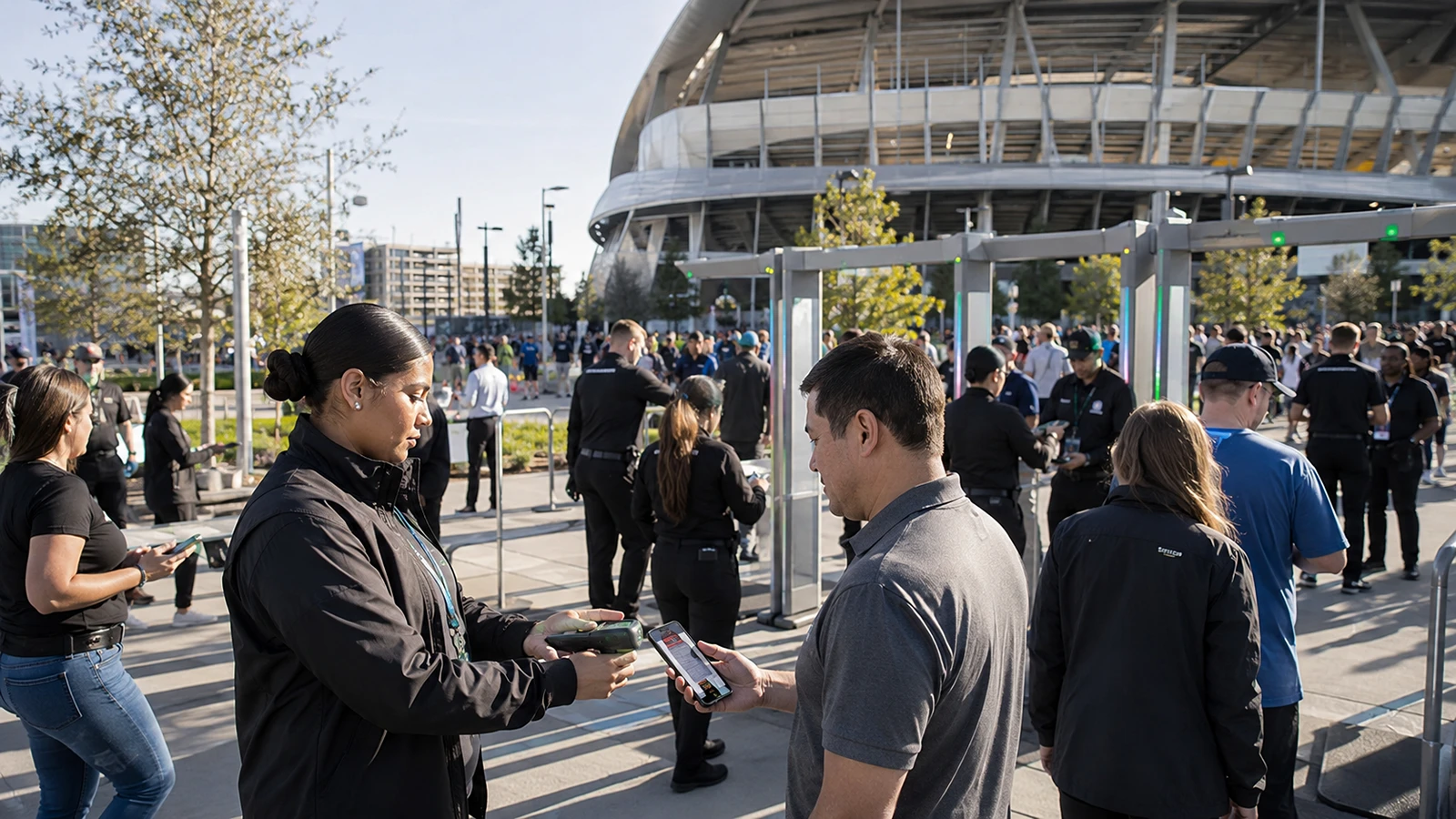
Your entrances are your single biggest bottleneck. For a 1,000-person event, plan for 6 to 10 staff at your primary entrances. The final count depends on your screening intensity. Are you just scanning tickets, or are you doing bag checks and ID verification for alcohol?
A good formula is 1-2 staff per lane, plus 1 supervisor per entrance. Slow screening is a liability; it creates long, frustrated queues and negative event flow psychology before guests are even inside. Expect your entry roles to account for 35-45% of your total crowd control staffing requirements.
Perimeter staffing: visibility, fence line, and restricted zones
A crowd that isn't contained is a crowd that's at risk. For an indoor venue, plan a minimum of 4-6 perimeter staff. For an outdoor site with a wide fence line, you'll need 6-10 staff.
A solid guideline is 1 perimeter staffer per 150 feet of boundary. This isn't just about the main fence; this includes special coverage for backstage areas, loading docks, service roads, and any other unauthorized access point. As safety experts at NCS4 note, visible perimeter coverage is central to a safe event security ratio per attendee.
CEO Excerpt
"Planners ask 'how many staff for 1000 guests' but they're asking the wrong question. It's not one number. The real number is a formula based on entrances, alcohol, and venue risk. This guide gives you that formula."- CEO Event Staff
VIP, ADA, and high-touch zones: role-specific coverage
Basic “how many staff for 1,000 guests” calculations often miss high-touch zones. These aren't "crowd control" in the traditional sense, but they are critical for managing flow and preventing friction.
- VIP Areas: Require 2-4 dedicated staff for credential verification and managing flow.
- ADA Platforms: Need 1-2 staff for mobility assistance and to ensure the area remains clear for those who need it.
- Sponsor Zones: High-traffic vendor or sponsor activations may need 1-3 floating staff to manage queues during peak surges.
Emergency paths and evacuation roles
Your evacuation plan is only as good as the staff who execute it. Position a minimum of 4-5 evacuation spotters at main exits and emergency-only paths.
The ratio here is simple: 1 emergency route staffer per exit path, plus 1 roaming supervisor with a radio. For these roles, visibility, clear spacing, and reliable communication equipment matter more than raw headcount. These positions are a non-negotiable part of a safety plan and are essential to your crowd control staffing requirements.
Risk variables that increase staffing needs (3 factors)
Your baseline of 14-20 staff is just the start. That number will increase based on these three risk factors:
- Alcohol Zones: The presence of alcohol increases your staffing needs by 20-30%. You must add staff at ID points, managing bar queues, and roaming to de-escalate.
- Confined Spaces: Narrow corridors, low ceilings, or tight switchback queues are choke points. They require extra ushers and flow directors to prevent crushing and maintain flow.
- Event Duration: Any event longer than 4 hours needs rotation staff. Alertness is key to safety. You must factor in a 10-15% buffer for breaks to keep your team fresh.
Any of these variables will shift your event security ratio per attendee toward the higher, safer end.
Fast Estimate Box (simple, operator-ready)
Fast Estimate: 1,000 Guests
- Baseline (Corporate Event, 1 entry, no alcohol): 14–20 staff
- Add Risk Factors:
- Add 4–6 staff if alcohol is present.
- Add 4–8 staff if it's an outdoor venue or has 2+ entries.
Worked Example (Festival, 1,000 guests, outdoor, 2 entries, alcohol):
- 20 (High Baseline) + 6 (Alcohol) + 6 (Outdoor/Multi-entry) = 32 Total Staff
Safety checklist for 1,000-person crowd control
Before your doors open, run this final 5-point checklist.
- Confirm entry lane staffing and your peak-arrival plan.
- Assign perimeter zones with clear radio channels.
- Validate all emergency paths and spotter positions.
- Identify and staff all ADA, VIP, or high-risk zones (like bar lines).
- Confirm your supervisor-to-staff ratio is 1:6 to 1:8
Need to staff your event?
Need trained crowd and guest-flow staff for large-scale events? Event Staff supports festivals, stadium activations, and corporate gatherings with compliant supervisors and backup staff. Request a scope call to plan staffing for your next 1,000-person event.
Plan Your Staffing With Confidence
Understaffing doesn’t just slow entry it increases risk, damages guest experience, and exposes your event to liability.
Event Staff helps planners accurately scope crowd control teams, with trained staff for:
- Entry screening & queue management
- Perimeter security & flow control
- VIP and high-risk zone coverage
👉 Book a staffing strategy call and get a custom staffing plan for your event—before gaps become problems.
Ready to elevate your next event?
Join thousands of event planners who trust EventStaff.com for reliable, professional staffing solutions.
Trusted by event professionals nationwide
1k+
Events Staffed
2 million+
Guests Served
97%
Positive reviews