
What Professional Event Cleaning Includes After a Large Event
When a large-scale event ends, whether it’s a 500-person corporate gala, trade show, or multi-day conference, the real operational challenge begins: restoring the venue quickly, safely, and completely.
But what does an events cleaner actually handle behind the scenes?
Professional event cleaning goes far beyond basic janitorial work. It’s a structured restoration process involving specialized crews, industrial-grade equipment, and strict quality protocols designed to minimize downtime and prevent long-term damage.
In this guide, you’ll learn exactly what post-event cleaning includes, how long it takes, how crews are structured, and what standards top-tier vendors follow so you can make informed decisions and protect your venue investment.
EXECUTIVE SUMMARY
This blog is strong in structure, operational depth, and audience alignment, but needs improvements in keyword placement, E-E-A-T signals, and LLM-style optimization. Adding question-based headers, credible industry references, and a stronger CTA will significantly improve performance. With minor refinements, it can rank well and convert high-intent event planners effectively.
What Does an Events Cleaner Actually Do After a Large Event?
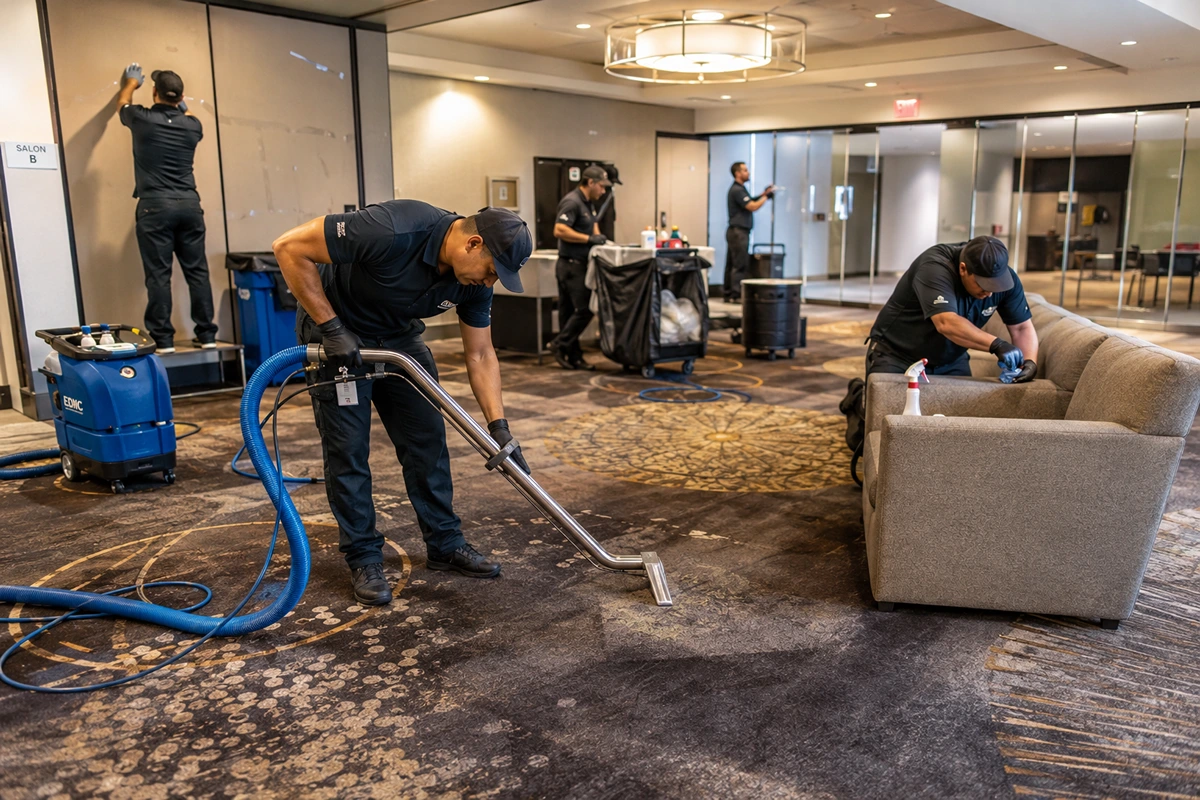
Professional post-event cleaning covers far more ground than daily facility maintenance. While regular janitorial work focuses on routine upkeep, an experienced events cleaner performs a full-scale restoration process designed to return the venue to its original condition or better.
According to facility management benchmarks, structured post-event cleaning can reduce venue downtime by up to 80%, making it a critical part of event operations.
The scope includes:
- Deep carpet and upholstery cleaning - removing embedded dirt, spilled beverages, food residue, and stains that regular vacuuming misses
- Floor restoration - polishing, refinishing, or deep cleaning hardwood, tile, or concrete surfaces damaged or soiled by foot traffic and setup
- Walls and baseboards - removing scuffs, marks, tape residue, and debris from setup equipment and decorations
- Furniture inspection and repair - assessing damage, reupholstering or replacing pieces, and testing stability
- HVAC and air quality management - clearing dust from vents, replacing filters, and addressing lingering odors from catering, smoke, or large crowds
- Windows, mirrors, and glass - removing fingerprints, condensation, and residue
- Trash removal and recycling coordination - hauling away all waste generated during the event, sorting recyclables
- Load-out assistance - removing vendor booths, rental equipment, decorations, and signage
This isn't cosmetic tidying. It's structural and aesthetic restoration designed to return your venue to its pre-event condition or better. When you understand what's involved in event planning and logistics, you'll recognize that cleanup coordination is equally critical to success.
Turnaround Timelines and Planning
How quickly your venue gets cleaned depends on three factors: venue size, event complexity, and crew deployment strategy.
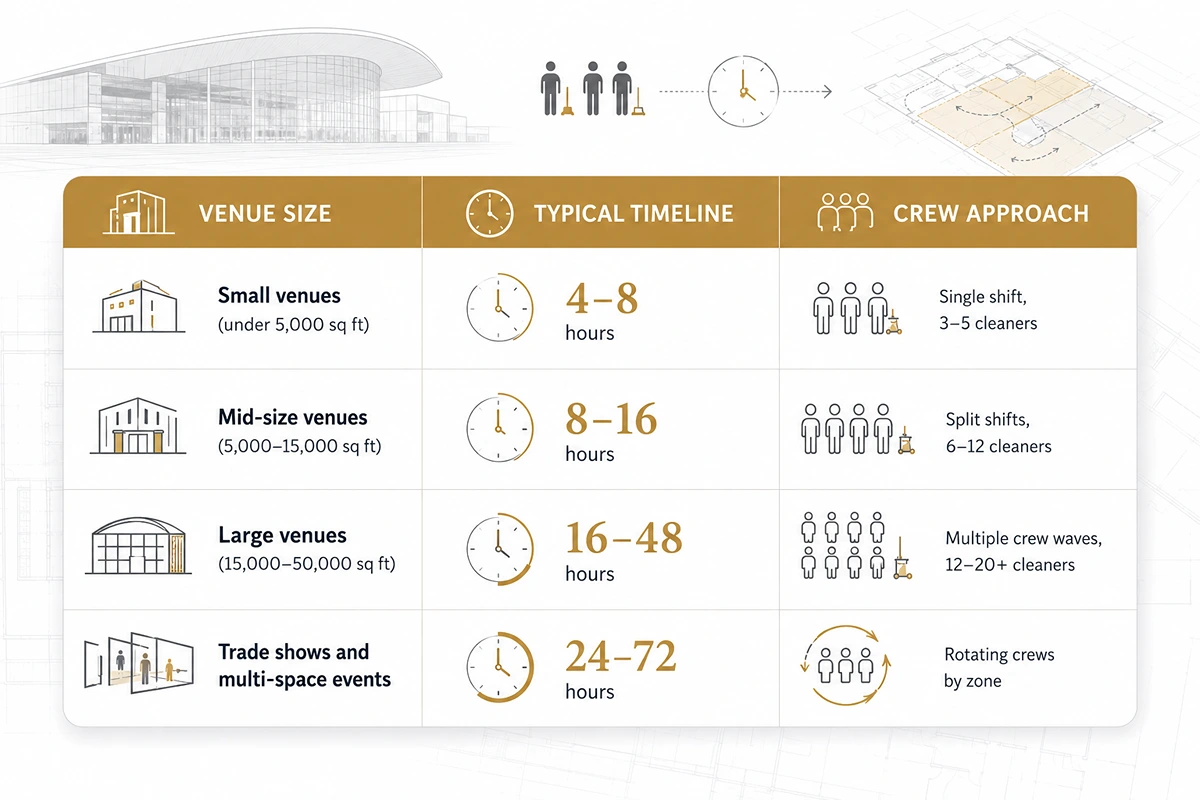
Timing strategy matters. Many venues begin light cleanup during the event (clearing tables and trash as guests finish dining, removing decor incrementally) to reduce the post-event load. Others schedule overnight crews to start immediately after final guest departure, aiming for a dawn-to-noon completion for venues reopening the next business day.
Research from the 2024 Event Management Industry Report shows that venues implementing coordinated cleanup protocols reduce reopening delays by 65%. Professional cleaning services coordinate with venue management to establish load-out schedules (when vendor booths and rental equipment leave) and begin deep cleaning only after all setup equipment is cleared. Starting too early wastes crew time; starting too late cuts into your reopening timeline.
Crew Size and Staffing Requirements
The number of cleaners needed depends on venue size, event intensity, and turnaround deadline.
General sizing:
- Small events: 3-5 cleaners for 4-6 hours
- Mid-size events: 6-12 cleaners working 8-12 hours
- Large corporate events or trade shows: 15-30+ cleaners in rotating shifts
Professional crews also include specialized roles:
- Carpet and upholstery technicians (trained in stain removal and fiber care)
- Floor specialists (hardwood and tile restoration)
- Quality inspectors who verify completion against checklists
For large events in enterprise venues (think a 2,000-person conference in a 40,000 sq ft convention center), a coordinated crew of 20+ cleaners working in stations (carpeted areas, hard floors, restrooms, and food service zones) is standard. Crew leads ensure task completion and consistency across shifts. Proper event staffing and coordination during setup makes cleanup exponentially faster and more efficient.
Real-World Example: Post-Event Recovery in Action
After a 2-day corporate conference with 1,800 attendees at a 35,000 sq ft convention space, the venue required overnight restoration before reopening the next morning.
A 22-member cleaning crew was deployed in rotating shifts:
- Zone 1: Carpet extraction and stain removal
- Zone 2: Hard floor burnishing and polishing
- Zone 3: Restroom sanitation and restocking
- Zone 4: Waste removal and load-out clearing
Within 14 hours, the venue passed final inspection with zero reopening delays. According to the venue manager, early coordination between event staff and the cleaning team reduced total downtime by nearly 40%.
This level of efficiency is only possible with structured planning, trained crews, and professional-grade equipment.
CEO EXCERPT
Professional post-event restoration transforms venue downtime into rapid recovery. Our comprehensive approach to event cleaning minimizes venue damage, accelerates reopening timelines, and protects your bottom line through coordinated, standards-based restoration protocols. Learn how professional cleanup reduces venue vulnerability and maximizes asset utilization.- Daniel Muersing
Equipment, Chemicals, and Safety
Professional event cleaning relies on equipment and chemicals far more advanced than household supplies.

Chemical standards:
Professional cleaners use industrial-strength detergents, degreasers, and spotters formulated for specific stains (wine, food oil, grass, and scuff marks). They follow OSHA safety protocols for chemical handling, including:
- Proper dilution ratios
- Adequate ventilation during application
- Protective equipment (gloves, respirators)
- Material Safety Data Sheet (MSDS) compliance
According to 2024 facility management data, venues using professional-grade cleaning protocols report 92% guest satisfaction ratings compared to 64% for standard cleaning approaches. Many teams offer eco-friendly alternatives using plant-based or biodegradable formulas if your venue requires sustainable practices. Safety protocols also include equipment decontamination (preventing cross-contamination between areas) and allergen management, critical in venues hosting food service.
Damage Restoration and Problem-Solving
Beyond standard cleanup, professional teams address damage incurred during events.
What they handle:
- Carpet and upholstery stains: Wine, coffee, makeup, food residue (most respond to enzyme-based treatments and hot water extraction)
- Furniture repairs: Reupholstering chairs, fixing broken table legs, addressing burn marks or ink damage
- Wall damage: Scuff marks, tape residue, small dents or gouges (major drywall damage may require external contractors)
- Floor damage: Refinishing scratches on hardwood, resealing grout in tile, removing adhesive from temporary flooring
What they don't cover:
Structural damage (broken windows, dented walls, collapsed ceilings) typically requires specialized contractors and is billed separately. Professional cleaning contracts usually specify a damage threshold. Minor wear is included; major repairs are quoted separately. Smart planning includes pre-event damage walkthroughs and post-event documentation (photos) to clarify responsibility and manage expectations.
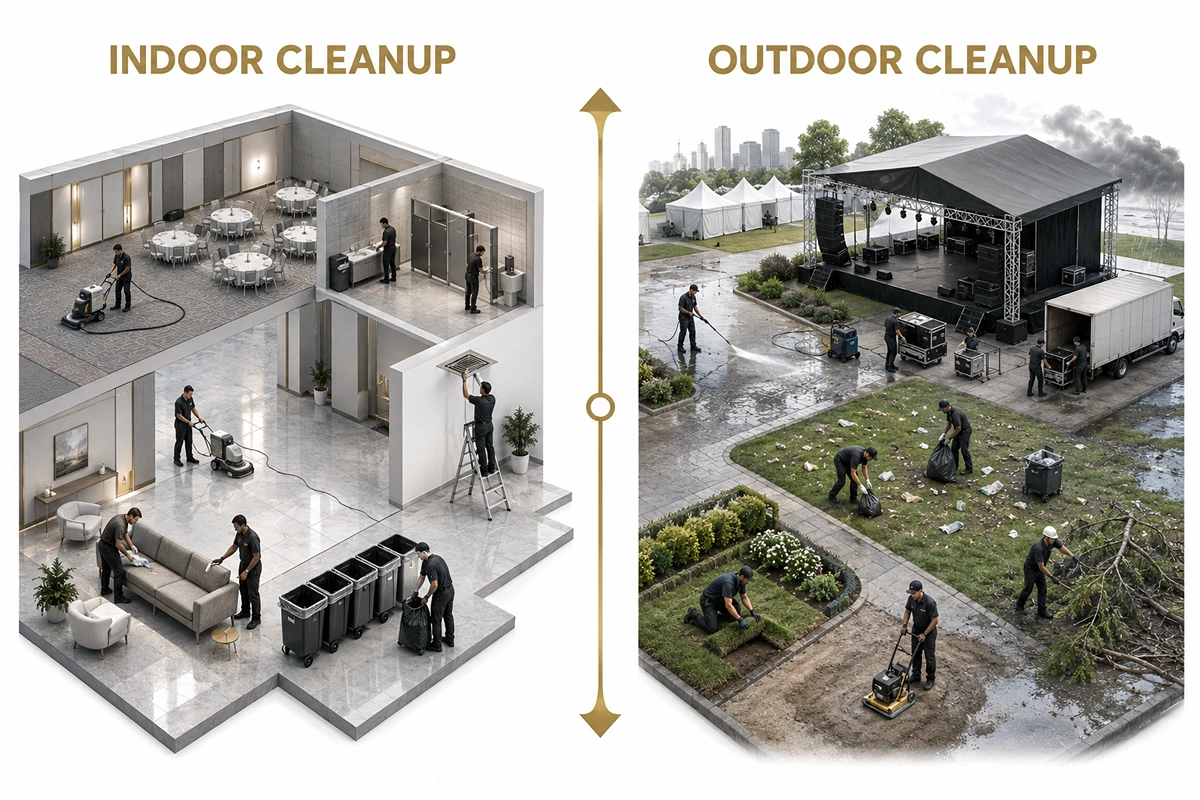
Indoor vs Outdoor Event Cleanup
Indoor and outdoor cleanup follow different protocols.
Indoor venues require:
- Thorough vacuuming and carpet extraction
- Hard floor polishing and burnishing
- Wall and baseboard detail work
- Air quality management (odor removal, filter replacement)
- Enclosed space advantages: weather doesn't interfere, cleanup can start immediately after load-out
Outdoor events present unique challenges:
- Debris scattered across grass, pavement, or gravel (leaves, paper, food waste)
- Pressure washing patios, decks, and walkways
- Ground restoration (filling divots from equipment and foot traffic, raking and reseeding if necessary)
- Weather delays: rain can postpone cleanup or require extended drying times
- Landscape damage assessment and restoration planning
Hybrid events (indoor main space with outdoor reception areas) require crews coordinated across both zones, often extending timelines by 4-8 hours. Understanding venue-specific cleanup requirements and logistics upfront prevents timeline surprises.
Quality Standards and Inspections
How do you know the job is done right?
Professional cleaning services use multi-point inspection checklists verifying completion against industry standards. A typical inspection includes:
- Visual walk-throughs of all areas (no visible debris, trash, or stains)
- Spot testing on carpets and upholstery to confirm stain removal
- Floor gloss and shine verification (floors meet baseline shine standards)
- Air quality checks (odor tests, filter replacement confirmation)
- Furniture functionality (all chairs, tables, and fixtures are stable and clean)
- Restroom standards (deep cleaned, stocked, free of spillage or odors)
Reputable vendors provide photo documentation and sign-off confirmations, protecting both parties and giving you confidence in results. Industry standards require detailed post-event inspection documentation per 2024 venue management protocols.
Contracts and What to Ask Vendors
Before hiring event cleaning services, clarify scope and expectations in writing.
Essential contract terms:
- Service scope: What's included vs excluded (damage repairs, load-out assistance, air quality management)?
- Timeline and turnaround: When does cleanup start, what's the completion deadline, and what happens if it runs over?
- Crew size and lead: How many cleaners, who's the on-site supervisor, and what's the escalation process if issues arise?
- Equipment and chemicals: Will they use eco-friendly options, and what's the cost difference?
- Damage limits: What's the dollar threshold before damage repairs are billed separately?
- Insurance and liability: Are they fully insured, and what's covered in case of accidents?
- Payment terms: Is it hourly, flat rate, or tiered by venue size? When is payment due?
Questions to ask:
- How will you handle unexpected cleanup challenges (severe staining, equipment damage)?
- Do you provide a post-cleanup inspection and sign-off?
- Are you available for same-day emergency cleanup if the event runs late?
- What's your experience with venues similar to ours?
Clear contracts prevent miscommunication and protect your venue's timeline and reputation.
Post-Event Cleaning Checklist for Event Planners
Before hiring a vendor, make sure your post-event cleaning service includes:
- Deep carpet and upholstery cleaning
- Hard floor restoration and polishing
- Waste removal and recycling coordination
- HVAC and air quality management
- Damage inspection and documentation
- Certified equipment and chemical handling
- Post-cleaning inspection and sign-off
This checklist helps you quickly evaluate whether a vendor meets professional standards and avoids costly gaps in service.
Ready to Restore Your Venue Faster Without Risk?
Professional event cleaning is an investment in your venue's longevity and guest experience. When executed by trained crews with industry-standard equipment and processes, it transforms a post-event venue from exhausted to restored in sometimes just hours. The difference lies in comprehensive scope, realistic timelines, and quality verification. Whether you're planning a corporate conference or large-scale gala, understanding what professional cleanup includes helps you budget accurately, set realistic expectations, and partner with vendors who prioritize your venue's condition.
Need a cleaning partner who can restore your venue overnight without compromising quality?
EventStaff’s professional event cleaning teams specialize in large-scale post-event restoration, from deep cleaning and damage assessment to full venue recovery. Our trained crews, industry-standard equipment, and rapid-response protocols help you reduce downtime, protect assets, and reopen faster.
Request a customized cleanup plan today and ensure your next event ends as smoothly as it begins.
Ready to elevate your next event?
Join thousands of event planners who trust EventStaff.com for reliable, professional staffing solutions.
Trusted by event professionals nationwide
1k+
Events Staffed
2 million+
Guests Served
97%
Positive reviews