
Event Staffing Miami Cost Guide (Summer 2026): Why Prices Are Higher Than Expected
Planning an event in Miami this summer?
Then you’ve likely noticed something quickly: event staffing in Miami costs more than most cities.
And it’s not just demand.
From heat rotation and bilingual guest support to rooftop logistics and late-night staffing, Miami events require a different staffing model entirely.
This guide breaks down exactly:
- Why staffing costs increase
- What most planners underestimate
- How to budget correctly before you request a quote
Executive Summary
This blog explains why event staffing in Miami costs more during summer. It covers the staffing factors planners often miss: heat rotation, bilingual event staff, rooftop and beach venue coverage, nightlife staff availability, booking timelines, and budget planning. It shows how Miami’s climate, guest profile, and venue types change the staff mix before the event begins.
What Does Event Staffing Cost in Miami (Summer 2026)?
Miami summer staffing rates are typically higher than national averages due to demand, working conditions, and role specialization.
Here’s a rough breakdown:
- Standard event staff: $28–$45/hour
- Bilingual event staff: $35–$55/hour
- Team leads / supervisors: $45–$75/hour
- Late-night staffing premium: +15% to 30%
- Heat rotation coverage: +10% to 25% added headcount
A 200-person rooftop event may see:
- 20 visible staff → 25–28 total scheduled staff
- Total staffing cost increase: 20%–40% higher than indoor markets
The key takeaway:
Miami staffing costs scale with conditions, not just guest count.
The Quote Jumps Because Miami Adds Costs Other Cities Don’t
Event staffing in Miami gets expensive fast when the event is outdoors, guest-facing, bilingual, or scheduled after dark. A basic guest count does not explain the final quote. A 200-person indoor reception in a cooler market may only need standard floor coverage. A 200-person Miami rooftop event in July may require extra event staffers for heat rotation, a team lead watching elevator flow, bilingual event staff at entry, and backup coverage for anyone pulled off post during peak heat.
Miami’s summer climate is the first pressure point. Local weather conditions can push outdoor teams into rotation planning before the event even starts. Once you add rooftop access, beach logistics, bilingual guest questions, and evening service, the staffing plan stops looking like a simple headcount.
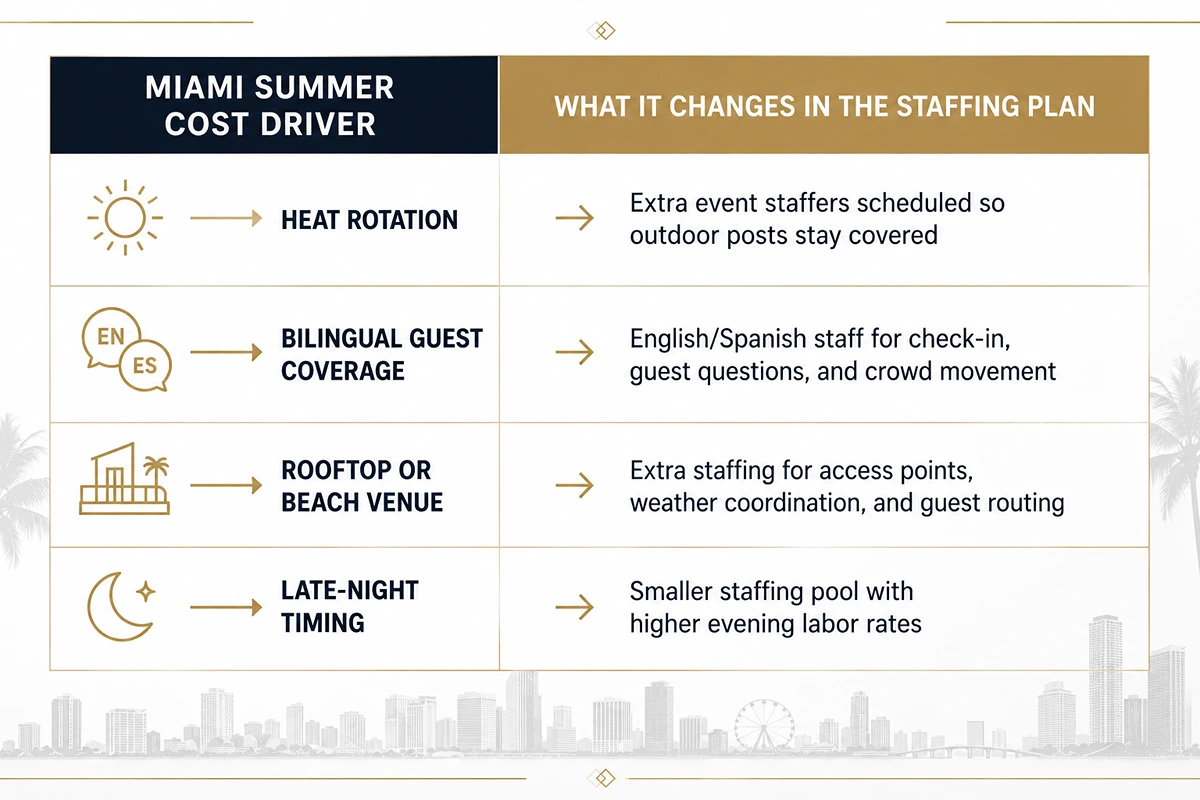
For planners comparing Miami to another market, the mistake is assuming a small city premium will cover everything. In Miami summer, those costs stack. A stronger outdoor event staffing plan separates visible guest-facing staff from operational coverage: bilingual event staff, crowd management staff, team leads, and venue-specific coordinators.
Heat Rotation Adds Headcount Before Guest Count Does
Miami heat changes the staffing number before the guest list does. For outdoor event planning in Miami, the planner has to think beyond how many guests arrive. The bigger staffing question is how long staff can stay at heat-exposed posts without leaving registration, entry, sampling, crowd movement, or guest direction uncovered.
A beach activation with 20 planned event staffers may need closer to 25 scheduled people once rotation is built in. That extra coverage keeps posts covered while staff rotate away from full sun, hydrate, and return without leaving one area exposed. OSHA’s heat guidance gives planners a practical safety reference here, especially for outdoor teams working through peak afternoon conditions.
The worst version shows up during the afternoon window. Guests arrive hot, lines form quickly, and the staff at check-in are also expected to answer questions, manage wristbands, and calm complaints. If the staffing plan has no rotation layer, the event either burns out the team or leaves visible gaps.
For EventStaff, crowd management staffing in Miami should include a team lead watching heat-exposed posts, staggered rotation before doors open, and backup event staffers placed near pressure points instead of pulled randomly after someone steps away.
CEO Excerpt
In Miami, the staffing quote usually looks expensive only when the planner is comparing it to a normal summer event. Once you factor in heat rotation, bilingual coverage, rooftop access, beach movement, and late-night pressure, the number starts making sense. The mistake is budgeting for guest count before budgeting for the actual venue conditions. - Daniel Muersing
A Monolingual Front Desk Slows Miami Guests Down Fast
Miami guest-facing roles often work better with English/Spanish coverage built into the plan from the beginning. Bilingual event staff is useful beyond the welcome desk. They affect check-in, bar lines, sampling stations, VIP routing, shuttle queues, and any point where guests ask practical questions. A monolingual team may complete the shift, but the gap shows up in slower answers, repeated escalations, and guests being passed between staff for simple help.
Miami-Dade’s Census profile gives the demographic reason behind this. For Miami summer events, the staffing mix should identify which posts require bilingual coverage and which can stay standard. Entry, registration, guest questions, and crowd movement usually sit higher on the list. Back-of-house floaters or setup support may not require the same language profile.
Late booking makes this harder. Bilingual event staff is a smaller pool than general event staffers, and the pool gets tighter for outdoor, nightlife, or hospitality-heavy formats. Waiting until the final few weeks can leave the planner choosing between weaker availability, higher rates, or fewer bilingual posts than the event actually requires.
A stronger bilingual staffing plan maps language coverage by guest touchpoint. Registration, guest questions, VIP access, and crowd movement should get the stronger language coverage first.
A Rooftop, Beach, or Waterfront Venue Changes the Staff Count
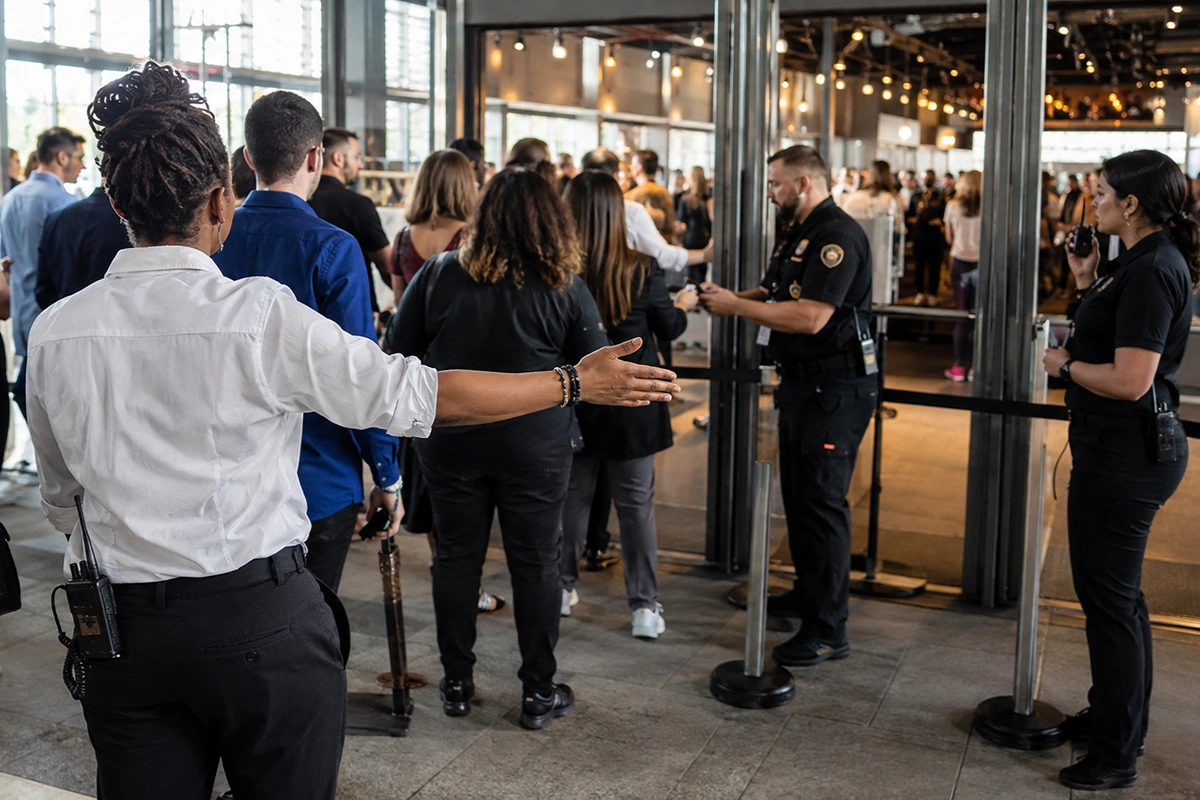
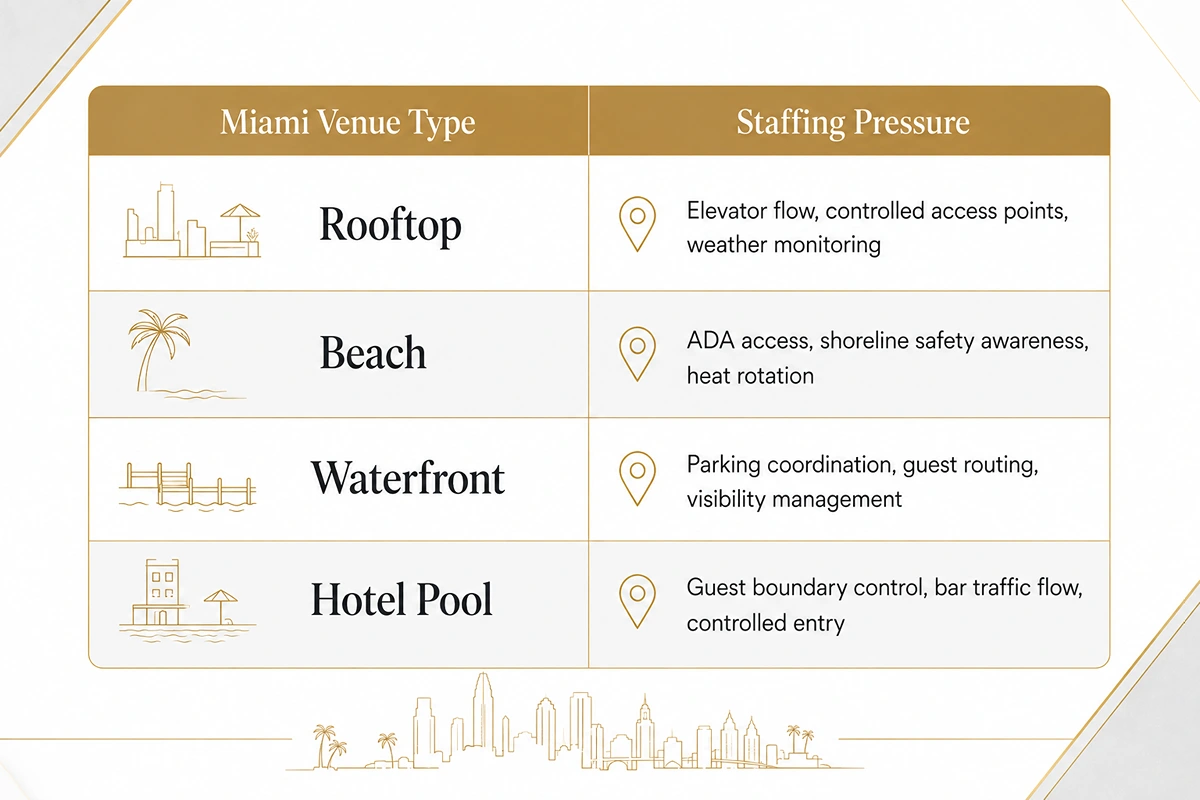
A Miami rooftop event and a Miami beach event may share the same guest count, but the staffing plan should not look the same. Rooftop venues put pressure on elevators, access points, guest entry, weather calls, and bar flow. If the elevator backs up, the issue can look like a guest arrival problem, but it is really a staffing placement problem. Someone has to manage the lobby, someone has to manage the rooftop entry, and a team lead has to know when traffic is stacking between the two.
Beach events create a different problem. Staff may have to manage guest direction across sand, ADA access, water-adjacent areas, heat exposure, and weather updates. Miami-Dade notes that a special event permit is required for events in county-owned park and recreation facilities or beaches, so planners should confirm venue rules before finalizing the staff count.
Waterfront events bring their own pressure points: parking confusion, dimmer evening visibility, rideshare flow, dock-adjacent areas, and guests moving between indoor and outdoor spaces. A generic staffing quote will usually miss those details.
For EventStaff, event staffing Miami should start with the venue shape. A rooftop may need elevator flow coverage. A beach event may need ADA and guest-direction coverage. A waterfront event may need extra crowd management staff near parking, entry, and exits.
Late-Night Miami Events Pull From a Smaller Staff Pool
A Miami event that starts after dinner is pulling from a different staff pool than a daytime outdoor activation. The rate usually changes because late-night work narrows availability. The people who can work an 11 PM to 3 AM rooftop brand party are not the same pool as standard daytime event staffers. Add bilingual coverage, bar-adjacent guest flow, venue protocols, and post-midnight crowd movement, and the staffing search gets tighter.
City of Miami Beach special event guidance says people or groups conducting special events must apply online and submit minimum requirements under the city’s permitting guidelines. That matters for Miami nightlife because many high-profile events use private commercial properties, beach areas, hotel venues, or event spaces where approvals, security coordination, and city-service requirements can affect the operating plan. (City of Miami Beach)
A thin staffing plan at night shows up fast. The entry line gets louder, wristband checks slow down, bar traffic blocks the room, and VIP movement becomes harder to keep discreet.
EventStaff would usually protect the first hour and the last hour. That means placing event staffers at entry, bar-adjacent flow, VIP access, rideshare exits, and any bottleneck between indoor and outdoor areas. For events with alcohol service, connect the staffing plan with bar service staffing early, instead of treating it as a separate last-minute vendor issue.
The Hardest Miami Roles Should Be Booked First
Miami summer staffing gets harder to source when the role is bilingual, outdoors, late-night, or venue-specific. A standard daytime role may be easier to fill. A bilingual night-shift role for a rooftop or beach event is a much narrower search. Waiting until the final weeks often leaves planners with a weaker candidate pool, fewer bilingual staff, and less time to brief people on the venue.
City of Miami special event guidance notes that events may require additional approvals from departments such as Building or Public Works, and the special event process comes first before those extra steps are advised. That is a good reminder for planners: staffing, permits, venue approvals, and city requirements should move together, not in separate, last-minute tracks.
For a safer Miami summer plan, use this rough timing:
- standard event staffers: 4–6 weeks
- bilingual event staff: 6–8 weeks
- night-shift staff: 6–8 weeks
- bilingual night staff: around 8 weeks
- venue-specific coordinators: 6–8 weeks
EventStaff would treat late booking as a risk signal, not only a scheduling issue. If the event is outdoors, bilingual, or late-night, the staffing plan should lock the hardest roles first: team leads, bilingual guest-facing posts, crowd management staff, and anyone responsible for venue-specific movement.
Budget for the Posts That Cannot Go Empty
Miami summer staffing usually gets underbudgeted because planners price the visible staff first. They count the people greeting guests, checking names, managing lines, handing out samples, or directing people across the venue. Then the quote comes back higher because the real staffing plan also has to cover heat rotation, bilingual posts, team leads, crowd management staff, and venue-specific coverage.
A planner may think they are booking 20 event staffers for a rooftop event. The actual plan may require 20 visible staff, plus extra rotation coverage; plus one lead watching access points, plus bilingual staff at check-in and for guest questions. That difference is not padding. It is the part of the plan that keeps visible posts from going empty.
For Miami summer, the budget should be split into five buckets:
- baseline event staffers
- bilingual event staff
- heat rotation coverage
- crowd management staff or team leads
- venue-specific coordinators for rooftop, beach, waterfront, or hotel pool formats
EventStaff would start by asking where the event can break first: heat-exposed check-in, elevator flow, beach access, bilingual guest questions, bar traffic, or late-night exits. Once those pressure points are named, the staff count becomes easier to defend.
Plan Your Miami Staffing Before Costs Escalate
If your event includes outdoor heat, bilingual guests, rooftop access, or late-night timing, your staffing model needs to be built before you request quotes.
The difference between a smooth event and a stressed one often comes down to staff planning done early.
👉 Talk to EventStaff to:
- Build a staffing plan tailored to your venue
- Identify hidden cost drivers early
- Lock in the right team before availability tightens
Get your Miami event staffing plan reviewed before you finalize your budget.
Ready to elevate your next event?
Join thousands of event planners who trust EventStaff.com for reliable, professional staffing solutions.
Trusted by event professionals nationwide
1k+
Events Staffed
2 million+
Guests Served
97%
Positive reviews