

Why Product Demonstration Marketing Fails at Events
Executive Summary
Most product demonstration marketing campaigns fail because the demo feels like a scripted sales pitch instead of a real interaction. Event visitors decide within seconds whether they care, and most product demonstrator teams lose them by overexplaining features, dragging the live product demo too long, or forgetting lead capture entirely. The best product demonstration marketing campaigns feel quick, conversational, and interactive which is exactly why they convert better.
Why Scripted Product Demonstrator Teams Lose Attention Fast
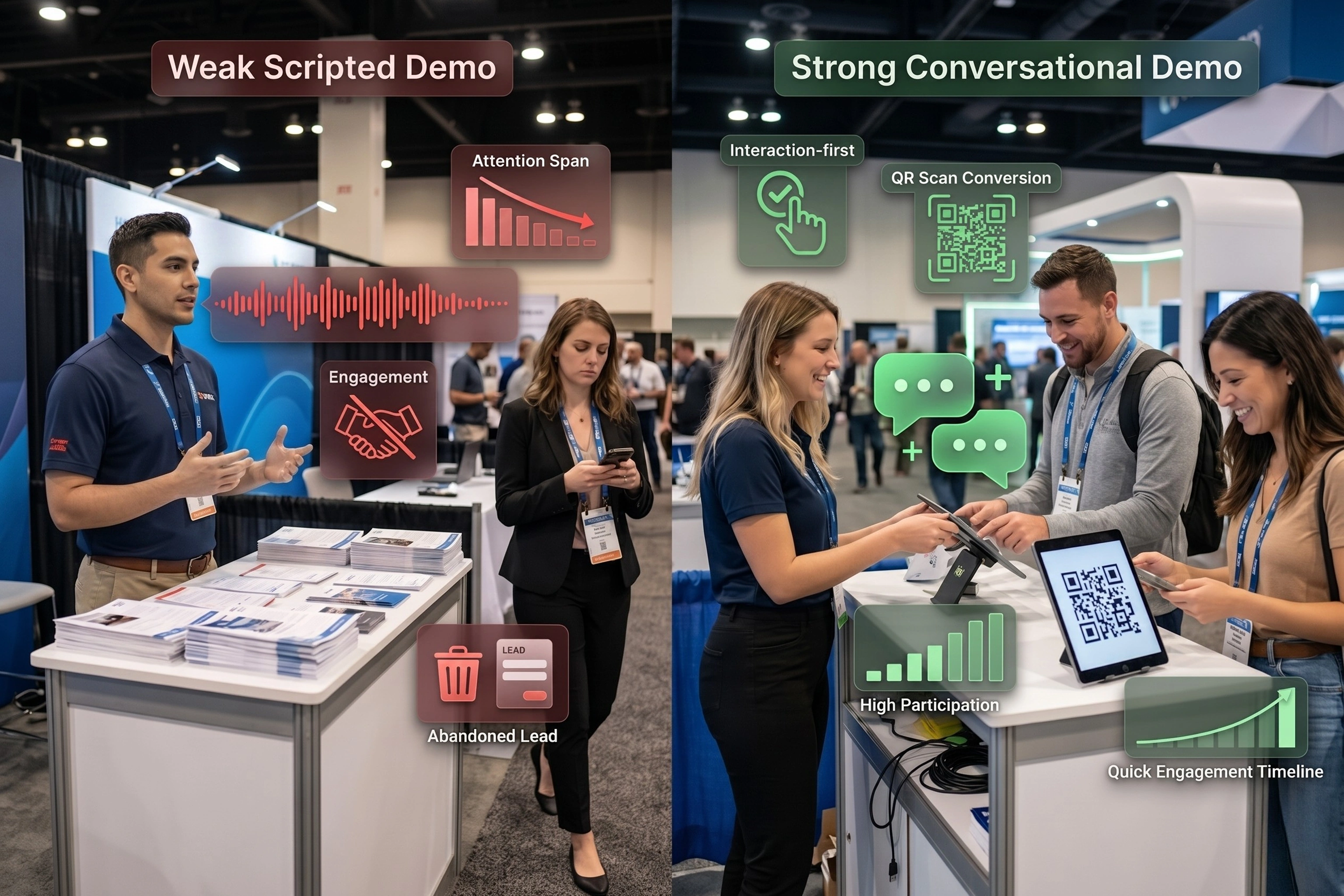
Most people do not walk into an event hoping to hear a rehearsed pitch.
They want curiosity.
They want interaction.
They want something useful immediately.
That is where most product demonstration marketing campaigns fail.
A typical product demonstrator starts talking before understanding the visitor. The result feels transactional from the first sentence.
At busy expos, retail activations, and trade shows, visitors are constantly being approached. If your live product demo starts with features instead of relevance, the conversation is already over.
Booth's attention spans are measured in seconds, not minutes. Studies show attendees decide whether to stay within the first 10–15 seconds. That means your product demo staff either creates instant curiosity or loses the interaction entirely.
The best product demonstration marketing campaigns begin with engagement, not explanation.
Instead of:
"Let me show you our newest product."
Strong product demonstrator teams ask:
"What problem are you trying to solve right now?"
That single shift immediately changes the interaction.
CEO Insight
Most brands think demos fail because of weak products. They usually fail because the interaction feels unnatural. The moment a visitor feels trapped in a pitch instead of invited into a conversation, the sale is already slipping away.-DanielMeursing
Why Product Demonstrator Teams That Recite Features Kill Engagement
One of the biggest mistakes in product demonstration marketing is assuming product knowledge automatically creates conversions.
It does not.
Visitors rarely remember specifications.
They remember how the interaction felt.
Weak product demonstrator teams overwhelm visitors with:
- technical details
- memorized scripts
- long explanations
Strong live product demo teams simplify everything.
They:
- Ask questions first
- personalize the interaction
- Focus on one key benefit
- adapt based on visitor reactions
Face-to-face engagement works because prospects pick up on nonverbal cues and can ask related questions in real time. That conversational approach directly affects conversions.
The highest-performing product demo staff understand that attention is earned, not demanded.
Most visitors can instantly tell whether someone is talking to them or at them.
That is why conversational product demonstration marketing consistently outperforms scripted presentations.
Why Long Live Product Demo Scripts Lose Sales Fast
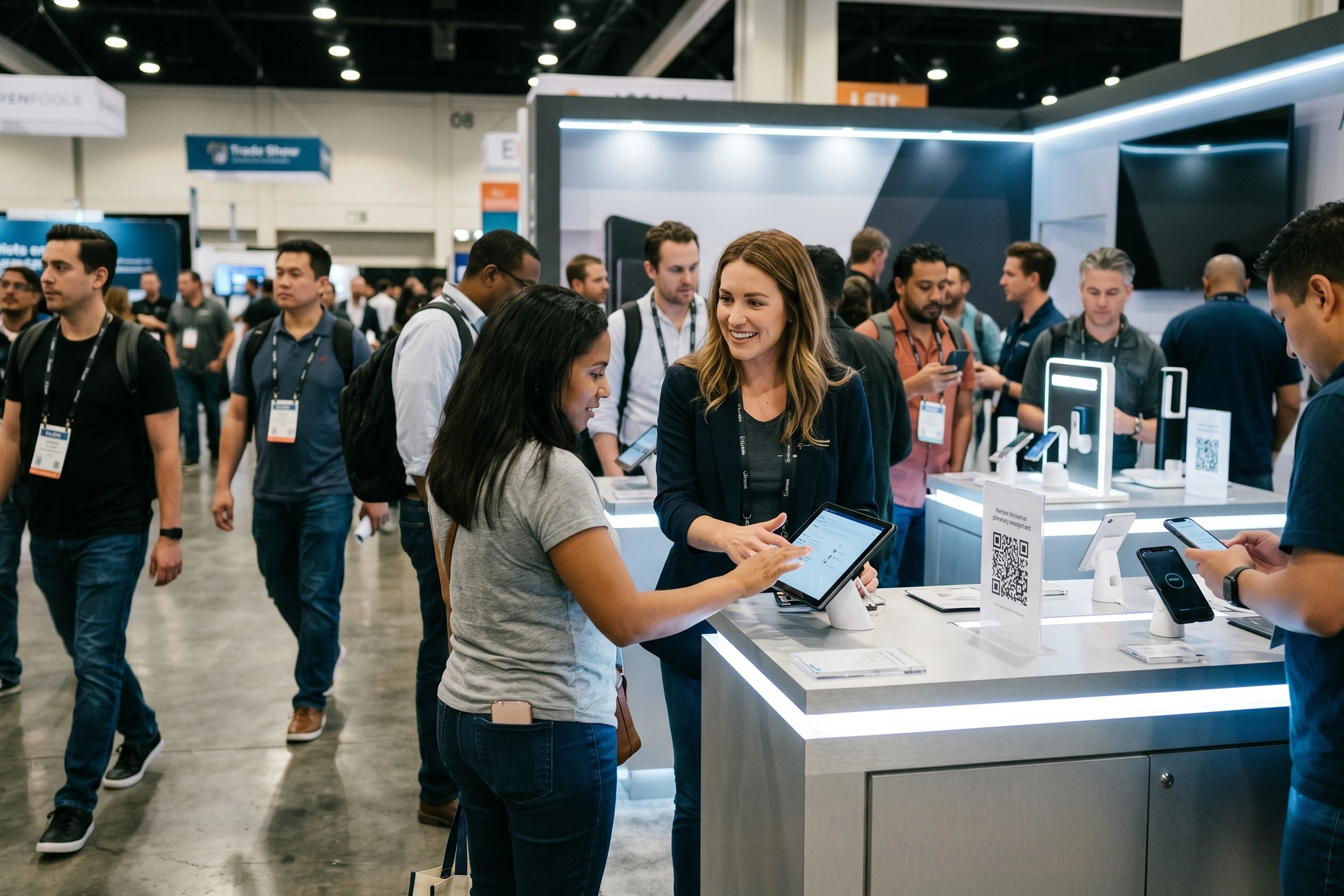
Most event attendees give your booth less than two minutes.
Yet many product demonstration marketing campaigns still train staff using five-minute walkthroughs.
That destroys momentum.
A strong product demonstrator should be able to:
- explain value quickly
- create interaction immediately
- Keep the live product demo moving naturally
The best live product demo experiences feel lightweight and interactive.
The worst feel like presentations people are trying to escape from.
This becomes obvious at crowded trade shows where visitors move rapidly between booths. If your product demo staff takes too long to reach the value point, people physically keep walking.
One operational rule improves almost every product demonstration marketing campaign instantly:
Interaction should happen before explanation.
Touch first.
Try first.
Experience first.
Then explain.
That is exactly why successful in-store product demonstration campaigns focus on participation early.
The Product Demonstration Marketing Mistake Brands Notice Too Late
Here is the hidden issue most brands miss:
The demo succeeds.
The conversion fails.
This happens constantly in product demonstration marketing.
Visitors:
- enjoy the interaction
- stay engaged
- ask questions
- walk away
And nothing gets captured.
No scan.
No email.
No trial signup.
No follow-up path.
Weak product demo, staff think engagement alone is the goal.
Strong in-store product demonstration teams understand the interaction is only the beginning.
A successful live product demo should naturally transition into:
- QR scans
- sign-ups
- appointment bookings
- giveaways tied to registration
- email capture
Participation creates memory. Research shows 91% of attendees are more likely to purchase from brands following event activations, and 87% say discovering new products is key to valuable in-person experiences. Without a lead capture structure, even strong product demonstration marketing campaigns struggle to generate measurable ROI.
This is why experienced product demonstrator teams train specifically on transition timing, not just demo delivery.
Real Case: SurveyMonkey's Deminar Strategy
SurveyMonkey combined a webinar format with live product demos and offered free Fitbits to incentivize signups. The company discovered that clear registration pages explaining what attendees would learn, combined with face-to-face interaction between sales teams and prospects, significantly boosted attendance and demo engagement. The incentive + conversational demo approach drove higher-quality leads than scripted presentations alone.
Why Product Demonstration Marketing Needs Conversation Training
Most brands overtrain for product information and undertrain for communication.
That is backwards.
The average product demonstrator already understands the product. The real challenge is knowing how to:
- read body language
- adapt naturally
- simplify messaging
- avoid robotic delivery
That is what improves product demonstration marketing performance.
Strong product demo staff know when to:
- stop talking
- ask a better question
- pivot the conversation
- shorten the explanation
Weak demos feel rehearsed.
Strong live product demo interactions feel human.
Because visitors do not remember perfect scripts.
They remember whether the interaction felt natural.
Why In-Store Product Demonstration Campaigns Hold Attention Longer
Retail environments destroy attention spans quickly.
Customers are distracted by:
- phones
- checkout lines
- conversations
- competing displays
- movement
That is why strong in-store product demonstration campaigns reduce friction immediately.
Visitors should be able to:
- try something instantly
- interact without pressure
- understand value quickly
The strongest product demonstration marketing campaigns make participation feel effortless.
If the customer has to wait too long for context, they leave.
That is why many successful live product demo campaigns now focus on:
- fast sampling
- side-by-side comparisons
- gamified interactions
- touch-first demonstrations
Why the Best Product Demonstration Marketing Feels Natural
The highest-converting product demonstration marketing campaigns rarely feel like marketing at all.
That is the secret.
Strong live product demo experiences feel:
- conversational
- quick
- interactive
- useful
Weak demos feel:
- scripted
- slow
- sales-heavy
Attendees want experiences, not presentations. Modern visitors are looking for meaningful encounters, interactivity, and added value. They do not want feature lectures. They want relevance immediately.
That is why successful product demo staff create interaction first and explanation second.
Because when the experience feels natural, the conversion feels natural too.
What Great Product Demo Staff Briefings Actually Look Like
Most event briefings overload teams with unnecessary product details.
That is a mistake.
A good product demo staff briefing should focus on:
- opening questions
- objection handling
- engagement flow
- lead capture timing
- demo pacing
One of the best structures for product demonstration marketing preparation is the 45-minute split briefing:
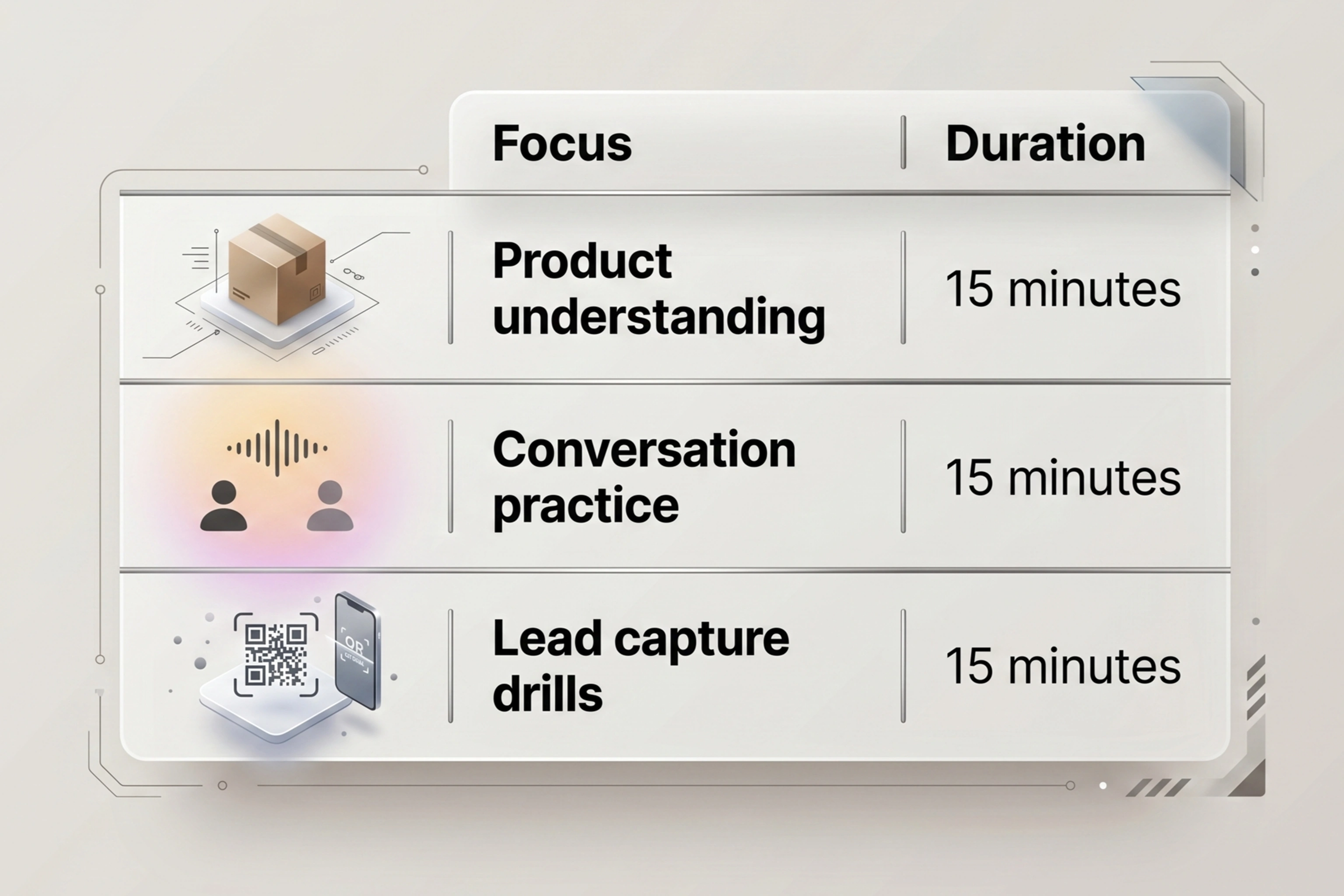
This structure helps product demonstrator teams feel flexible instead of scripted.
Strong live product demo campaigns are built around adaptability, not memorization.
Final Take on Product Demonstration Marketing
Most product demonstration marketing failures come from one core issue:
Brands talk too much and engage too little.
Visitors do not want feature lectures.
They want relevance immediately.
If your product demonstrator teams:
- Ask questions first
- shorten demo flow
- prioritize interaction
- capture data naturally
- adapt conversations quickly
Your conversions improve fast.
Because the best live product demo campaigns never feel like presentations.
They feel like experiences people actually want to join.
Ready to Deploy Product Demo Teams That Convert?
Event Staff specializes in product demonstration marketing teams trained to turn attention into interaction, and interaction into measurable conversions. Contact us today for demo staffing.
We build activations where your product demonstrates value, not features.
Ready to elevate your next event?
Join thousands of event planners who trust EventStaff.com for reliable, professional staffing solutions.
Trusted by event professionals nationwide
1k+
Events Staffed
2 million+
Guests Served
97%
Positive reviews