

Visitor management matters inside Midtown corporate events because guests can arrive at the correct venue and still lose time before the next session. They may check in at the lobby, then pause near an elevator bank, follow the wrong ballroom sign, miss a breakout corridor, or return to registration because the sponsor suite is on another floor.
That confusion affects more than guest comfort. In Midtown venues, corporate conferences often run on tight schedules with executives, sponsors, speakers, buyers, press, and internal teams moving through the same building. When guests cannot find the next room quickly, the agenda begins losing minutes that are hard to recover.
CEO Excerpt
“Corporate events depend on movement that feels easy to the guest. A strong agenda can still lose energy when attendees spend session breaks looking for rooms or asking the same directions. The right staff placement helps guests move with confidence and lets the host team stay focused on the people they invited.” - Daniel Meursing, CEO, Eventstaff
Why Midtown Conference Guests Lose Time Inside the Right Building
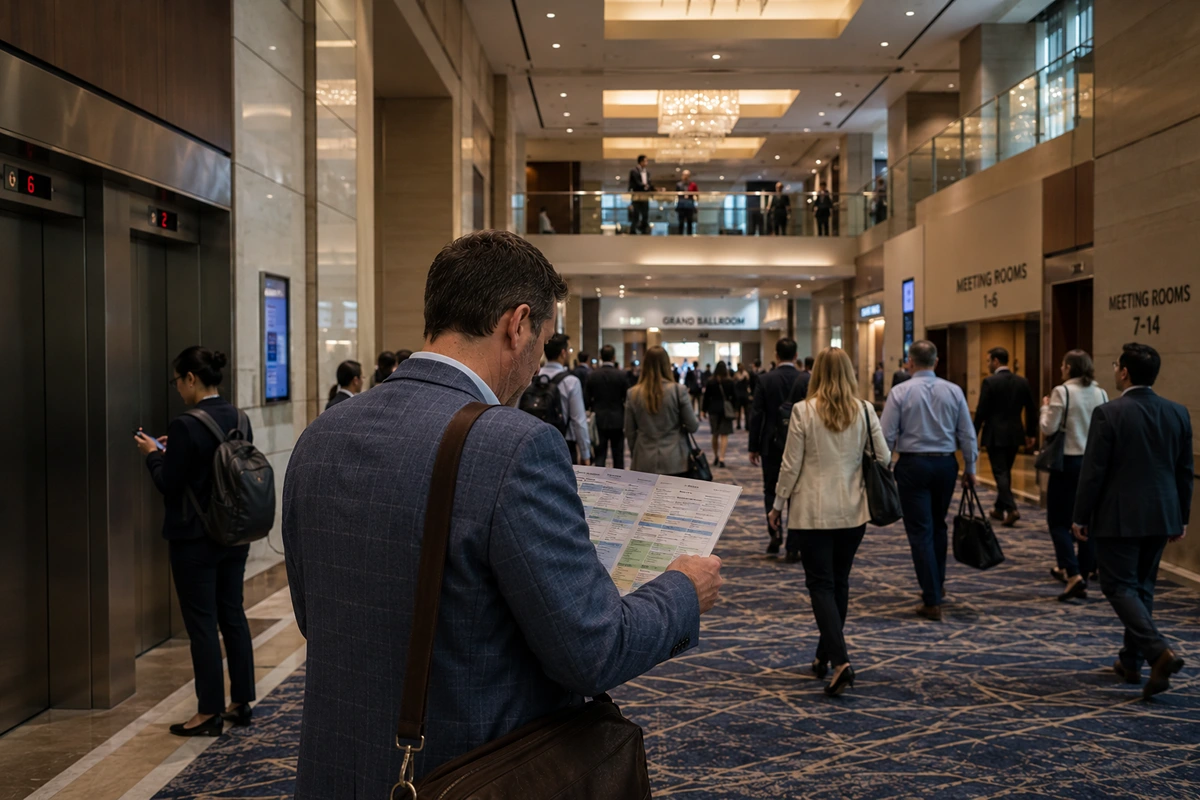
Midtown is built for movement, but that movement does not always feel clear once guests enter a conference venue. A corporate attendee may arrive from Grand Central, Penn Station, Times Square subway lines, Bryant Park, Rockefeller Center, a nearby office tower, or a hotel room upstairs. They may know the address perfectly, then still struggle to understand which elevator, ballroom level, or meeting-room corridor applies to their agenda.
This is common in hotel-based conferences because the building is serving several audiences at once. Conference attendees are moving alongside tourists with luggage, business travelers checking out, restaurant guests, hotel staff, venue teams, speakers, and private-event guests. A lobby can look active and well-run while still leaving conference attendees unsure about the next step.
NYC Tourism describes Midtown as the area many visitors picture when they think of Manhattan, with landmarks, hotels, restaurants, offices, theater traffic, shopping, and major transportation connections shaping the district. That density is exactly why corporate event planners need a staff plan that follows how people actually move inside Midtown buildings.
The guest’s most frustrating moment usually happens after arrival. They have already entered the venue, found the registration desk, and received a badge or agenda. Then they look up and realize the keynote, breakout, sponsor meeting, and networking lounge are all in different places. That is where conference staff become essential.
How Visitor Management Protects Corporate Event Movement
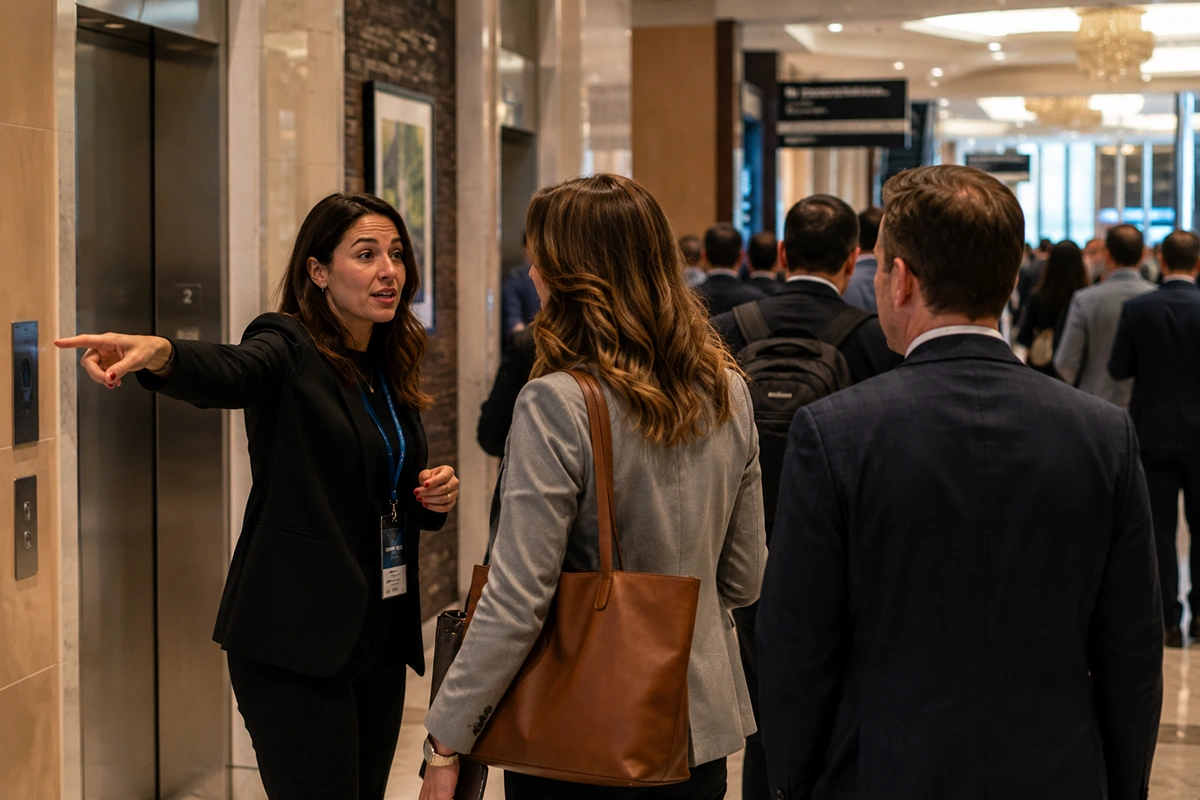
Visitor management protects corporate event movement by placing trained staff at the points where guests make decisions. That may be the lobby, a hallway turn, an escalator landing, an elevator bank, a ballroom foyer, or the corridor leading to breakout rooms. The best staff positions are often between formal checkpoints, because that is where guests hesitate.
For corporate events, this support protects the business purpose of the day. Executives need to reach private meetings without being stopped repeatedly. Speakers need to find green rooms, stages, or prep areas quickly. Sponsors need guests directed toward hosted suites, demos, and branded meeting spaces. Attendees need to move from keynotes to breakouts without crowding the registration desk for directions.
Strong visitor management also reduces pressure on the internal event team. Company staff should be available for clients, senior leaders, sponsors, and speakers, instead of spending the entire transition window pointing people toward elevators. Conference staff handle movement questions so the host team can stay focused on relationships and agenda priorities.
The value is especially clear during session changes. A five-minute delay may not sound serious, but it can affect a panel start, a hosted buyer appointment, a sponsor meeting, or an executive introduction. Staff at decision points help guests make the right move before they lose time in the wrong hallway.
Where Convention Logistics Breaks Down Between Rooms
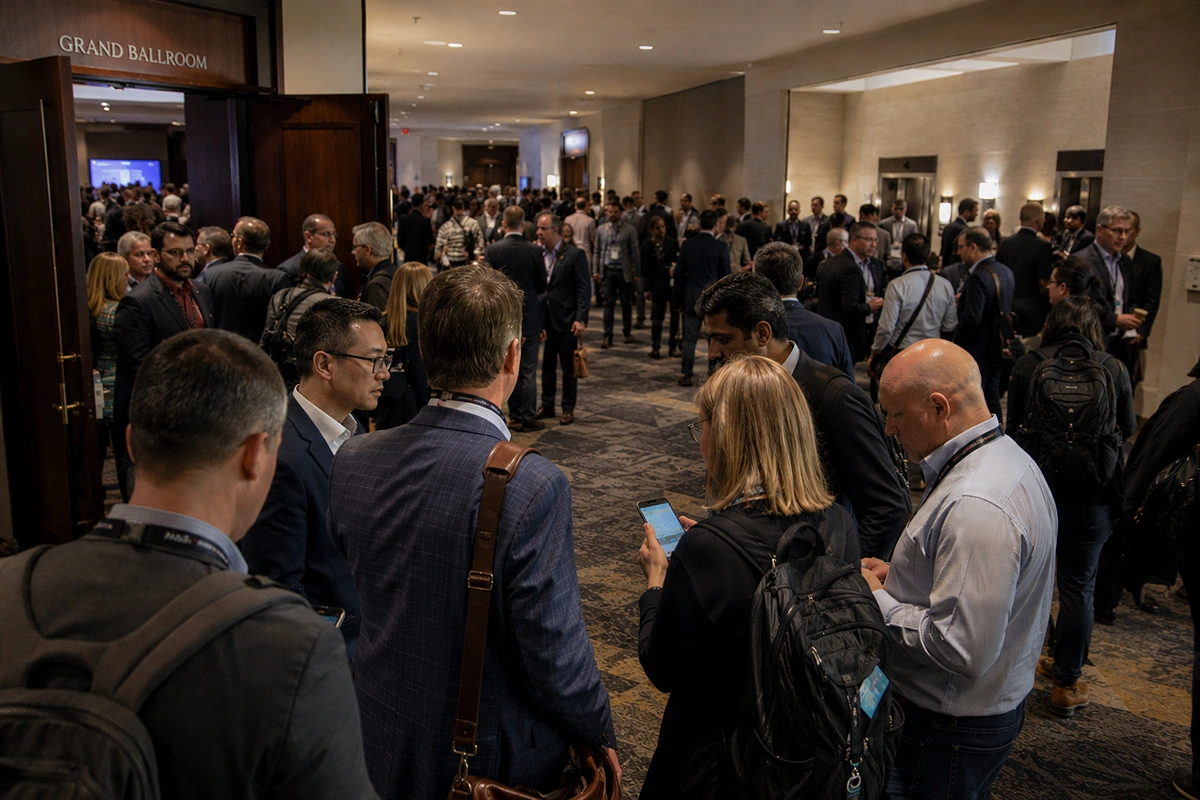
Convention logistics often breaks down during the movement between planned moments. The agenda may be clear on paper, but guests still need to translate room names, floor numbers, elevator routes, and venue signs into real movement. In a Midtown hotel or corporate venue, that translation can slow quickly when several groups are moving at once.
Lobby questions overload registration.
Guests return to check-in for room directions, restroom questions, elevator guidance, sponsor meetings, and speaker locations when no one is placed between the lobby and the next decision point. That pulls registration staff away from arrivals and makes the lobby feel less controlled during busy session transitions. Conference staff prevent that by answering movement questions before they collect at the desk.
Elevators and escalators become decision points.
Midtown conference venues often use multiple floors, especially inside large hotels and office-tower meeting spaces. A guest who chooses the wrong bank or misses the correct escalator route can lose several minutes before realizing the room path has changed. Staff placed near vertical movement points keep convention logistics clearer when guests move from general sessions to smaller rooms.
Sponsor and VIP movement needs a cleaner handoff.
Corporate events often include private sponsor rooms, executive meetings, press moments, hosted buyer appointments, and speaker prep areas. Those routes may not be obvious to regular attendees, and they often require discretion. Conference staff help route high-value guests without forcing them to ask several people for the same direction.

Why Midtown Corporate Venues Need Staff Beyond Signage
Signage helps, but Midtown conference venues often need live staff because the environment changes throughout the day. A morning keynote may send guests toward a ballroom. A mid-morning breakout may split them across smaller rooms. Lunch may pull people into a prefunction area, restaurant level, or sponsor lounge. Afternoon sessions may send executives, buyers, and speakers into separate meeting tracks.
New York Hilton Midtown shows the scale of this challenge in one venue. Its official events page lists more than 150,000 square feet of meeting space across two floors, 49 meeting rooms, several ballrooms, and a largest ballroom setup that can host up to 3,000 guests. In a venue of that size, guest direction cannot rely only on printed room names.
Times Square adds another layer. New York Marriott Marquis lists 46 event rooms, more than 100,000 square feet of total event space, 40 breakout rooms, and a largest-space capacity of 2,800. That kind of Midtown conference setting can host large programs where guests are moving between ballrooms, breakout rooms, terraces, meeting spaces, and sponsor areas across the same property.
The local operating issue is that Midtown guests often arrive already compressed by the city around them. Some have come from subway platforms, some from hotel elevators, some from nearby offices, some from rideshares stuck near Times Square, and some from a previous meeting across town. Once inside, they need the venue path to feel simple. Conference staff make that possible by giving guests live confirmation at the exact points where signs are easy to miss.
How Eventstaff Supports Midtown Corporate Events With the Right Staff
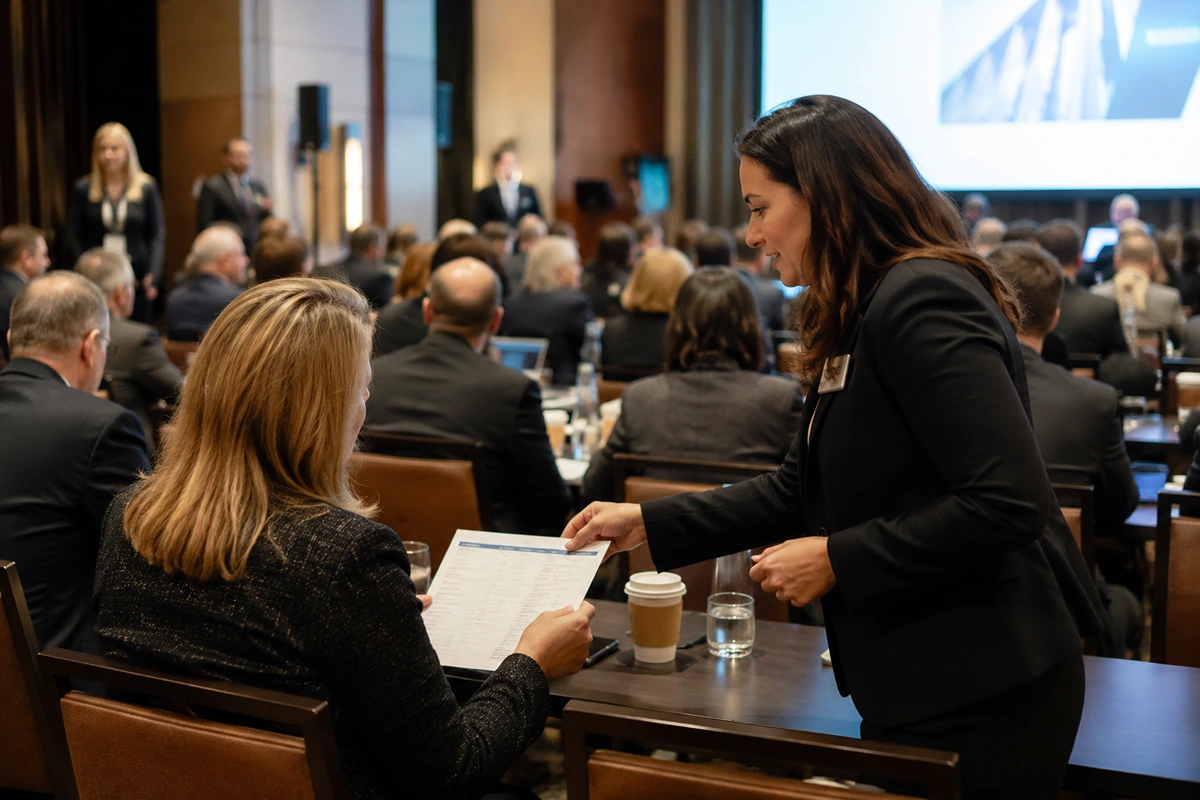
At Eventstaff, we provide trained conference staff who help guests move with confidence through Midtown corporate event venues. Our staff can be placed in lobbies, near registration, beside elevator banks, at escalator landings, outside breakout corridors, near sponsor rooms, and around ballroom foyers. That placement helps guests find the next room without sending every question back to the event desk.
For corporate events, our support can extend across the full front-of-house experience. Conference staff guide session movement and answer program questions. Check-in staff keep registration and arrival questions organized. Hostesses support VIP arrivals, executive guests, and polished first impressions. Greeters or ushers can help with room entry, lobby direction, and session movement where the event footprint requires it.
This coordinated approach helps the corporate team stay focused on the event’s business value. Internal staff can spend more time with clients, speakers, sponsors, and leadership instead of repeatedly solving hallway confusion. Guests move with fewer interruptions, speakers reach the right rooms faster, and sponsor areas receive better-directed traffic.
Midtown corporate events work best when staffing follows the guest path from arrival through the last session change. Our role is to help planners see where guests will pause, where questions will collect, and where a live person can prevent confusion. That is how visitor management becomes part of a stronger corporate event experience.
Bottom Line
Midtown corporate events create real movement pressure inside the building. Guests may arrive from Grand Central, Penn Station, Times Square, nearby offices, hotel rooms, or rideshares, then still need help finding breakout rooms, sponsor spaces, ballrooms, elevators, and meeting floors. Strong visitor management keeps that movement clear before confusion affects the agenda.
Eventstaff helps corporate teams protect the guest experience with trained conference staff and related support roles for check-in, VIP arrivals, room entry, and session movement. When convention logistics is planned around how guests actually move through Midtown venues, the event feels more controlled, more professional, and easier to navigate.
Ready to elevate your next event?
Join thousands of event planners who trust EventStaff.com for reliable, professional staffing solutions.
Trusted by event professionals nationwide
1k+
Events Staffed
2 million+
Guests Served
97%
Positive reviews


.webp)
.jpg)