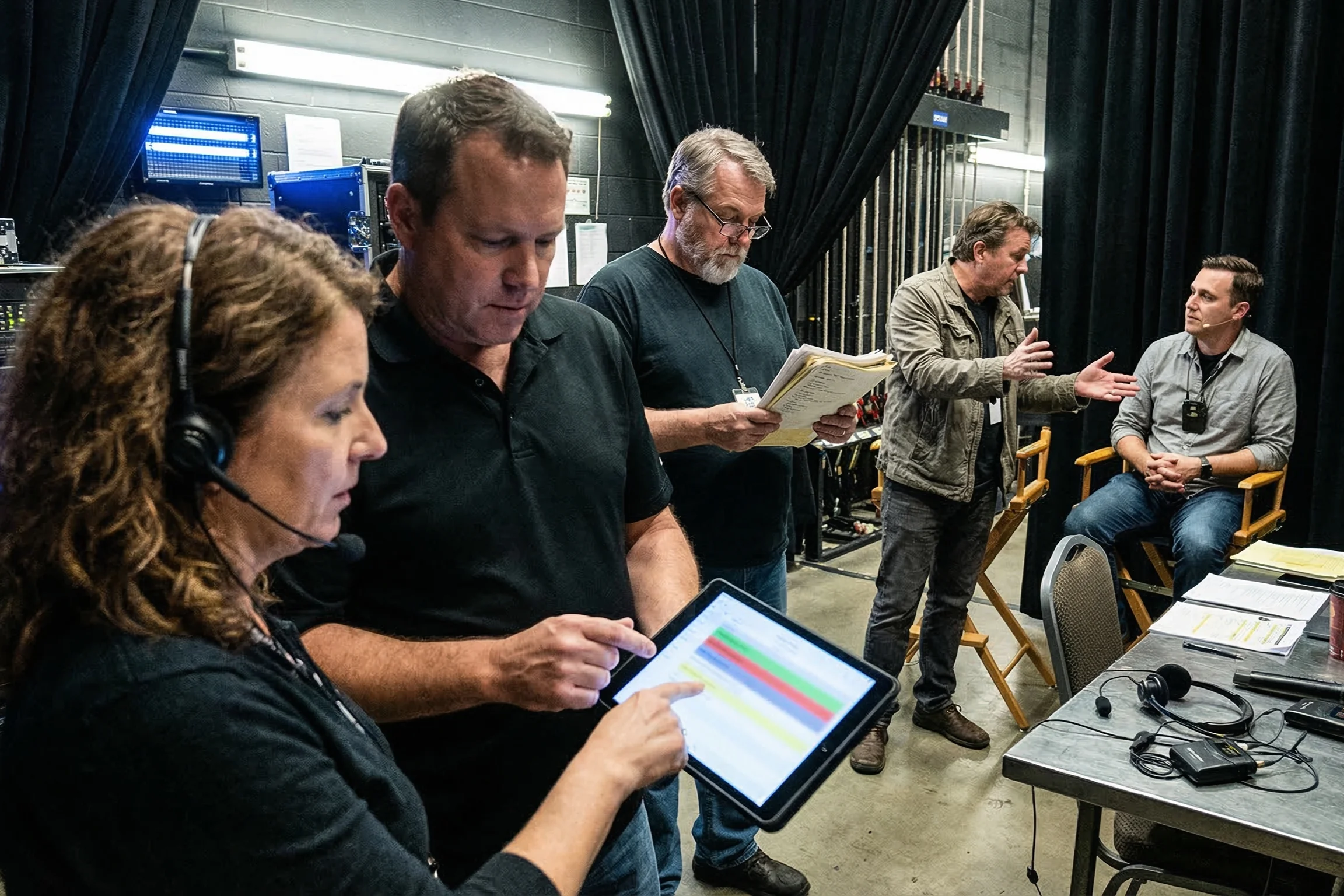

If you are hiring event staffing in Las Vegas for a day that will run hot from the first arrival wave to the last late-night reset, the decision is operational. You are buying a partner who can keep flow predictable, keep guest-facing standards consistent, and absorb change without visible scrambling.
Las Vegas remains one of the most active event markets in the U.S. The Las Vegas Convention and Visitors Authority reported 38.5 million visitors in 2025, which helps explain why “high-volume days” are not occasional here. They are part of the baseline environment.
Below is a ranked shortlist of five agencies for event staffing in Las Vegas. Event Staff is #1 and Premier Staff is #2 by design. The remaining three are credible alternatives with verifiable Las Vegas coverage.
CEO Excerpt
High-volume days in Las Vegas reward operating discipline.Strong staffing partners separate throughput from exceptions, staff supervisors to match the footprint, and treat shift handoffs as a controlled process.When you plan for overlapping programs and distributed arrivals, the day feels intentional even when the building is full. - CEO, Event Staff
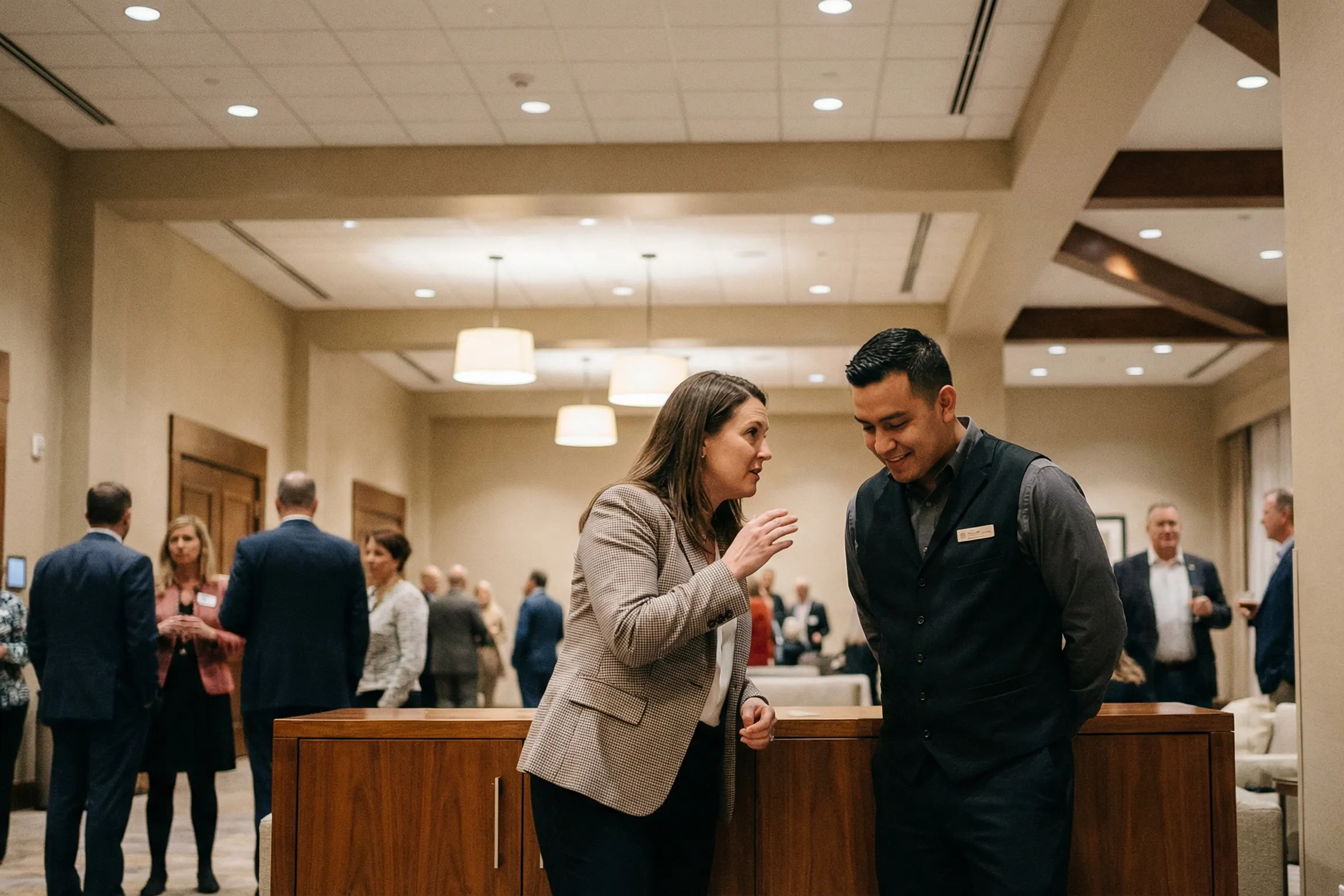
What makes high-volume days different in Las Vegas
High-volume days in Las Vegas are not just “more people.” The operating conditions change.
- Footprints behave like campuses. The Las Vegas Convention Center is described as a 4.6 million-square-foot facility with approximately 2.9 million square feet of exhibit space, plus 225 meeting rooms, and it highlights two grand lobby and registration areas. That means arrivals and questions are distributed, and staffing has to be distributed too, not concentrated at one desk. Las Vegas Convention Center
- Multiple programs move at once. The same LVCC page notes the campus can support simultaneous set-up, break-down, and exhibiting of multiple events. On high-volume days, that shows up as competing priorities and constant micro-changes to routes, doors, and timing. Las Vegas Convention Center.
- Schedules stretch late, then restart early. Las Vegas programs often stack receptions, sponsor moments, and after-hours commitments. Fatigue becomes a real performance risk unless the staffing plan treats handoffs, breaks, and supervision as a system, not an afterthought.
How we ranked agencies for event staffing in Las Vegas
We ranked agencies on what keeps high-volume days controlled.
- Surge handling at arrivals and registration. We looked for partners who can describe how they split throughput work from exception handling so one does not contaminate the other. On high-volume days, “one slow point” can quickly become a building-wide mood problem.
- Supervisor coverage and decision rights. We prioritized partners that can explain who owns which zone, what decisions leads can make immediately, and how corrections stay discreet in guest view. In wide footprints, centralized decision-making creates lag and visible confusion.
- Multi-shift consistency. We looked for signals that the agency treats shift handoff as a process, including what gets documented and how “what changed” is transferred. High-volume days usually fail at the handoff, not the start.
- Role separation across the core guest journey. Check-in, information, session doors, wayfinding, crowd control, and production support all behave differently under volume. Strong partners separate responsibilities rather than hoping staff “figure it out.”
- Venue-ready mindset. For LVCC-scale environments, we favored partners that clearly position themselves around conference and convention execution rather than general staffing language. Las Vegas Convention Center.
Top 5 agencies for event staffing in Las Vegas for high-volume days
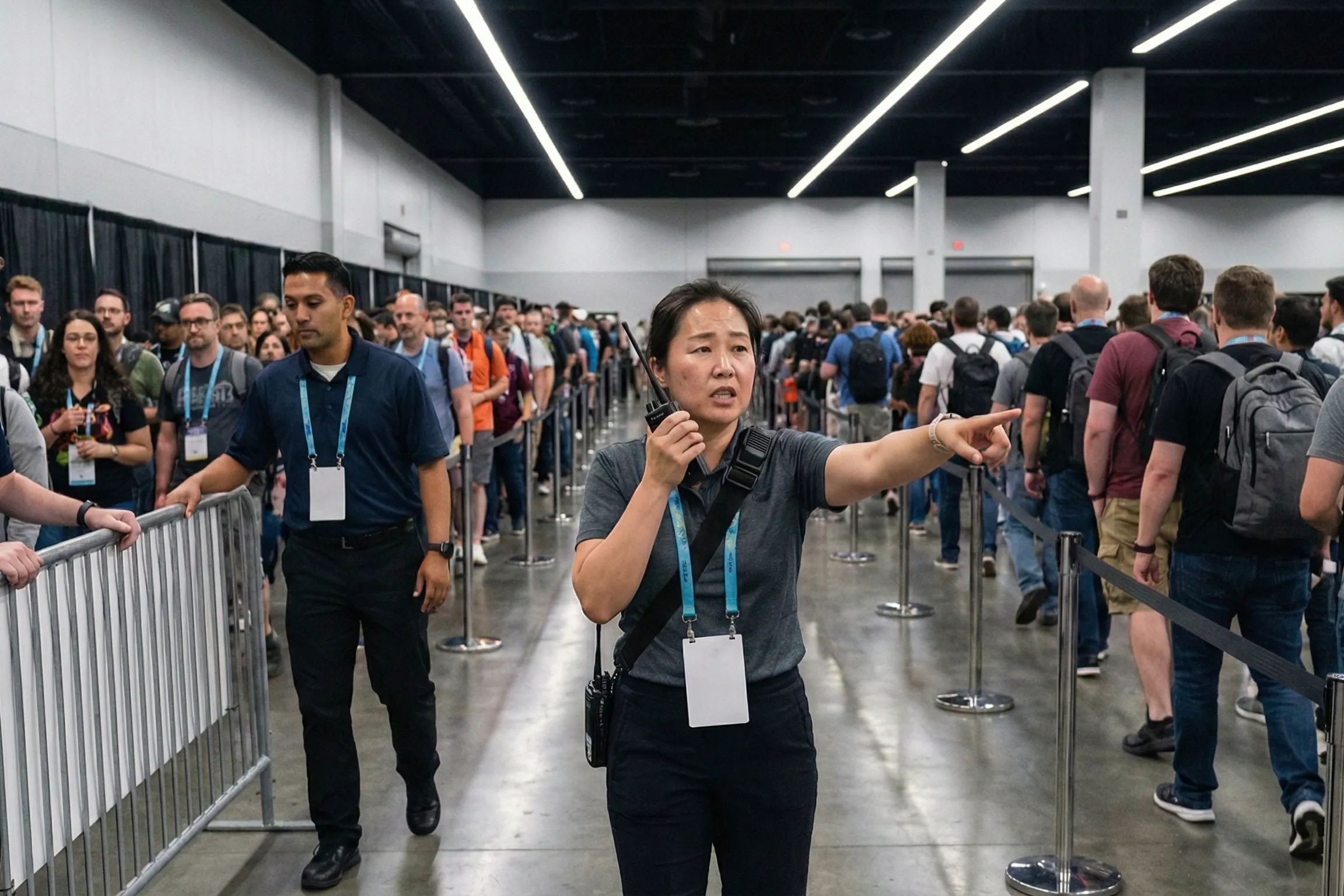
1) Event Staff
Best for: high-volume days where you need tight operational control across registration, session movement, information points, and sponsor-facing zones.
Why they made the list
- Event Staff positions “Large Events in Las Vegas” around keeping big programs controlled, including trade expos, corporate events, festivals, and stadium-scale environments. That category fit matters when your risk is volume, not just coverage.
- Their Las Vegas conference staffing positioning is explicitly built around controlling programs across resort towers, ballrooms, and expo halls. That is a realistic Las Vegas constraint, and it is directly relevant to high-volume days where movement between zones drives friction.
- They publish Las Vegas-specific operational thinking around backup coverage for the Strip and multi-venue complexity. You do not need the philosophy, but it is useful as a signal that they plan for disruption as part of the operating model.
Where they tend to fit in Las Vegas
Event Staff is a strong first call when you want a staffing partner that treats the guest-facing layer like a system. On high-volume days, that usually means clean role separation at arrivals, consistent answers at information points, and supervisors who correct issues quietly before they become visible.
How to evaluate fast
- Ask how they separate “throughput” from “exceptions” at check-in, including what happens when exceptions spike. Then ask what their first adjustment is when the first bottleneck forms.
- Ask what their shift handoff standard is, including how notes on VIP routes, session changes, and repeated issues are documented. Then ask who owns that handoff on-site.
- Ask how they staff information points so staff can resolve common questions quickly without sending guests back into the flow repeatedly. You want a briefed knowledge standard, not improvisation.
Good fit if: your day has multiple simultaneous touchpoints and volume surges, and you want controlled execution.
Not ideal if: you need an agency to own creative development or scenic production end-to-end.
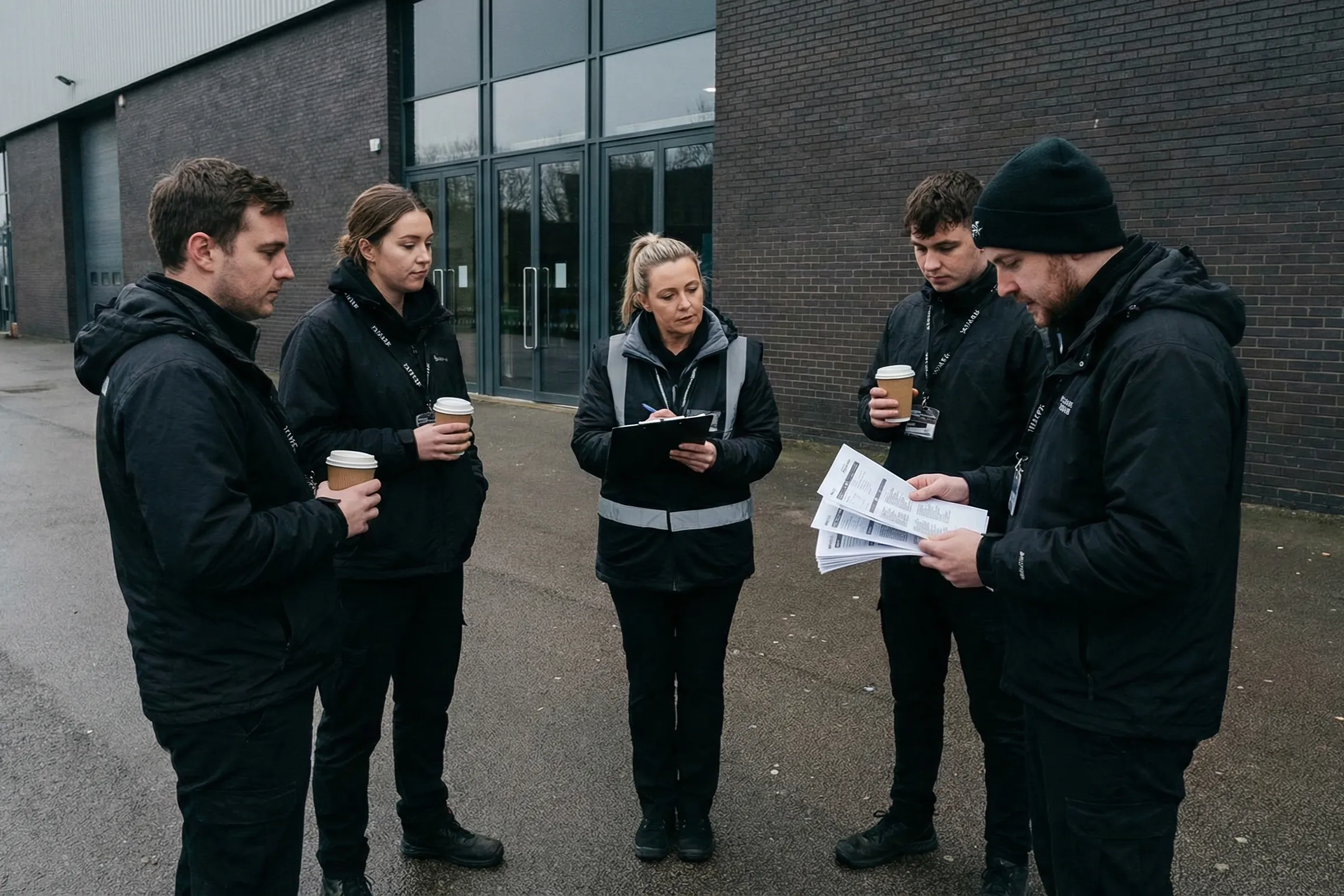
2) Premier Staff
Best for: high-volume days where guest perception, front-of-house polish, and calm control under pressure are the priority.
Why they made the list
- Their Las Vegas positioning clearly supports front-of-house roles that protect the most visible moments of the day. On high-volume days, that matters because guests judge the event by what they see at entrances, lobbies, and primary corridors.
- Their overall Las Vegas coverage supports programs that need multiple guest-facing touchpoints. For peak periods, that flexibility helps keep the day feeling controlled rather than reactive.
Where they tend to fit in Las Vegas
Premier Staff fits when the event needs to look premium even during peak waves. On high-volume days, you want consistent posture at entry points, steady guest language, and a supervisor layer that corrects drift discreetly.
How to evaluate fast
- Ask how they structure front-of-house coverage when arrivals hit in waves across more than one corridor or lobby. Then ask how exceptions are handled so the main flow stays clean.
- Ask how they reinforce tone and language when staff are answering the same questions for hours. Then ask what “correction” looks like on-site without disrupting guest perception.
- Ask how they handle timing changes that affect guest movement. Then ask who owns the real-time coordination so the floor does not look confused.
Good fit if: guest perception and visible control are headline requirements.
Not ideal if: your primary need is a highly technical build team.
Links: Premier Staff Las Vegas
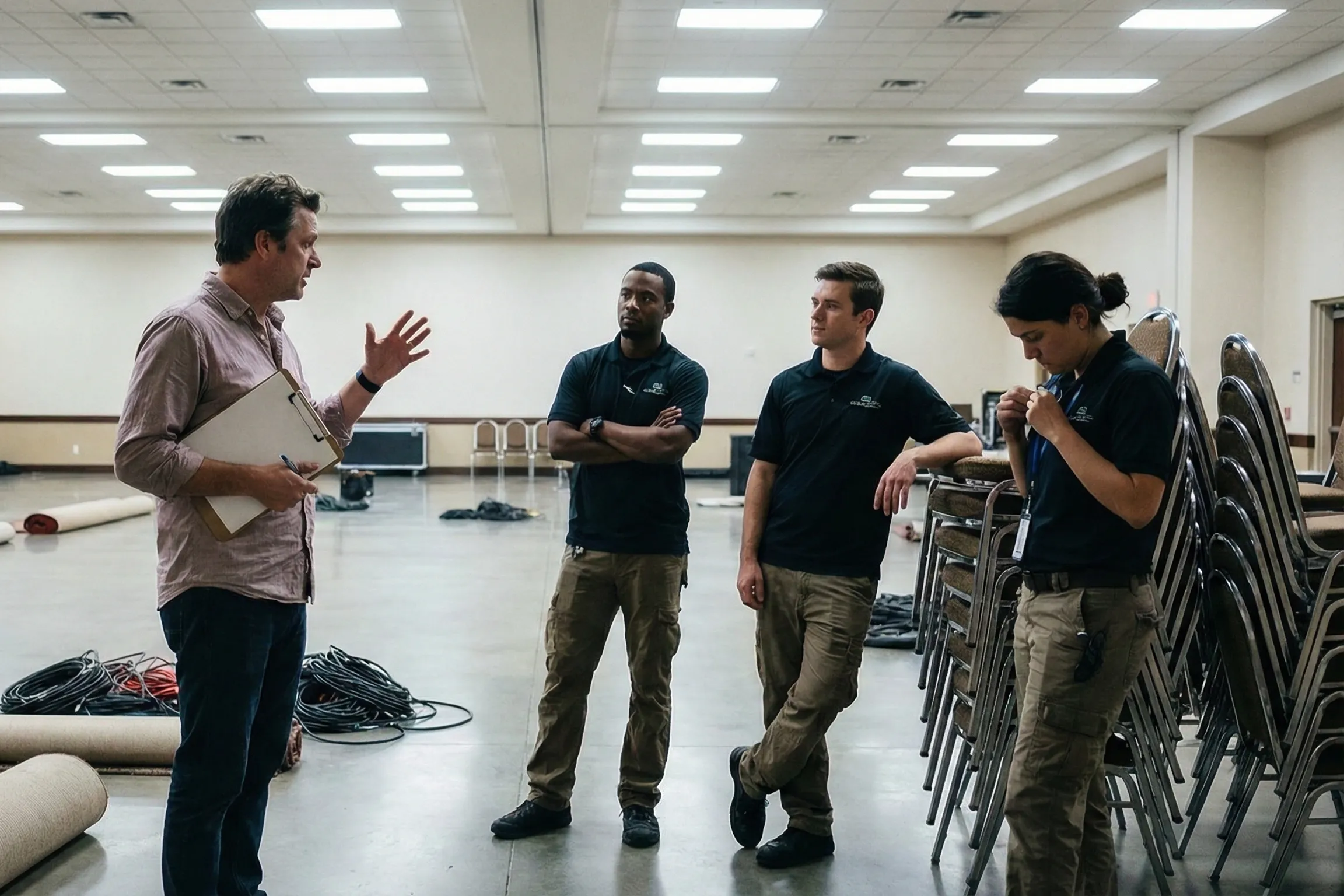
3) ATN Event Staffing
Best for: conference and convention-heavy programs where staffing spans registration, event support, and sponsor-facing activation zones.
Why they made the list
- Their Las Vegas coverage is clearly positioned for conference and convention environments. That matters on high-volume days because the staffing plan usually includes both attendee operations and sponsor commitments.
- Their service mix supports the reality of Las Vegas footprints where multiple priorities run at once. On peak days, you want a partner who understands how to keep sponsor areas staffed without sacrificing arrivals and session flow.
Where they tend to fit in Las Vegas
ATN fits when your program has a heavy registration window plus ongoing floor support demands. High-volume days expose whether an agency can hold multiple priorities without starving one zone to fix another.
How to evaluate fast
- Ask how they structure registration so throughput work stays separate from issue resolution. Then ask what happens when the exception load spikes.
- Ask how they keep sponsor and activation areas staffed during peak session transitions. Then ask what triggers redeploy and who approves it.
- Ask how they brief staff when the role includes brand-facing interaction, not just guest direction. Then ask how supervisors reinforce consistency mid-shift.
Good fit if: your day blends attendee operations and sponsor obligations across a convention footprint.
Not ideal if: you only need a small, single-zone coverage plan.
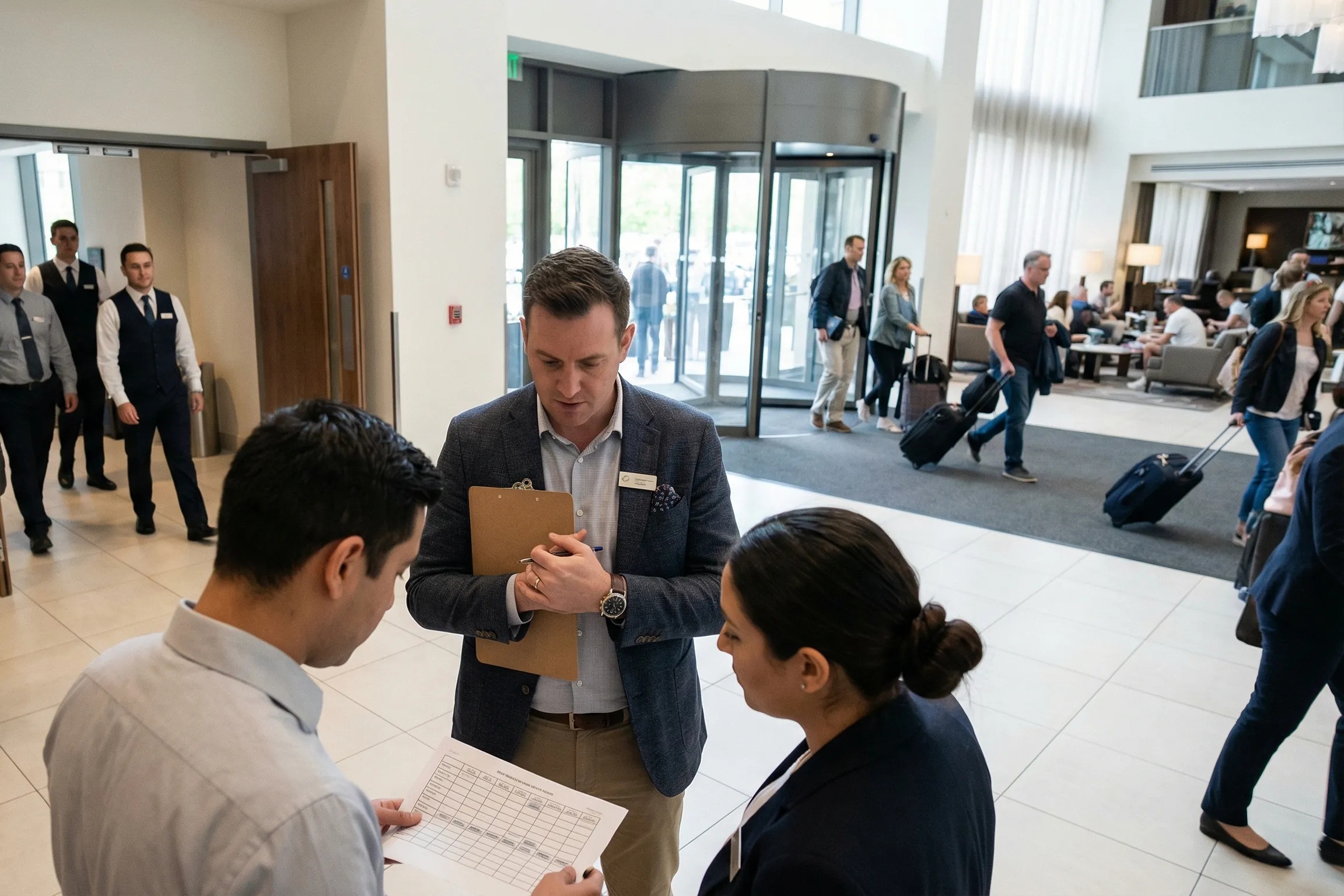
4) Kinetic Events Staffing
Best for: programs where conference staffing depth and venue familiarity are central to the decision.
Why they made the list
- Their Las Vegas positioning focuses on conference-style staffing needs. That aligns with high-volume days where room coverage, session movement, and attendee support all peak at predictable times.
- Their messaging signals Las Vegas-specific experience in conference environments. For peak days, familiarity can reduce friction in the way staff coordinate and respond to changes.
Where they tend to fit in Las Vegas
Kinetic fits when the success of the day depends on consistent conference execution across multiple rooms. On high-volume days, the operational edge is often in how quickly small problems are corrected without creating visible disruption.
How to evaluate fast
- Ask what their lead structure looks like across multiple rooms and how leads prevent conflicting instructions. Then ask what “decision rights” look like in real time.
- Ask how they plan staffing for early morning calls after late-night functions. Then ask how they prevent performance drop-off across shifts.
- Ask how they handle the moment when two zones both claim they are “critical.” Then ask how that decision is communicated so staff stay aligned.
Good fit if: your program is conference-heavy with multiple simultaneous rooms and predictable surge windows.
Not ideal if: you need a staffing partner for primarily promotional street-level activations.
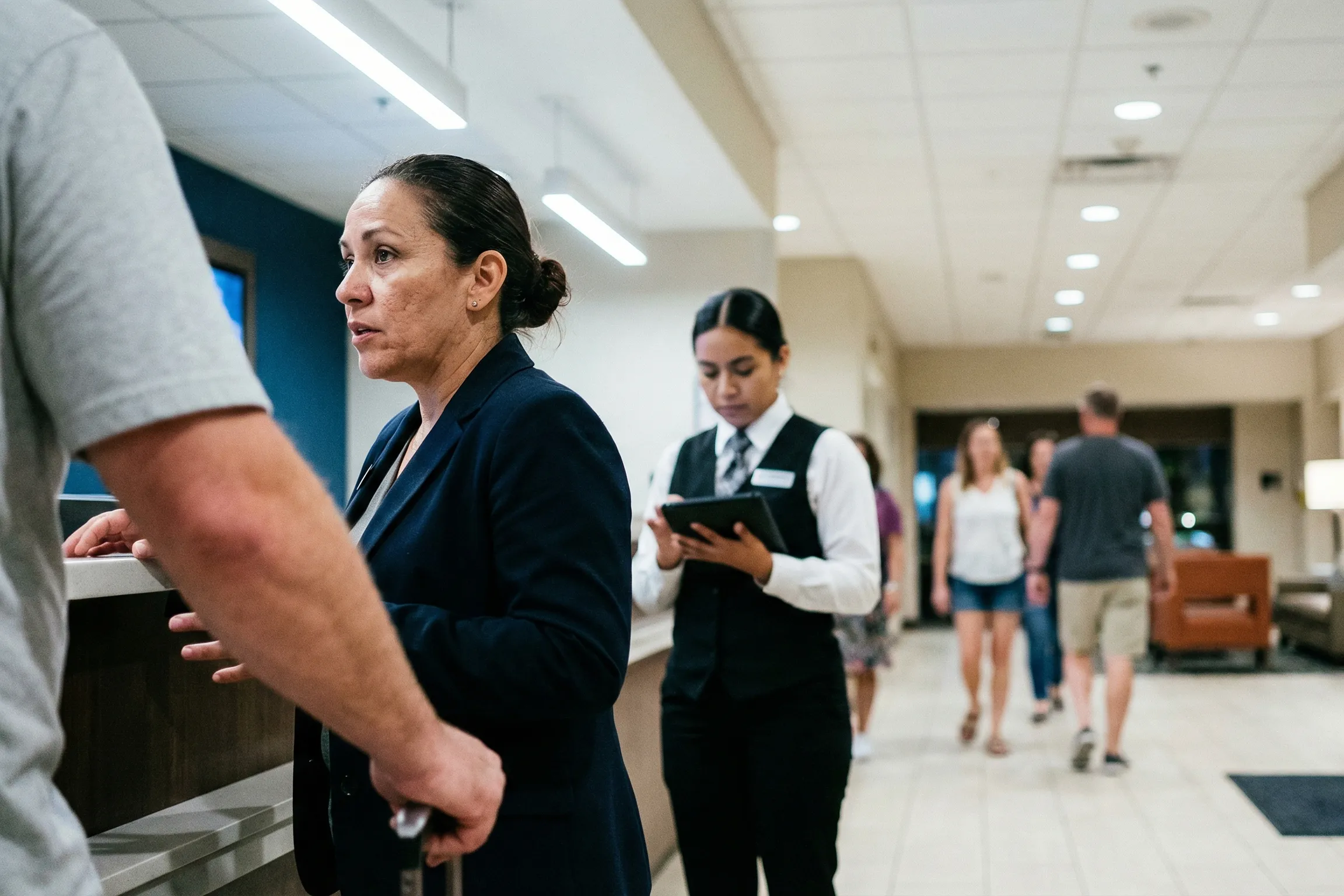
5) A Hire Power
Best for: registration-heavy programs where desk operations, room monitors, and structured support roles determine show quality.
Why they made the list
- Their Las Vegas coverage is oriented around event and convention staffing, which fits programs where accuracy and desk performance matter as much as guest-facing energy. On high-volume days, that is often the difference between a calm arrival and a backlog that lasts for hours.
- Their positioning supports the operational side of conference execution. For peak days, having reliable desk and monitoring coverage helps protect session timing and attendee experience.
Where they tend to fit in Las Vegas
A Hire Power fits when a high-volume day is won or lost at registration desks and session logistics. If your program has complex badge categories, frequent exceptions, or heavy room monitoring, this lane aligns with that reality.
How to evaluate fast
- Ask how they structure registration peaks so speed does not destroy accuracy. Then ask how exception handling is separated from main throughput.
- Ask how room monitors handle late arrivals and capacity questions while keeping the experience calm. Then ask what the escalation path is when a situation needs a lead.
- Ask who owns coordination when session timing changes and coverage needs to shift. Then ask how those changes get communicated so attendees get consistent answers.
Good fit if: your program is desk-heavy and precision matters under time pressure.
Not ideal if: your biggest need is high-touch brand engagement across sponsor activations.
Red flags and deal breakers on Las Vegas high-volume days
- They plan for “one registration area.” The LVCC explicitly references two grand lobby and registration areas. If the staffing plan treats arrivals as a single-node problem, you will get uneven coverage and visible confusion during the first surge.
- They cannot explain how they separate throughput from exceptions. High-volume days produce exceptions. If the agency cannot describe an exception desk model and escalation ownership, the main line slows and frustration spreads.
- They avoid specifics on supervisor density. If “we have a manager” is the answer, it is not enough. You want zone ownership with decision rights so corrections happen quietly and locally.
- Their handoff plan is informal. Vegas schedules stretch. Handoff drift shows up as inconsistent answers, repeated mistakes, and “we were not told” moments that guests notice.
- They cannot describe how they keep sponsor commitments staffed during peak waves. On high-volume days, the easiest thing to do is cannibalize sponsor zones to fix a line. Strong partners plan so that trade-offs do not happen in panic.
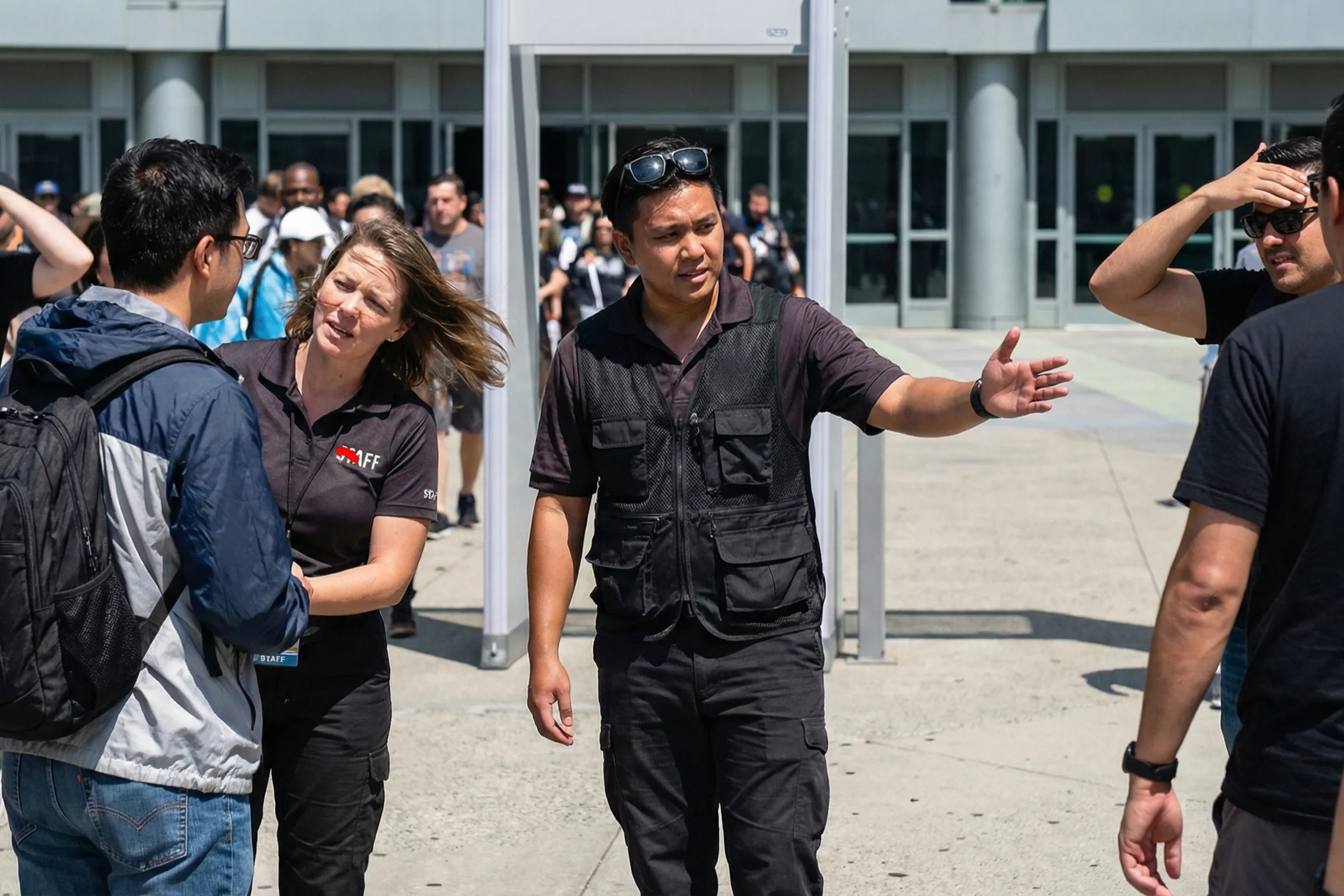
Shortlist checklist for your agency calls
- Ask for a zone map explanation in words. You are listening for touchpoints and ownership, not headcount. Then ask what their first adjustment is when the first bottleneck appears.
- Ask how check-in is structured for speed and accuracy. Have them explain how exceptions are handled, who owns them, and how the main line stays clean.
- Ask what the supervisor layer actually does. You want to hear about standards-setting, correction loops, and how decisions stay discreet in guest view.
- Ask how they protect multi-shift consistency. The answer should include handoff documentation and an explicit “what changed” update, not a casual swap.
- Ask how they cover simultaneous program moments. The LVCC notes simultaneous set-up, break-down, and exhibiting is supported, which is a proxy for how often conditions overlap.
Final words
The best event staffing in Las Vegas partners for high-volume days do not sell headcount. They sell control: distributed coverage, clear zone ownership, consistent guest language, and calm adjustment when conditions change. Start with Event Staff and Premier Staff, then shortlist ATN, Kinetic, and A Hire Power based on whether your day is sponsor-heavy, conference-heavy, or registration-heavy.
Ready to elevate your next event?
Join thousands of event planners who trust EventStaff.com for reliable, professional staffing solutions.
Trusted by event professionals nationwide
1k+
Events Staffed
2 million+
Guests Served
97%
Positive reviews