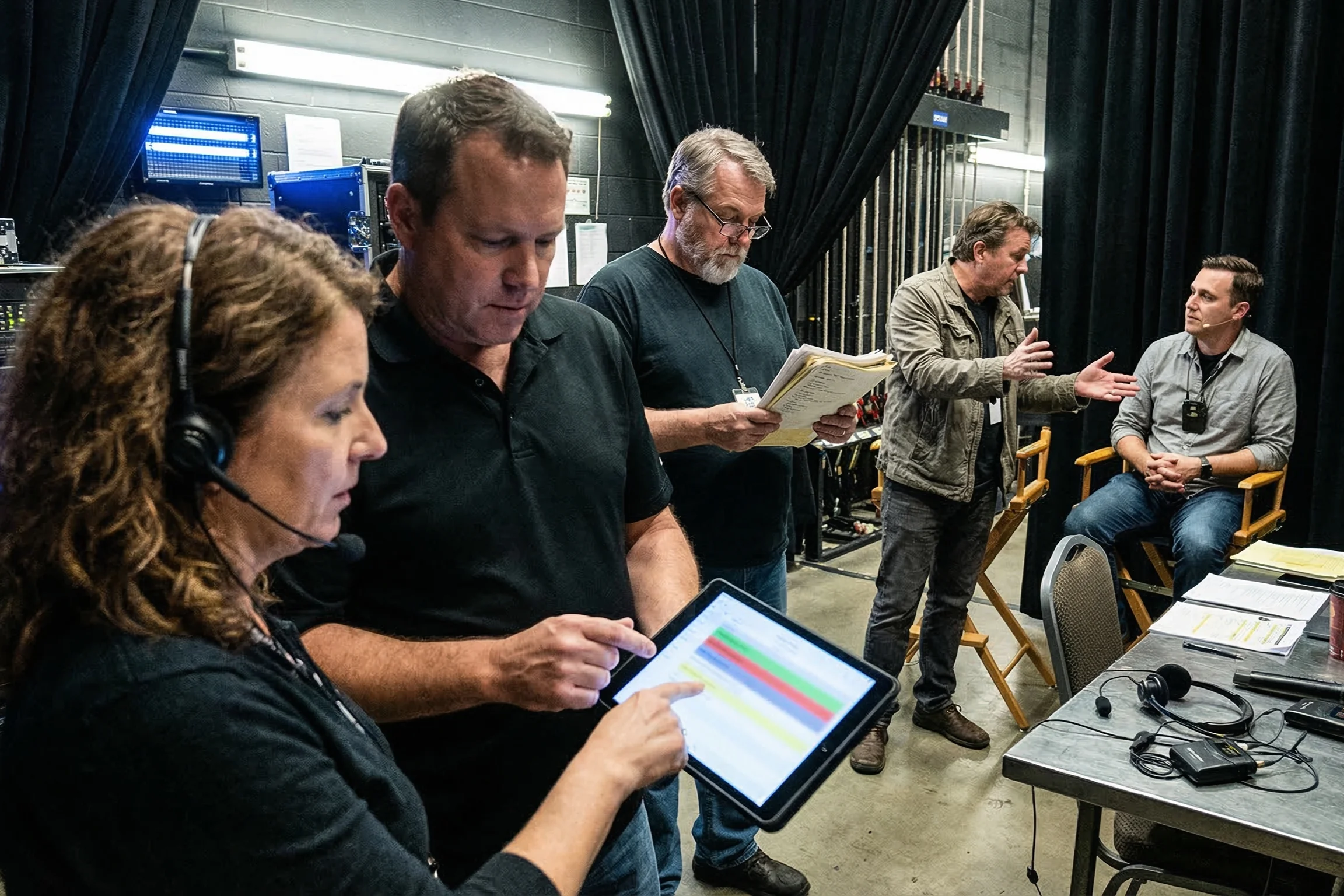

Midtown breakfast meetings put event logistics under pressure before the first speaker reaches the front of the room. Guests arrive from subway stations, hotels, office towers, rideshares, and nearby headquarters within the same narrow window, often between 8:45 and 9:15 AM. That kind of arrival pattern gives the host very little room for slow check-in, unclear direction, or registration confusion.
When the first impression happens in a crowded lobby, the meeting starts absorbing friction before the agenda begins. Strong staffing helps protect timing, guest flow, executive perception, and the calm start corporate teams expect from a well-run morning event.
CEO Excerpt
“Corporate events are often judged before the first speaker begins. When guests arrive together, the check-in experience tells them whether the host has control of the room. Strong staffing gives the event structure, protects the agenda, and lets internal teams focus on the people they invited.”- Daniel Meursing, CEO, Eventstaff
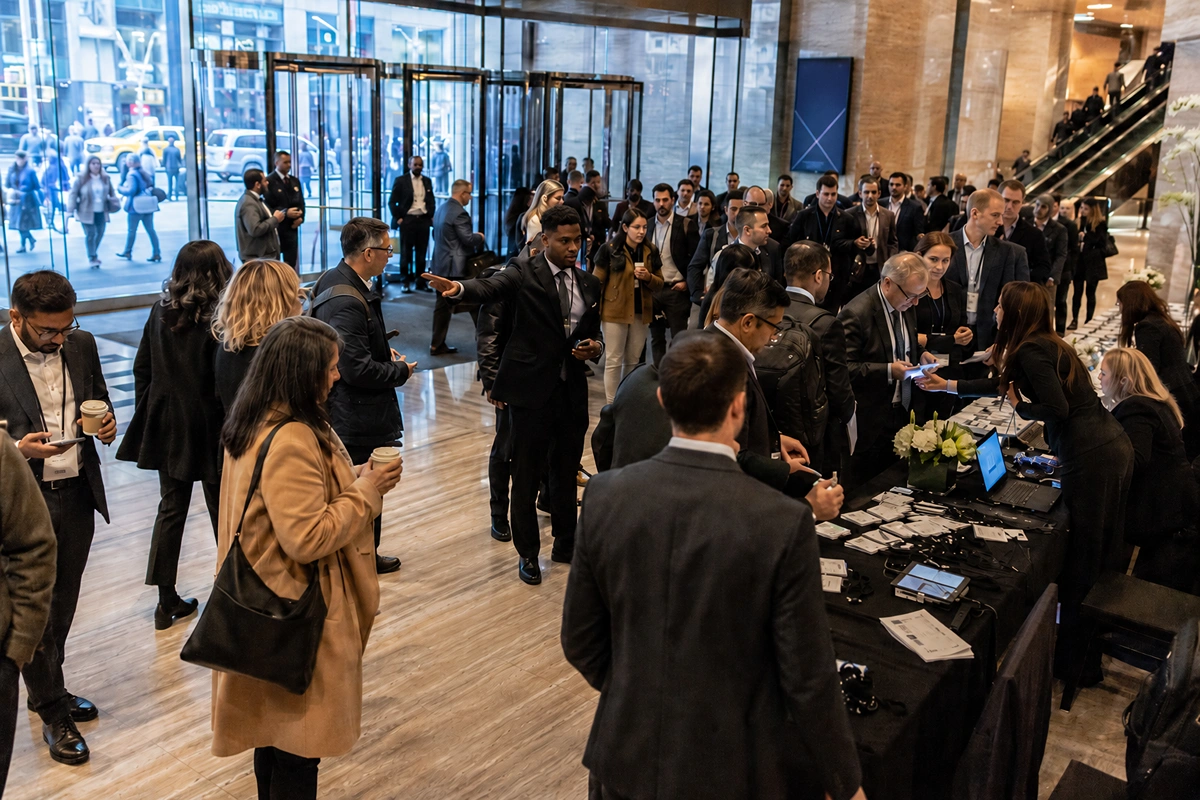
Why Midtown Breakfast Check-In Breaks So Quickly
Breakfast meetings look simple on paper because the agenda is usually shorter than a conference, gala, or full-day summit. In practice, that shorter format makes every operational delay more visible because guests expect to arrive, check in, grab coffee, and sit down almost immediately. A five-minute registration slowdown can affect the opening remarks, the first presentation, and the way the room feels when senior leaders enter.
Midtown makes that pressure more intense because many venues sit inside buildings with shared lobbies, elevator banks, security desks, and tenant traffic. A corporate breakfast near Bryant Park, Grand Central, Times Square, or Madison Avenue may be competing with commuters, hotel guests, office workers, messengers, and building staff at the same time. The MTA’s subway and bus ridership data shows average weekday subway ridership reached 3.376 million in 2024, which helps explain the scale of morning movement feeding Manhattan business districts.
The issue usually begins before guests reach the check-in table. They may be waiting for elevators, confirming the room floor, looking for the right entrance, or searching for a colleague. If staff are only stationed behind a table, the first operational gap appears in the lobby, where people need direction before they need registration.
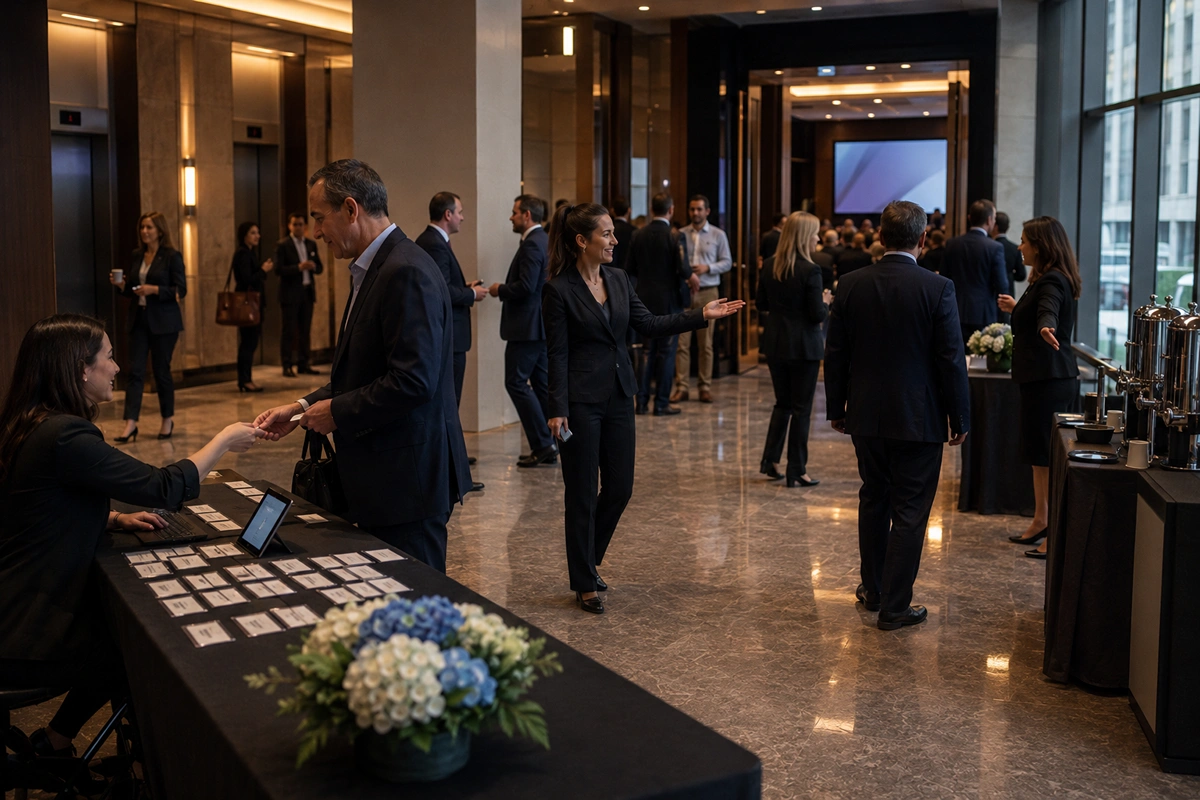
How Event Logistics Shapes the First 15 Minutes
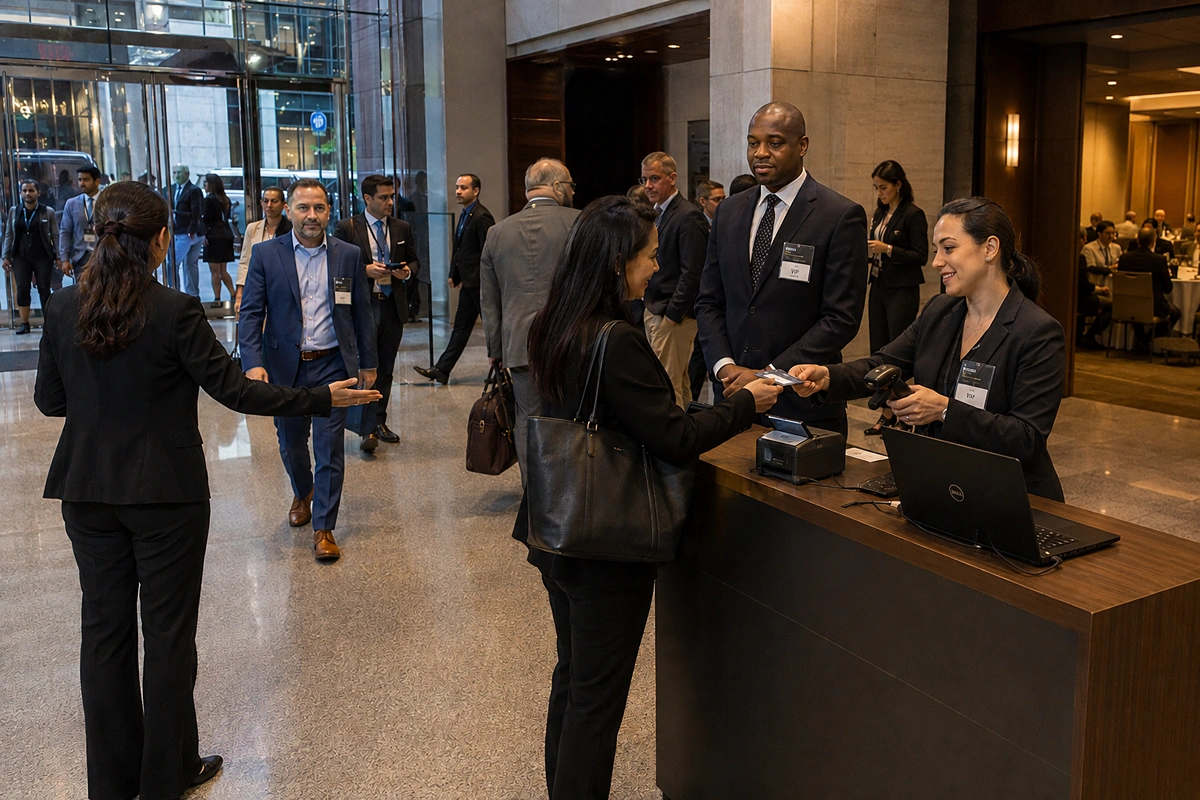
For a Midtown breakfast meeting, event logistics shows up through placement, timing, communication, and staff readiness. The table position matters, but so does who stands before the table, who keeps the line moving, who handles exceptions, and who directs guests toward coffee, seating, restrooms, or the correct meeting room. When those roles are planned well, the room fills steadily instead of receiving late clusters of guests after the event has already begun.
The first 15 minutes also decide whether the internal team can stay focused on clients, executives, board members, partners, or speakers. Without trained check-in support, company employees often get pulled into badge lookup, guest list issues, elevator questions, late speaker arrivals, and last-minute room changes. That pulls them away from the relationship-building work that the breakfast meeting was designed to create.
Strong event logistics gives the host a controlled arrival path. One person can welcome and direct, another can manage registration, and another can support VIPs, speakers, or guests whose names need attention. This keeps simple check-ins moving while exceptions are handled without blocking everyone behind them.
The arrival experience should feel controlled, quick, and easy for the guest. When staffing is planned properly, guests know where to go, how to move, and who can help. That is why staffing matters most at the front of the event, where a small amount of confusion can spread quickly through the entire room.
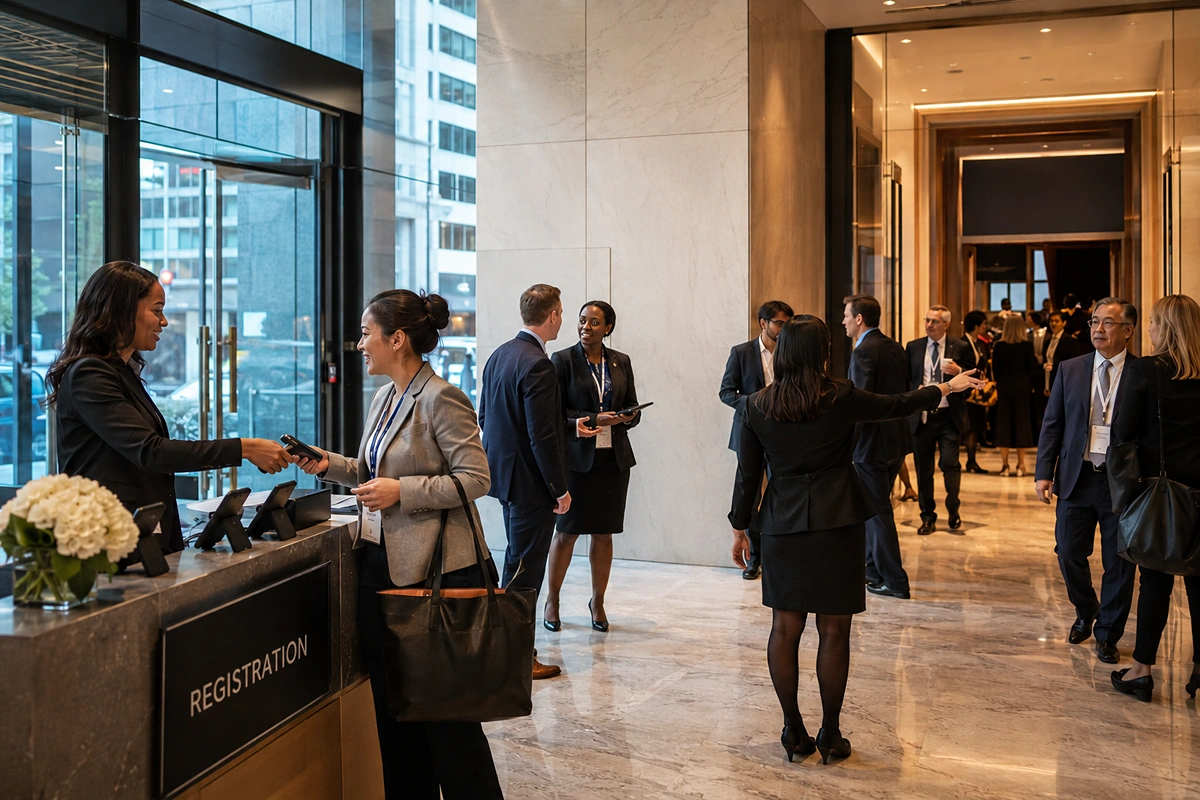
Where Guest Flow Starts to Fall Apart
Guest flow breaks down when the event path asks guests to pause in the wrong place. Breakfast meetings naturally create multiple stop points, including security, check-in, badge pickup, coffee, coat storage, informal greetings, and seating. If those points sit too close together, people start blocking the same lane they are supposed to move through.
The lobby becomes the waiting area.
Guests often arrive before the room feels fully open, especially when they are trying to be punctual for a 9 AM start. If no one shapes the line early, the lobby becomes a holding area by default. The queue can then spread toward elevators, building security, or public entrances, which makes the event feel crowded before guests even reach the room.
One registration issue slows the full line.
A missing name, changed attendee, duplicate guest, sponsor category, or unclear RSVP status can hold up everyone behind that person. Trained staff protect guest flow by separating quick check-ins from issue handling. That way, one exception does not turn into a visible backup.
Coffee service pulls people sideways.
Breakfast events often place coffee near check-in because it feels convenient for guests. The challenge is that coffee creates pauses, turns, conversations, and small clusters. If the table sits too close to registration, it can interrupt movement from check-in to the meeting room.
When these friction points overlap, guests feel the event slowing down even if the official agenda is still on time. They may walk into the room checking their phone, looking for a seat, or wondering why the arrival felt more difficult than expected. That mood matters because corporate breakfasts depend on focus from the first few minutes.
Why Midtown Corporate Events Need More Local Planning
Midtown is one of the most compressed event environments in the country, especially during weekday mornings. The Grand Central Partnership shares district data on employment, office populations, transportation, retail, and pedestrian counts, all of which matter when planning a corporate arrival path in Midtown East. A breakfast event in this district is operating inside an active business environment before the event guest list even begins arriving.
A venue near Bryant Park may draw guests from subway lines, nearby hotels, Times Square offices, Fifth Avenue buildings, and commuter routes within a few blocks. Bryant Park’s official visitor information describes the park as Midtown Manhattan’s town square, which reflects how much public movement, meeting activity, and visitor traffic surrounds that part of the city.
That local density changes the staffing plan. A suburban ballroom may give guests a parking lot, clear entrance, and more room to gather, while a Midtown breakfast may give them a building lobby, an elevator queue, and a short walk from transit. Event logistics has to account for that environment before the guest list ever reaches the check-in table.
This is also why Midtown breakfast meetings should avoid relying only on signage or internal employees. Signage helps, but people still need live direction when entrances are shared, elevators are crowded, or the room is several floors above street level. Staff give guests confidence because someone is visibly managing the arrival path.
How Eventstaff Strengthens the Arrival Plan
Eventstaff becomes valuable when the arrival window is tight, the room matters, and the host cannot afford a crowded or distracted start. The clearest trigger is a guest count above 75, but headcount alone does not tell the full story. A 60-person breakfast with executives, investors, sponsors, press, or multiple guest categories can need more support than a larger meeting with a simple internal audience.
The brand’s role is to provide trained corporate event staff who can manage the pressure points around check-in, guest direction, VIP handling, conference support, and front-of-house coordination. In a Midtown setting, that means guests are welcomed before the table, registration exceptions are separated from the main line, and movement stays clear around elevators, security desks, and room entrances.
Eventstaff helps corporate teams protect the first impression without pulling internal employees away from clients, executives, or speakers. The value is practical: guests move faster, the room fills with more control, and the meeting begins with less visible friction. That is especially important for Midtown breakfast events, where late arrivals and crowded lobbies can affect executive perception before the presentation starts.
Good staffing also gives the planner a cleaner escalation path. If a speaker is late, a VIP arrives with an assistant, or a guest is missing from the list, the issue can be handled without freezing the main line. That keeps the event moving while the host stays focused on the people in the room.
Bottom Line
Midtown breakfast meetings create a fast, visible test for event logistics because the arrival window is short and guest expectations are high. When check-in slows down, guest flow suffers, internal teams get distracted, and the room can feel unsettled before the agenda begins. Eventstaff helps corporate teams protect that first impression with trained corporate event staff who manage check-in, direction, exceptions, VIP movement, and front-of-house coordination.
Ready to elevate your next event?
Join thousands of event planners who trust EventStaff.com for reliable, professional staffing solutions.
Trusted by event professionals nationwide
1k+
Events Staffed
2 million+
Guests Served
97%
Positive reviews