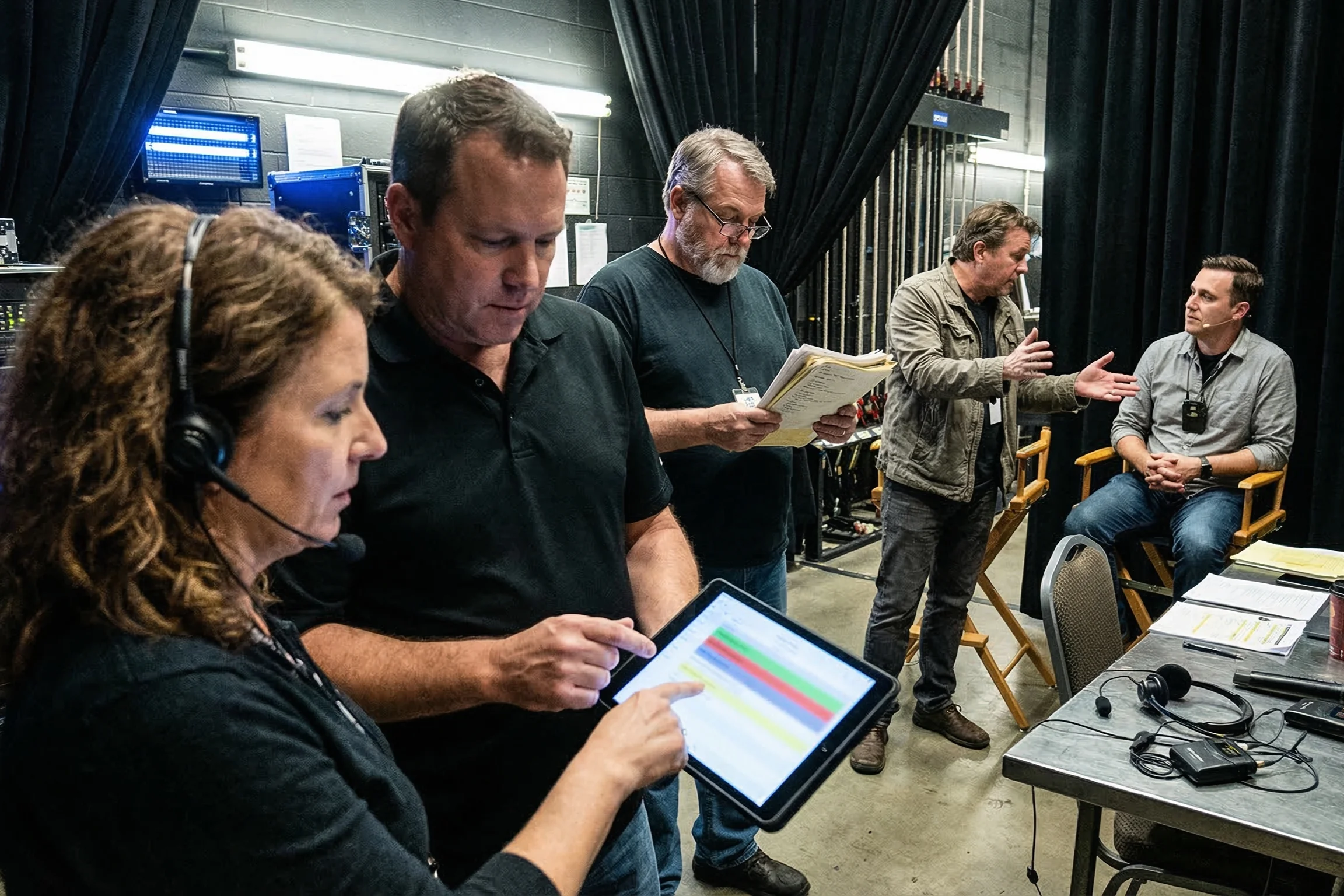

A sidewalk queue can make a venue look unprepared before guests reach the door. The event may be ready inside, but the outside line becomes the first thing guests, passersby, neighboring businesses, and VIP arrivals see, which means the venue is being judged before the first ticket, invitation, or guest name is checked.
That is why queue management matters at NYC events. When the line bends into pedestrian traffic, blocks another entrance, or leaves guests asking where to stand, the issue becomes public before the venue team has a chance to correct the impression, and the arrival experience starts with uncertainty instead of control.
CEO Excerpt
“The outside line is part of the event experience. Guests start judging the venue before they reach the door, so entry has to feel organized from the sidewalk onward. Strong crowd management helps the host protect that first impression and keep the arrival process controlled.” - Daniel Meursing, CEO, Eventstaff
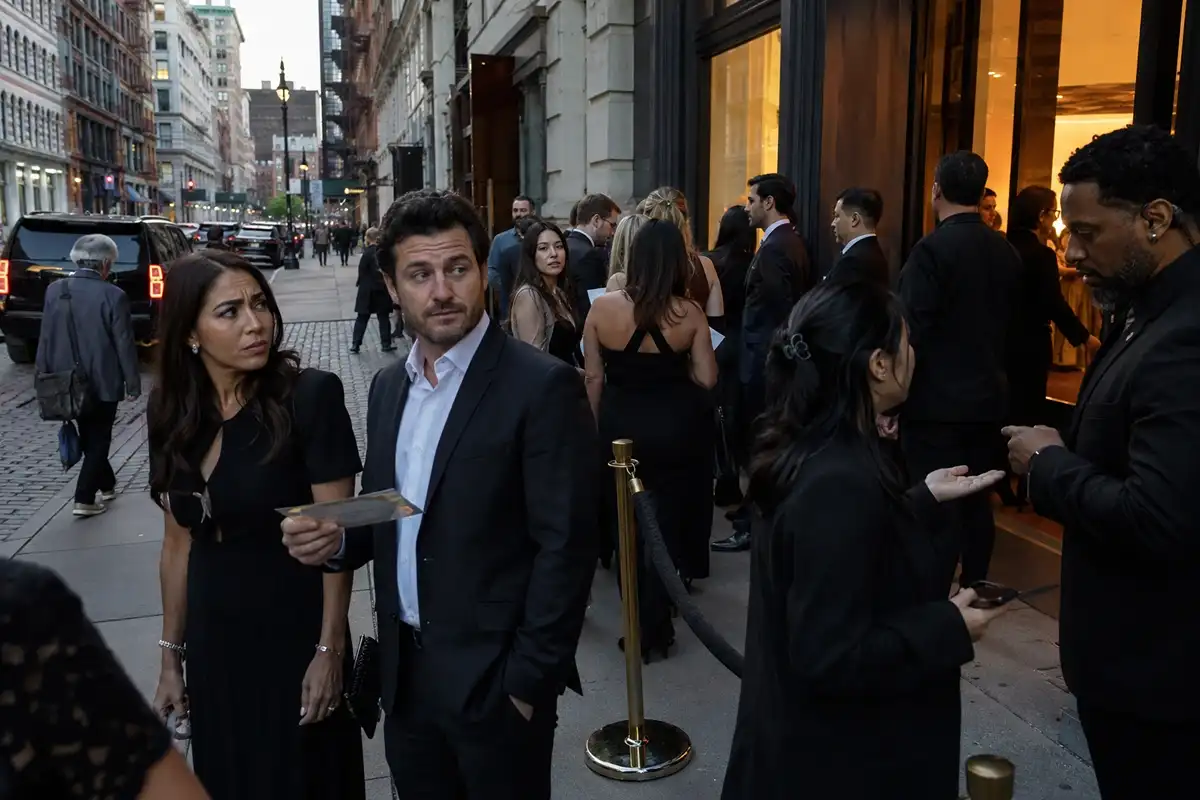
Why a sidewalk queue changes how guests judge the venue
Guests judge the event before they step inside, and the sidewalk line gives them the first visible signal of whether the venue is ready. If the line looks confused, they start assuming the entry plan is behind, the staff are overwhelmed, or the guest list is being handled poorly before anyone has checked them in.
That judgment can form even when the inside operation is on schedule. A well-produced room, strong check-in team, and prepared event lead can still lose credibility if the line outside looks unmanaged, especially when guests are standing in public view without clear direction.
The sidewalk queue also affects the emotional tone of entry. When people are unsure where the line starts, whether they are in the right place, or why the entrance is moving slowly, they arrive at the door already looking for reassurance instead of simply moving into the event.
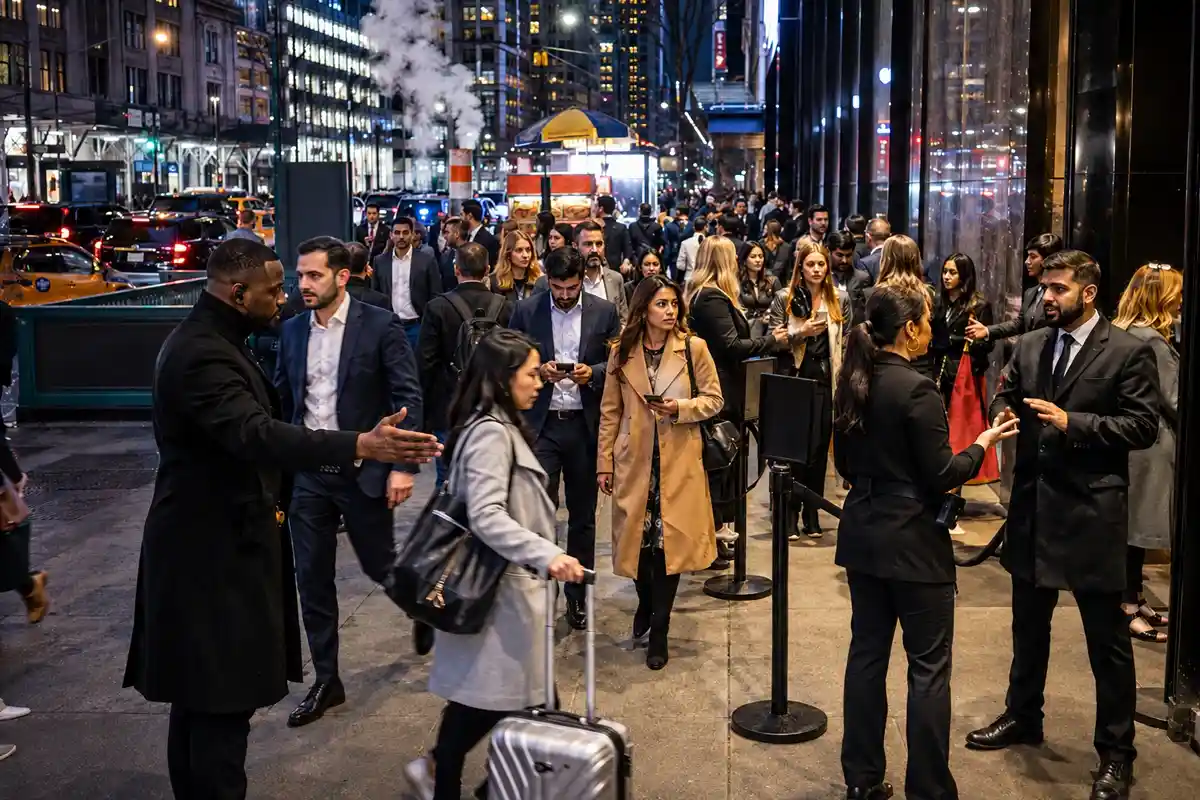
Why queue management matters more on NYC sidewalks
Queue management matters more in New York because sidewalks are already working hard. Outside a venue, the same space may be serving pedestrians, neighboring businesses, hotel guests, delivery workers, rideshare pickups, building tenants, and other event traffic, so a poorly shaped line can affect more than the guest list.
NYC DOT describes New York as a pedestrian city built around an interconnected network of sidewalks and crossings, which matters for event teams because a sidewalk queue becomes part of that shared movement system. If the line is unmanaged, it can interrupt public flow, create friction with nearby entrances, and make the venue look less prepared in a very visible setting.
This is especially important for Manhattan hotel venues, SoHo galleries, Midtown event spaces, theater-adjacent entrances, private clubs, rooftops, nightlife venues, and Brooklyn event spaces in Williamsburg or DUMBO. In these areas, the sidewalk is rarely empty enough to absorb a confused queue, so staff need to shape the line before guests begin solving the problem themselves.
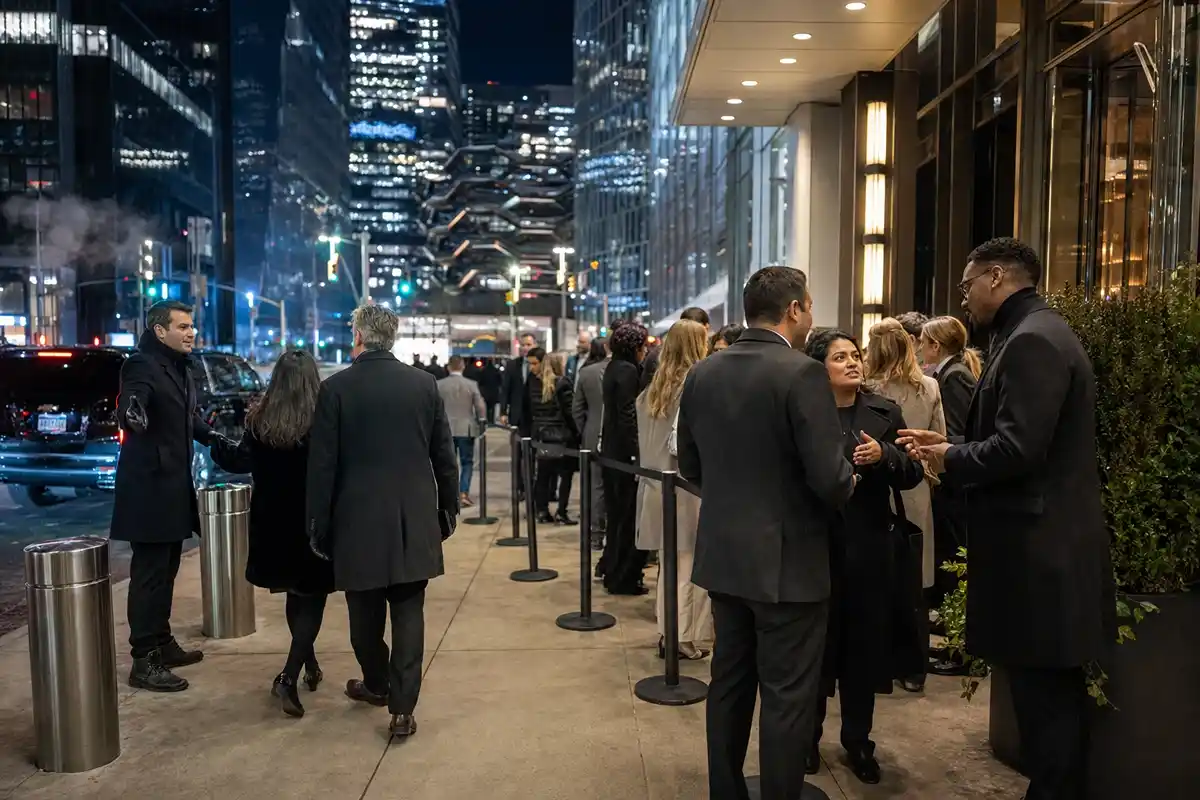
How entry management begins before the door
Entry management begins before the guest reaches the door, scanner, ticket desk, host stand, or security checkpoint. The sidewalk is part of the entry experience because that is where guests decide whether the venue looks prepared, whether staff know the plan, and whether they are being guided with confidence.
Greeters, ushers, and crowd control staff each support that moment differently. Greeters confirm guests are in the right place and reduce uncertainty, ushers guide movement toward the correct entry point, and crowd control staff help keep the queue shaped without blocking public movement.
Good entry management also protects the door team from becoming overloaded too early. When simple questions are answered outside the entrance, the staff controlling admission can stay focused on guest verification, security flow, ticket types, and communication with the venue lead.
Where the sidewalk queue usually breaks
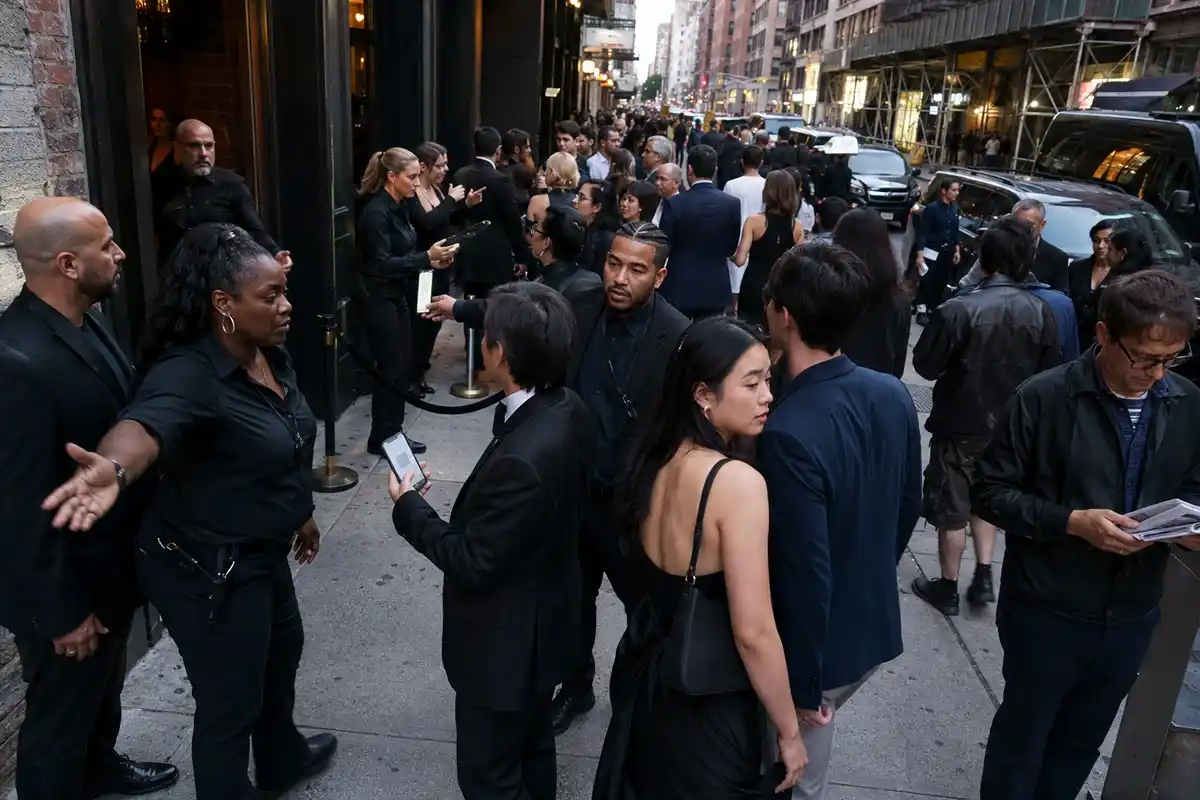
The sidewalk queue usually breaks in small ways before it becomes a visible problem. Guests start solving the line themselves, and once that happens, staff have to correct confusion rather than guide movement from the start.
- The start of the line is unclear.
Guests arrive and immediately ask where to stand, which pushes basic questions toward the door. A clear first contact helps guests join the right place without slowing the people already moving toward entry, and it keeps the entrance from becoming the first information desk. - The line bends into pedestrian traffic.
When the queue grows without direction, it can block sidewalk movement, neighboring doors, curb access, or building entrances. Crowd control staff help shape the line so guests stay organized while the public sidewalk remains easier for passersby, tenants, and nearby businesses to use. - Different guest types mix too early.
VIPs, general admission guests, press, vendors, performers, and invited guests may need different entry paths. If they merge outside, the door team has to untangle the problem at the slowest possible point, which makes entry feel less controlled for everyone waiting behind them. - The door team becomes the information desk.
When every question reaches the entrance, the people managing admission lose focus. Greeters and ushers should absorb simple questions before they reach the threshold, so the door team can keep the line moving instead of pausing to explain the basics.
Why NYC arrival waves can overload a venue entrance
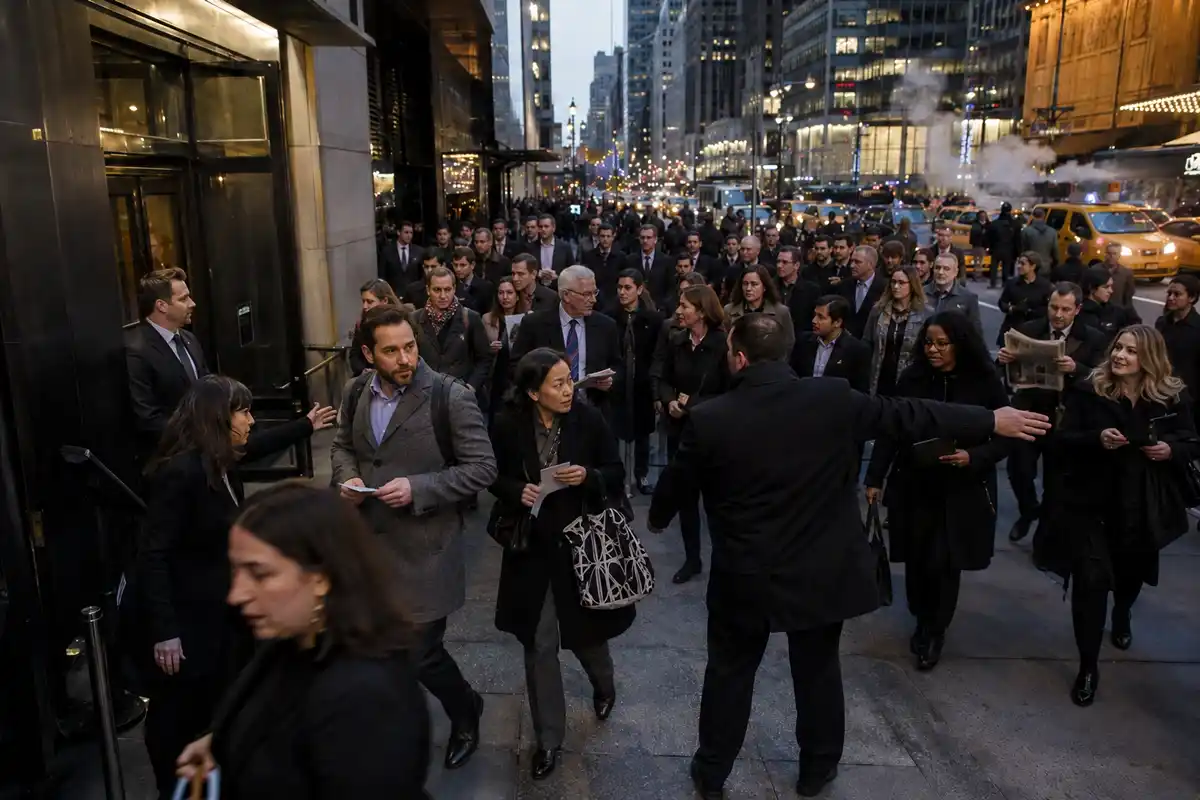
NYC event arrivals often come in waves because guests are moving from transit, offices, hotels, restaurants, and nearby venues within tight windows. A reception near Grand Central, a theater-area event, a rooftop in Midtown, or a private event near Hudson Yards can move from light arrivals to a packed sidewalk quickly.
The MTA reported 3.376 million average weekday subway riders in 2024, which helps explain the scale of daily movement around NYC’s business and event districts. When many guests arrive from transit or nearby meetings at the same time, a sidewalk queue can build faster than the door team expects, especially when the venue has one main entrance or a shared building lobby.
That arrival pressure makes queue management a planning issue rather than a last-minute correction. The line needs a start point, a holding pattern, a VIP route, a plan for late arrivals, and staff who know how to keep guests moving without creating sidewalk friction.
How crowd control staff, greeters, and ushers keep the line controlled
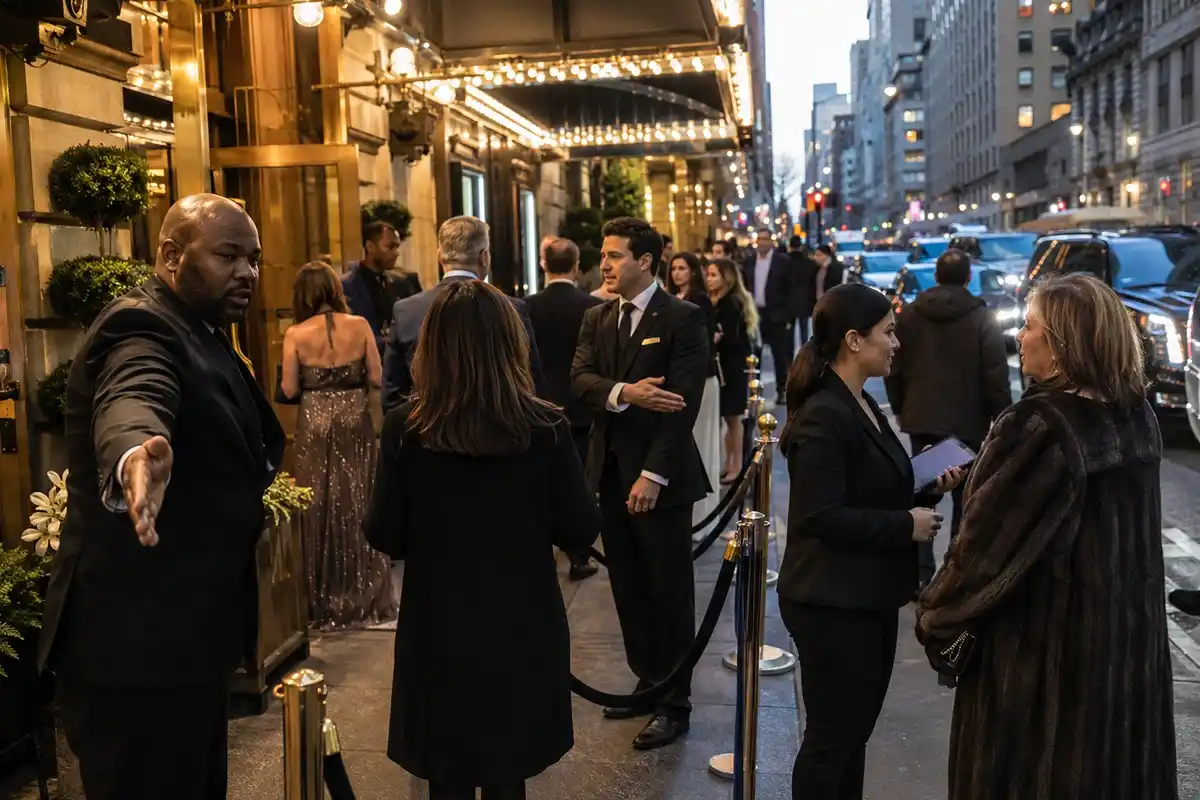
Crowd control staff help shape the queue so it stays orderly, visible, and safe for guests and passersby. Their role is especially important when the line grows along a public sidewalk, near a curb, beside a hotel entrance, or next to another business that needs its doorway clear.
Greeters create the first human checkpoint and reduce the number of guests reaching the door with basic questions. They confirm the event, direct guests to the right line, identify common concerns early, and make the arrival process feel staffed from the first approach.
Ushers support movement from the sidewalk toward the venue entrance and onward into the event space. They help prevent the entry area from stalling by guiding guests through the next step instead of letting people cluster at the threshold.
Together, these roles make entry management feel calm and intentional. Guests see staff who know the plan, the venue looks prepared, and the door team can focus on controlled admission rather than constant correction.
What a messy sidewalk queue costs the host
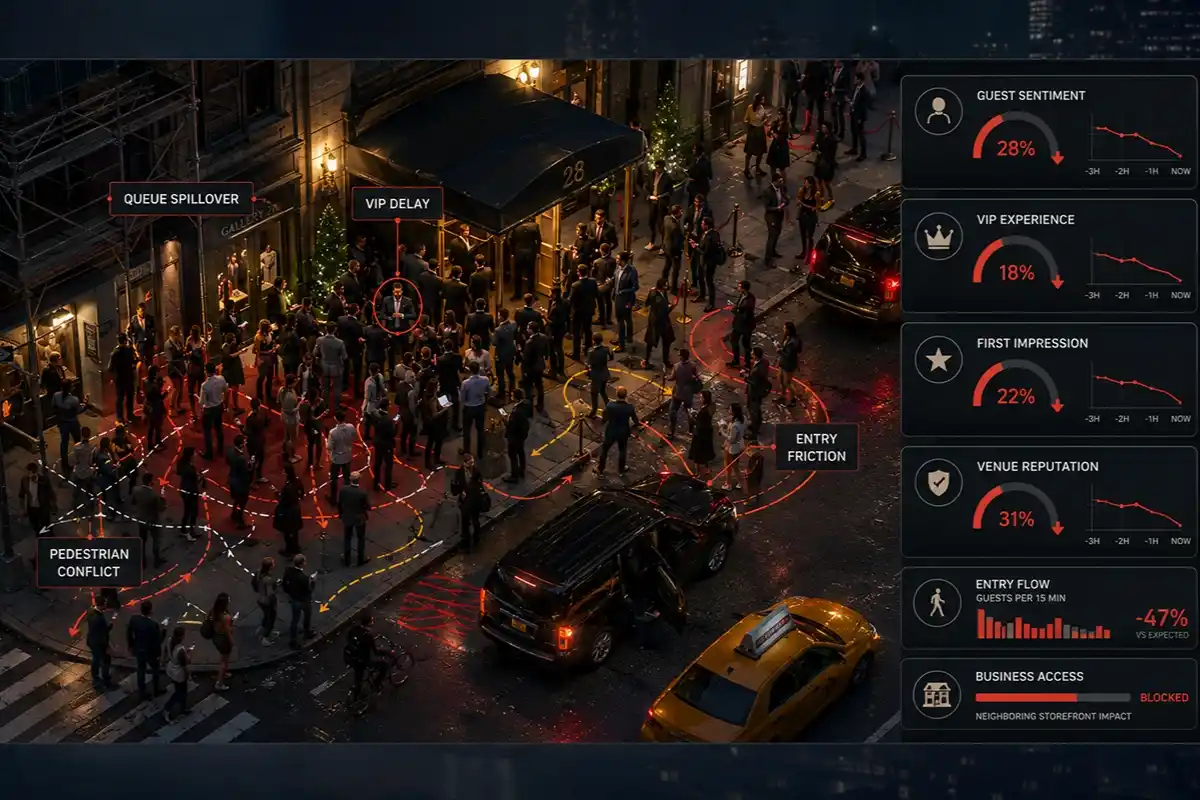
A messy sidewalk queue creates pressure that reaches beyond the line itself. Guests lose confidence, VIPs feel mishandled, passersby see disorder, and neighboring businesses may be affected if the line blocks their entrance, customer path, or curb access.
The host also risks starting the event with a reputational problem that follows guests inside. If the outside of the venue looks disorganized, guests may carry that impression into the room even after the entry process improves, which makes the event team work harder to recover trust.
New York’s event market gives hosts very little room for visible disorder. NYC Tourism + Conventions reported 1,515 meetings and events booked in 2025, along with $84.7 billion in total economic impact from visitation, which reflects the scale and expectations around the city’s event environment.
When NYC events should add crowd management support
NYC events should add crowd management support when the sidewalk queue is likely to become visible, complex, or difficult to control with the door team alone. That includes high guest counts, timed arrivals, narrow entrances, shared building access, public-facing events, VIP entry, press arrivals, or multiple ticket types.
Support is also important when the venue is near transit, hotels, theaters, restaurants, nightlife corridors, or heavy pedestrian routes. In those settings, queue management and entry management need to protect both the guest experience and the public space around the venue.
Weather can raise the stakes because rain, cold, heat, or wind can make guests less patient outside. A stronger staffing plan gives the line clearer communication, faster movement, and better reassurance before frustration reaches the door.
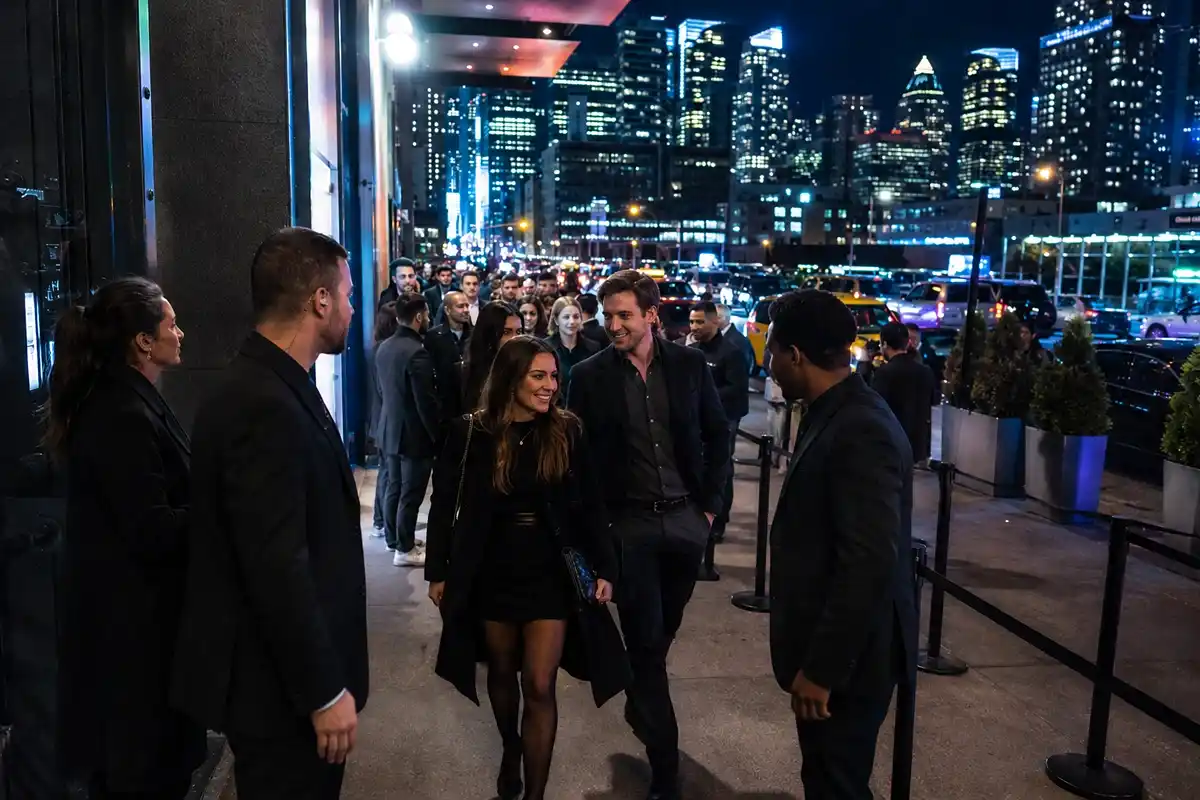
How Eventstaff supports queue management in New York
Eventstaff supports queue management in New York with trained crowd management teams who understand venue entry pressure. That support can include crowd control staff, greeters, and ushers positioned outside the venue, near the line start, at line splits, and along the path toward entry.
The goal is to make the outside of the event look as prepared as the inside. Staff can help shape the queue, answer simple questions, separate guest types, keep pedestrian paths clearer, and communicate pressure points before the entry team gets overwhelmed.
For NYC events, this support is especially valuable because the sidewalk is part of the event’s public face. Eventstaff helps planners manage that first impression with trained people who understand guest movement, entry pacing, and the operational details that keep a venue looking ready.
Bottom Line
The sidewalk queue that makes a venue look unprepared usually starts as a small visibility problem. Guests do not know where to stand, the line bends into public space, and the door team becomes overloaded with questions before entry even begins.
Strong queue management and entry management prevent that pressure from taking over the arrival experience. With trained Eventstaff crowd control staff, greeters, and ushers, NYC venues can keep lines clearer, guests calmer, and the first public impression more professional.
Ready to elevate your next event?
Join thousands of event planners who trust EventStaff.com for reliable, professional staffing solutions.
Trusted by event professionals nationwide
1k+
Events Staffed
2 million+
Guests Served
97%
Positive reviews