

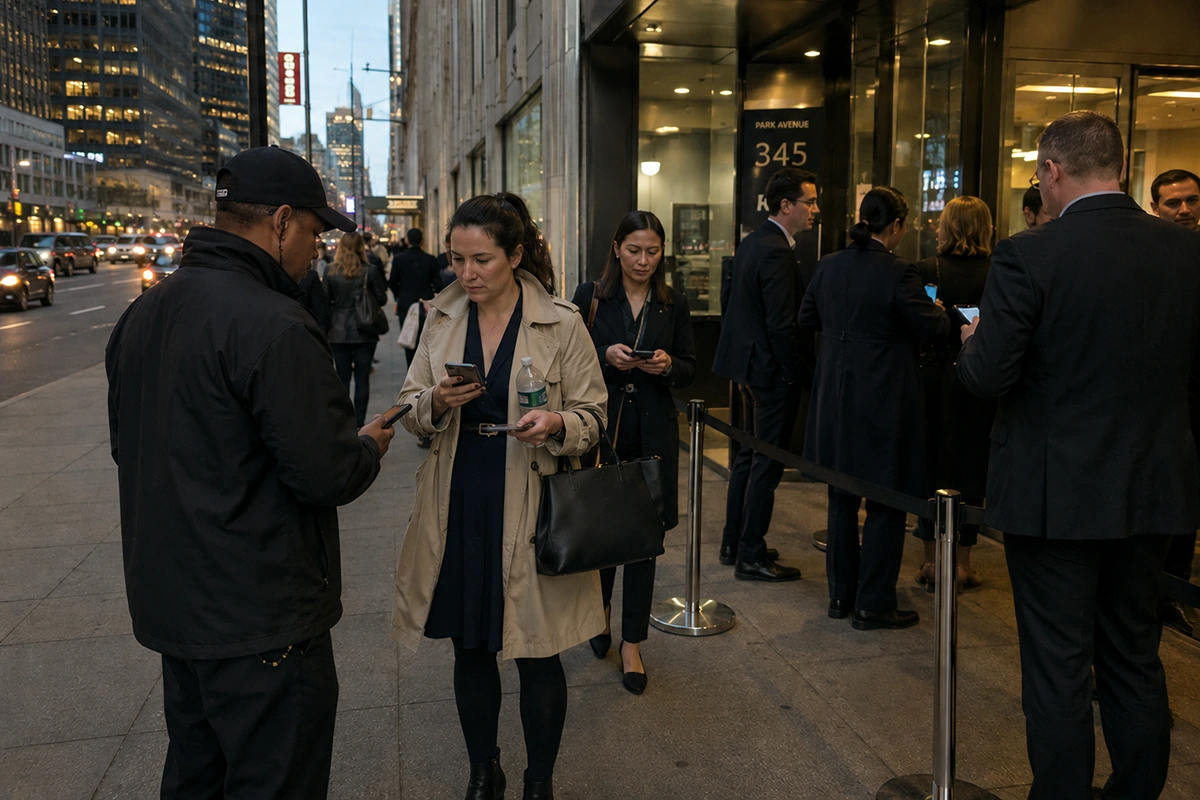
Ticketing flow can break down in Manhattan before the scanner becomes the issue. A guest reaches the front, opens the wrong app, searches an email thread, turns up screen brightness, or tries to swipe through four passes on one phone. Behind them, the line has little room to recover because the entrance may sit a few feet from active pedestrian movement.
That is the Manhattan doorway problem. Many event spaces do not have a wide forecourt, private driveway, or exterior holding area where ticket issues can sit comfortably. A single phone-ticket delay can press against a storefront, sidewalk shed, curb cut, restaurant entrance, hotel door, or stream of pedestrians walking past the event.
CEO Excerpt
“Digital tickets are efficient only when the entrance is staffed for how guests actually arrive. In Manhattan, a phone delay can affect the doorway, the sidewalk, and the first impression at the same time. Strong ticket checking keeps that moment organized before it becomes visible.” -Daniel Meursing, CEO, Eventstaff

Why Manhattan Doorways Have No Room for Phone-Ticket Friction
Manhattan entrances often work with almost no buffer between the sidewalk and the event threshold. A downtown gallery may open directly onto a narrow block. A Midtown reception may share frontage with a hotel entrance, restaurant door, office lobby, or neighboring retail space. A rooftop event may begin at a street-level elevator lobby where guests need to be checked before they move upstairs.
That physical setup changes how ticket delays behave. In a venue with a large exterior plaza, one guest searching for a ticket can step aside without much effect. On a Manhattan block, that same guest may be standing where the next guest needs to scan, where pedestrians pass, or where a rideshare group has just arrived from the curb.
NYC DOT’s Pedestrian Mobility Plan describes New York as a city of pedestrians that depends on sidewalks and street crossings for comfortable movement . For ticketed events, that means the doorway is operating inside public movement, not apart from it. The event line has to be managed in a way that respects the block around it.
Phone tickets add pressure because guests often prepare them late. They may be walking from the subway, stepping out of a rideshare, avoiding sidewalk congestion, greeting friends, or checking which door belongs to the event. By the time they reach the scanner, the ticket may still be buried in a wallet app, PDF, email, text thread, or another guest’s phone.
How Ticketing Flow Starts Before the Scanner
Strong ticketing flow begins before the guest reaches the doorway. Ticket checkers should prompt guests to open mobile tickets early, raise screen brightness, confirm the right event, and separate anyone who needs help. That keeps the scanner from becoming the first place where ticket problems are discovered.
In Manhattan, the most useful ticket checker is often positioned upstream from the door. That staff member can move along the line, ask guests to prepare phones, identify group tickets, and direct anyone with a missing QR code toward support. The scanner-side staff can then focus on moving ready guests through the threshold.
This matters because the doorway itself is too valuable to become a troubleshooting station. Once a guest stops at the threshold, the line behind them starts compressing toward the sidewalk. A few seconds can affect group arrivals, VIP timing, and the way passersby experience the event from the street.
Ticketing flow also protects the guest who has the issue. Instead of making them search through email while everyone waits, staff can move them to the side, connect them with a door lead, or confirm the guest list away from the main scan point. The guest gets help without turning the entrance into a visible stall.
Where Entry Management Fails on a Manhattan Block
Entry management fails when the event treats the doorway as if it has unlimited space around it. In Manhattan, the line has to fit the block. That means ticket checkers need to account for storefronts, residential entrances, sidewalk sheds, bike racks, curb activity, restaurant frontage, crosswalk corners, and people who are not attending the event at all.
The line cannot always extend backward.
A straight queue may look easy on a staffing plan, but many Manhattan blocks do not allow it. The line may run into a neighboring business, apartment lobby, trash setout, sidewalk shed, bus stop, or curb cut. Ticket checkers help shape the line around the actual street condition instead of letting guests create their own pattern at the door.
Rideshares create short arrival bursts.
A car pulls up, four guests step out, one person has every ticket, and the group reaches the entrance together while still sorting phones. That creates a sudden doorway pause even when the event is not at peak volume. Ticket checkers can intercept that group before the scanner and get the passes ready before they arrive at the threshold.
The sidewalk remains public space.
People walking past the event should be able to understand where the line is and how to move around it. If the entry queue blends into the pedestrian path, passersby may cut through the line, guests may step out of order, and the entrance can look disorganized from the street. Clear staff placement keeps entry management readable.

Why Manhattan Events Need Ticket Checkers Before the Door
Manhattan event entrances need ticket checkers before the door because the sidewalk is part of the operating environment. A ticketed event in Times Square, Flatiron, Chelsea, SoHo, the Lower East Side, FiDi, or Midtown may be surrounded by office workers, tourists, restaurant guests, shoppers, delivery workers, hotel traffic, and people moving between subway stops. The event line cannot behave as if the block belongs only to invited guests.
Times Square shows the scale of this problem clearly. The Times Square Alliance publishes pedestrian count data for the district, tracking how many people move through one of Manhattan’s busiest commercial and entertainment areas. An event entrance near that kind of foot traffic needs ticket preparation before guests reach the scan point.
The same principle applies outside the largest tourist zones. NYC Tourism describes Manhattan as the city’s central borough, shaped by Broadway, Central Park, neighborhoods, shopping, restaurants, skyline destinations, and constant visitor movement. A doorway in that environment has to protect guest entry and normal street movement at the same time.
Local entry planning should therefore begin with the block. Where will guests approach from? Where can a line form without blocking a neighboring door? Where can ticket issues step aside? Where will rideshares unload? Where can staff stand without narrowing the walking lane? Ticket checkers make those decisions practical once guests start arriving.

How Eventstaff Ticket Checkers Keep Manhattan Entrances Clear
At Eventstaff, we provide trained ticket checkers who help planners keep Manhattan entrances moving before the doorway becomes crowded. Our staff can be placed upstream from the threshold, at the scanner, beside a support point, or along the line where phone-ticket preparation should begin. That positioning helps solve friction before it reaches the most visible part of the entrance.
Our ticket checkers support QR code readiness, mobile ticket scanning, guest list confirmation, group ticket preparation, and exception routing. If one guest cannot find the right pass, staff can move that person toward a support lead while ready guests continue forward. That keeps ticketing flow clear without making the interaction feel rushed or impersonal.
We can also coordinate ticket checkers with related front-of-house roles when the event requires a stronger entry plan. Greeters can help guests find the right line before ticket checking begins. Ushers can support movement after entry. Hostesses can help with VIP arrivals, sponsor guests, or premium guest handoffs where the doorway experience needs more polish.
For Manhattan events, the result is an entrance that fits the street around it. Guests know when to prepare tickets, where to wait, where to go with a ticket issue, and how to move through the doorway without creating a jam. That gives the host team more control over both the guest experience and the public-facing look of the event.
Bottom Line
A phone-ticket delay can jam a Manhattan doorway because the entrance often has almost no space to absorb uncertainty. One guest searching a phone can affect the scanner, the line, the sidewalk, the curb, and the neighboring frontage around the venue. Strong ticketing flow prevents that delay from reaching the threshold.
Eventstaff helps planners protect entry management with trained ticket checkers who prepare guests before the scan point, separate ticket issues from ready guests, and keep the doorway clear. For Manhattan events, that staffing plan helps the entrance work with the block instead of fighting against it.
Ready to elevate your next event?
Join thousands of event planners who trust EventStaff.com for reliable, professional staffing solutions.
Trusted by event professionals nationwide
1k+
Events Staffed
2 million+
Guests Served
97%
Positive reviews


.webp)
.jpg)