
A product demo on a Manhattan sidewalk often begins with a glance, not a conversation. Someone slows near a sample, looks at the display, hears the first few words, checks the people ahead of them, and decides almost immediately whether to stop or keep walking. Product reps have only a few seconds to make the product clear enough for action.
That short window matters because Manhattan sidewalks do not give campaigns much room for hesitation. A rep has to invite interest, explain value, and guide the right person toward a sample, scan, store visit, or quick product trial without turning the walking lane into a stalled crowd. Strong staffing makes that moment feel easy instead of forced.
CEO Excerpt
“A sidewalk product demo does not get much time to earn attention. The right rep knows how to make the product clear, read the passerby, and guide interested people toward action without fighting the pace of the street.” - Daniel Meursing, CEO, Eventstaff
Why Manhattan Sidewalks Give Product Reps So Little Time
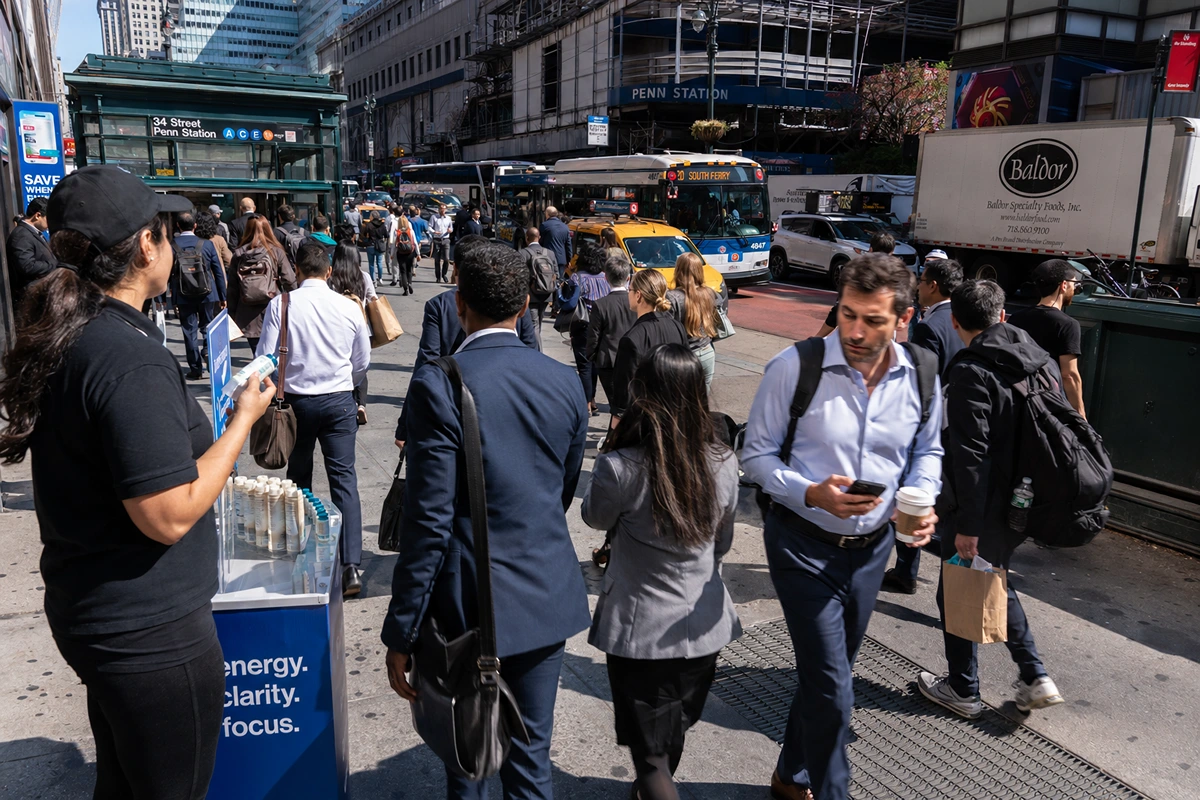
Manhattan pedestrians often move with a specific purpose. They may be walking to the subway, returning to an office after lunch, heading to a hotel, crossing between meetings, shopping in SoHo, or moving through Herald Square with bags and a schedule. A product rep has to work inside that rhythm rather than assume people are waiting to be pitched.
The local environment changes the way attention works. In Midtown, people may respond best to a fast benefit and a quick sample because they are moving between work and transit. In SoHo or Flatiron, shoppers may give a product a little more time if the offer connects to what they are already browsing. Near Bryant Park or Herald Square, the audience may include office workers, tourists, commuters, and shoppers in the same five-minute window.
NYC DOT’s Pedestrian Mobility Plan describes New York as a city of pedestrians where sidewalks and crossings support everyday movement across the city. That matters for a sidewalk campaign because the demo cannot treat the walking lane as empty event space. Product reps need to respect how people are already moving while still creating a clear brand interaction.
The three-second window is not about rushing the guest. It is about clarity. If the product cue is confusing, the passerby keeps moving. If the rep explains too much too soon, the interaction feels like a pitch instead of an invitation. Good product reps know how to make the first line direct enough for a busy block.
How Product Reps Make a Product Demo Work in Seconds
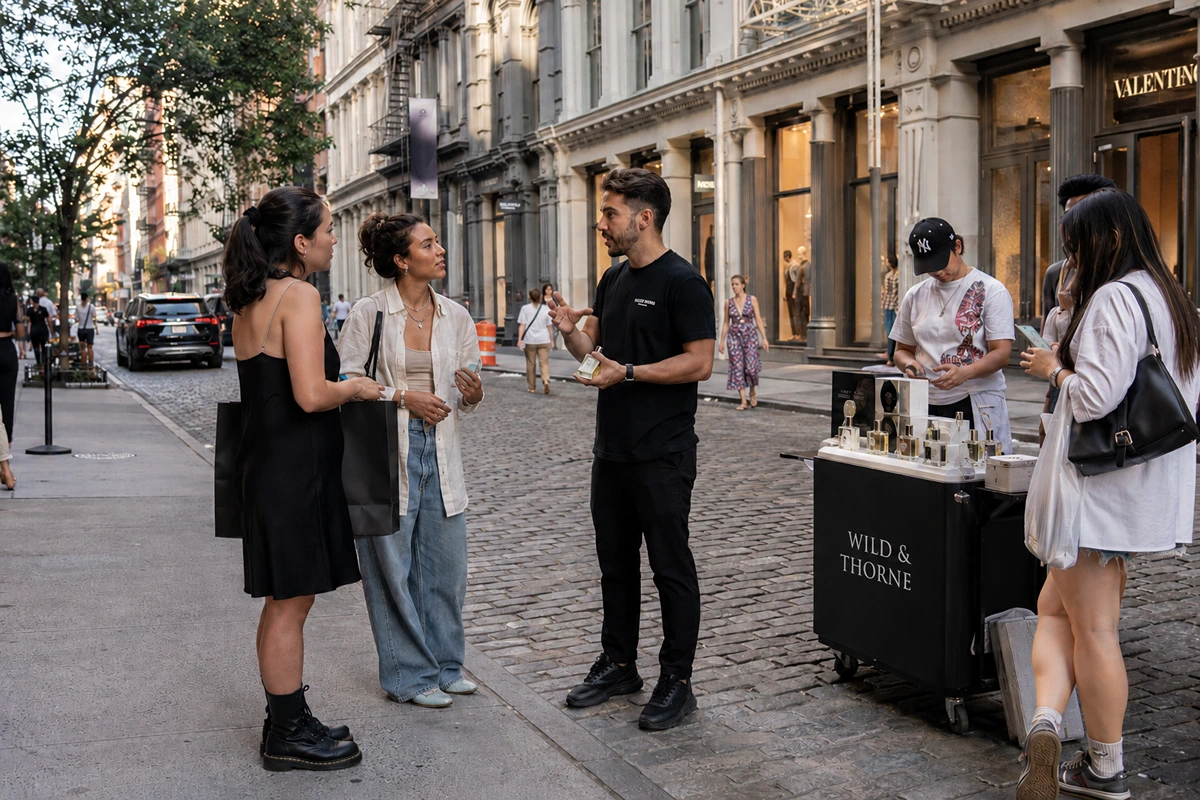
Product reps make a product demo work by leading with the most useful product cue, not the full brand story. On a Manhattan sidewalk, the opener has to answer one quick question for the passerby: “why should I stop?” That may mean naming the sample, showing the product in use, pointing to a short benefit, or inviting the person into a quick trial.
Strong reps also read body language. A person who slows near the table, looks at the product, glances at a friend, or watches another guest try the sample may be open to engagement. Someone walking fast with headphones, navigating a crowd, or avoiding eye contact is unlikely to be the right target. Product reps protect the campaign by giving the best time to the strongest opportunities.
The next step must be obvious. A rep can direct someone to try a sample, scan a QR code, step into a pop-up, watch a short demo, or speak with a brand ambassador for a deeper explanation. That keeps the product demo short enough for the sidewalk while still useful for the brand.
This is where product reps differ from a passive display. The rep converts a glance into a decision. In a street activation, that decision may be small, but it still matters: try it, scan it, taste it, touch it, enter the store, or ask one more question.
Where Street Activation Breaks Down on a Busy Block
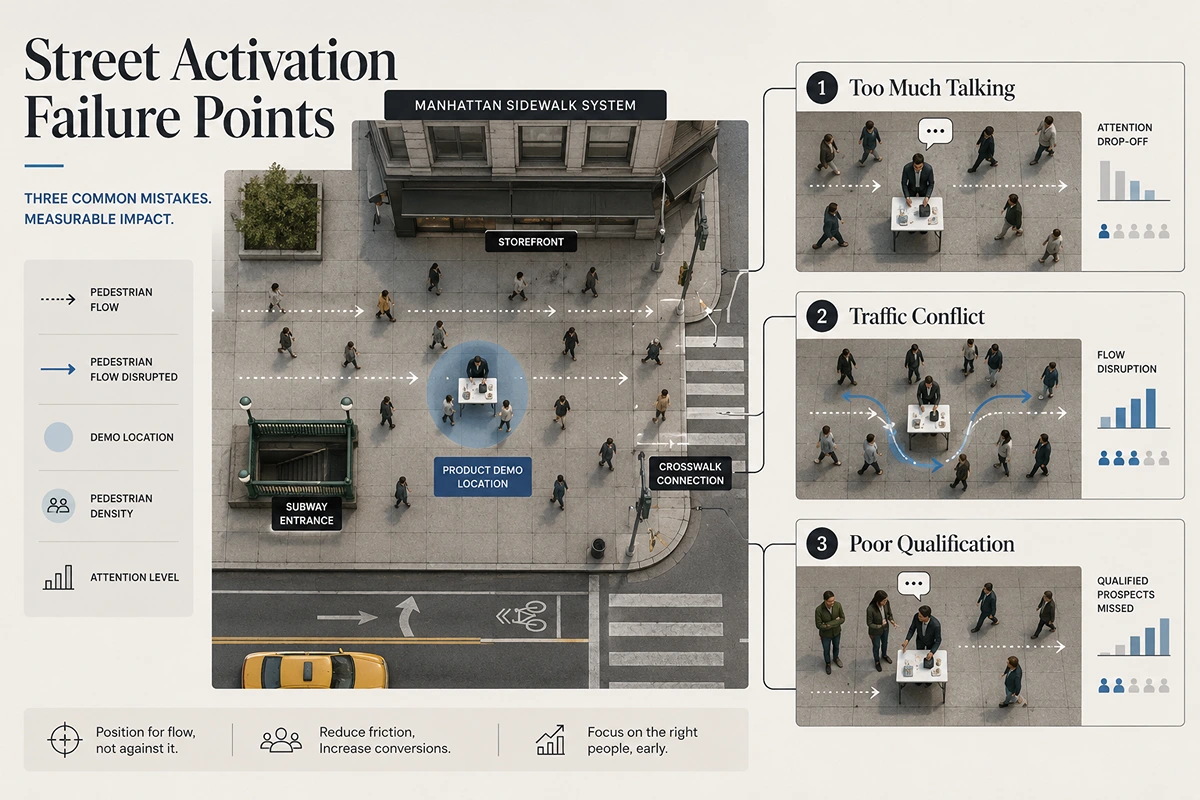
Street activation breaks down when the campaign asks too much from people who only have a few seconds to decide. Manhattan sidewalks bring mixed audiences past the same product moment: office workers, shoppers, tourists, delivery workers, hotel guests, residents, and commuters. A product rep has to keep the interaction clear enough for the right people without slowing everyone else.
The opener is too long for the sidewalk.
A rep who begins with a brand paragraph can lose people before the product feels relevant. On a busy block, the first line should make the benefit, sample, or next step clear immediately. Product reps need a short, confident opener that works while people are still deciding whether to stop.
The sample point blocks the walking lane.
If the sample tray, QR sign, or demo station sits where people naturally pass, interested guests and unrelated pedestrians start competing for the same space. Product reps can angle the engagement point so people step slightly out of the walking path. That protects the demo and keeps the block easier to navigate.
The wrong audience gets too much time.
A busy sidewalk brings everyone past the campaign, including people with no interest or no time. Product reps need to qualify quickly so the strongest prospects get the better explanation. That means giving a fast invitation, watching the response, and moving on when the person is clearly not interested.
Why Manhattan Product Demos Need Local Field Planning
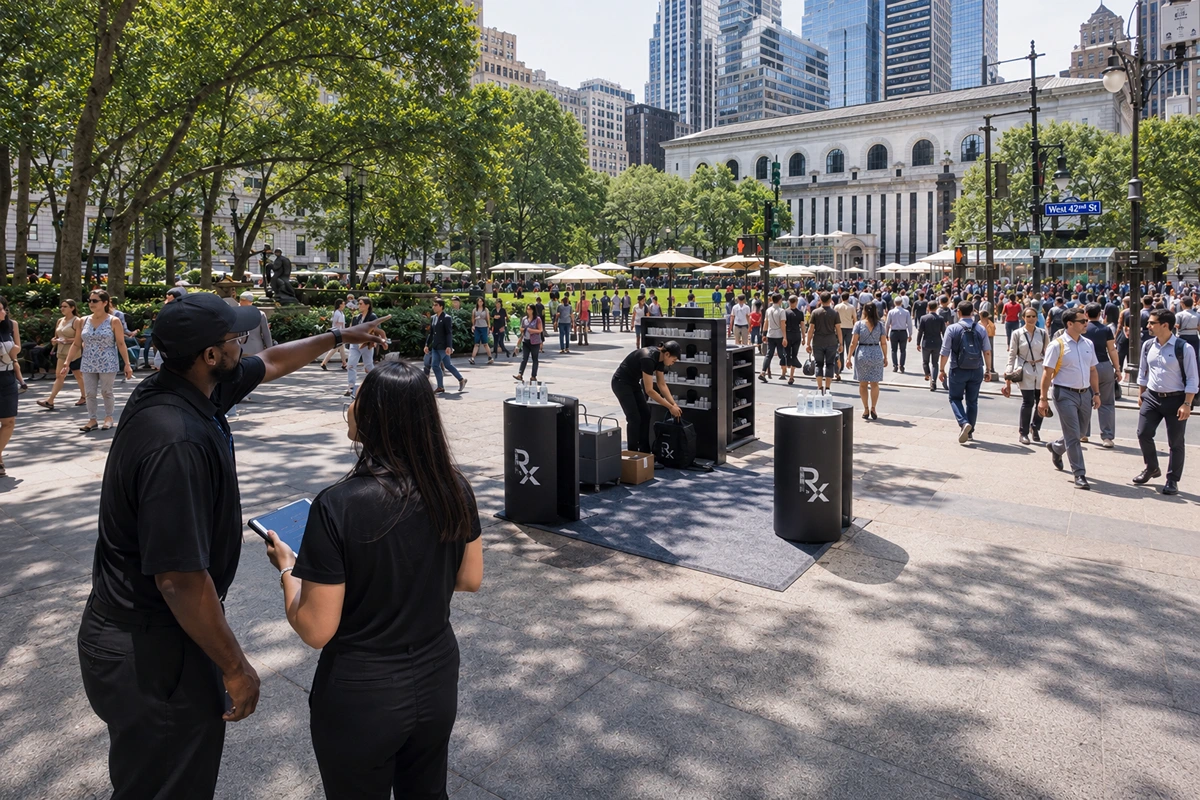
Manhattan product demos need local field planning because each block creates a different kind of pause. A Midtown lunch-hour campaign may have a fast-moving office crowd that responds to samples and clear utility. A SoHo retail block may give reps more browsing behavior, but also more window pauses and store-entry conflicts. A Flatiron or Bryant Park area campaign may catch a mix of office workers, shoppers, tourists, and people cutting through the neighborhood.
NYC Tourism describes Manhattan as the borough many visitors associate with the city’s major landmarks, shopping, restaurants, entertainment, and neighborhoods. That variety matters because product reps are not speaking to one uniform sidewalk audience. They are adjusting to the block, the time of day, and the reason people are moving through that area.
Local planning should decide where the rep stands, where the product is shown, where a sample is handed off, and where deeper engagement happens. If the first interaction is near a subway stair, the pitch needs to be faster. If the activation is beside a store or pop-up, the rep can guide interested people toward the entrance. If the sidewalk is narrow or partially blocked by a shed, the demo point may need to shift.
Street activation also changes by timing. Morning commuters may resist anything that feels slow. Lunch traffic may respond to a quick handoff or scan. After-work shoppers may accept a more product-led conversation if the offer feels relevant. Product reps make those adjustments in real time instead of treating every passerby the same way.
How Eventstaff Product Reps Support Manhattan Street Activation
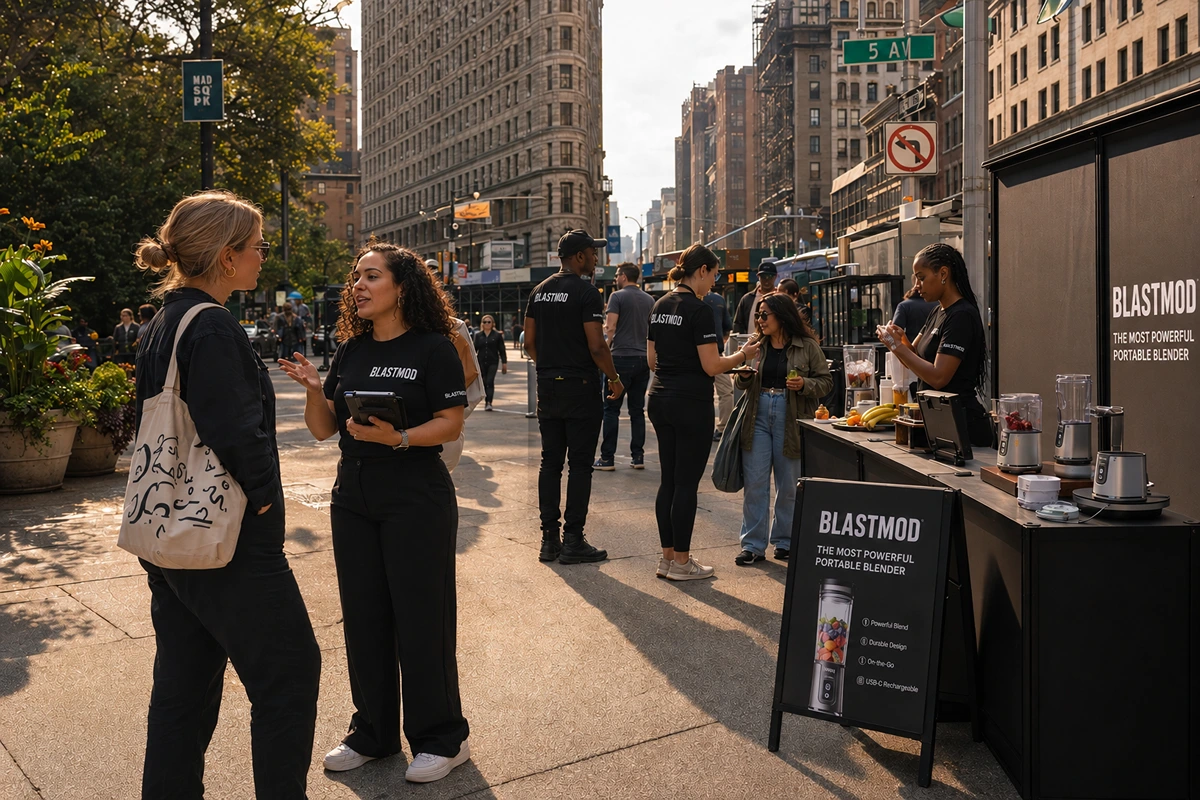
At Eventstaff, our product reps help brands turn short sidewalk attention into clear product action. We place reps where passersby first notice the campaign, where they decide whether to engage, and where the next step needs to be easy. That gives the product demo a human lead instead of relying only on signage, samples, or a table.
Our product reps support product explanation, sample handoff, QR scan guidance, product feature clarity, audience qualification, store-entry direction, and coordination with brand leads or store teams. If the campaign needs deeper support, brand ambassadors can handle longer conversations, street teams can extend awareness along nearby blocks, and guerrilla marketing teams can support stunt-led moments that need more field energy.
The role stays practical. A rep may shorten the opener during a rush, reposition the sample point when foot traffic changes, guide interested shoppers toward a pop-up, or move deeper conversations away from the walking lane. Those small adjustments help the campaign stay useful without making the sidewalk feel blocked.
For Manhattan street activation, the goal is to respect the pace of the block while still giving the product a real chance to connect. Product reps help the brand make that connection quickly, clearly, and professionally.
Bottom Line
The three-second demo window on a Manhattan sidewalk is short because people are already moving with purpose. A product demo has to compete with subway timing, office schedules, shopping decisions, hotel traffic, and the natural pace of the block. Product reps make that moment useful by turning a glance into a sample, scan, trial, store visit, or product conversation.
Eventstaff supports Manhattan street activation with trained product reps who explain products quickly, qualify interest, guide next steps, and keep the interaction appropriate for the sidewalk. When the right staff are in place, the demo feels clear, fast, and worth stopping for.
Ready to elevate your next event?
Join thousands of event planners who trust EventStaff.com for reliable, professional staffing solutions.
Trusted by event professionals nationwide
1k+
Events Staffed
2 million+
Guests Served
97%
Positive reviews