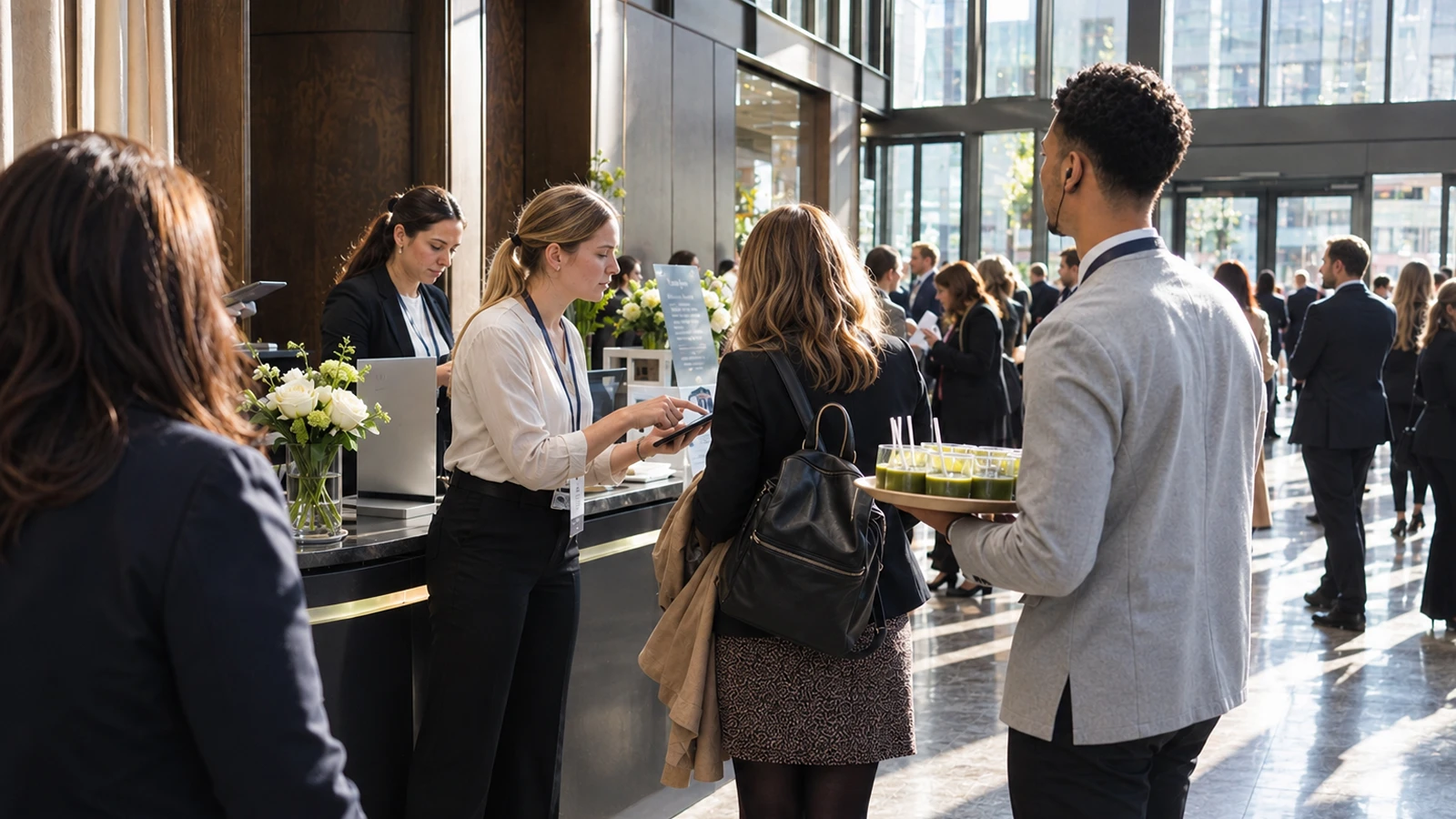

In New York City, guest services are judged almost immediately. A guest steps into a lobby, looks for the right desk, scans for direction, and decides within minutes whether the host feels prepared. For corporate breakfasts, conferences, private receptions, brand events, and executive gatherings, those first interactions shape the attendee experience before anyone reaches the room.
That is why trained hospitality staff matter. They welcome guests, give visible direction, reduce arrival confusion, protect check-in flow, and help the event feel controlled from the first interaction.
CEO Excerpt
“Guests decide very quickly whether an event feels prepared. In New York, that decision often happens in the lobby before the ballroom. Strong hospitality staffing gives the host control of that first impression. When guests are welcomed, directed, and supported immediately, the entire event starts with more confidence.”- Daniel Meursing, CEO, Eventstaff

The first five minutes set the tone before the event begins
NYC events often begin at the building door, lobby desk, elevator bank, security line, or registration table. The room may look ready, but guests usually form their first impression earlier, while they are still trying to understand where to go and who is in charge.
Many guests walk in from meetings, trains, hotels, client offices, and building security checkpoints. By the time they enter the venue, they expect the event to make sense quickly. If the first visible touchpoint feels unclear, the arrival experience starts with friction, especially for executives, sponsors, speakers, investors, clients, press, and VIPs who notice improvised handling immediately.
Why guest services matter more in NYC arrival windows
Guest services carry extra weight in New York because arrival windows can tighten fast. A 9 AM breakfast in Midtown, a sponsor reception near Hudson Yards, or a finance event in the Financial District may move from calm to crowded within minutes.
The MTA reported 3.376 million average weekday subway riders in 2024, which helps explain the scale of daily movement around business and event districts.
Guests can arrive in clusters from nearby offices, subway exits, rideshares, hotel lobbies, and back-to-back meetings. Several small pauses can turn the lobby crowded, especially when the check-in desk is also handling room direction, VIP routing, elevator guidance, late arrivals, and badge questions.

Why NYC creates a different arrival experience problem
Pace, expectations, and venue complexity shape the attendee experience in New York. A guest walking into a Manhattan event is often used to quick service, clear signage, direct answers, and polished front-of-house handling, especially in corporate, finance, media, luxury, and tech settings.
NYC also brings a wide mix of event environments: hotel ballrooms, office towers, private clubs, rooftops, galleries, conference floors, theater lobbies, and convention spaces. Javits Center’s official calendar reflects the city’s steady mix of trade shows, conferences, public programs, and large-format events.
That local event culture raises the standard for hospitality staff. Guests expect movement, sponsors expect polish, executives expect discretion, and venue teams expect front-of-house staff to know where guests should go without turning every question into a delay.
Where the first-five-minute breakdown usually happens
The first-five-minute problem usually starts quietly. A few guests pause, then a few more ask questions, and the arrival area begins to feel crowded before the event lead sees the pattern.
- No visible first point of contact.
Guests enter the building and have to decide whether to approach security, reception, registration, or the event floor. A trained hostess or greeter gives the event a clear human starting point, so the first guest decision is simple. - Check-in becomes the only problem-solving station.
When every question reaches the registration desk, the line slows. Check-in staff should confirm guests while nearby hospitality staff handle direction, room questions, and next-step guidance. - Elevator direction is unclear.
Many NYC venues depend on the right elevator bank, floor access, or building route. When guests wait at the wrong bank or reach the wrong floor, the event loses time before they arrive. - VIPs blend into the general arrival flow.
Speakers, sponsors, executives, and private guests often need faster recognition. Hospitality staff help identify priority arrivals and route them without creating visible disruption.

How trained hospitality staff protect event arrivals
Trained hospitality staff protect the attendee experience by giving guests confidence before the main program starts. They create visible order at the points where confusion spreads: entrance, lobby, check-in, elevators, hallway turns, room doors, and VIP access points.
For NYC guest services, that can include welcoming arrivals, confirming the event name, directing guests to the correct desk, supporting check-in staff, managing room flow, identifying VIPs, and escalating problems before they slow down the line. The best hospitality staff also understand tone, so a luxury brand reception feels polished, a corporate breakfast feels efficient, a conference feels organized, and a private executive event feels discreet.
What weak arrival handling costs the host
The costs of weak arrival handling often appear after the event is already underway. The host may lose five minutes at the door, but the real impact lasts longer because guests walk in uncertain, executives notice delays, sponsors see people waiting, and internal team members get pulled into basic arrival questions.
New York City also operates at a scale where hospitality expectations are high. NYC Tourism + Conventions reported 1,515 meetings and events booked in 2025, along with 65 million visitors and $84.7 billion in total economic impact.
In that environment, guests compare your event against a high local standard. If the first five minutes feel unmanaged, the host absorbs the blame for delays, confusion, and preventable pressure at the door.

When NYC events should add hospitality staff
A planner should add hospitality staff before arrival pressure reaches the doorway. The need is especially clear when the event has multiple guest types, a tight start time, VIP attendees, security coordination, or a venue layout that guests may struggle to read at first glance.
NYC events should consider added staff during commuter-heavy windows, in multi-floor venues, at shared entrances, or when the guest list includes speakers, press, sponsors, clients, board members, or high-value prospects. Hospitality support also matters when check-in involves names, QR codes, badges, wristbands, ticket verification, or segmented guest lists, because those details should support the arrival plan rather than slow the first desk.
How Eventstaff supports NYC guest services
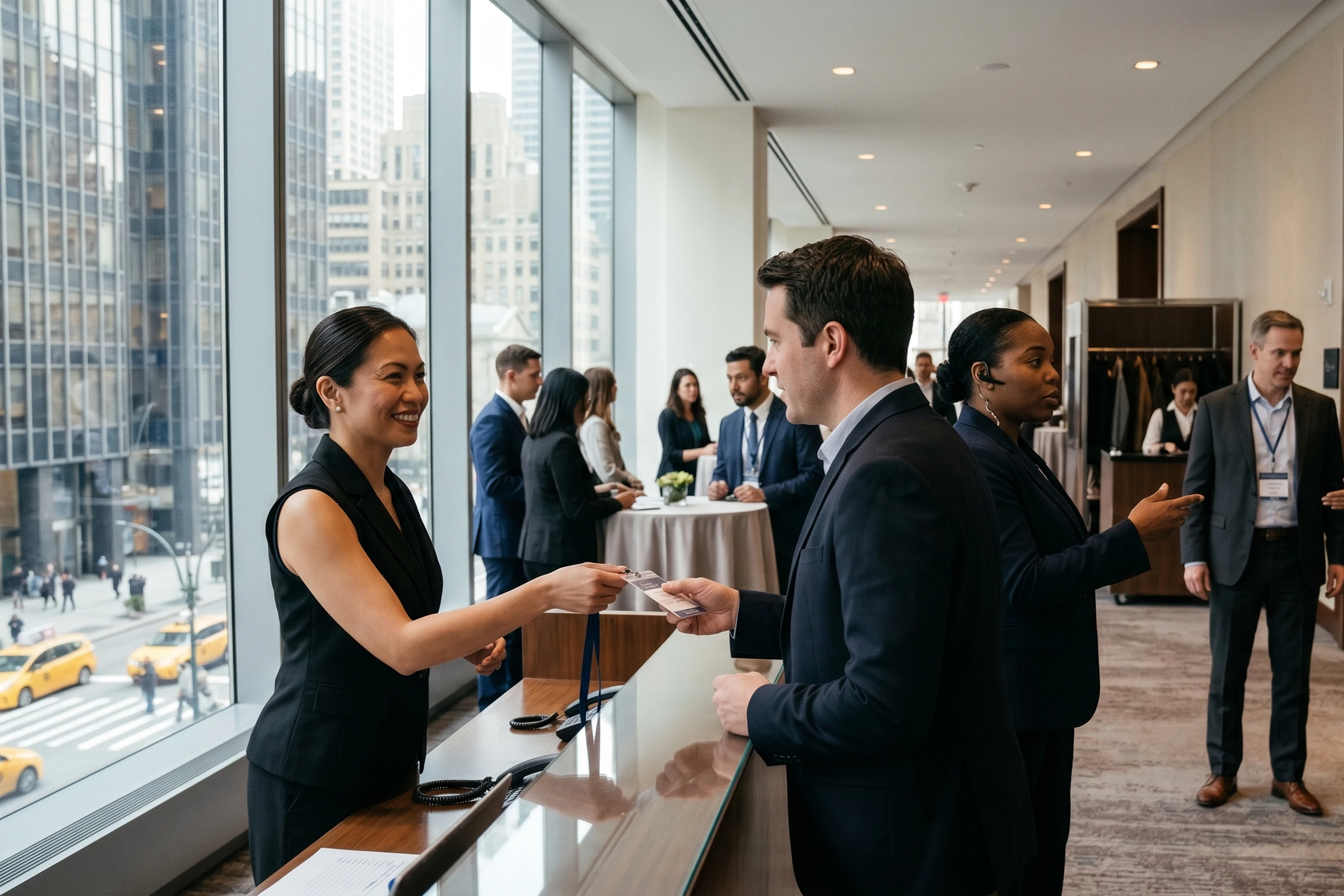
Eventstaff supports NYC guest services with trained hospitality staff who understand front-of-house pressure. The team can support entrances, lobbies, registration areas, elevator banks, conference rooms, VIP routes, and guest-facing transition points.
For hospitality staff, the priority is controlled arrival flow, stronger guest confidence, and a better arrival experience from the first visible interaction. Eventstaff can provide hostesses, check-in staff, ticket checkers, conference staff, and guest-facing support teams for NYC events where timing and presentation matter.
That support helps planners protect the tone of the event while keeping their internal team focused on clients, speakers, sponsors, and production.
Bottom Line
NYC guest services are decided quickly because guests expect clarity on arrival. A crowded lobby, unclear check-in area, or slow elevator route can affect the attendee experience before the event begins.
Trained Eventstaff teams help guests feel welcome, directed, and supported from arrival, so the host starts with confidence rather than correction. For planners managing high-value NYC audiences, the first five minutes deserve the same attention as the main program.
Ready to elevate your next event?
Join thousands of event planners who trust EventStaff.com for reliable, professional staffing solutions.
Trusted by event professionals nationwide
1k+
Events Staffed
2 million+
Guests Served
97%
Positive reviews