

A NYC brand activation can look successful from the outside. People stop, samples move fast, phones come out, and the setup starts drawing a crowd. But at the end of the day, the campaign team may still be looking at weak sign-ups, thin follow-up data, and very few qualified prospects.
That is one of the biggest risks with experiential events in New York City. Attention comes quickly in the right location, but leads require trained staff, sharper audience filtering, and a clear handoff from curiosity to action.
CEO Excerpt
“Attention is valuable, but the goal of a brand activation is to move people toward action. In New York, the crowd can build quickly, so the staff have to know how to qualify interest without slowing the energy. The right team helps brands turn public attention into measurable opportunity.” - Daniel Meursing, CEO, Eventstaff

Why attention can look like success in NYC
New York gives brand activations a natural advantage: movement. A street-level setup in SoHo, Flatiron, Times Square, Union Square, Bryant Park, Williamsburg, DUMBO, or near Javits can create visible interest quickly because people are already moving through dense retail, business, transit, and event corridors.
That energy can make a brand activation feel productive early. A crowd forms, people watch, and the activation team gets busy. But crowd size alone does not show whether the right audience is stopping. A tourist taking a photo, a commuter grabbing a sample, and a buyer asking a product question all create visible activity, but they do not carry the same commercial value.
Times Square Alliance tracks district indicators including pedestrian flows, retail activity, real estate markets, and demographics, which shows why location-level audience behavior matters in high-traffic NYC environments.
For experiential events, the staffing plan has to separate passing attention from real intent. That starts with what staff say, where they stand, and how quickly they guide interested people toward the next step.
Why experiential events lose leads after the first interaction
Experiential events often lose leads after the first conversation because the opening interaction stays too general. Someone stops, smiles, asks what is happening, accepts a sample, and walks away before staff understand whether that person fits the campaign audience.
In NYC, this happens fast. The MTA reported 3.376 million average weekday subway riders in 2024, which reflects the scale of daily movement around the city’s commercial and event districts.
That movement creates a short window for staff to qualify interest. A trained brand ambassador or product rep should know the first question, the qualifying signal, and the next action. For example, the right question may identify whether someone works nearby, shops in the category, attends the adjacent event, fits the buyer profile, or wants the offer being promoted.
When staff focus only on getting people to stop, the activation may create energy with limited pipeline value. Strong experiential events give staff a clear path from greeting to qualification to follow-up.

How street marketing changes by NYC location
Street marketing in NYC has to adapt block by block. A team near Bryant Park during lunch is speaking to a different audience than a team in SoHo on a Saturday afternoon, outside Javits during a trade show, or near Grand Central during a commuter-heavy window.
In shopping areas, staff may need to connect the activation to product trial, retail interest, limited offers, or nearby purchase opportunities. In business districts, the conversation may need to move faster, with sharper qualification and less casual explanation. Around conferences or large venues, the best lead may be a professional attendee who needs a quick value statement before they move to the next session.
NYC Tourism + Conventions reported 1,515 meetings and events booked in 2025, along with $84.7 billion in total economic impact from overall visitation. That volume supports the wider reality that New York is a dense event and business environment where audience context changes quickly.
Good street marketing treats location as part of the strategy. The same script cannot carry every audience, especially in a city where the person stopping may be a tourist, buyer, executive, student, local resident, journalist, creator, or conference attendee.
Where the lead handoff usually breaks
The lead handoff usually breaks when staff are busy creating activity but lack a defined conversion path. The activation looks alive, but the prospect leaves without being qualified, captured, or directed toward a clear next step.
- The opening line attracts attention but does not qualify intent.
A friendly greeting can bring someone closer, but the staff member still needs to understand why the person stopped. The first real question should help identify whether they are curious, relevant, ready to try, or worth routing to a deeper conversation. - Samples move faster than conversations.
Sampling can build awareness, but it can also drain inventory without creating leads. Trained brand activation staff should know when to pause, explain the product, ask a qualifying question, and connect the sample to a follow-up action. - The next step feels optional or unclear.
A person may enjoy the activation and still leave without signing up, booking, scanning, purchasing, or speaking to the right staff member. Strong lead flow makes the next action visible, simple, and easy to complete. - Every passerby gets the same pitch.
NYC audiences vary by neighborhood, time of day, event calendar, and street traffic pattern. Staff should adjust the conversation for shoppers, commuters, event attendees, tourists, local residents, and business audiences.
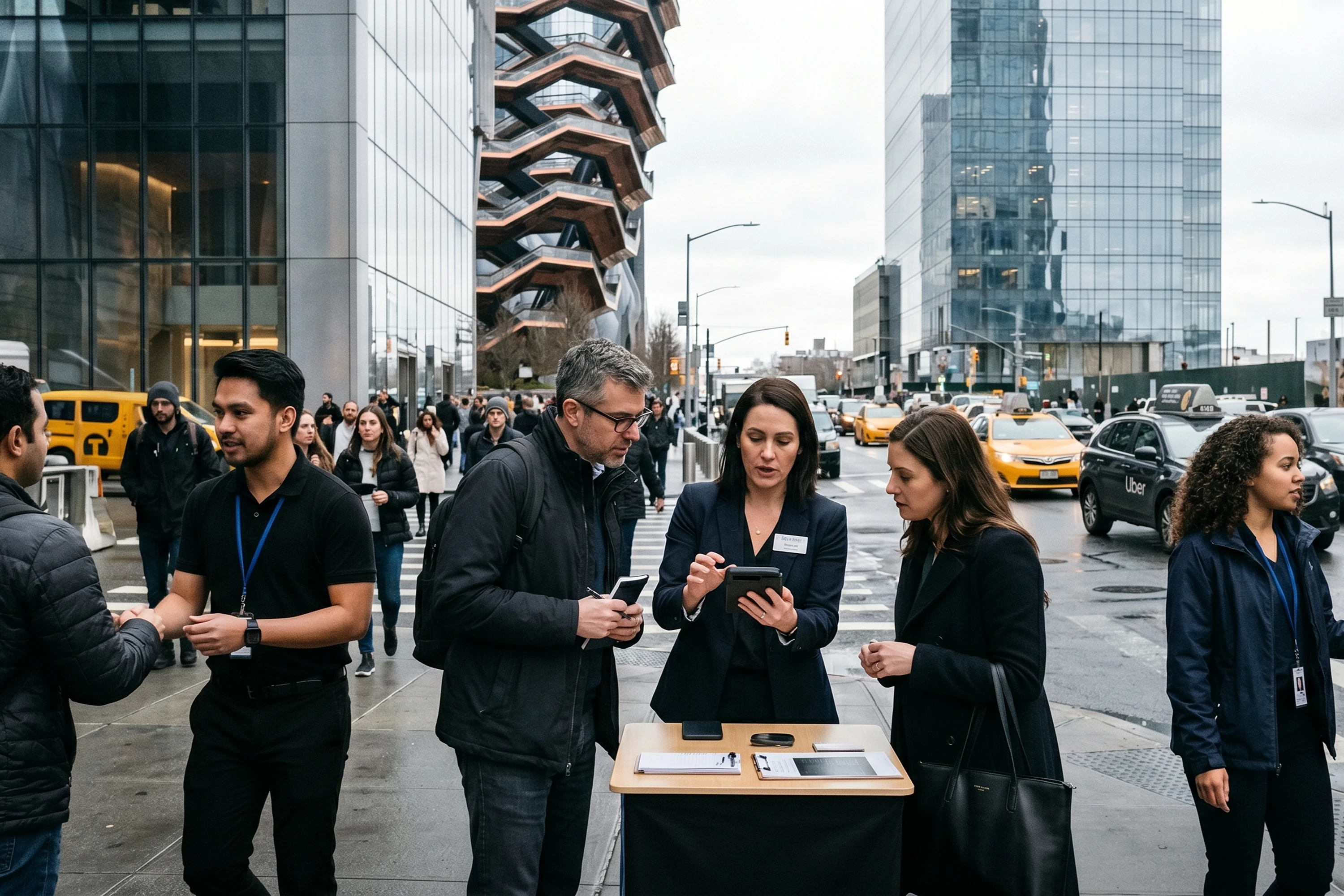
How trained brand activation staff separate attention from intent
Trained brand activation staff help experiential events move beyond surface-level engagement. They know how to open a conversation, qualify the person quickly, explain the offer clearly, and pass stronger prospects into the right next step.
A street team may be responsible for creating the first interaction and bringing people toward the activation. Brand ambassadors can explain the campaign, keep the tone consistent, and make the brand feel credible. Product reps can answer deeper questions, identify stronger prospects, and move high-intent guests toward trial, sign-up, booking, purchase, or follow-up.
The strongest teams also know when to shorten the interaction. In NYC, some people need a direct invitation, while others need a fast route to the offer. Trained staff keep the pace sharp and make sure the best prospects receive the most attention.
What no-lead attention costs the brand
A busy brand activation with weak leads can create a reporting problem after the event. The team may have strong photos, high sample counts, and visible foot traffic, but the commercial story feels thin when follow-up data is reviewed.
That creates pressure for marketing teams, field teams, agency partners, and internal stakeholders. If the campaign goal included sign-ups, qualified conversations, appointments, product trials, app downloads, retail visits, or post-event follow-up, the staff plan has to support those outcomes from the start.
No-lead attention can also distort decision-making. A crowded activation may look like proof that the concept worked, even when the staff plan failed to capture the right audience. For NYC experiential events, the better measure is how well the team turned attention into usable action.
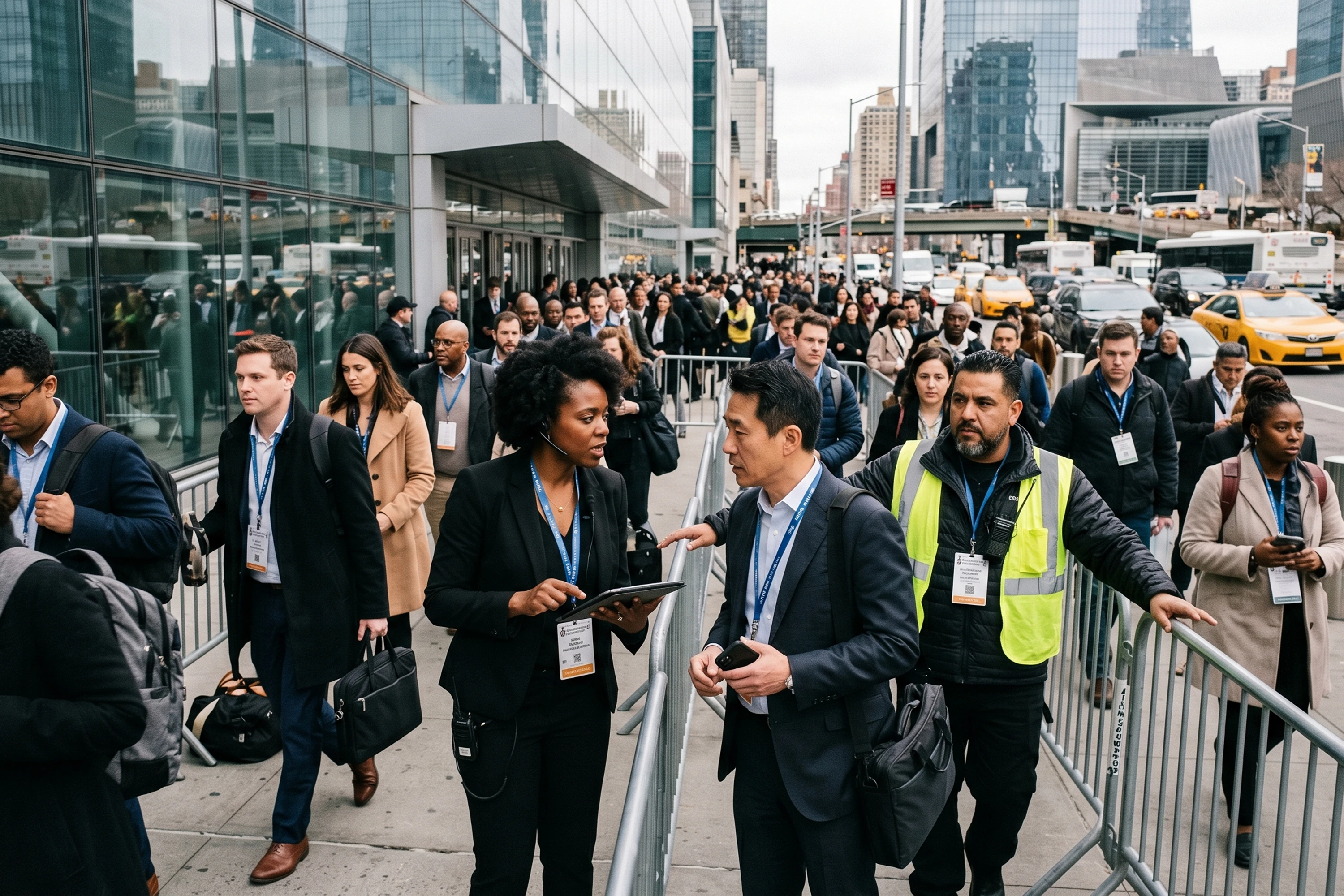
When NYC activations should add Eventstaff support
A NYC activation should add trained support when the campaign depends on more than visibility. If the goal includes lead capture, buyer qualification, product education, sample-to-sign-up flow, demo booking, retail traffic, or sponsor reporting, the staff team needs to be built around those outcomes.
Eventstaff support is especially valuable for high-foot-traffic placements, product launches, pop-ups, conference-adjacent activations, street marketing campaigns, and multi-role brand teams. These settings need staff who can draw people in without losing the lead path.
The need becomes even clearer when the campaign has a narrow audience. A luxury product, tech launch, wellness brand, beverage campaign, fashion drop, or B2B activation may attract broad attention, but the useful prospects need to be identified quickly.
How Eventstaff supports lead-focused brand activation
Eventstaff supports brand activation campaigns with trained staff who understand live engagement, audience qualification, and on-site conversion pressure. The team can provide brand ambassadors, product reps, street teams, experiential staff, and lead capture support for NYC activations where attention needs to become action.
For experiential events, the staffing plan should be built around the campaign goal. Some activations need more front-line outreach. Others need stronger product explanation, tighter lead capture, VIP handling, retail routing, or conference-adjacent qualification.
Eventstaff helps brands place the right people at the right points in the activation. That gives the campaign a better chance to turn NYC attention into qualified conversations, usable data, and follow-up value.
Bottom Line
A NYC brand activation can get attention and still fall short on leads. That gap usually appears when staff are trained to attract interest but lack the structure to qualify, explain, route, and capture it.
For experiential events, the strongest results come from a team that understands both the street-level pace of New York and the commercial goal behind the campaign. Eventstaff helps brands support that moment with trained brand activation staff, sharper street marketing execution, and a clearer path from attention to lead value.
Ready to elevate your next event?
Join thousands of event planners who trust EventStaff.com for reliable, professional staffing solutions.
Trusted by event professionals nationwide
1k+
Events Staffed
2 million+
Guests Served
97%
Positive reviews