

In Midtown Manhattan, event logistics can start slipping hours before the first guest reaches the door. A delayed truck, a missed freight elevator window, a vendor using the wrong entrance, or an unclear setup sequence can push the entire room behind schedule before the event looks late from the outside.
That is the load-in gap planners worry about. The room may still be empty, the guest list may be untouched, and the front-of-house team may still be preparing for arrivals, but the production clock is already under pressure. For Production Teams, the critical work happens in the hidden window between building access and door time.
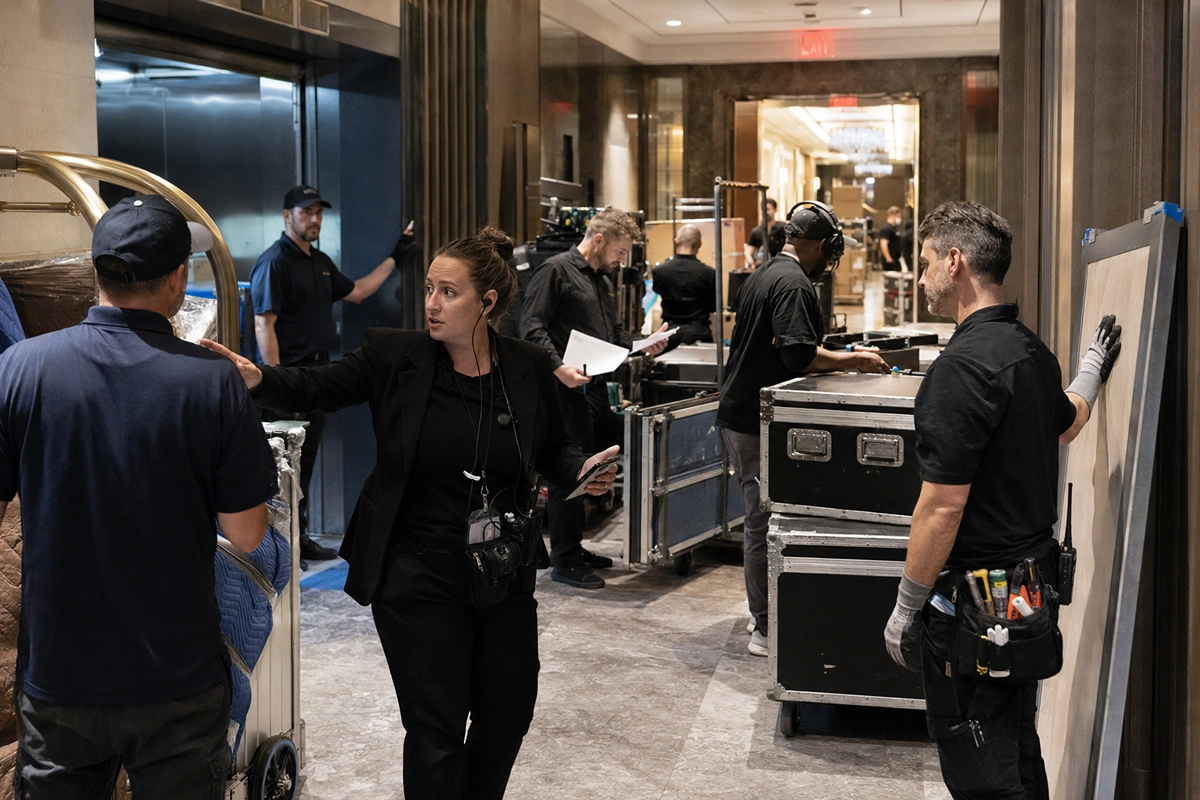
CEO Excerpt
“Strong production support is most visible when the event opens smoothly. In Midtown, that depends on what happens long before guests arrive. When load-in movement, vendor timing, and room readiness are managed correctly, the planner can open doors with confidence.” - Daniel Meursing, CEO, Eventstaff
Why Midtown Load-Ins Lose Time Before the Event Starts
Midtown load-ins are rarely simple drop-offs. A corporate reception, product launch, investor event, media preview, brand dinner, or private hospitality event may require AV, staging, furniture, signage, florals, step-and-repeat materials, lighting, rentals, backline equipment, and sponsor assets to arrive in a specific order.
The delay often starts when that order is unclear. A large rental delivery may reach the service entrance before the room is ready. AV may need access to the stage area while furniture is still being placed. A signage vendor may need a decision from the producer while another vendor is waiting at the curb.
In Midtown, these gaps are harder to absorb because buildings often have shared service entrances, freight elevator windows, tenant rules, hotel back-of-house routes, and limited curb time. A vendor who loses 20 minutes downstairs can create a room-level delay that affects lighting focus, furniture placement, check-in setup, catering access, or the final sweep before doors open.
That is why Production Teams matter before guests arrive. They help keep the load-in window active, directed, and accountable, so every vendor knows where to go, what can move next, and when an issue needs to reach the event lead.
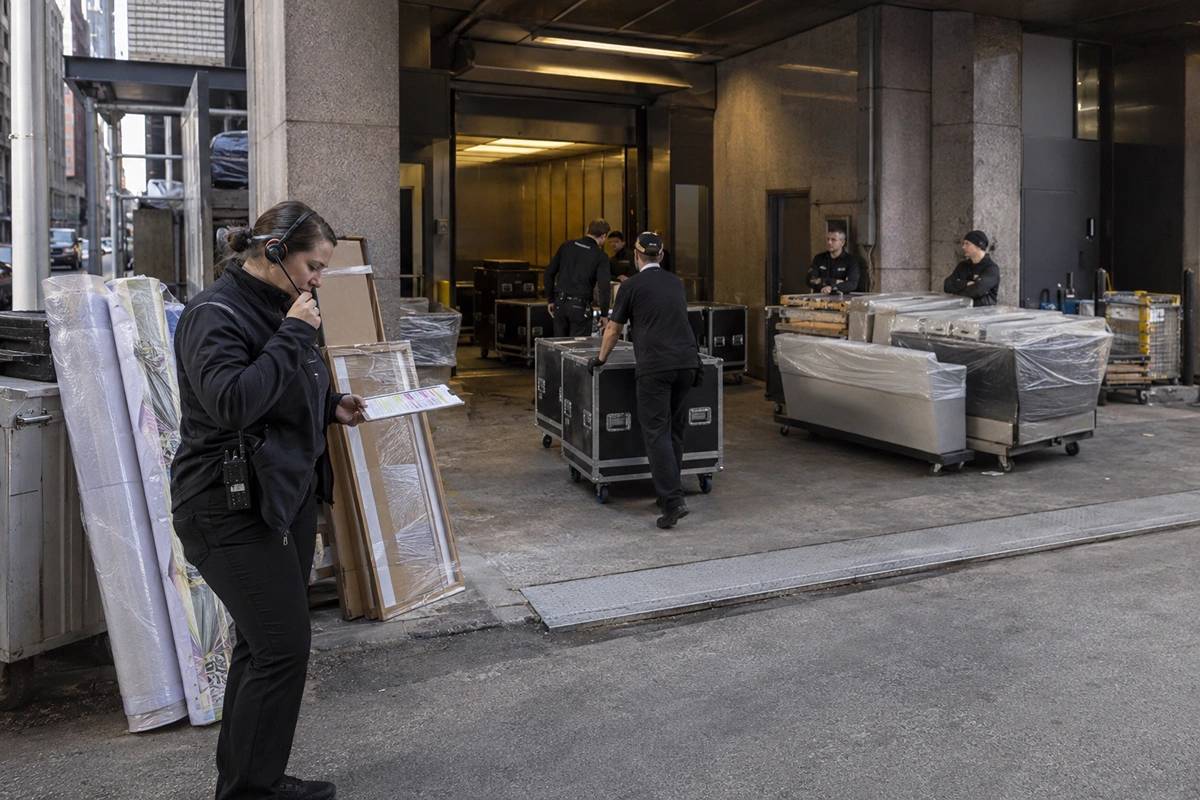
Why Event Logistics Has to Control the Load-In Sequence
Strong event logistics in Midtown is about sequencing. The event team needs to know which vendor should arrive first, which access path they should use, where materials should pause, and who makes the call when one setup task blocks another.
Production Teams help manage that sequence on the ground. They can meet vendors at the correct entrance, confirm whether freight access is ready, keep materials from stacking in the wrong corridor, and direct setup pieces toward the right room zone. That support prevents the venue entrance, service hallway, or ballroom threshold from becoming an unofficial holding area.
The work is also about communication. If a rental delivery is late, the production lead needs to know what that delay affects. If AV needs a clear path before furniture is placed, someone has to protect that order. If a step-and-repeat wall arrives before floor protection is down, the team needs a quick decision before the setup path gets crowded.
This is where event logistics becomes practical. It is not a clipboard concept. It is the real-time movement of people, carts, equipment, timing, and information through a Midtown building that may already be busy with tenants, hotel guests, security teams, loading traffic, and other scheduled activity.
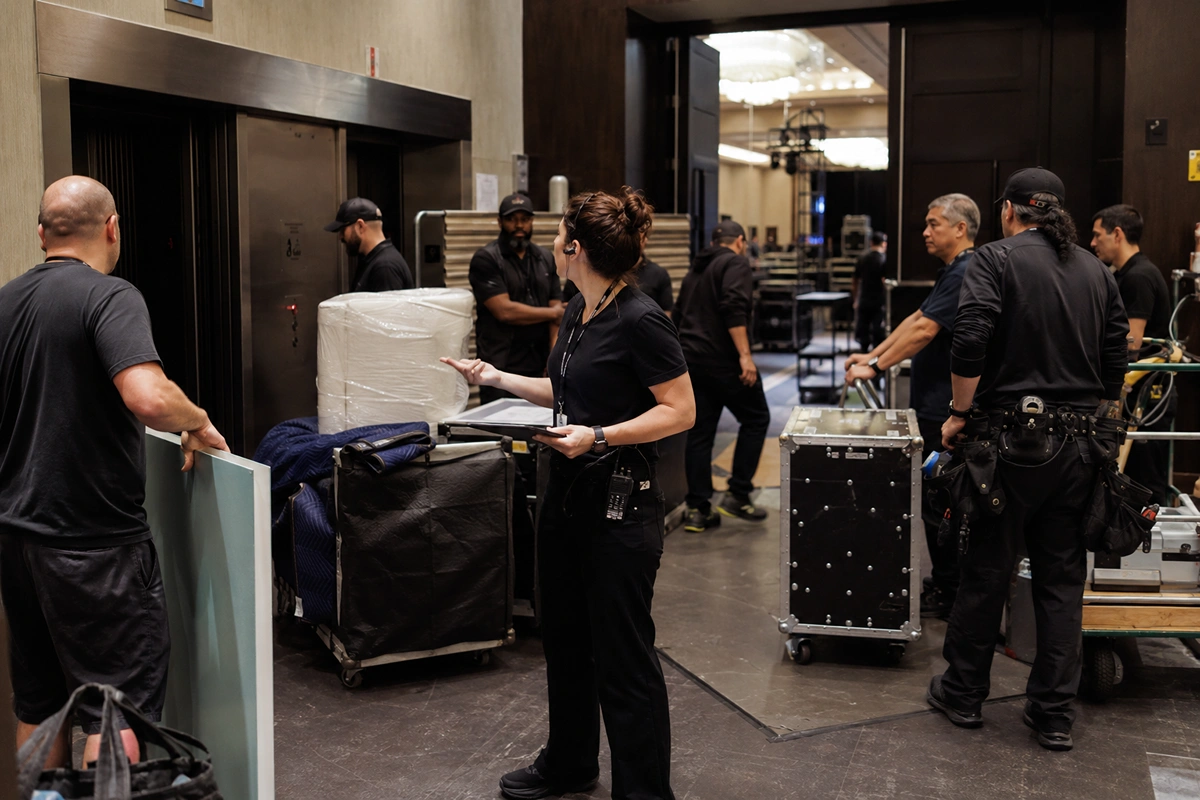
Where Event Operations Break Down Before Doors Open
Event operations often break down when nobody owns the space between the vendor schedule and the room reveal. The planner may have the run of show, the venue may have access rules, and each vendor may have their own arrival time, but the actual movement between curb, freight, corridor, and setup zone still needs active control.
One common issue is vendor clustering. Three teams may arrive close together because each wants enough time to set up, but the venue may only have one usable freight elevator window or one back-of-house route. Without Production Teams guiding order and movement, vendors start negotiating space in real time.
Another issue is decision drift. A vendor may ask the wrong person where to place cases, which doorway to use, or whether to wait in the hallway. Those small questions can scatter across security, venue staff, producers, and vendor leads, creating a slow chain of answers when the room needs physical progress.
Strong event operations keep those questions moving toward the right person. Production Teams do not replace the producer or venue lead. They support them by keeping the setup path clear, flagging friction early, and making sure the room keeps moving toward guest readiness.
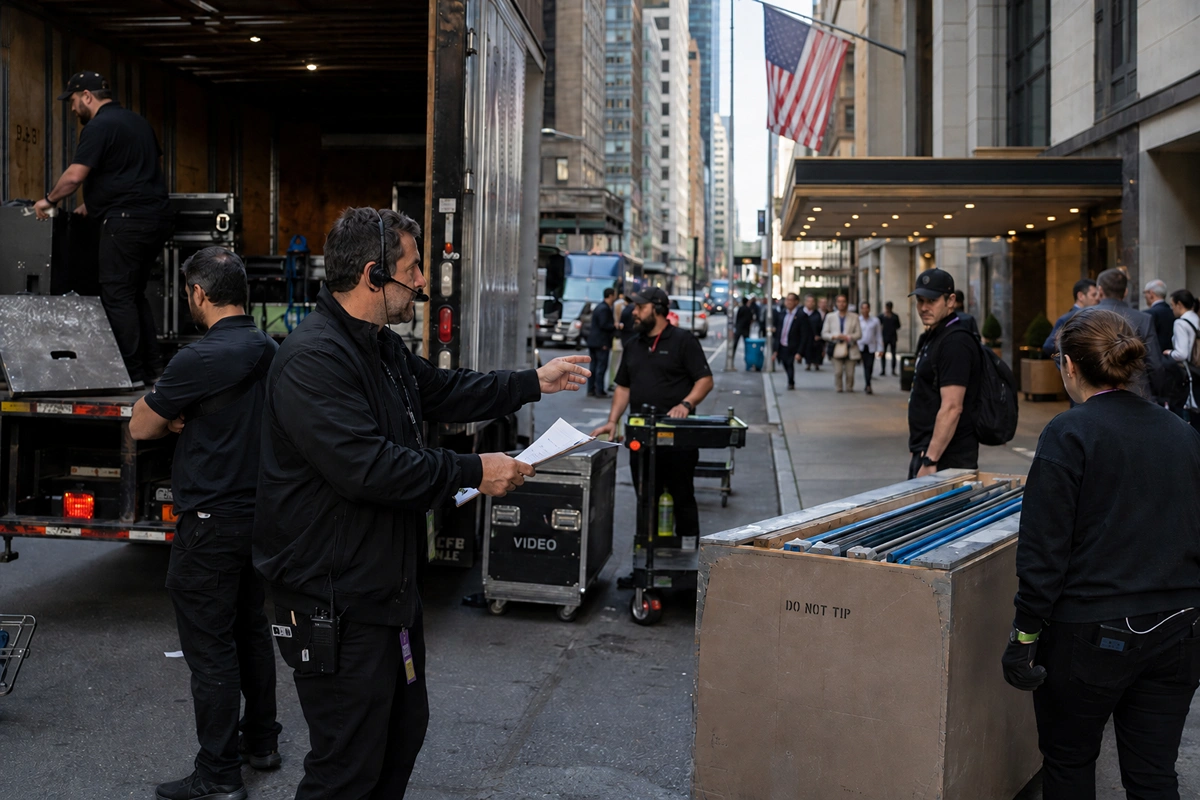
Why Midtown Makes the Load-In Gap More Expensive
Midtown creates load-in pressure because event setup has to work inside one of the busiest commercial environments in the country. Around Bryant Park, Times Square, Herald Square, Madison Avenue, Fifth Avenue, and Grand Central, production movement overlaps with office traffic, hotel arrivals, retail deliveries, theater activity, pedestrians, bikes, cars, rideshares, and building security procedures.
NYC DOT identifies loading zones as curb areas that support commercial vehicles and the loading or unloading of goods, which makes curb planning a real part of event setup in Manhattan. A production truck that cannot access the right curb zone at the right time can disrupt the entire load-in sequence.
The city’s off-hour delivery program also shows how serious this timing issue is. NYC DOT encourages deliveries between 7 p.m. and 6 a.m. in areas including Midtown and Lower Manhattan because these districts have high pedestrian volumes and limited curb space. For event producers, that same reality affects daytime and early evening load-ins when vendor access competes with normal city movement.
Midtown’s pedestrian environment adds another layer. Times Square alone includes pedestrian plazas managed across Broadway between 41st and 47th Streets, with the city identifying multiple plaza zones of different sizes. That public-space density reflects how Midtown buildings and event venues operate inside a constant flow of people, vehicles, and street-level decisions.
How Eventstaff Production Teams Keep Doors on Schedule
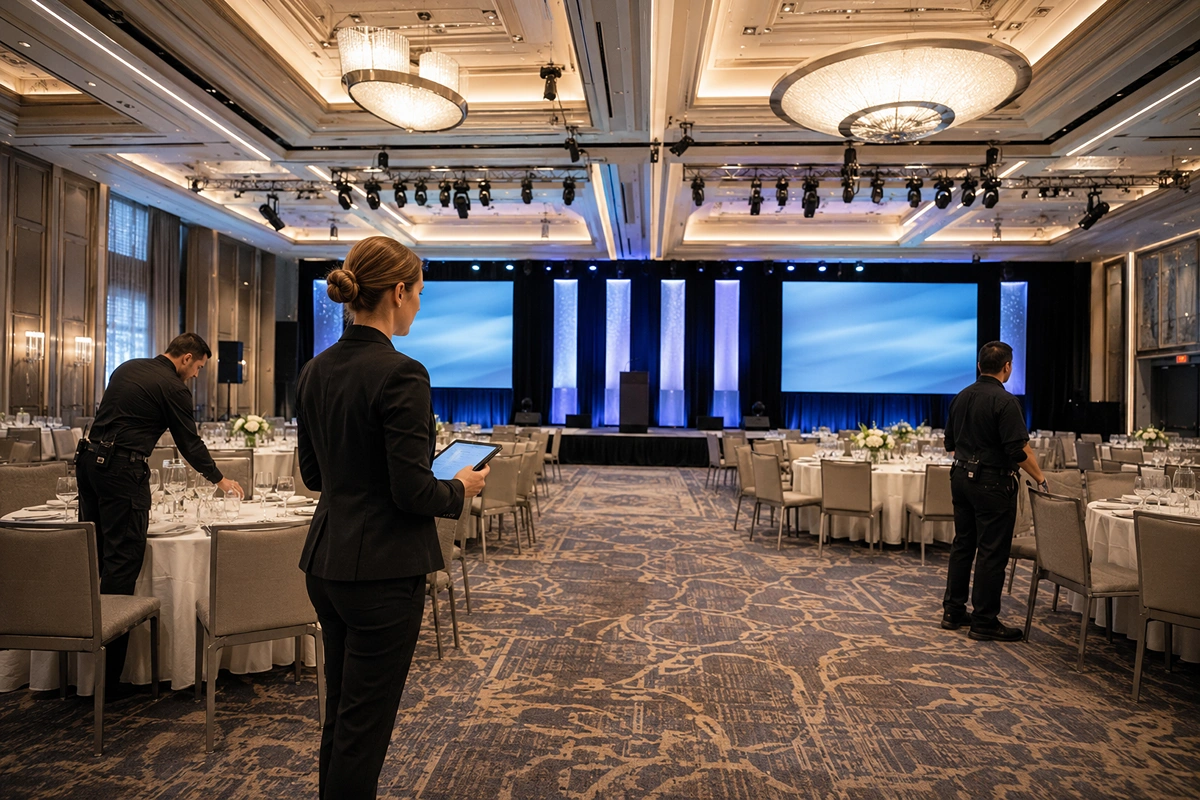
At Eventstaff, we support Production Teams by focusing on the pre-door window where load-in decisions shape the guest experience. Our staff can be positioned near service entrances, freight elevators, back-of-house corridors, ballroom access points, setup zones, and producer check-in points so movement stays organized before the room opens.
Our Production Teams help vendors find the right access point, keep materials moving in the right order, flag access issues, support room setup, and escalate timing conflicts before they affect door time. In Midtown, that can mean helping a rental team avoid the wrong entrance, keeping cases from blocking a shared corridor, or making sure a delayed install does not quietly push the final room check behind schedule.
We also help protect the event lead’s attention. Instead of every vendor question landing on the planner at once, our staff can handle basic routing, movement, staging support, and setup coordination while escalating decisions that truly need producer approval.
The result is a cleaner handoff to front-of-house. Doors can open with the room set, signage placed, AV ready, furniture aligned, pathways clear, and the production team no longer fighting a hidden delay that started at the curb.
Bottom Line
A Midtown load-in gap can delay doors before guests arrive because production timing depends on more than a vendor schedule. Trucks, freight access, service entrances, staging, AV, rentals, signage, and room setup all need active coordination inside a dense Manhattan environment.
The right Production Teams plan keeps event logistics connected to real movement on the ground. When Eventstaff supports event operations, we help planners protect the pre-door window, reduce vendor stalls, and move the room toward guest readiness with control.
Ready to elevate your next event?
Join thousands of event planners who trust EventStaff.com for reliable, professional staffing solutions.
Trusted by event professionals nationwide
1k+
Events Staffed
2 million+
Guests Served
97%
Positive reviews

.webp)
.jpg)
