
Most lists of event marketing examples show the same famous campaigns with a nice photo and a line about how creative they were. What they leave out is the stuff you'd need to pitch your own version: how many people came, who was working the floor, and how guests got from the door to the moment everyone came for. And the day itself is what pays off. In Event Marketer's EventTrack 2026 survey, fielded in summer 2025, 61% of consumers said a live experience made them more inclined to buy, and 82% told friends or family who weren't there about it. A long line ends up in those stories too, so here are five events brands ran themselves in 2025 and 2026, with the crowd, staff and trade-off behind each.
Executive Summary
Event marketing examples are easier to copy when you know what happened on site. This guide breaks down five brand-hosted events from 2025 and 2026, ranging from a user conference to a public race, by crowd, staff roles, guest flow and trade-off, then lines them up in one table.
What makes an event marketing example worth copying
Every example below is an event a brand hosted itself, so it owned the venue, the crowd and the staff. If you're sponsoring someone else's festival or conference instead, our sponsor activation ideas cover that side. If you're gathering event marketing ideas for a planning meeting, each example covers the five details your team will ask about:
- Format: what kind of event it was
- Crowd and length: how many people came, over how many days
- Staff roles: the jobs this format needs on site
- Guest flow: the path from arrival to the main moment
- Trade-off: the choice that helped the event but made the day harder
The staff roles come from public reports of how each event ran, since none of the brands published a staffing plan.
Event marketing examples and how each one was run on site
1. Salesforce Dreamforce
Dreamforce is Salesforce's yearly user conference, and in October 2025 it filled Moscone Center and the streets around it in San Francisco with three days of keynotes, product demos, panels and parties.
- Crowd and length: More than 30,000 attendees were expected over three days, according to Axios, down from about 45,000 the year before. The city's transit agency planned around the same 30,000 and gave no reason for the drop, so treat both as planning figures.
- Street closures: Howard Street between 3rd and 4th stayed fully closed until October 19, and 4th Street between Mission and Howard was shut to cars from 6 a.m. to 8 p.m. on event days.
- Staff roles this format needs: registration and badge check-in, wayfinding staff at street crossings and between the North, South and West halls, and session room staff who manage doors and seat counts.
- Guest flow: badge pickup, sessions across three halls, then crossings over closed streets to evening events.
- Trade-off: A multi-building downtown footprint brings the city into the brand's world, but every street crossing becomes a wayfinding and safety point that needs someone on it all day.
2. Samsung Galaxy Unpacked and its fan space
Samsung launched the Galaxy Z Fold7 and Z Flip7 at Unpacked in Brooklyn on July 9, 2025, then kept the launch going in Manhattan with a Galaxy Experience Space at 500 Broadway in SoHo.
- Crowd and length: one launch day, then a fan space open from July 9 to August 9. SamMobile reported that the events were free and needed no registration, and Samsung hasn't published visitor numbers.
- What ran inside: daily workshops, running, photography and gaming meetups, influencer meet-and-greets and giveaways.
- Staff roles this format needs: product specialists who can lead a workshop, greeters at the door and line managers for the meet-and-greets.
- Guest flow: walk in off Broadway, try the phones, join a workshop, then queue for a meet-and-greet.
- Trade-off: Free entry with no sign-up removes every barrier for fans, but it also leaves you with no headcount to staff against. Since Samsung hasn't shared attendance, the safest plan is a range, with a team that can grow or shrink by the hour.
"When you sponsor someone else's event, the organizer owns the line, the entrances and the crowd, and your team only has to look after your space. Host your own and all of that lands on you. Before doors open, name one person who owns guest flow from the sidewalk to the exit, walk the whole team through that route, and make sure everyone knows who calls a pause when the line backs up." -- Daniel Meursing, CEO, EventStaff
3. Welch's Zero Bodega
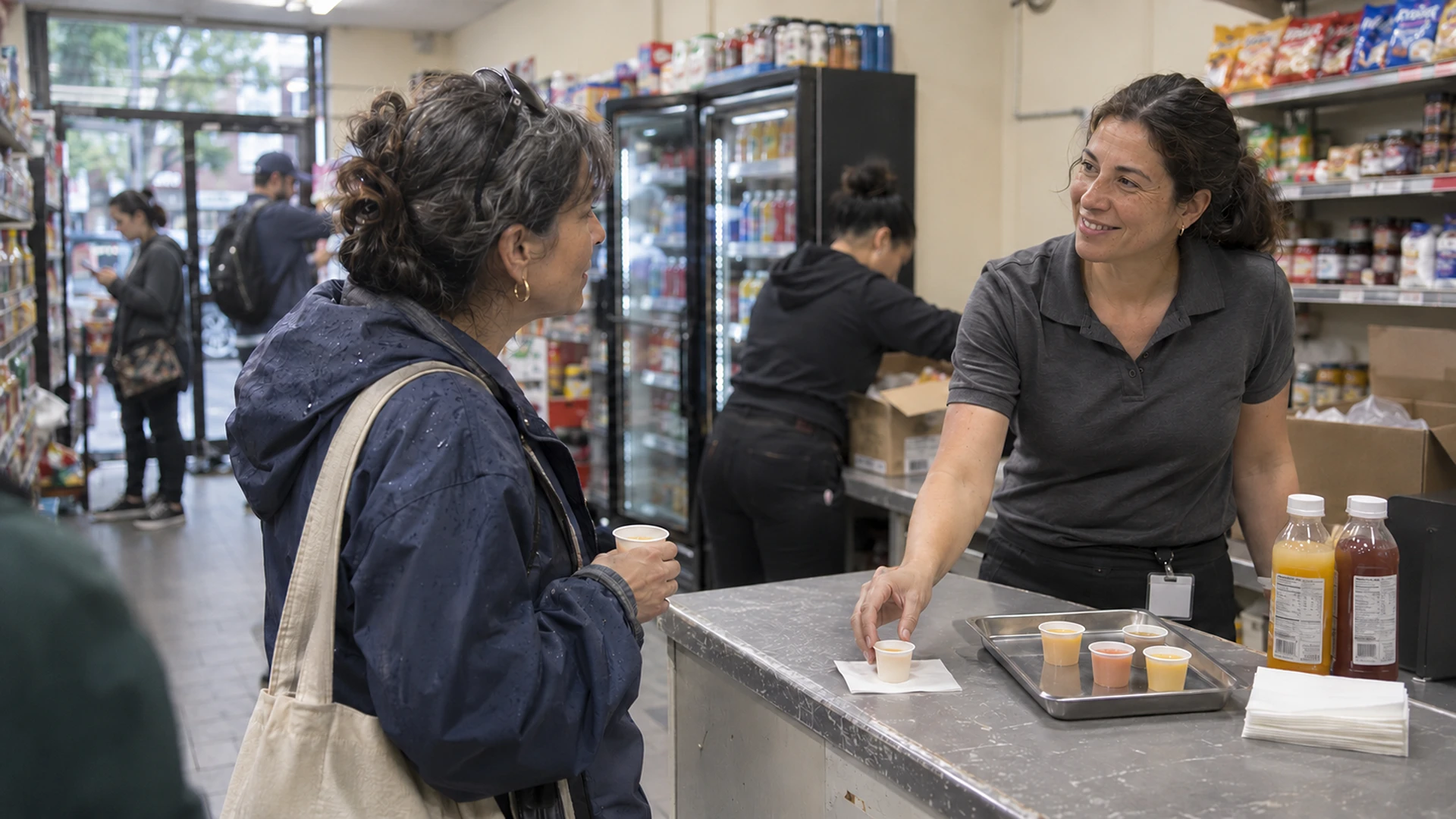
To launch its Zero Sugar juices in January 2025, Welch's turned a West Village studio into a New York corner store where everything cost zero dollars, with a speakeasy hidden behind one of the fridge doors.
- Crowd and length: Almost 3,000 people came, sampling nearly 10,000 products and drinks and generating 7 million organic social impressions, according to BizBash. Trade press lists January 23 to 26, while Welch's own announcement describes three public days, so the daily average sits between about 750 and 1,000 visitors, each trying more than three samples.
- Staff roles this format needs: line managers outside (Welch's said some fans lined up hours before opening), greeters, sampling staff on the shelves, someone at the checkout handing out scratch-off tickets, a host on the password door and drink service in the lounge.
- Guest flow: line up, shop the shelves, check out, scratch the ticket, give the password at the fridge door, then relax in the speakeasy.
- Trade-off: Every step that made the bodega fun to share was also one more place for a line to form. With people queuing before opening, the first hour likely ran well above those averages too.
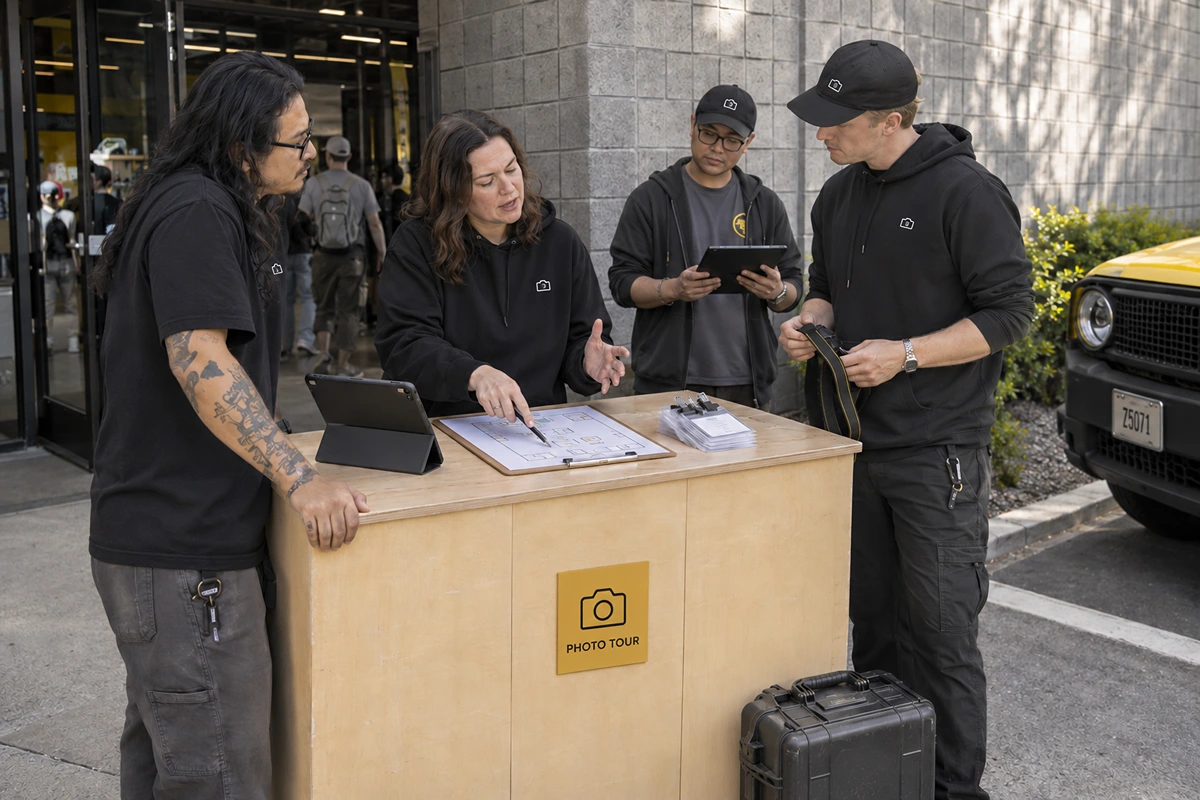
4. Nikon Tour
Nikon's 2026 tour drives a bright yellow SUV full of cameras and lenses to 10 US cities, starting in Chapel Hill in May and wrapping up in Boston in November, and every stop is free.
- Crowd and length: Each stop runs three days, so the tour adds up to 30 event days. Nikon's press release says the first five stops drew more than 1,300 attendees, which works out to about 260 a stop, or under 90 a day.
- What runs each day: an Intro to Photography day, a NIKKOR Z Lens Day where attendees test four or five lenses in a session, and a ZR Day for video, plus ambassador-led photo walks.
- Staff roles this format needs: product specialists who can teach a class, staff on a gear check-out and return desk, and someone to lead each photo walk group.
- Guest flow: register online, check in, pick up gear, join a workshop or photo walk, then hand the gear back.
- Trade-off: Across 30 event days, you choose between one traveling crew and local staff in each city. A traveling crew keeps the teaching consistent but adds travel and hotels to every stop, while local crews cost less but need training on the gear ten times over. Nikon hasn't said which model it uses.
5. Red Bull Soapbox Race
Red Bull's Soapbox Race sends amateur teams down an obstacle course in homemade carts, and on May 31, 2025, the race ran beside the Iowa State Capitol in Des Moines.
- Crowd and length: Watching was free, 50 teams raced, the pit lane opened to families at 10 a.m. and the race started at noon. Local station WHO 13 expected about 20,000 people, after more than 25,000 came in 2022. Afterwards, WHO 13 reported that more than 35,000 people watched and the racing ran for more than three and a half hours.
- Staff roles this format needs: crowd control along the course, ushers to keep walkways and viewing areas clear, and hosts in the pit lane where families get close to the carts.
- Guest flow: walk the pit lane, find a spot on the course, then stay through an afternoon of runs.
- Trade-off: Opening the pit lane two hours early spreads arrivals out, but it adds two hours that the crowd and the pit area need covering before a single cart moves. About 20,000 people were expected, and more than 35,000 showed up. Both are press estimates, but a free, unticketed event needs a plan for the top of the range.
Experiential marketing examples compared side by side
Crowd figures are organizer, city or press estimates, and the staff roles show what each format typically needs.
If you're comparing brand activation examples for a consumer launch, the Samsung, Welch's and Red Bull rows show the trade you're making: free entry brings a bigger crowd but gives you less certainty about its size. A conference or registered tour gives you a headcount to staff against, which matters most when the goal is leads. If New York is on your list, our experiential staff can cover every role in the table.

How to staff your own event marketing campaign
Every brand-hosted event comes down to two staffing calls: which roles your format needs, and how many people your busiest hour needs.
Matching staff roles to the format
These roles come from how each format works, since none of the five brands published a staffing plan, so check them against your own floor plan.
- Conference: registration and check-in, wayfinding at every hall change and street crossing, and session door staff. Our San Francisco conference staff cover all three.
- Launch and fan space: workshop leads, greeters and line managers for meet-and-greets. Product reps who know the device can run the workshops.
- Pop-up: line managers outside, greeters, and one person on every step of the guest flow, which is how New York pop-up staff are usually planned.
- Tour: specialists who can teach, a gear desk, and an early decision on a traveling crew versus local crews.
- Public spectacle: crowd control along the route, ushers for walkways and viewing areas, and hosts anywhere guests can get close to the action.
Planning for the peak hour
A daily average is easy to plan with, which is why it's risky. The average day hides the hour that decides whether people wait or walk away. Welch's averaged somewhere between 750 and 1,000 visitors a day, but with fans queuing before opening, the first hour likely carried far more than its share. Here's how to plan for it:
- Stagger shifts so your biggest team is on at opening, then trim it through the quiet stretch.
- Put a floater next to each bottleneck, like a checkout, a password door or a meet-and-greet line, who can step in the moment it backs up.
- Decide before doors open what happens when the line outgrows the space (a cut-off sign, timed return slots or a holding area) and who makes the call.
Staffing for the peak costs more in the quiet hours. One extra person for a four-hour rush in New York runs about $104 at Instawork's average brand ambassador pay of $25.93 an hour, before the 20% to 65% markup a business pays on top. Understaffing it is when guests leave the line, and that's the moment they'll tell their friends about. If you'd like a shift plan built around your busiest hour, our brand activation team can staff it from the first greeter to the last floater.
Ready to elevate your next event?
Join thousands of event planners who trust EventStaff.com for reliable, professional staffing solutions.
Trusted by event professionals nationwide
1k+
Events Staffed
2 million+
Guests Served
97%
Positive reviews