

A Las Vegas check-in line can change the mood of a convention before the first session begins. The planner sees it first near the entrance, where guests are checking phones, looking for badge pickup, asking where sponsors should go, and trying to work out whether they are in the right line.
That is the moment Convention Staffing in Las Vegas has to solve. For the person hiring conference staff, the real concern is not only whether the desk is covered. It is whether attendees feel guided, prepared, and confident before the registration area starts to look overwhelmed.
High-volume attendee check-in is one of the clearest tests of a convention staffing plan. When staff are placed only at the counter, every small question travels forward until it reaches the desk. When staff are placed across the arrival path, the line feels more controlled because attendees are sorted before they become a delay.
Quick Answer
Convention Staffing in Las Vegas supports high-volume attendee check-in by placing trained conference staff across the full arrival path, including entrance direction, line sorting, badge pickup, mobile check-in support, exception handling, VIP routing, and post-registration wayfinding.
CEO Excerpt
“I always look at registration by asking where the guest first starts to hesitate. If that hesitation reaches the counter, the whole line feels slower. In Las Vegas, that happens quickly because attendees come from different hotels, entrances, and access levels. The right conference staff plan gives those guests an answer earlier, before the desk becomes the only place to solve everything.” - Daniel Meursing, CEO, Eventstaff
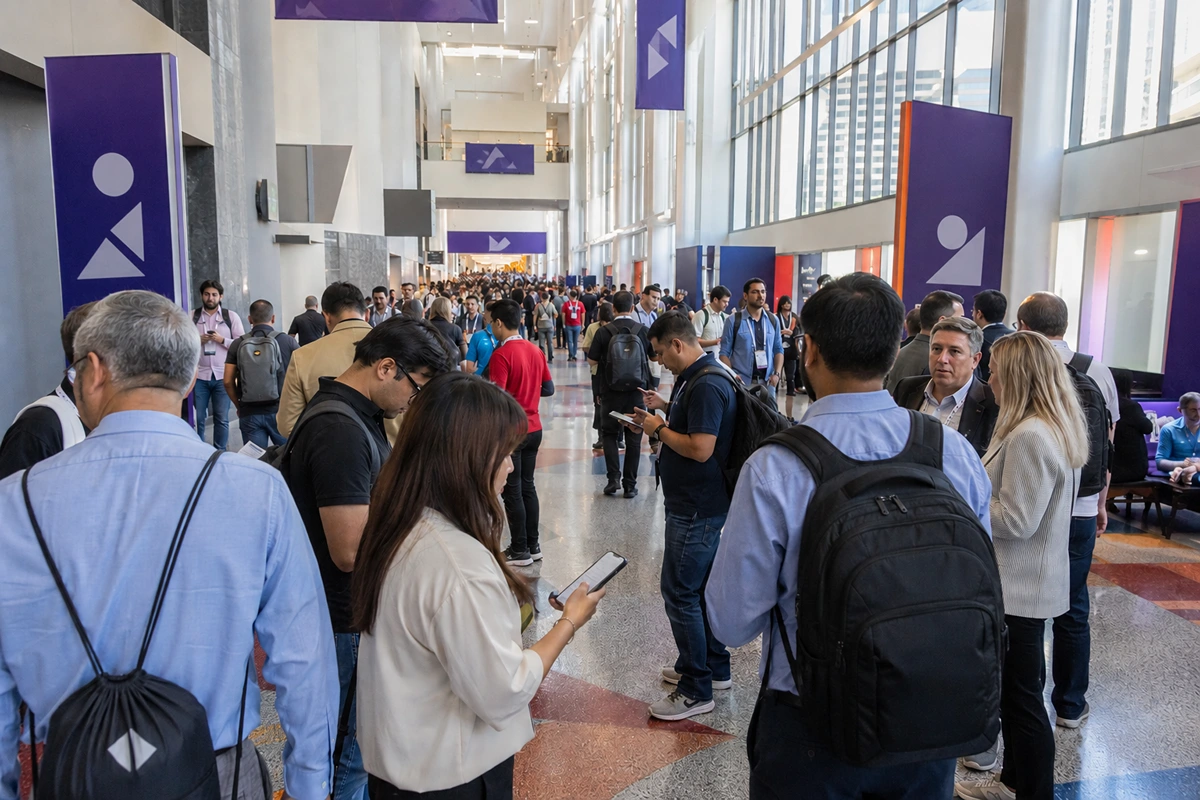
The Line Usually Starts Before Guests See the Desk
Las Vegas conventions rarely create pressure in a neat, gradual way. Guests arrive from hotel towers, rideshare zones, shuttle drops, casino corridors, airport transfers, sponsor breakfasts, and private meetings. Many of them reach the venue at almost the same time because the agenda gives them the same first deadline.
That matters because the first visible line is usually the result of several smaller hesitations. Someone cannot find the QR code. A sponsor guest needs a different badge. A first-time attendee is unsure which hall they need. A group arrives together and blocks the lane while one person looks for the confirmation email.
The Las Vegas Convention Center shows why this becomes a serious planning issue. The venue spans 4.6 million square feet, includes about 2.9 million square feet of exhibit space, has 225 meeting rooms, and sits within a short distance of 150,000 hotel rooms, according to the official Las Vegas Convention Center profile. For a hiring manager, those numbers point to one staffing consequence: attendees need help across the approach, desk, and post-check-in route, not only at one registration counter.
This is where convention registration staffing for high-volume attendee events becomes more practical than theoretical. The check-in experience depends on whether staff can catch confusion early, move the right guests into the right flow, and keep badge-ready attendees from waiting behind problems that require a longer conversation.
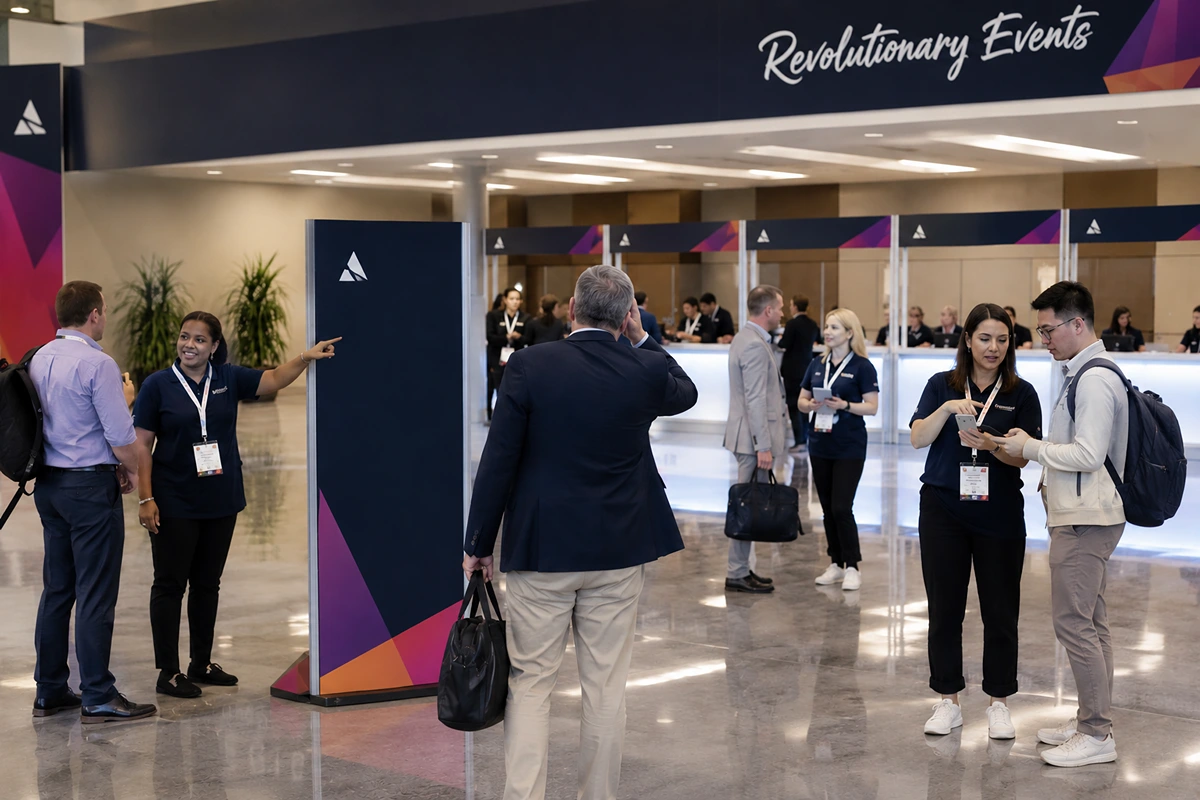
The Real Hiring Question Is Where Guests Hesitate
A planner hiring conference staff for a Las Vegas convention should look at the check-in area through the guest’s movement, not through the desk layout alone. The desk may be fully staffed and still feel slow if the approach area is unclear. The registration system may be strong and still fall behind if attendees arrive without phones ready, confirmations open, or badge categories understood.
That is why the better hiring question is simple: where will attendees stop?
They may stop at the entrance because they do not know whether they are in the right hall. They may stop before the line because they do not know whether speakers, sponsors, exhibitors, and general attendees use the same desk. They may stop at the counter because their name is missing or their badge type changed. They may stop after check-in because they have no clear route to the keynote, expo floor, meeting room, or lounge.
Each pause has a staffing answer. Entrance staff reduce uncertainty before guests enter the registration zone. Queue guides separate attendee types before they become a visible backup. Mobile check-in support helps guests open QR codes while the line is still moving. Help desk staff pull longer issues away from the main flow. Directional staff after badge pickup keep the exit side from crowding.
For attendee check-in staffing for destination conventions, this is especially important. A guest may know the brand, association, or industry well and still be completely new to the venue. Las Vegas adds that layer often because conventions draw national and international visitors who are moving through a city built around large properties, connected venues, and time-sensitive programming.
A Check-In Risk Map for Las Vegas Convention Planners
The table below is the practical asset I would use before hiring conference staff. It keeps the staffing discussion focused on where the buyer’s risk actually appears.
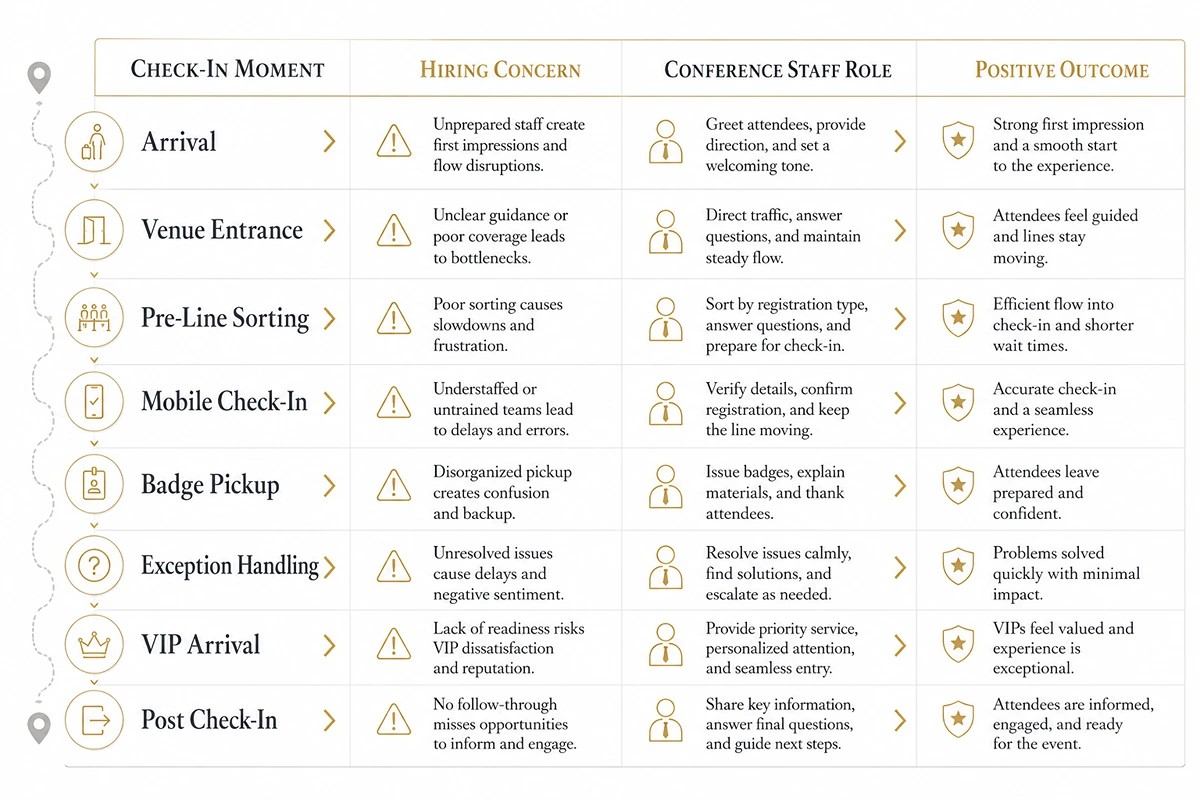
This is the part of the staffing plan that often gets missed. Many teams hire for the badge desk because that is the visible task. The bigger impression is shaped by everything around it.
A badge-ready attendee should never be slowed by a complicated exception in front of them. A sponsor guest should not have to explain their access level in the general line. A first-time attendee should not have to return to the desk for directions after they already checked in. Good conference staff coverage separates those moments so the event feels organized from the first interaction.
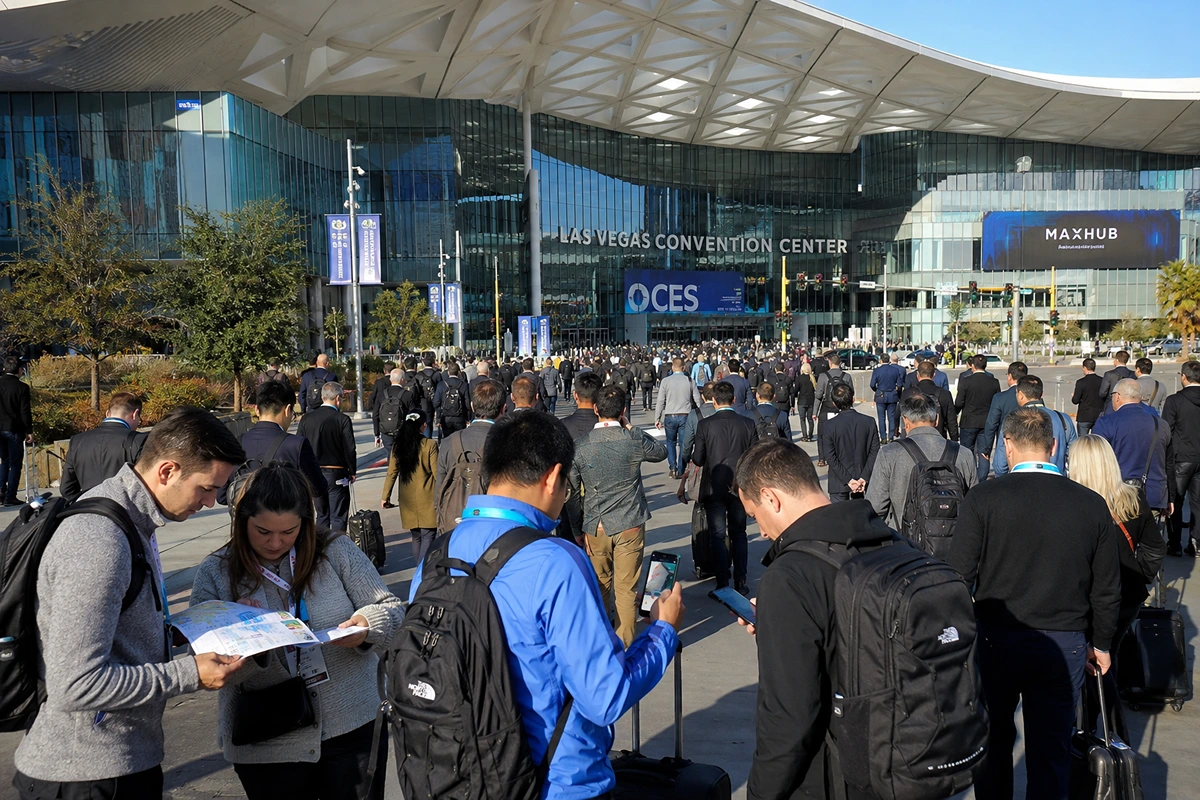
Las Vegas Adds Volume, Distance, and First-Time Pressure
The 2026 convention calendar makes this topic more relevant. LVCVA reported that the Las Vegas Convention Center is on pace to host approximately 1.2 million tradeshow attendees in 2026, up from 1.0 million in 2025, with returning and expanding shows contributing to the outlook. For a planner, that does not mean every event needs the same staffing plan. It means registration readiness will matter more because the city’s largest shows are competing for attention, movement, and guest patience.
Large destination shows also bring mixed attendee familiarity. NAB Show 2025 in Las Vegas reported 55,000 registered attendees from 160 countries, with 26% international attendees and 53% first-time attendees, according to NAB’s 2025 show wrap. That mix changes the check-in plan because first-time and international attendees often need more human guidance around badge rules, app access, venue routes, session locations, and help points.
The staffing implication is clear. A Las Vegas convention may need more than a desk team that can process badges quickly. It may need conference staff who can absorb uncertainty before it reaches the counter.
A practical staffing plan focuses coverage where attendee volume, questions, and access issues are most likely to create delays or confusion. Buyers get the most value when conference staff are assigned to the moments that shape first impressions and keep registration moving smoothly. If the first 90 minutes include a keynote rush, sponsor arrivals, hosted-buyer meetings, and general badge pickup, the heaviest coverage belongs in that window. Midday coverage can often be leaner once the first wave has passed.

The Mistake Is Treating Every Attendee Like the Same Guest
At high-volume conventions, the line often looks like one crowd. Operationally, it is usually several audiences moving through the same space. General attendees, exhibitors, sponsors, speakers, press, VIPs, hosted buyers, and staff may all need different levels of support.
When those groups are treated the same, the desk becomes a negotiation point. A speaker asks for the green room. A sponsor guest asks about lounge access. A hosted buyer needs a different credential. A general attendee only needs a badge pickup, but they are stuck behind all of it.
Conference registration staffing for large events should separate those paths before they reach the desk. That can be as simple as a queue guide asking the right question early: “Are you here for general badge pickup, sponsor check-in, speaker check-in, or help desk?” The goal is to keep complicated cases from blending into the fastest flow.
This is also where staff briefing becomes important. Conference staff should know more than the location of the registration desk. They need to understand attendee categories, badge types, sponsor routes, VIP instructions, help desk rules, session locations, and escalation contacts. Without that context, a polished staff member can still send a guest to the wrong place.
Self-Check-In Still Needs People Around It
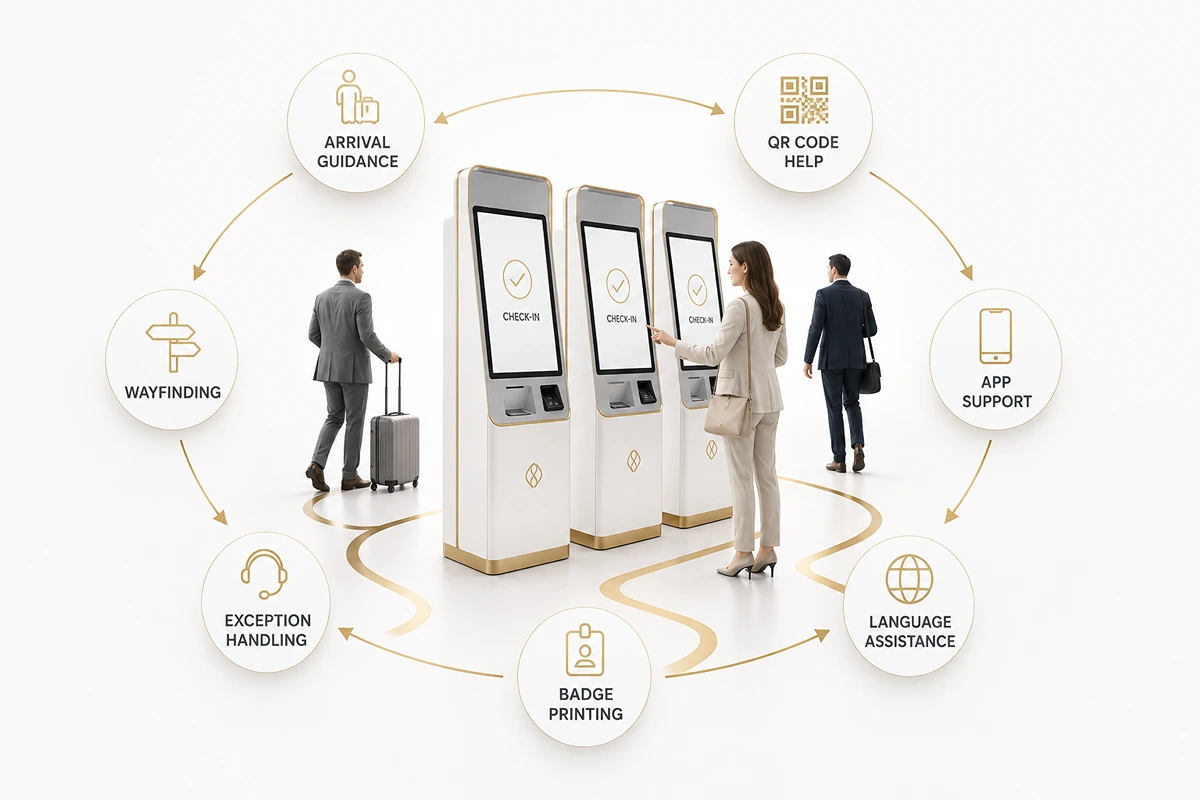
Digital check-in can help, but it does not remove the need for staff. In a high-volume Las Vegas environment, the technology only works well when attendees reach it prepared. If they cannot find the QR code, access the app, search the email, confirm the badge type, or understand the kiosk prompt, the delay simply shifts from the desk to the device.
This is why mobile check-in support should sit before the counter. A staff member can help guests open the correct screen while they are still moving through the line. That small step protects the desk from avoidable delays and gives attendees a better sense that the event is in control.
For destination conventions, the support may also need to account for international guests. Phone settings, email access, language comfort, and unfamiliar event apps can all affect how quickly an attendee moves through registration. When the audience data suggests a meaningful international mix, multilingual or highly experienced guest-facing staff may be worth prioritizing for check-in zones.
The trade-off is straightforward. More desk staff can help when the desk is the bottleneck. Better-prepared attendees help when the real delay is happening before the desk. A strong staffing plan usually balances both.

Where the First Visible Backup Usually Comes From
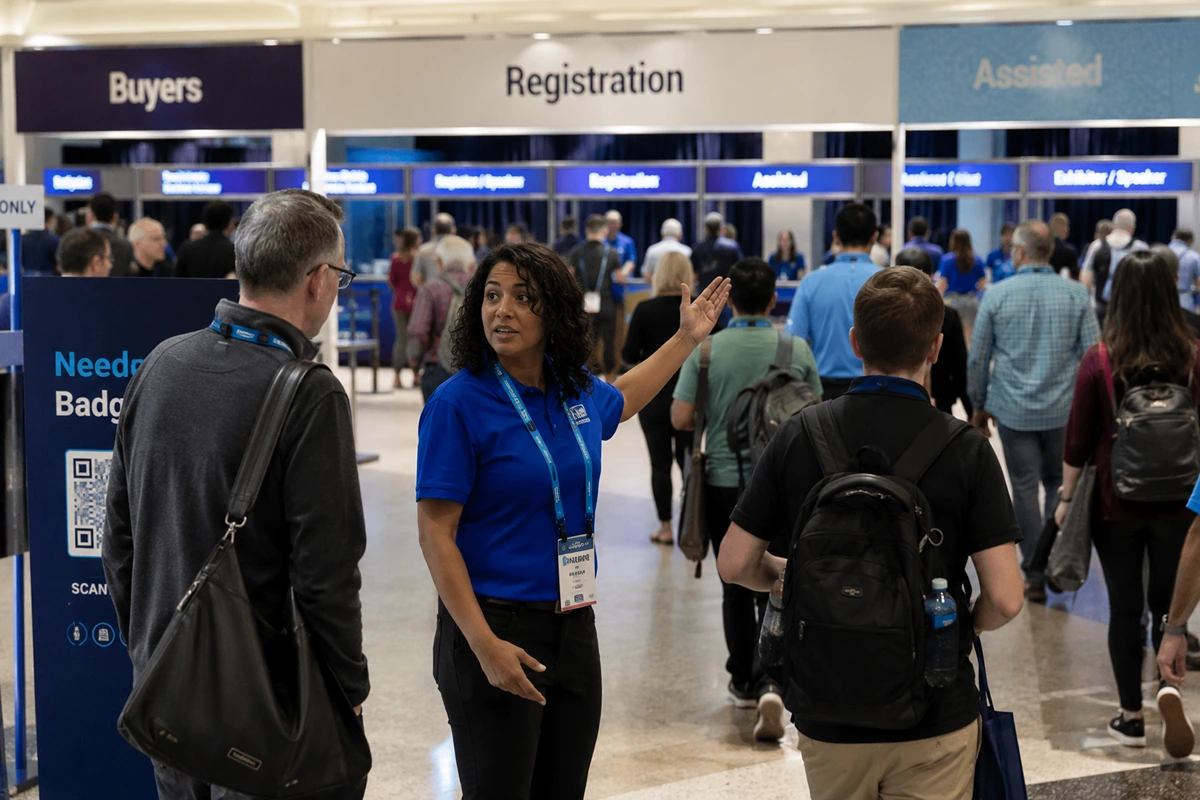
The first visible backup often comes from exception cases. These are the attendees who need more than a quick scan, print, or pickup. Their issue may be completely legitimate, but it does not belong inside the fastest line.
Common exception cases include missing names, badge spelling errors, incorrect access levels, payment flags, sponsor list changes, group pickup confusion, press credentials, speaker credentials, and late additions. At a smaller event, one staff member might handle these at the desk without much damage. At a large Las Vegas convention, that same approach can make the line look worse very quickly.
A separate help desk is one of the simplest ways to protect the experience. It gives complicated cases a clear place to go while badge-ready attendees keep moving. It also gives the planner and registration vendor a cleaner escalation path because the same staff lead can track which issues keep repeating.
This is where a buyer should be honest about the event’s risk profile. If the attendee list is still changing, sponsors have special access rules, or multiple guest categories are involved, exception handling should be staffed from the start. Waiting until the line forms usually means solving the issue in front of everyone.
Where the First Visible Backup Usually Comes From
Strong conference staff do more than fill positions. They change how the check-in area feels to the guest and how much the planner has to personally manage during the opening window.
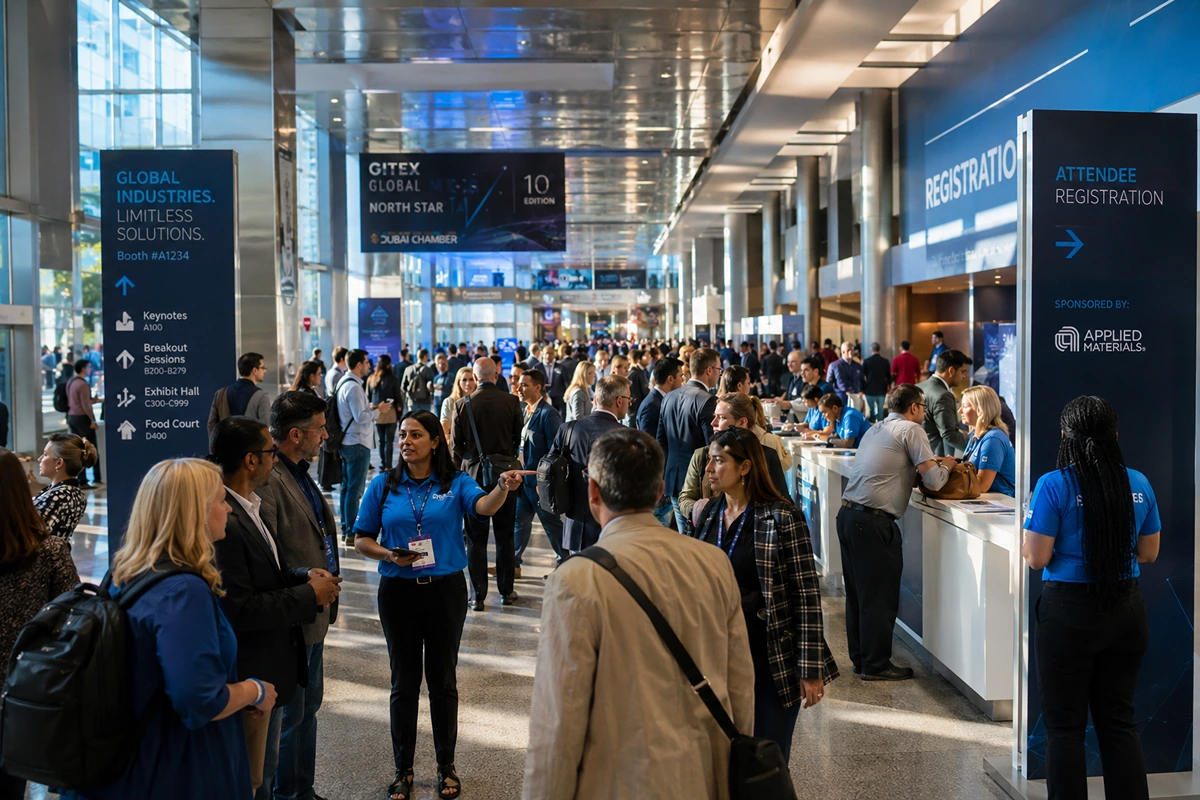
Registration desk staff protect badge accuracy and processing rhythm. Queue guides protect the main line from unnecessary mixing. Mobile check-in support protects the desk from avoidable phone and app delays. Help desk staff protect badge-ready guests from slow exception cases. Directional staff protect the exit side of registration from crowding. A staff lead protects the planner from having every small issue land directly on them.
That role separation matters because high-volume check-in is full of small decisions. Which guests belong in the fast lane? Which ones need help? Which route should speakers use? Who can approve a sponsor badge change? Where should international attendees go if they need registration support? Which desk closes when the first rush ends?
When those answers are built into the staffing plan, the event feels calmer without needing a big announcement. Guests simply move through the right path earlier.
How Eventstaff Fits This Moment
Eventstaff fits high-volume Las Vegas convention check-in when the buyer needs conference staff who can support the full arrival experience. That includes entrance direction, pre-line sorting, badge pickup, mobile check-in preparation, help desk routing, VIP and sponsor check-in, and post-registration wayfinding.
This is especially useful when the event has layered access. Sponsors, speakers, hosted buyers, exhibitors, press, executives, and general attendees may all arrive in the same window with different needs. A clear conference staff plan keeps those needs from collapsing into one long, slow line.
The best time to bring Eventstaff into the conversation is when the registration categories, venue entrances, agenda timing, and attendee volume estimates are taking shape. That is when the staffing plan can still be designed around guest movement rather than added later as generic support.
Bottom Line
Convention Staffing in Las Vegas should be planned around the full check-in moment, from first arrival to badge pickup to the next guest destination. Large venues, hotel-driven arrivals, first-time attendees, international guests, sponsor access, and opening-session pressure can all turn registration into the first visible test of the event.
The strongest plan separates simple check-ins from exceptions, places staff before the desk, gives VIPs and sponsors a defined route, and keeps attendees moving after badge pickup. If your Las Vegas convention has a compressed arrival window or layered guest list, Eventstaff can help you build conference staff coverage around the points where the attendee experience is most likely to slow down.
Ready to elevate your next event?
Join thousands of event planners who trust EventStaff.com for reliable, professional staffing solutions.
Trusted by event professionals nationwide
1k+
Events Staffed
2 million+
Guests Served
97%
Positive reviews