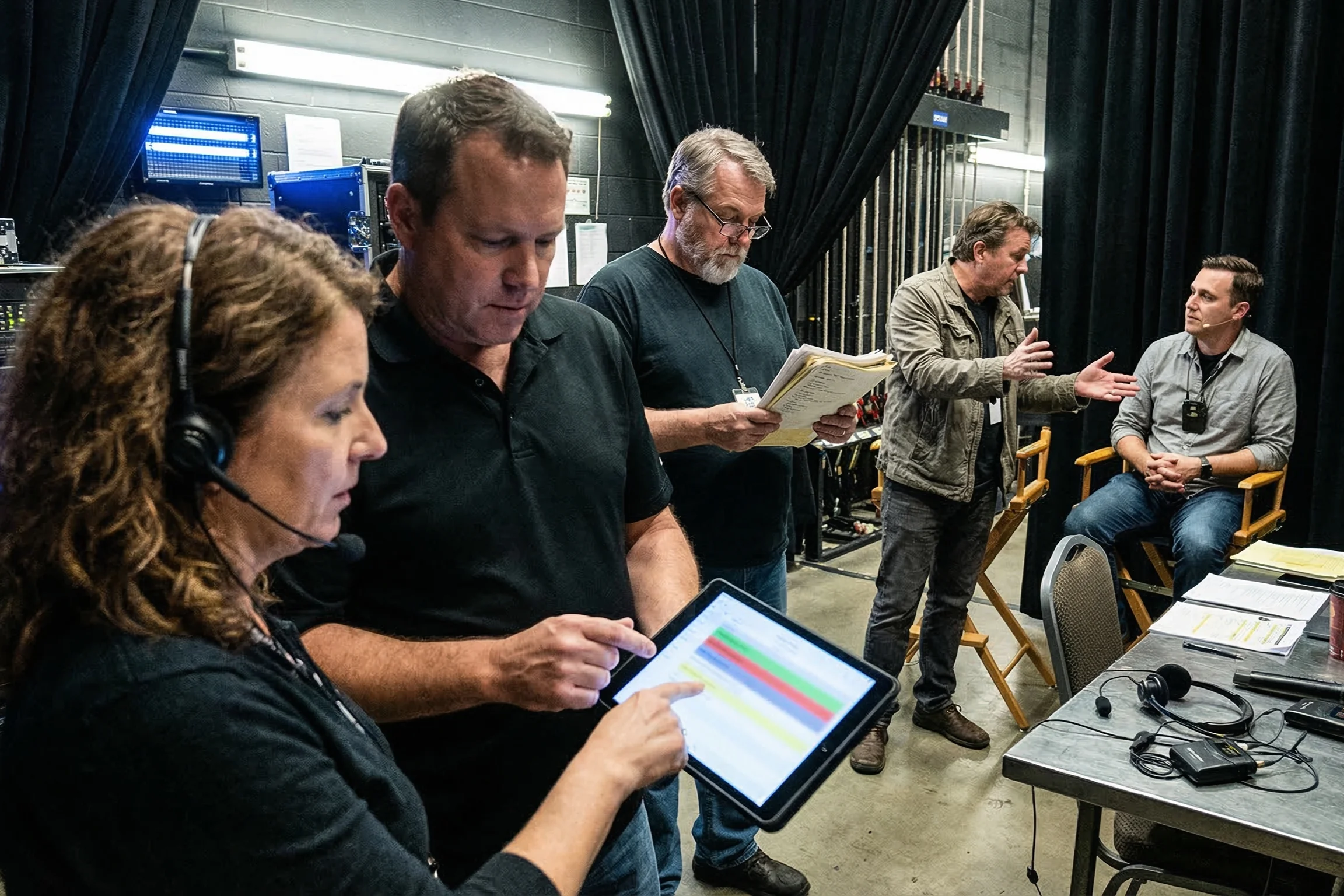

6 Retail Activation Ideas That Actually Move the Needle
Retail activation ideas are one of the most effective ways to influence in-store buying behavior, but only when executed correctly. Most retail event ideas fail not because the concept is wrong, but because the execution, especially staffing, is underpowered.
In this guide, we break down 6 proven retail activation ideas that actually drive conversions, including:
- How each activation works
- Staffing requirements
- Realistic costs
- Expected ROI
These in-store activation ideas are widely used in shopper marketing activations and retail experiential marketing campaigns to turn foot traffic into measurable sales.
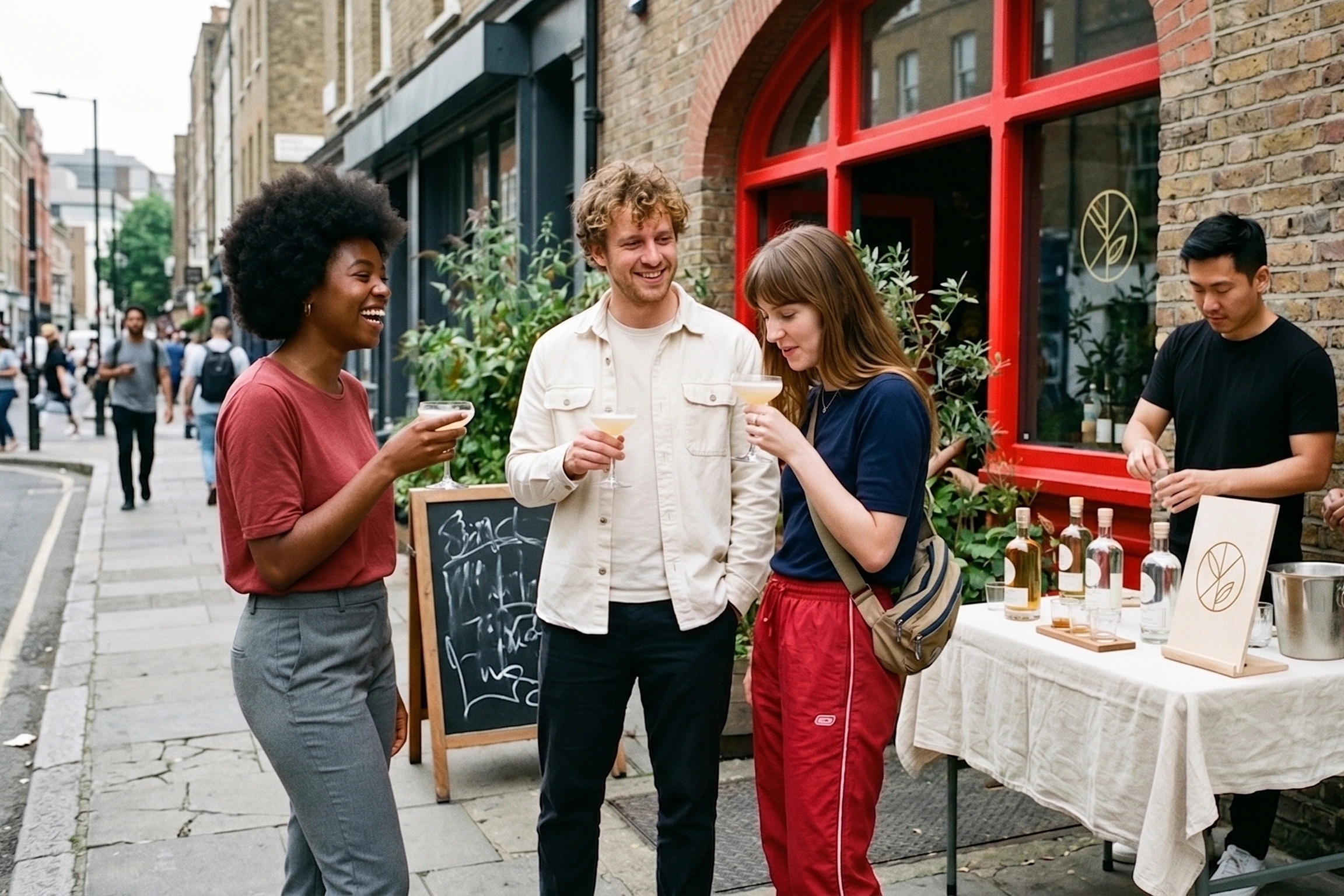
What Are Retail Activation Ideas?
Retail activation ideas are in-store or near-store experiences designed to engage shoppers and influence purchase decisions in real time.
Unlike passive merchandising, shopper marketing activations focus on:
- Direct interaction
- Product experience
- Guided selling
Examples include:
- Sampling stations
- Product demonstrations
- Pop-up brand experiences
- Gamified promotions
The goal is simple: move customers from awareness to purchase within the same visit.
Before You Pick Any Retail Activation Idea, Know This
Execution is 70%. The idea is 30%.
Data point: Stores that add just one trained staff member during peak hours see up to 2x higher engagement than understaffed setups.
Here’s the reality: add just one trained staff member during peak hours, and engagement can double.
A sampling station with one person on a Saturday? You’ll get long lines and low conversions.
Add 2–3 trained staff, and conversions jump to 20–40%.
Real example: Beefeater Gin's Multi-Market Sampling Campaign
Beefeater executed 2,000+ in-store sampling activations across 16 national markets, partnering with Fever-Tree Tonic to create a complementary trial experience. The results were unmistakable: 19.5% sales lift and 26,600+ bottles sold. But here's what matters: each activation moved 4 bottles per hour on average. That's not luck. That's trained staff, clear flow, and product knowledge translating curiosity into purchase.
What actually drives conversions in retail event ideas:
One. Enough staff to keep lines under 3 minutes. One staff member handles ~20–30 guests/hour. Do the math for your peak traffic.
Two. Staff who can actually sell. Not greeters. Not data collectors. People who know your product, handle objections, and close sales. A trained brand ambassador drives 3–4x more conversions than someone standing around.
Three. Clear flow.
Guests move: entry → engage → buy. If that flow breaks at any point, conversions drop immediately.
Skip any one of these, and your retail activation ideas fail, even if they're genuinely smart.
Nobody tells you this: Most stores don't lose sales because of bad products; they lose them because no one is available when customers are ready to buy.
Quick reality: Most stores skip #2 because they think checkout staff can "just run it." They can't.
CEO Excerpt:
In-store activation ideas only work when someone is actively moving customers from curiosity to purchase. Without that, it’s just a display, not an activation.-Daniel Muersing
6 In-Store Activation Ideas That Work: What Actually Works + What to Budget
1. In-Store Sampling Station
The idea: Guests taste or try your product. Staff explain, answer questions, and drive purchases.
Best for: Food, beverage, beauty, and personal care.
Staffing: 2–3 trained brand ambassadors at $40–$50/hr (retail activation standard range)
Conversion: 20–40% with trained staff (vs. <10% if passive)
Peak hour output: 1–2 sales mid-traffic, 4–6 sales in high-traffic
What to actually do: Hire people who can talk and sell. Not brand-new staff. Not cashiers. People are trained on product facts and how to handle "no thanks." This is a core retail event idea that works when executed right.
- Hidden cost: Even good sampling fails if your staff doesn't know your product. Brief them hard before launch.
2. Pop-Up Zone or Experience Booth
The idea: A branded space. Photo moment, interactive game, sensory experience, product tutorial.
Best for: Festivals, high-traffic retail environments, awareness campaigns.
Most retail experiential marketing fails when staffing doesn't match traffic volume.
Staffing: 2–3 staff at $25–$32/hr
Time spent at the booth: +30%
What people do next: 15–25% (purchase, email, social share)
What to actually do: Your staff needs energy. A flat pop-up kills the whole thing. If you can't find people who can maintain high energy for 6+ hours, shorten the activation to 4 hours instead.
- Did you know? The best pop-ups pair a greeter (high energy, invites people) with an explainer (answers deeper questions). Never put one person in both roles.
3. Live Demonstration or Workshop - High-Impact Retail Activation Idea
The idea: You show how to use the product. Real-time. Real questions. Real confidence-building.
Best for: Tech, appliances, makeup, tools, cooking. One of the most effective shopper marketing activations for building trust.
Staffing: 1–2 specialists at $30–$40/hr
Purchase rate: 35–50% when delivered by a credible expert
Word-of-mouth lift: High (3–5x more likely to share)
What to actually do: One good specialist beats three okay staff. This is the only in-store activation idea where you can actually reduce headcount. But the person has to know the product cold.
- Contrarian take: Don't run a demo if you can't find someone truly credible. A weak demo tanks harder than no demo.
4. Customization or Build-Your-Own Station - Premium Retail Activation Idea
The idea: Guests create something. Blend, bundle, design, flavor combo. They ring it up on-site.
Best for: food and beverage, personal care, home goods, gifts. An excellent retail event idea for high-touch customer engagement.
Staffing: 2–4 staff at $26–$35/hr
Purchase rate: 40–60% complete on-site
Sales increase: +30–50% average order value
What to actually do: This is your highest-return retail activation idea for AOV. Guests buy more when they invest time. Staff's job: guide choices without slowing the line. Have a clear time budget per guest (~5 min).
- Nobody tells you this: Customization stations require your best staff. Bad staff creates bottlenecks, and guests abandon mid-build.
5. Gamified Shopping or Loyalty Challenge - Affordable Retail Activation Idea
The idea: Guests play, earn points, unlock discounts or freebies. Repeat visits are built in.
Best for: Budget-conscious stores, repeat-visit goals, email capture. A smart shopper marketing activation for loyalty building.
Staffing: 1–2 staff at $22–$30/hr
Return visit rate: 25%
Social engagement: 50% of participants post or tag
What to actually do: This is the cheapest in-store activation idea to run, and it actually works. Your staff just needs to explain the rules clearly and distribute prizes. Low barrier to entry for your store.
- Fast takeaway: Gamification is your best bet if budget is tight and you want reliable repeat traffic.
6. Influencer Meet-or-Greet or Community Event - Traffic-Driving Retail Event Idea
The idea: Local influencer, athlete, or brand personality signs items, takes photos, creates buzz.
Best for: Foot traffic needs, brand awareness, and quick sales spike. One of the fastest-acting retail experiential marketing activations available.
Staffing: 2–3 staff at $25–$35/hr
Foot traffic spike: +300–500% during event window
Email list growth: +60–80%
What to actually do: This works fast but only if you pick the right person. Wrong influencer = wasted money. Pick someone your actual customers follow, not just someone with big numbers.
Contrarian point: Big influencers don't guarantee results relevance does.
- Quick reality: You need one staff member managing lines, one handling logistics/photos, and one collecting emails. Three roles. Not optional.
What These Retail Activation Ideas & In-Store Activation Ideas Actually Cost (6 Hours)
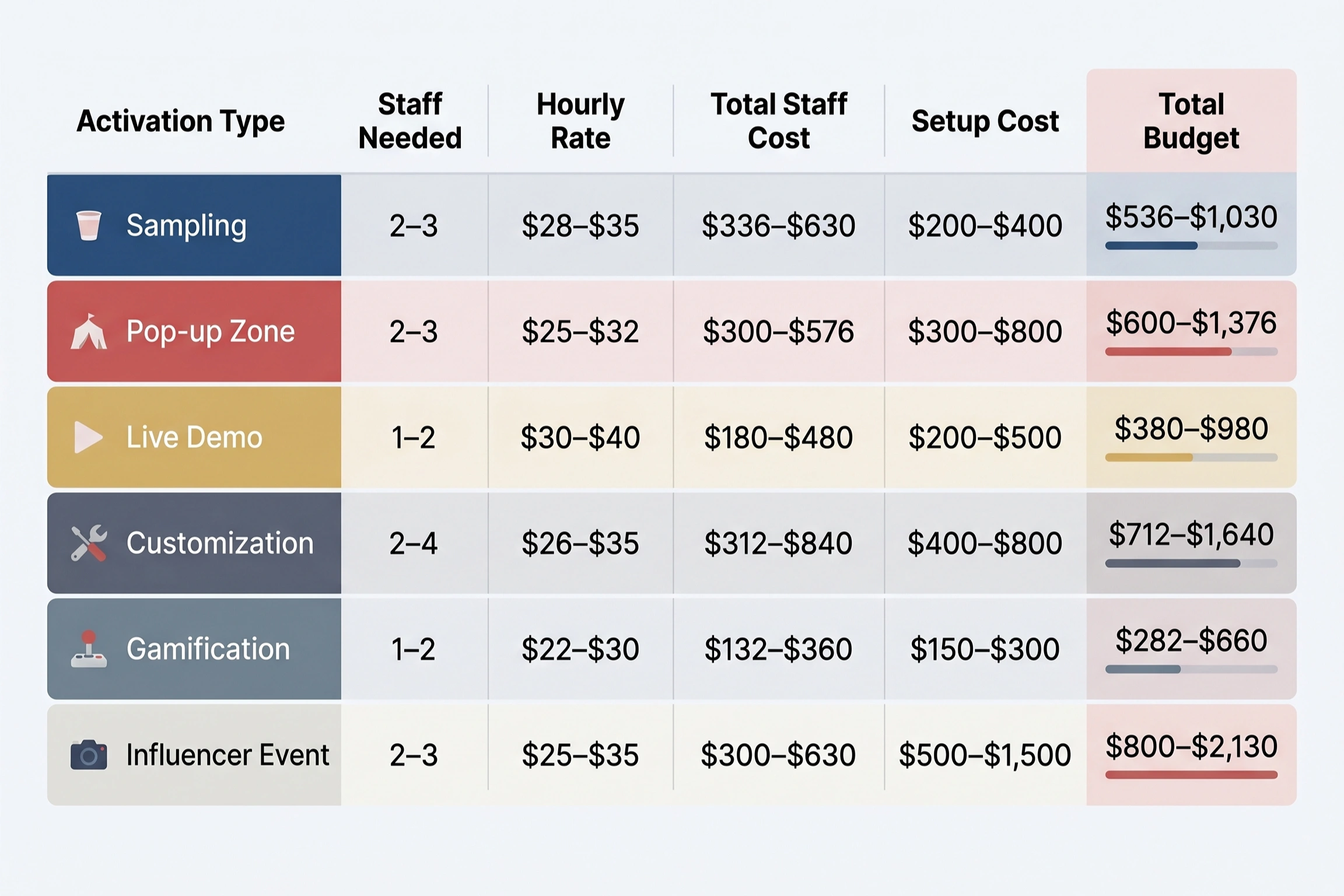
Key insight: Brands save $100 on staffing and lose $1,000+ in missed conversions. The cheapest option is never the best option.
These retail activation ideas are where most retail experiential marketing budgets are either won or wasted.
Hidden cost: One understaffed activation hour can wipe out your entire day's ROI.
- Fast takeaway: Budget $500–$1,500 per 6-hour activation for professional execution. Add 15% contingency.
Use our Retail Activation Planner to estimate your staffing and expected results.
Pick the Right Retail Activation Ideas & Event Ideas in 30 Seconds
Common Mistakes with Retail Activation Ideas & In-Store Activation Ideas (Don't Do These)
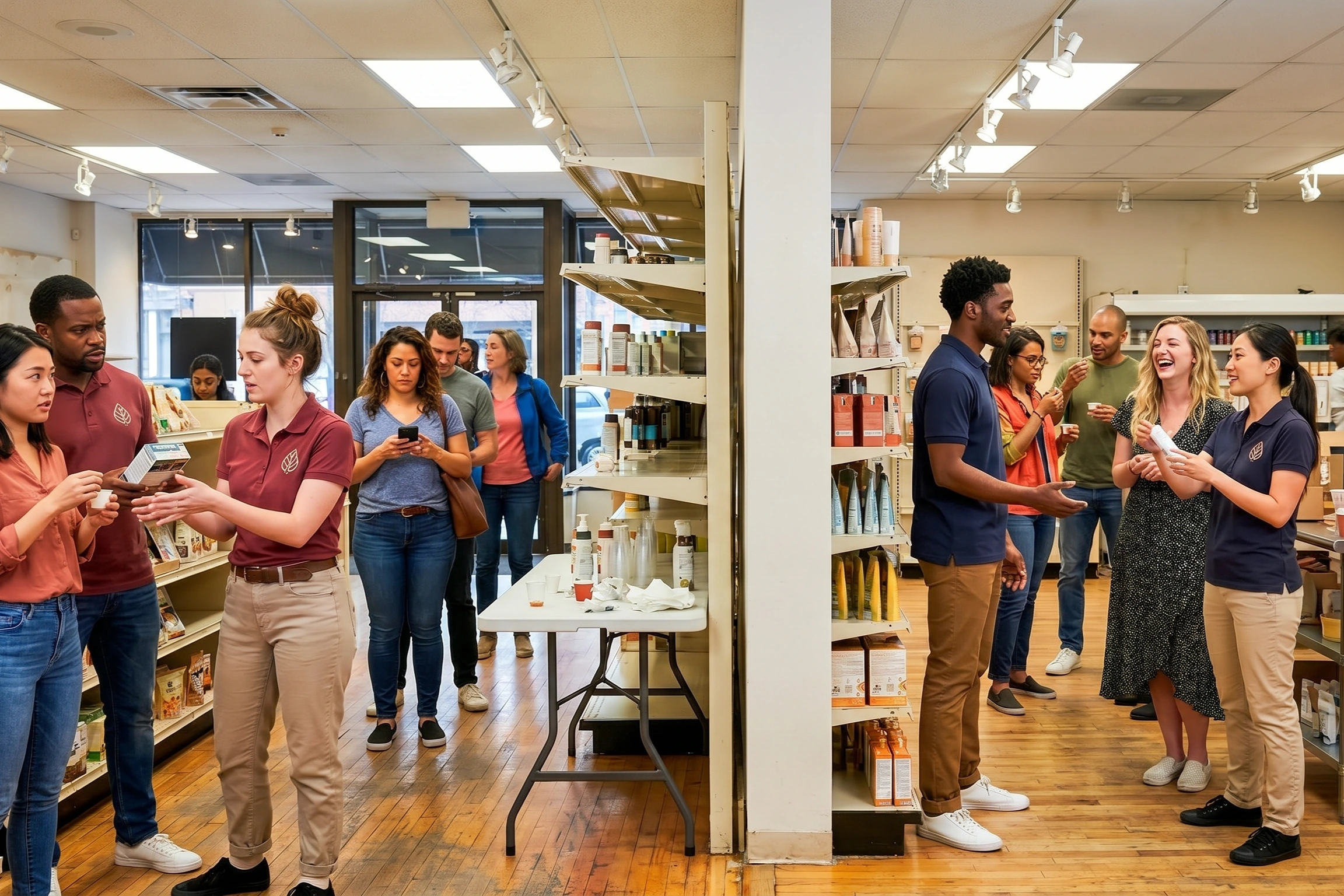
Mistake #1: Assigning untrained checkout staff.
Your cashiers are great at the registers. They're not trained product ambassadors. Guests sense it immediately. Results tank.
Mistake #2: Budgeting for 1 person on Saturday afternoon.
You think "it's not that busy." Then, at 3 pm, 200 people crowd the zone, and your single staff member is destroyed. Guests leave without buying.
Mistake #3: Not splitting roles.
One person tries to greet, explain, sell, and collect data simultaneously. Guests fall through cracks. Some leave without trying. Some buy reluctantly.
Mistake #4: Running complex activations in low-traffic stores.
A customization station makes sense in high-traffic urban locations. In a suburban store with 150 daily visitors, you're overstaffed and losing money.
The fix:
- One staff = flow management + greeter (friendly, high-energy, invites people)
- One staff = engagement + sales (answers questions, closes sales)
- Add peak-hour staff (lunch, evening, weekends) instead of all-day coverage
- Train staff on product facts and common objections before launch
- Brief staff on your actual goal: conversions, email signups, repeat visits
How to Know If Your Retail Activation Ideas & In-Store Activation Ideas Actually Worked
If you can't track conversions during the activation, don't run it again.
Focus on:
- Sales during the event window (the only metric that matters)
- Email captures per hour (lead quality, not vanity)
- Repeat visits within 7 days (proof the activation created loyalty, not just foot traffic)
If these don't move, your activation didn't work.
Calculate ROI:
(Revenue from activation guests − activation cost) ÷ activation cost = ROI
Target: 3:1 minimum. If you're getting less, something in execution is broken.
.webp)
Ready to run retail activation ideas that actually convert?
Get a custom activation plan tailored to your store traffic, budget, and goals—including:
- Recommended activation type
- Exact staffing model
- Expected ROI benchmarks
👉 Start your retail activation plan now and see what your store could realistically generate in the next 30 days.
Ready to elevate your next event?
Join thousands of event planners who trust EventStaff.com for reliable, professional staffing solutions.
Trusted by event professionals nationwide
1k+
Events Staffed
2 million+
Guests Served
97%
Positive reviews