
CEO Excerpt
"In over a decade of managing high-density entries, I’ve learned that technology is a variable, but throughput must be a constant. We deploy troubleshooters to ensure that when scanners pause, the guest experience doesn't." - CEO Event Staff
Event check-in troubleshooters are what stop a five-minute scanner issue from turning into a thirty-minute hallway jam. At peak arrival, most conferences process roughly 1.2 to 1.5 guests per lane per second. One frozen scanner quietly cuts that in half. Nobody panics at first, but the compression starts immediately. Troubleshooters step in early, isolate the problem, and keep verified guests moving while the fix happens in parallel.
What do event check-in troubleshooters do when technology fails?
- Preserve guest throughput when scanners stall
- Isolate technical failures without stopping entry
- Shift teams to manual verification while protecting lane logic
Executive Summary
Event check-in troubleshooters safeguard entry flow during technical outages by isolating scanner failures and activating manual verification protocols. This proactive "human failover" preserves guest throughput and prevents minor system glitches from escalating into major operational bottlenecks.
Reason 1: Troubleshooters Preserve Flow When Scanners Stop Working
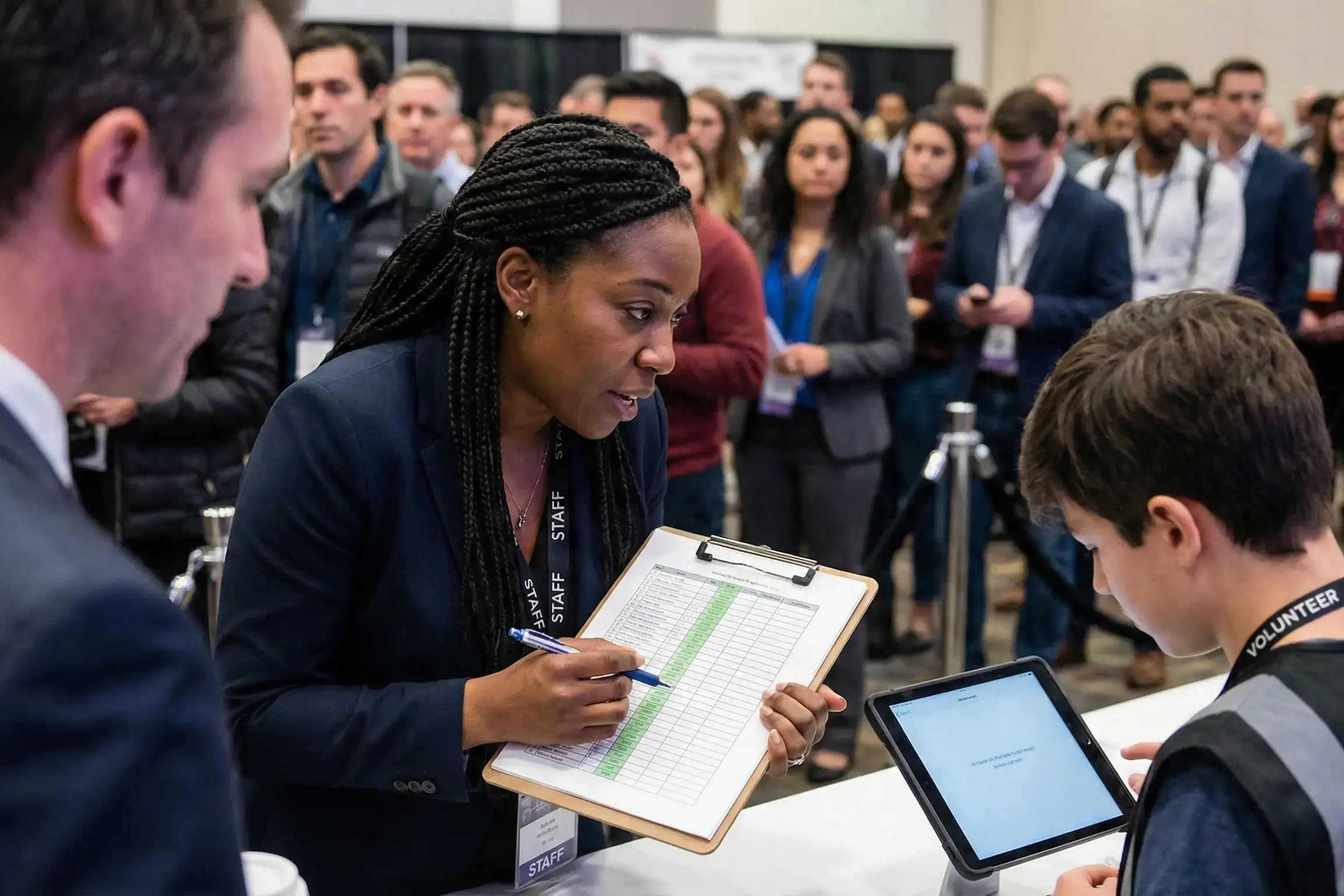
Scanner failures don’t announce themselves. There’s no alert. It starts with a pause. A guest leans back toward the phone. The staffer tries again. Then again. The line behind them tightens.
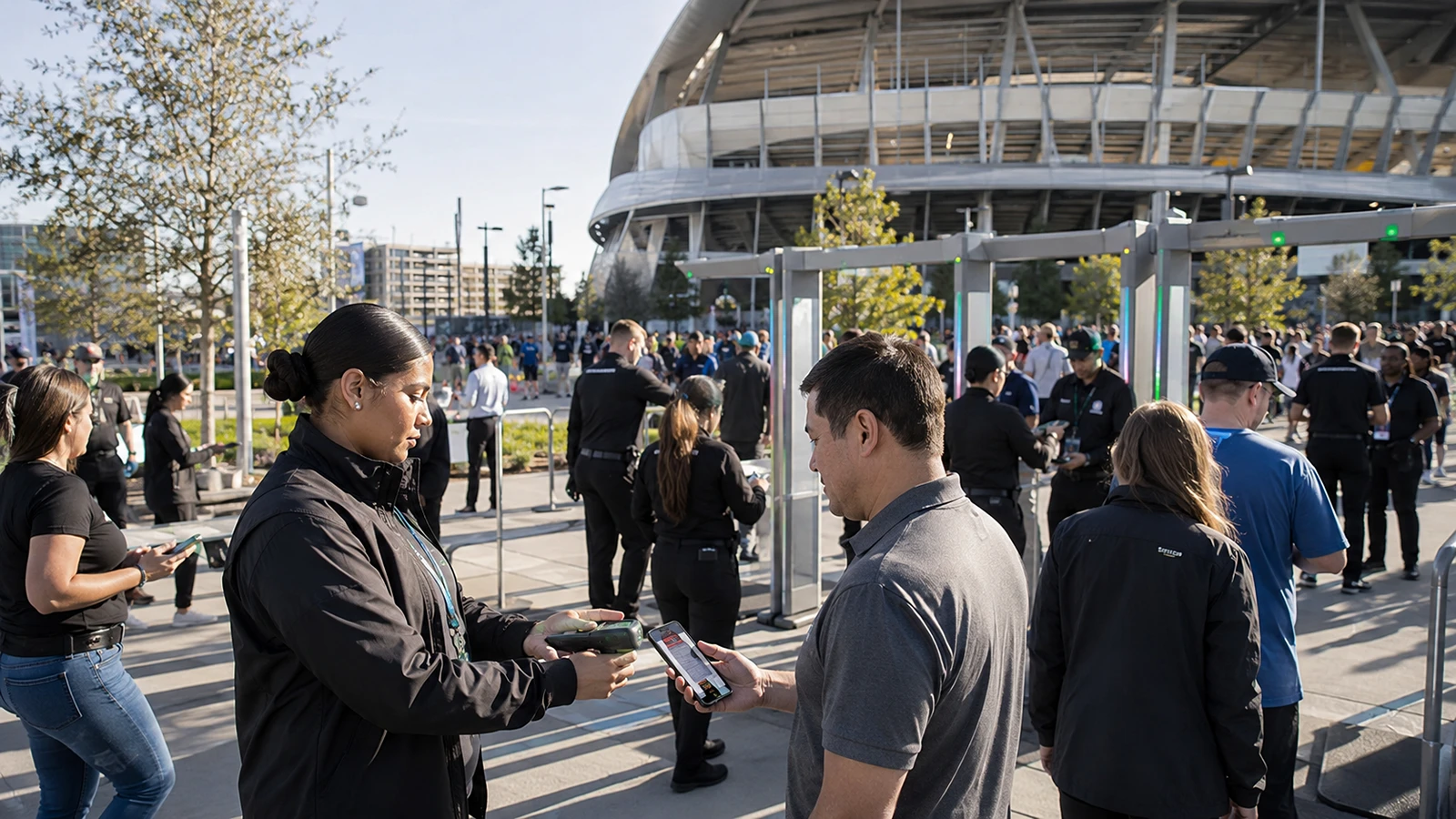
That’s the moment event check-in troubleshooters act. Within 10 to 15 seconds, they pull the stalled guest into a triage lane and reopen the primary lane. That one move prevents a downstream problem at security, escalators, or badge pickup.
On-site, troubleshooters follow a fixed recovery order. No guessing. No improvising.
- App reset
- Bluetooth reconnect
- Network toggle
- Unit swap
Each step has a time cap. If a scanner isn’t live within 30 seconds, it’s done. Hanging on to dead hardware is how forty guests end up stuck because of one device.
They also know when rescanning is a waste of time. Glare on badges, cracked screens, and low-light entries get routed to alternate verification immediately. That decisiveness is why slow entry errors are minimized during surge windows. Event check-in troubleshooters operate between scanning staff and supervisors, controlling lanes, devices, and recovery pacing during live entry windows.
Reason 2: They Manage Manual Check-In Without Breaking Queue Logic
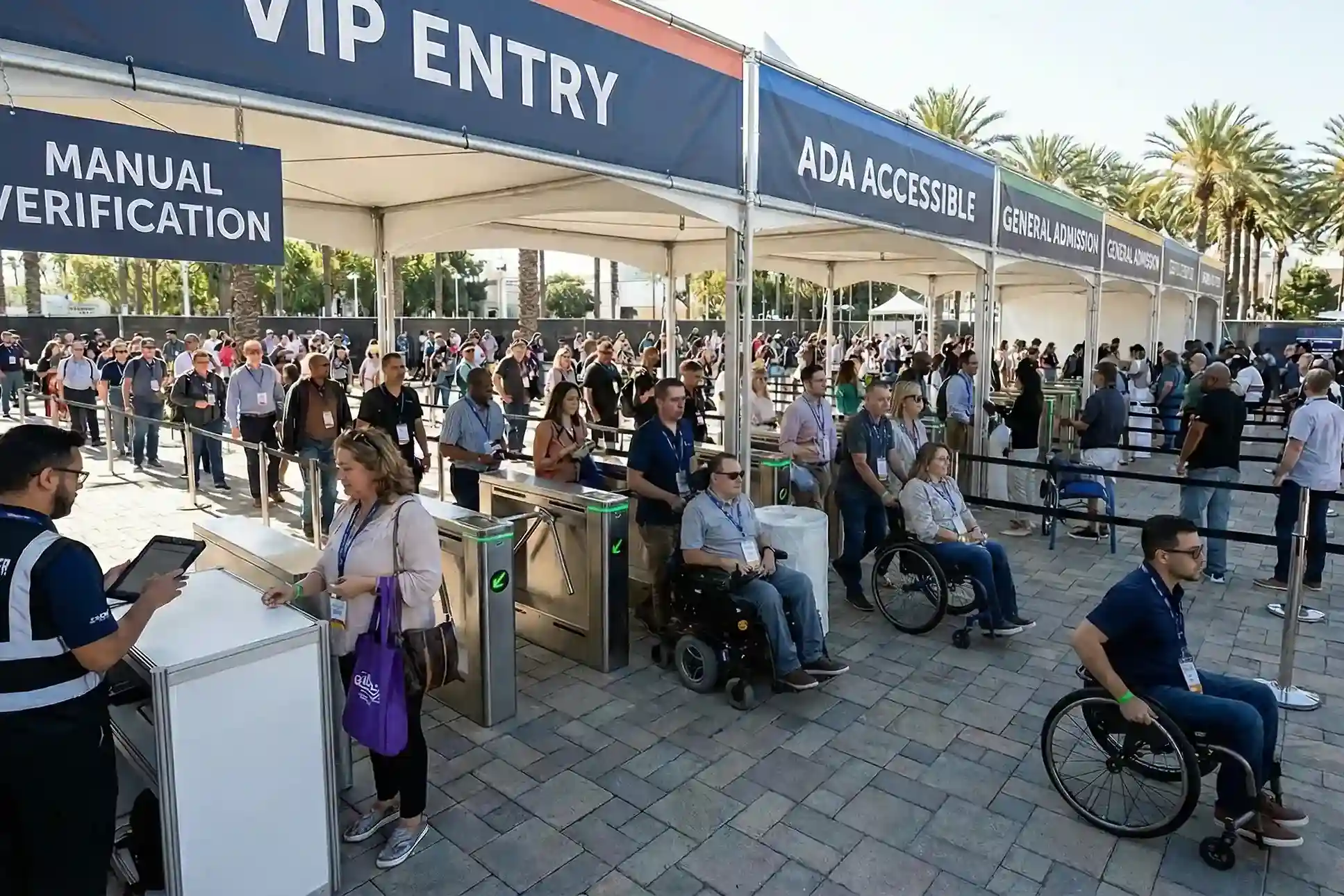
When platforms drop or Wi-Fi desyncs, entry doesn’t stop. It changes modes. Most outages last between five and twelve minutes. The real risk isn’t downtime. It’s a disorder.
Event check-in troubleshooters switch teams to manual lookup without collapsing lane structure. Names are verified against offline lists or cached databases. Temporary credentials get issued with clear visual markers so they can be reconciled later. Nothing enters the floor without a trail.
Manual processing is slower, and everyone knows it. Average speed drops to about 20 to 25 guests per lane per minute. If you don’t control that slowdown, it spills backward fast. This is where the queue management science becomes critical.
That’s why troubleshooters actively monitor and control flow:
- ADA and VIP lanes remain protected
- General access moves at a controlled pace
- Hallways stay clear
- Staff don’t improvise
They also maintain a strict chain of custody. Every temporary badge is logged. Wristband colors are tracked. That discipline prevents security gaps and reconciliation issues that usually surface hours after doors open.
Since 2024, more venues have required offline credential contingencies due to Wi-Fi load caps and shared-network restrictions. In 2026, that means manual lookup isn’t just a fallback; it’s a planned mode that troubleshooters must activate without supervisor delay.
Reason 3: They Restore Order After Systems Come Back Online
The most dangerous moment isn’t failure. It’s recovery.
When systems reboot, untrained teams tend to throw every lane back open. Guests surge. Verification slips. Priority access disappears. That’s how credential integrity breaks without anyone noticing.
Event check-in troubleshooters reopen lanes in stages. One lane goes live first. Throughput gets tested. Sync gets confirmed. Then the next lane opens. ADA and speaker access come back before general entry. It’s deliberate, even when the pressure’s high.
They also reset staff behavior. After an outage, scanners rush. Troubleshooters slow things just enough to restore accuracy. That small pause prevents duplicate scans, badge mismatches, and unverified access that would cause bigger issues later.
Why Event Staff Troubleshooters Hold Entry Together
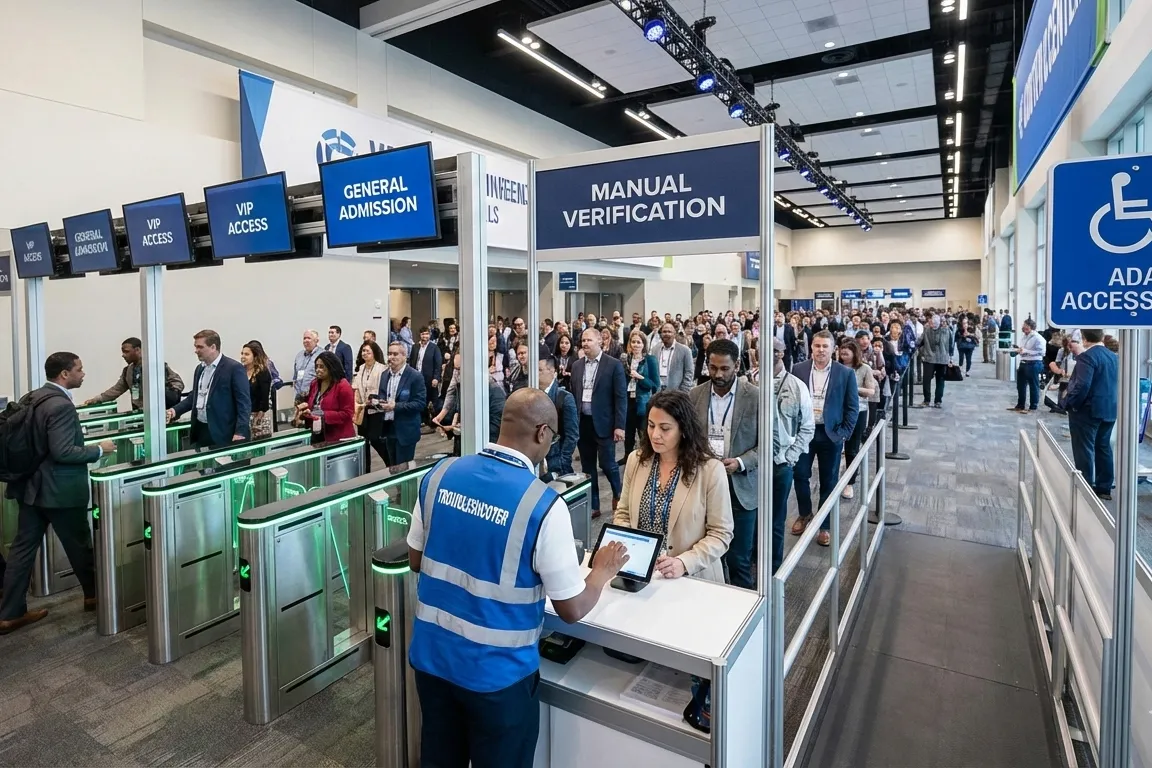
EventStaff trains troubleshooters for real failure patterns, not best-case scenarios. They’re drilled on platform quirks, device behavior, and surge timing. They know most conferences don’t have one peak. They have two.
One hits about twenty minutes before doors. The second comes right after the keynote release. During those windows, event check-in troubleshooters run at tighter coverage:
- One troubleshooter per four to five scanners
- A floater during peak arrival
- Direct radio access to entry supervisors
That structure lets issues get isolated without pulling scanners off task. When failures hit, troubleshooters communicate status, recovery timing, and lane adjustments in real time. That transparency keeps the whole entry calm and predictable. According to recent Cvent event data, onsite technology issues are consistently ranked among the top stressors for event planners, highlighting the need for human contingency layers.
Fast Estimate: Troubleshooter Coverage
For conferences with 1,000 to 3,000 attendees, plan for:
- One troubleshooter per 4 to 5 scanners
- One floater during peak arrival windows
- Manual mode reducing throughput by roughly 30 percent
- Coverage focused on the first 90 minutes of doors
That coverage prevents hallway spill, protects security, and keeps verified guests moving even when tech doesn’t cooperate. One unmanaged outage during peak arrival can add 20–30 minutes to entry, increasing labor costs by one to two overtime hours per lane. Effective PCMA crowd science suggests that perception of wait times is often more damaging than the wait itself; troubleshooters manage this optics by keeping lines visibly moving.
The "Human Failover" Protocol
If your event involves multi-day entry, layered credentials, or peak arrival surges, relying solely on software is a risk. Event check-in troubleshooters are not optional; they are the insurance policy for your timeline. EventStaff deploys trained troubleshooters who protect throughput, maintain verification integrity, and keep entry predictable even when the technology fails. If you are ready to secure your entry flow, you can get a quote for a scoped staffing plan built around your specific arrival curve and compliance needs. If your entry plan doesn’t include troubleshooters, it assumes technology won’t fail during peak arrival, a risk most planners cannot afford to take.
Ready to elevate your next event?
Join thousands of event planners who trust EventStaff.com for reliable, professional staffing solutions.
Trusted by event professionals nationwide
1k+
Events Staffed
2 million+
Guests Served
97%
Positive reviews