
What to Brief Event Staff on Before Doors Open
.webp)
You can hire the right event staff and still lose control in the first 20 minutes.
This is where most events quietly fail. Not during peak hours, not during breakdown, but right when doors open, and guests form their first impression.
Without a clear event staff briefing, teams start guessing. One person stands at the entrance without direction. Another gives inconsistent instructions. A third keeps asking basic questions while lines begin forming.
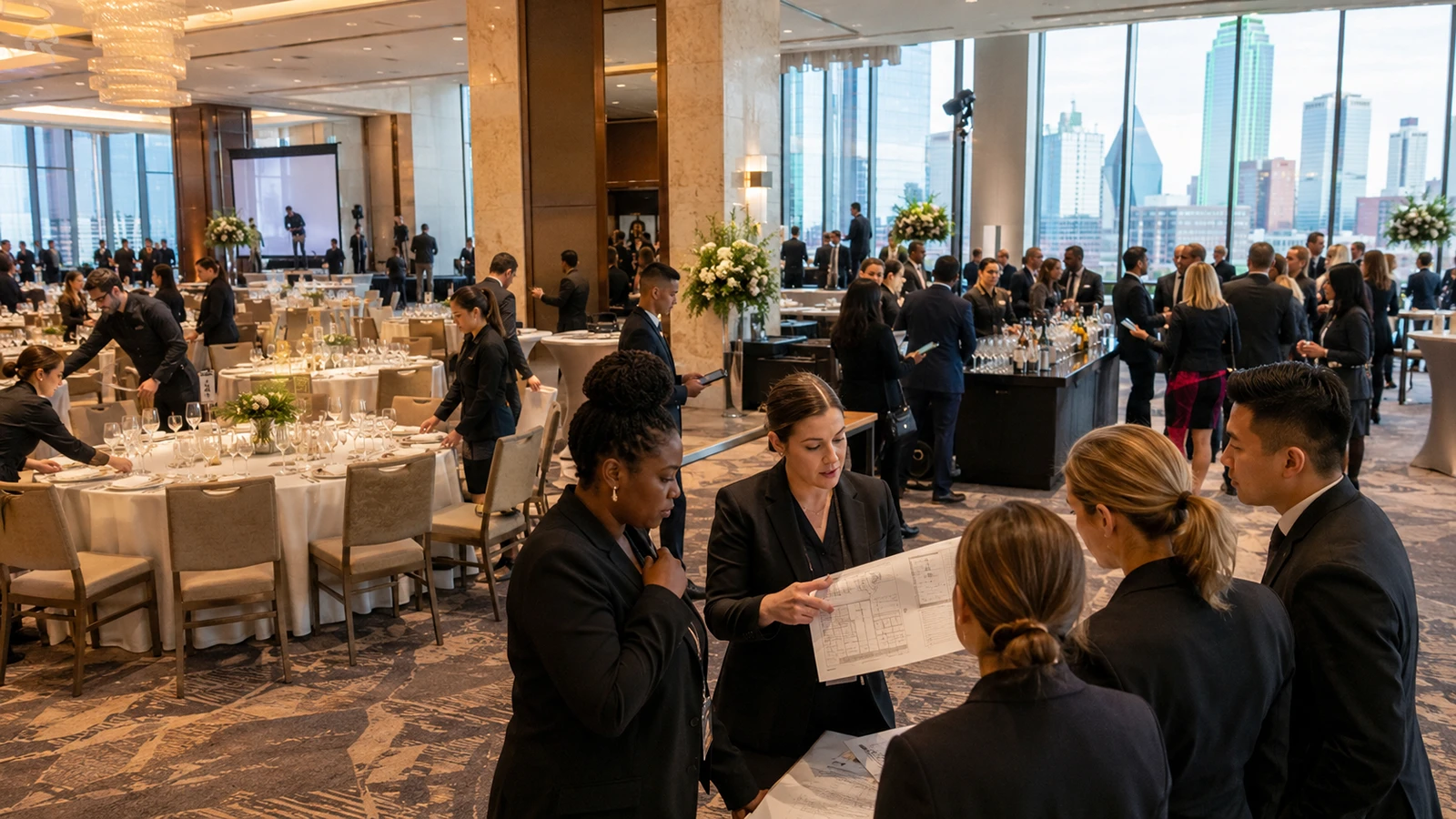
A structured event staff briefing before doors open removes that uncertainty. It ensures every staff member knows exactly where to stand, what to say, who to contact, and how to handle the first wave of guests.
According to EventMB, over 70% of attendees say their event experience is shaped within the first 30 minutes. That makes your pre-event staff briefing one of the highest-impact steps in your entire event execution.
Executive Summary
Use this event coordinator checklist to brief staff before doors open. It covers the five essentials every pre-event staff briefing should include: position and zone, escalation protocol, first-hour priorities, guest communication standards, and prohibited actions. You will also see why a printed reference card matters and how to tell if the briefing worked once guests start arriving.
Why a Pre-Event Staff Briefing Matters Before Doors Open
The riskiest window is often the quiet one before guests arrive.
In that moment, supervisors are checking final details, vendors are asking last-minute questions, and temporary staff are trying to understand the floor. If the briefing is skipped, staff begin the event by improvising.
At a large conference, this can show up fast. CES tells attendees to pick up badges before coming to the show, with remote badge pickup locations across Las Vegas. That means staff answering badge, entry, and direction questions need the same script before the first attendee arrives.
A 15-minute briefing is not training. It is first-hour protection. For broader planning, this event staffing plan guide can support the full run-up to event day.
CASE STUDY
A large conference like CES shows why this matters. CES tells attendees to pick up badges before coming to the show, with remote badge pickup locations across Las Vegas. That kind of setup only works if event staff know the same badge pickup script, entry rules, and direction language before the first attendee asks. Otherwise, one staff member sends guests to customer service, another points them toward registration, and the line starts forming in the wrong place.
5 Things to Brief Staff on Before Doors Open
A pre-event staff briefing should not turn into full training. It should focus on the critical details that prevent operational breakdown during the first hour.
1. Position and Zone: Where Each Staff Member Stands
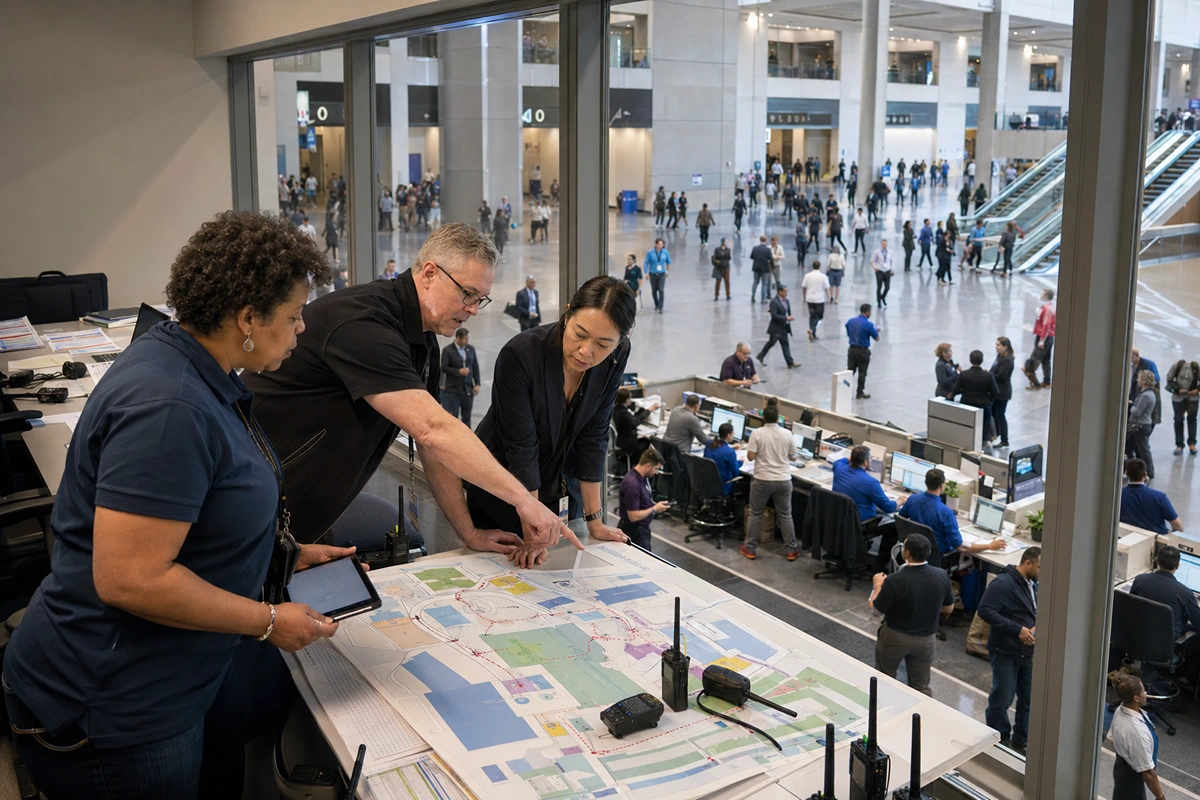
Every staff member must know their exact station, zone boundaries, nearby teammates, and reporting supervisor. Clear positioning prevents clustering and ensures full coverage across the venue.
2. Escalation Protocol: Who Staff Contact When Issues Arise
Staff should have one clear escalation path. Define who to contact, how to reach them, and what situations require immediate escalation, such as safety concerns or guest conflicts.
3. First-Hour Priorities: What Matters Most During Entry Flow
The opening window is about maintaining flow, not perfection. Staff should prioritize staying in position, managing movement, and reducing bottlenecks at key entry points.
4. Guest Communication Standards: What Staff Should Say
Provide exact scripts for greetings, directions, and wait-time communication. Consistent language builds trust and avoids confusion among guests.
5. Prohibited Actions: What Staff Should Never Improvise
Clearly define boundaries. Staff should not leave assigned zones, invent answers, or override protocols under pressure. These small decisions often create large operational issues.
CEO Excerpt
I always tell clients that the team does not fail when the doors open. The team fails when no one tells them what the first 20 minutes are supposed to look like. If your staff know where to stand, what to say, and who to call, they can protect the room before problems become visible to guests.
How to Brief Event Staff on Positions, Zones, and Supervisors
The most common briefing failure is positional confusion.
Do not say, “You’ll help with guest flow.” Say: “Your station is the ballroom entrance. Your zone is from this doorway to the registration table. Your adjacent colleague is Maya. Your supervisor is Alex.”
Then verify it. Ask each person to repeat their station, zone, and supervisor.
This matters because staff without clear zones tend to cluster near entrances or supervisors. In staffing for events, that creates a chain reaction: one zone becomes crowded, another goes uncovered, and guests start redirecting themselves. For conference-heavy events, this conference staffing mix guide gives more context on registration, ushers, and monitors.
Give Staff One Person to Call Before the Radios Start Blowing Up
Staff do not need five people to call. They need one clear path.
Tell them: “If there is a medical emergency, guest conflict, or safety issue, call Alex on radio channel two and say your location first.”
Also tell them what not to escalate. A guest asking for the bathroom, parking, or the sponsor table should not interrupt the supervisor during the opening rush. Staff should answer from the reference card or direct the guest using the approved language.
This is one of the most important parts of how to brief event staff because it protects supervisors from basic questions when they need to handle real problems.
Stop Staff From Overhelping Their Way Out of Position
- The first hour is about keeping staff in position and guests moving.
Tell staff: “Stay in your zone, give consistent answers, and keep guests moving. Do not leave your position to solve small problems unless your supervisor tells you to.”
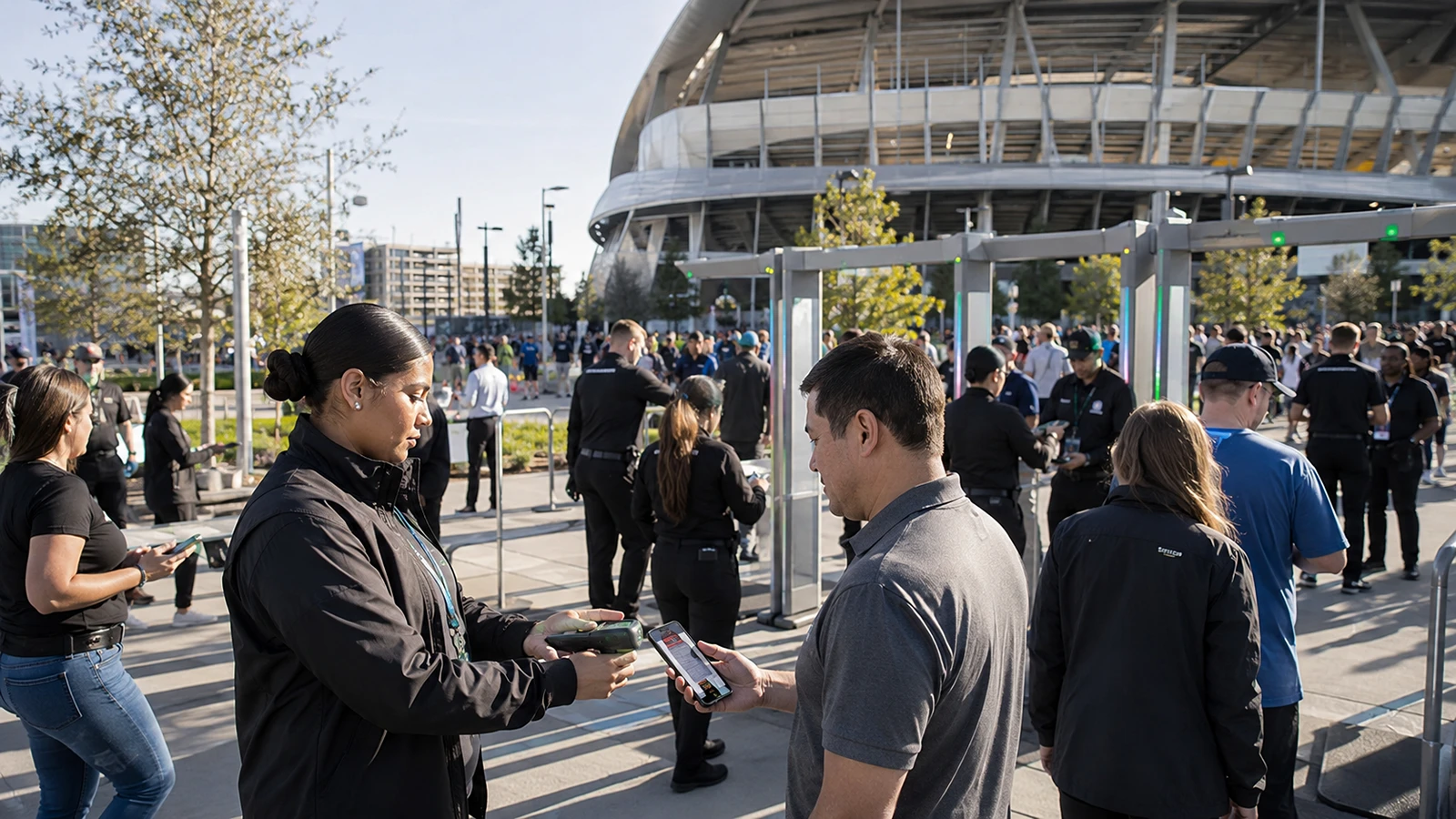
- For a festival like Coachella, wristband registration is mandatory before arrival through the official mobile app. That kind of rule has to be briefed clearly because entry staff will hear the same wristband questions again and again once guests reach the gate.
- For a brand activation in Los Angeles, that might mean a brand ambassador stays at the sampling point instead of walking a guest across the venue. If you are planning promotional or sampling roles, EventStaff’s brand activation solution is a natural next step.
- At a festival like Coachella, wristband registration is mandatory before arrival through the official mobile app. That means entry staff will hear the same wristband questions repeatedly once guests reach the gate. The first-hour priority cannot be “walk every confused guest through the app.” It has to be: stay in position, give the approved wristband answer, and keep the entry lane moving.
- The priority is simple: coverage first, polish second.
Give Staff the Exact Guest Language to Use
Do not ask staff to “be helpful.” Give them the words guests should hear.
Situation
Exact line staff should use
Why it matters
Greeting a guest
“Welcome to [event name]. How can I help you?”
Gives every guest the same first interaction.
Giving directions
“[Location] is past the registration table on your right.”
Prevents vague directions like “over there.”
Managing a wait
“You are checked in. The room opens in about 10 minutes, and we’ll guide you in from here.”
Reduces frustration by explaining what is happening.
Unsure of the answer
“Let me get the right person to help with that.”
Stops staff from guessing or giving wrong information.
Clear language prevents mixed messages. If one staff member says the session is upstairs, and another says it is past registration, guests lose confidence immediately.
Things Staff Should Never Improvise On-Site
Clear boundaries stop well-meaning staff from creating new problems.
Tell staff not to leave their position, not to invent answers, not to change protocol, and not to ignore their zone boundary. These mistakes are usually well-intentioned, but they create bigger problems.
One person leaving a post to “help” can leave an entrance uncovered. One improvised answer can spread the wrong information across the room.
The One-Page Card That Keeps Your Briefing From Disappearing
A verbal briefing fades once guests start asking questions.
Staff is hearing instructions while the room is moving, guests are arriving, and supervisors are under pressure. A one-page card gives them something to check without calling for help.
Include their station, supervisor, escalation rules, guest phrases, first-hour priorities, and prohibited actions. The card does not replace the briefing. It gives staff something to check instead of guessing. For timing-heavy events, a clean run of show can also help staff understand when priorities shift.
You’ll Know in 20 Minutes If the Briefing Failed
You will know within 20 minutes.
If the briefing worked, staff are in position, guests are getting the same answers, and supervisors are not answering basic questions every few minutes.
SXSW’s volunteer support materials separate roles, responsibilities, training, preparation, logistics, policies, and who volunteers contact if they have a problem. That is a good reminder that large U.S. events do not leave role clarity and support paths to chance.
If the briefing fails, staff cluster near one entry point, guests get conflicting directions, and queues start forming in places that should have been covered.
If that happens, do not wait until the event ends. Pull the team aside, clarify the missing point, and send them back to their zones.
Key Takeaway
Before doors open, every staff member should be able to answer four questions without asking a supervisor: Where do I stand? What do I say to guests? Who do I call if something goes wrong? What should I not do when the line starts moving?
Start Your Event Strong From the First Minute
The first 20 minutes of your event set the tone for everything that follows. A clear, structured event staff briefing ensures your team operates with confidence, consistency, and control from the moment doors open.
If you want an event team that arrives prepared, aligned, and ready to execute without confusion, EventStaff can help. From trained staff to on-ground coordination support, we ensure your team is briefed, positioned, and performance-ready before the first guest walks in.
Plan smarter. Brief better. Execute flawlessly.
Get in touch with EventStaff today to build a team that delivers from minute one.
Ready to elevate your next event?
Join thousands of event planners who trust EventStaff.com for reliable, professional staffing solutions.
Trusted by event professionals nationwide
1k+
Events Staffed
2 million+
Guests Served
97%
Positive reviews