
CEO Excerpt
I’ve seen flawless plans collapse because the event team leader lost control of the zone. At scale, small delays don’t stay small. They compound through crowd flow, coverage gaps, and hesitation. A disciplined event team leader keeps pressure contained before it becomes a visible risk. - CEO Event Staff
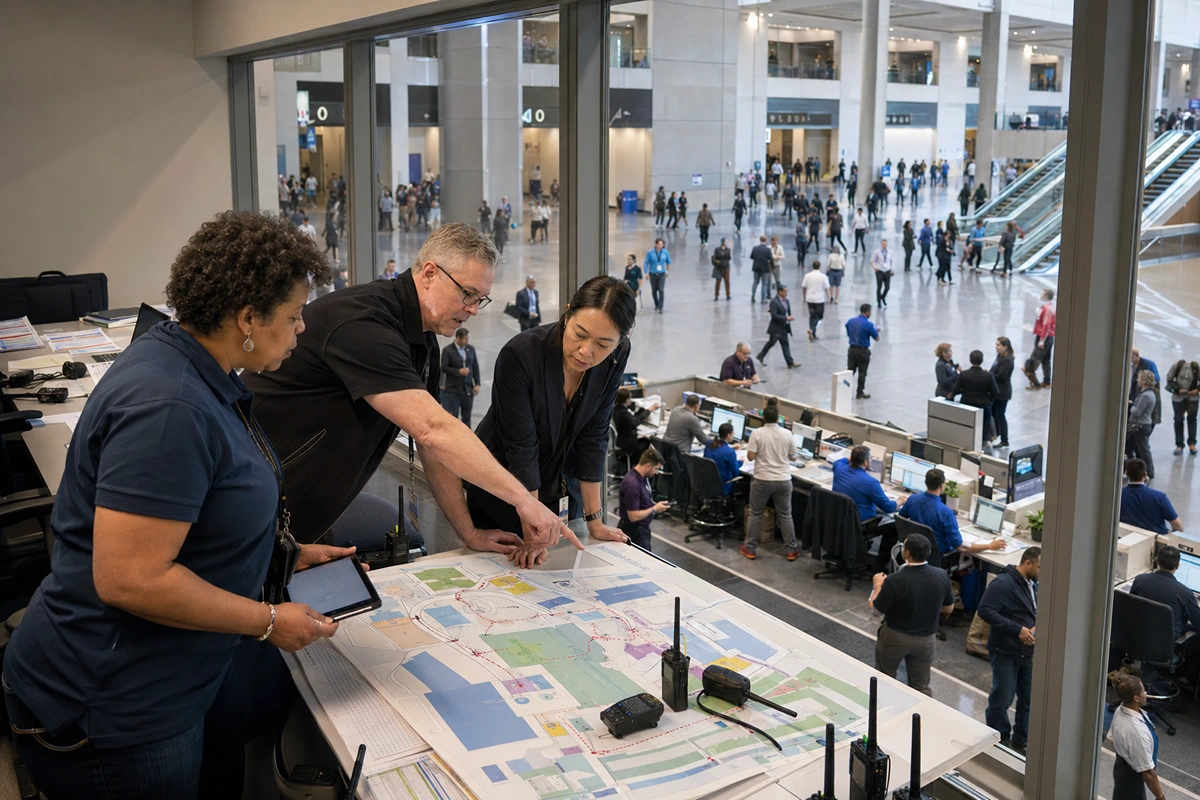
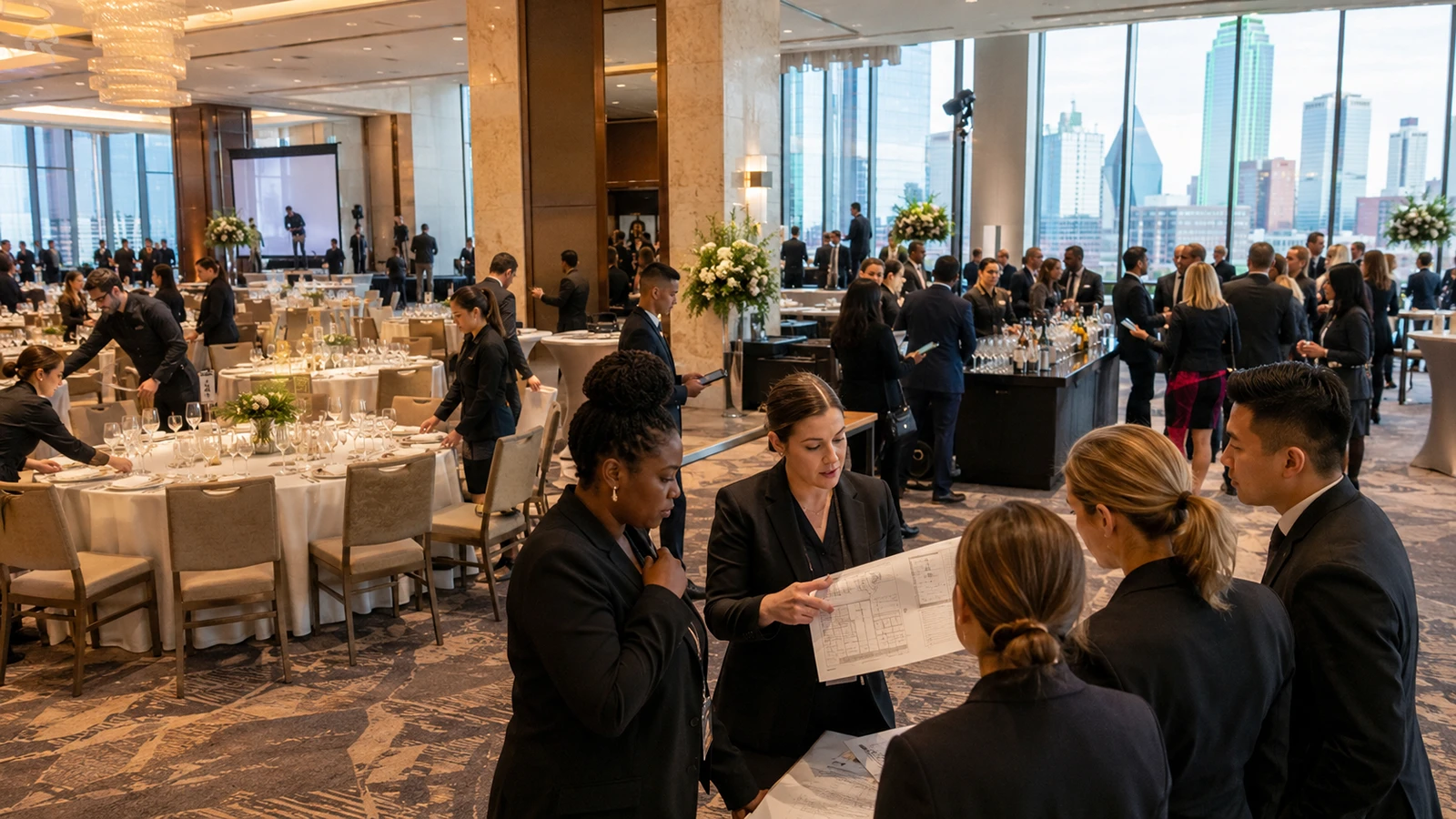
An event team leader is the operational anchor of any large-scale event. When attendance reaches 1,000 to 5,000 guests or more, supervision is no longer administrative. It becomes strategic. Crowd flow, radio clarity, break coverage, and cross-team coordination must operate in sync. If leadership slips, small delays multiply quickly.
In high-density environments, effective crowd management at events begins at the zone level. An event team leader is responsible for directing 15 to 30 staff members, monitoring crowd density in real time, adjusting positioning before congestion hardens, and coordinating with security, production, and guest services without hesitation.
So what skills does an event team leader actually need to manage large-scale events successfully?
They must be able to:
- Read early warning signs in crowd movement
- Deliver clear and decisive instructions under pressure
- Make fast decisions with incomplete information
- Maintain control without micromanaging
- Coordinate laterally across multiple operational teams
This short read outlines the core skills every event team leader needs to stabilize large-scale events, protect guest safety, and prevent operational friction before it becomes visible risk.
Executive Summary
An event team leader directs staff, monitors crowd density, and coordinates cross-team communication to keep large-scale events stable under pressure. Strong leadership is essential for effective crowd management at events, especially when traffic spikes, staffing ratios tighten, and real-time decisions impact safety and cost control.
Why Is an Event Team Leader Critical in Large-Scale Events?
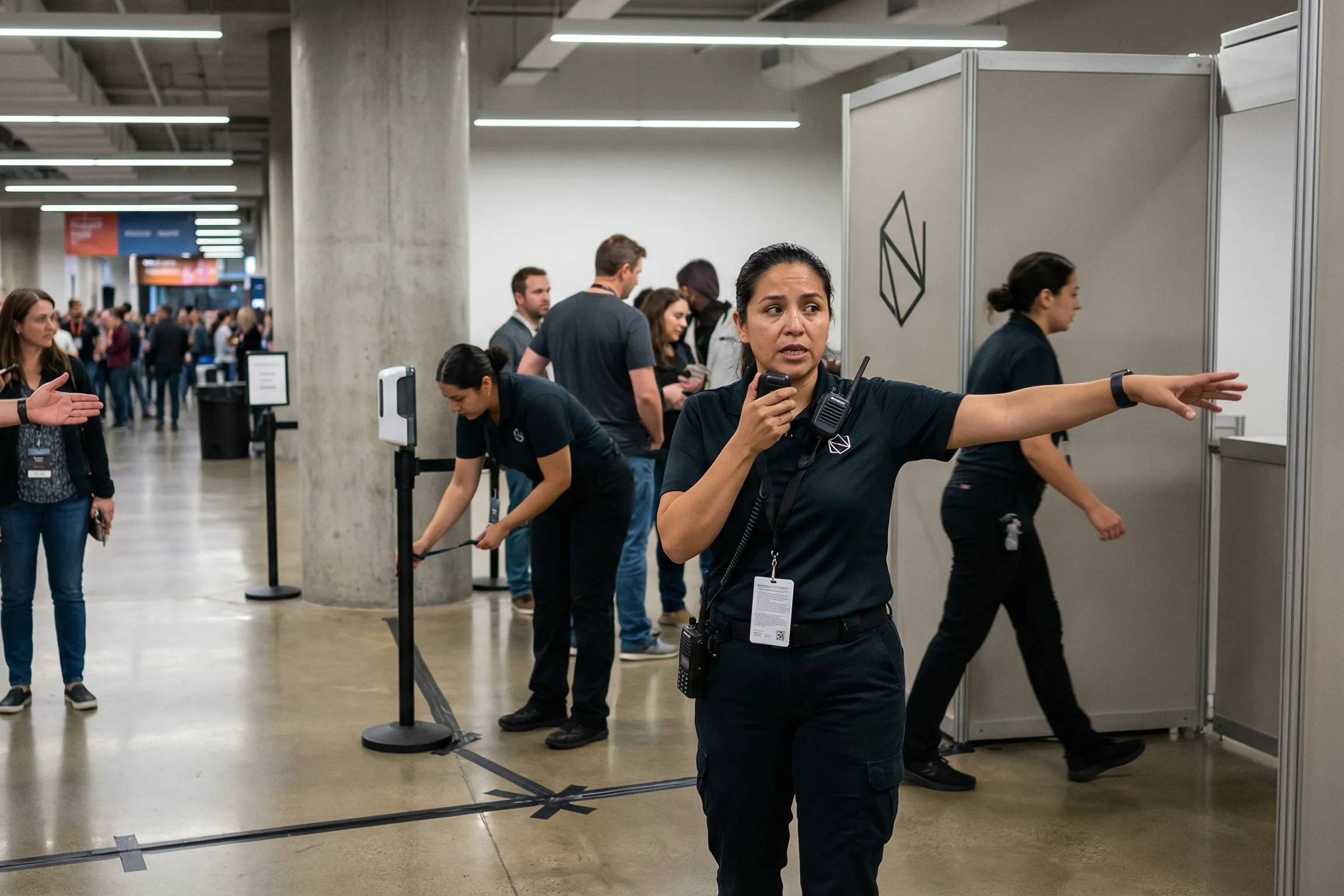
At small gatherings, minor delays remain contained. At large-scale events, they compound. An event team leader becomes critical once attendance crosses the 1,000 guest threshold because supervision shifts from task management to pressure control.
In high-density environments:
- Radios overlap and instructions blur
- Break rotations disrupt coverage if not monitored
- Vendor delays affect entry flow
- Lines expand into unintended areas
- Guests react visibly to congestion
The difference between a busy event and a breaking event is the presence of structured, zone-level leadership.
The Operational Role of an Event Team Leader
An event team leader is responsible for:
- Supervising 15 to 30 staff members within a defined zone
- Monitoring crowd density and flow patterns in real time
- Adjusting staffing positions before compression escalates
- Coordinating with security, production, and guest services
- Escalating issues with clarity and speed
Effective crowd management at events depends on early pattern recognition. Congestion rarely begins with a dramatic incident. It starts with small indicators:
- A line bending beyond its planned footprint
- Staff clustering in low-pressure areas
- Guests are slowing their pace and checking their phones
- Entry scanners operating below throughput targets
A disciplined event team leader identifies these signals early and recalibrates assignments immediately. That early intervention protects egress paths, reduces overtime risk, and preserves guest confidence.
At scale, leadership is not optional. It is the control system that keeps operational pressure contained.
An event team leader is the zone-level supervisor responsible for directing 15–30 staff members, monitoring crowd density, and coordinating across security, production, and guest services in real time. At events with 1,000 to 5,000+ attendees, their ability to read early warning signs, communicate clearly under pressure, and make fast decisions is what separates a smooth operation from a compounding failure.
Core Skill #1: Crowd Management Awareness
Crowd management at events is not just security's job. It starts with the event team leader watching the flow like a hawk. You're reading density, pace, and posture. When guests slow down and start checking their phones in line, something's backing up.
A strong event team leader knows the early signs of congestion or agitation and doesn't wait for complaints. They adjust staffing. They shift the routing. They open the space before compression hardens.
Understanding how guest psychology shapes movement patterns is essential here; the way people navigate chokepoints and high-density zones is predictable once you know what to look for. stadium flow psychology breaks down exactly how density builds before it becomes a problem.
Crowd management at events succeeds when leaders move first. Strong crowd awareness prevents safety incidents before they start and saves you from expensive reactive fixes later. Industry data shows that events utilizing professional crowd management services report 78% fewer safety incidents and significantly higher satisfaction scores from participants
Core Skill #2: Clear Command and Communication
Large events fail when instructions are unclear. Not dramatically. Quietly. A half-heard radio call. Two supervisors are giving slightly different directions. Staff hesitate, then improvise.
An event team leader has to cut through that noise. Deliver simple, unambiguous directions. Speak calmly when the pressure spikes. Act as the single point of clarity for their zone so nobody is guessing who to follow.
In high-volume environments, seconds matter. Union call times, timed entries, and sponsor walk-throughs demand precision. Clear leadership reduces confusion and response delays. A composed event team leader keeps the tempo steady, even when everything else feels loud.
Core Skill #3: Real-Time Decision Making Under Pressure
Large-scale events rarely go exactly as planned. Equipment fails. A VIP arrives early. Weather shifts. An event team leader cannot freeze while waiting for perfect information.
They make fast decisions with incomplete data. Prioritize safety first, then guest flow, then schedule impact. Escalate only when necessary, not as a reflex.
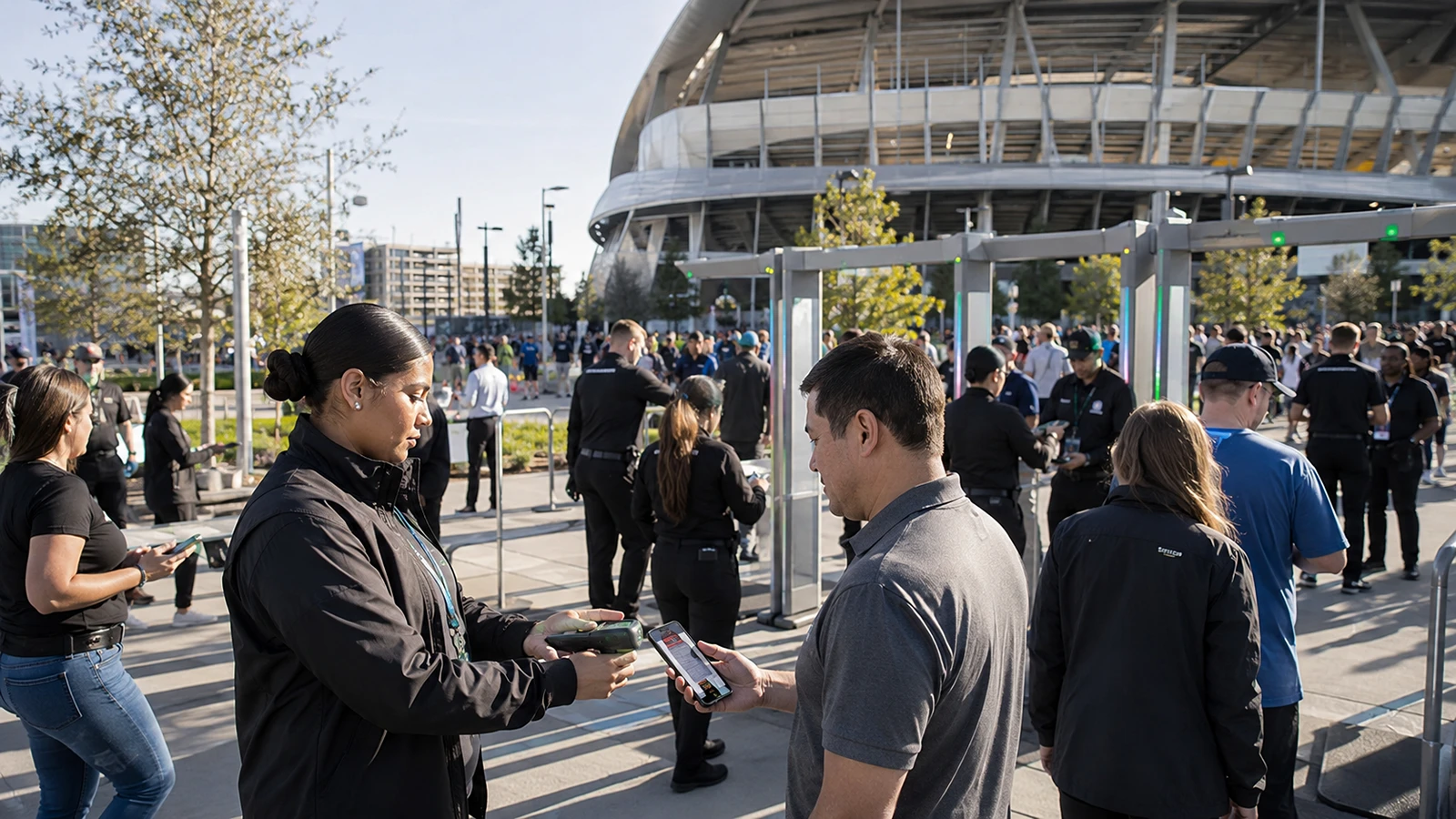
Picture credential scanners going down at one entrance. A decisive event team leader redirects traffic immediately and reallocates staff before the queue doubles. That speed protects crowd management at events and limits overtime exposure. Planners who understand staffing cuts costs know that fast, competent floor leadership is one of the highest-leverage investments in any event budget.
Core Skill #4: Team Control Without Micromanagement
Event teams are dynamic and constantly moving. People rotate for breaks, guests ask unpredictable questions, energy dips mid-shift. An event team leader can't hover over every interaction.
Effective leaders trust trained staff to execute. They step in only when intervention is required. They walk the floor, read tone, adjust positioning quietly. Presence matters more than pressure.
If you micromanage, speed drops. If you disappear, standards slide. The balance is subtle, and it's learned on real floors, not in theory. This balance improves speed, confidence, and accountability across the entire zone.
Core Skill #5: Cross-Team Coordination
Large events involve multiple stakeholders working at once. Security adjusts entry points. Production shifts a stage reset. Guest services reroute traffic. If those moves are not aligned, friction builds fast.
An event team leader must coordinate with security and crowd control teams, production and technical crews, and front-of-house staff in real time. It's constant calibration.
Crowd management at events improves when information flows sideways, not just up the chain. A quick check-in before rerouting a line can prevent congestion two zones away. For high-stakes formats like sponsor lounges and VIP areas, sponsor lounge staffing outlines the kind of cross-team alignment that keeps those zones running cleanly.
Strong coordination prevents bottlenecks and conflicting instructions before they compound. According to the U.S. Department of Justice and DHS best practices, establishing interoperable, multi-team communication protocols is considered the most critical factor in preventing dangerous density buildup and safety incidents at high-attendance events
Core Skill #6: Situational Awareness Across the Venue
An event team leader cannot operate inside a bubble. They need the full picture, not just their immediate zone. What's happening at the secondary entrance? Is production running behind? Are breaks overlapping?
Situational awareness means knowing what's unfolding beyond your line of sight. It means anticipating how one issue affects another area before it spills over. If one entrance tightens, another will feel it within minutes.
Strong crowd management at events depends on this awareness. An event team leader who stays aligned with central ops leads proactively. One who doesn't ends up reacting after pressure has already built.
Common Leadership Gaps in Large-Scale Events
Even experienced teams can struggle when the event team leader focuses on tasks instead of pressure signals. In large-scale environments, leadership gaps appear subtly before they become operational failures.
Effective crowd management at events breaks down long before security intervention. It starts with missed signals and unclear ownership.
Gap #1: Ignoring Early Density Indicators
Small warning signs often go unaddressed:
- A queue extending beyond its planned footprint
- Guests are slowing down near the entry scanners
- Staff clustering in low-traffic areas
- Break coverage overlaps during peak flow
When these indicators are ignored, compression builds quietly. By the time escalation occurs, rerouting requires more labor and more visibility.
Gap #2: Hesitation During Critical Moments
Large-scale events demand immediate response. Leadership hesitation results in:
- Delayed traffic redirection
- Conflicting instructions across teams
- Extended wait times
- Increased overtime exposure
An event team leader must act within defined thresholds. Waiting for multiple confirmations in high-density zones increases risk.
Gap #3: Task Focus Over Zone Stability
Checking boxes is not leadership. Some supervisors prioritize:
- Completion of assignments
- Schedule adherence alone
- Static positioning instead of dynamic flow
While tasks matter, zone stability matters more. Crowd movement is fluid. Leadership must adjust to it.
The Cost of Leadership Gaps
When supervisory control weakens, the impact is immediate:
- Labor hours extend
- Security presence increases
- Guest satisfaction drops
- Brand perception absorbs friction
The financial and reputational cost of weak zone leadership often exceeds the cost of investing in experienced supervision upfront.
Large-scale events do not fail suddenly. They drift off alignment when the event team leader does not intervene early enough.
Final Perspective for Planners and Agencies
Choosing the right event team leader is a strategic decision that directly impacts safety, cost control, and brand perception in large-scale events. Clear staff-to-lead ratios, defined escalation thresholds, and structured crowd management at events prevent small disruptions from escalating into operational risk. Strong supervision keeps teams aligned, protects egress flow, and maintains guest confidence even during peak pressure. In complex venues and high-attendance environments, leadership structure determines whether an event feels controlled or chaotic. If you are planning a high-density or multi-zone event, Get a Quote to secure experienced event team leadership before doors open.
Ready to elevate your next event?
Join thousands of event planners who trust EventStaff.com for reliable, professional staffing solutions.
Trusted by event professionals nationwide
1k+
Events Staffed
2 million+
Guests Served
97%
Positive reviews