
CEO Excerpt
As an event staffing operator, I can tell you that finding reliable catering staff isn’t about filling shifts; it’s about protecting service flow, supervision, and accountability when pressure peaks. The events that run smoothly are the ones where staffing ratios, defined roles, and backup coverage are engineered before guests arrive. - CEO Event Staff
If you are searching for how to find catering staff for a high-pressure event, you are not simply filling open shifts. You are protecting timing, service flow, and guest perception when execution must be precise.
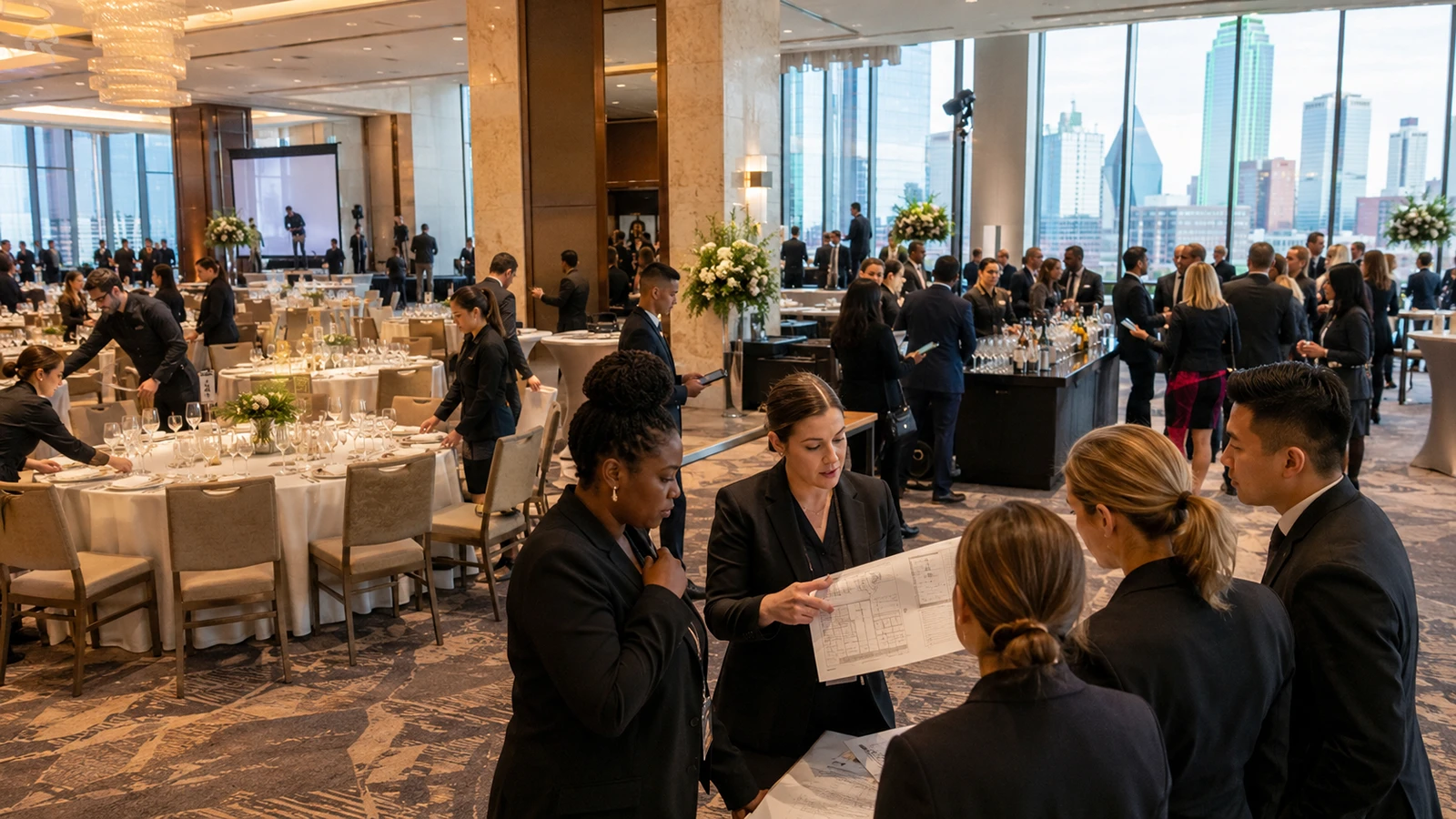
At conferences, hundreds of attendees move toward service areas at once. At galas, VIP tables expect seamless pacing. At weddings, missed cues are remembered long after the event ends. In each scenario, the difference between smooth service and visible breakdown is not just food quality. It is a staffing structure.
Reliable catering staff protects the operational core of your event by:
- Maintaining consistent food pacing betweenthe kitchen and the floor
- Managing guest communication, including dietary restrictions and VIP expectations
- Covering assigned zones so no table, buffet line, or bar stalls
- Allowing supervisors to oversee service instead of stepping in to run plates
High-pressure events expose weak planning immediately. Coverage gaps, unclear catering staff roles, and missing floaters cause congestion during peak windows. When planners understand how to find catering staff strategically, they prioritize defined roles, vetted temp agencies for catering staff, and a structured event catering team built for performance under load.
Finding dependable support is not about headcount alone. It is about assembling an event catering team with the right ratios, oversight, and accountability in place before doors open.
Executive Summary
How to find catering staff for high-pressure events requires structured ratios, defined roles, and vetted backup coverage to protect service speed and guest experience. This guide explains where to source staff, how to vet agencies, and how to build an event catering team that performs under load.
What Do Catering Staff Actually Do During High-Pressure Events?
Catering staff stabilizes service flow by managing pacing, guest requests, and zone coverage during peak volume periods.
Catering staff is not just servers. They protect throughput when 300 attendees move toward buffet lines at once. A structured event catering team manages:
- Food pacing between the kitchen and the floor
- Guest communication, including dietary and VIP needs
- Zone assignments so no table or station stalls
In 2026, the average banquet server in the United States earns around $16.00 per hour, with typical wages ranging from roughly $28,000 to $38,000 annually, depending on experience and location. Knowing how to find catering staff means identifying which roles protect flow and which are optional.
Where Can You Find Reliable Catering Staff?
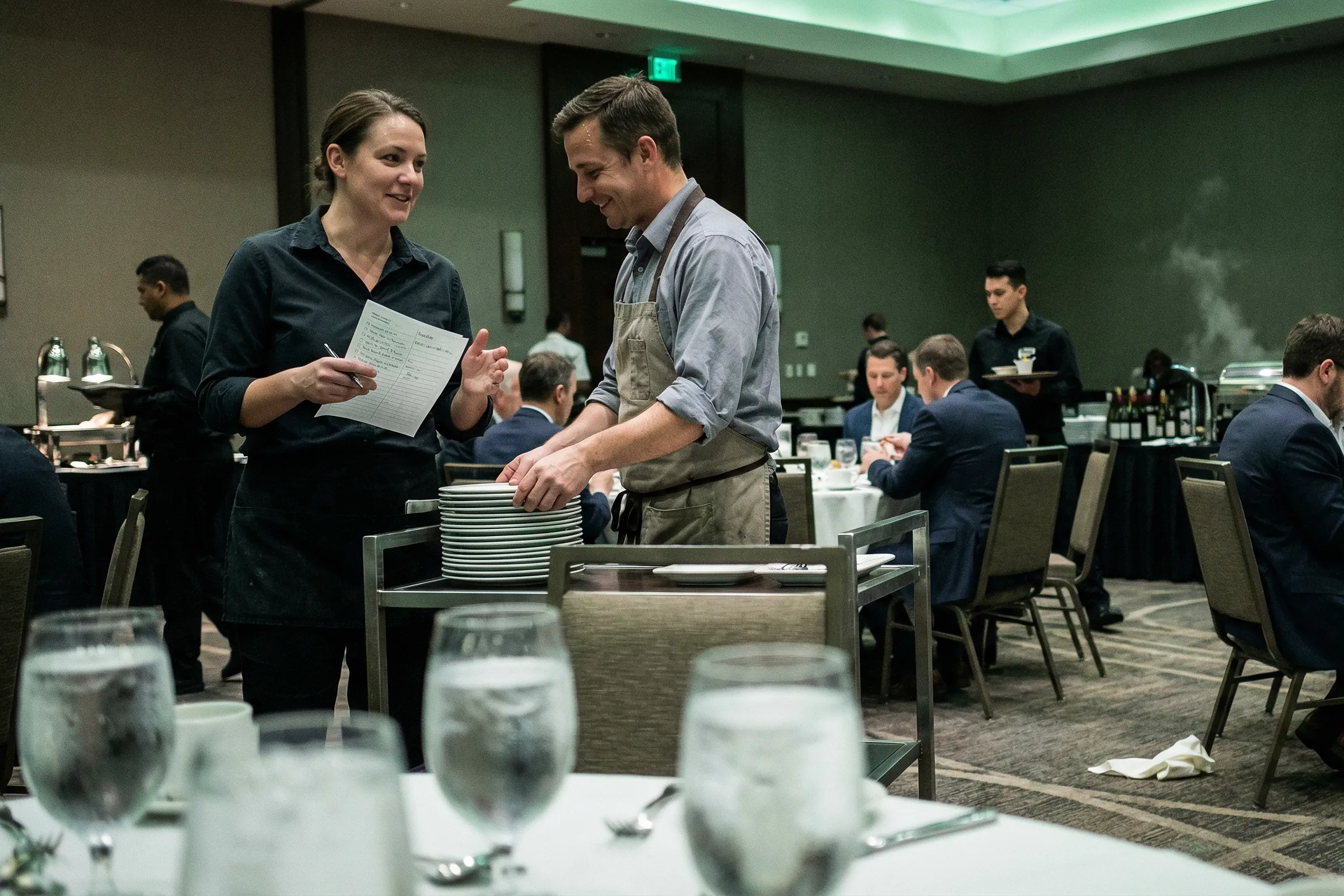
Reliable catering staff is typically sourced through vetted staffing agencies with replacement protocols and supervisor oversight.
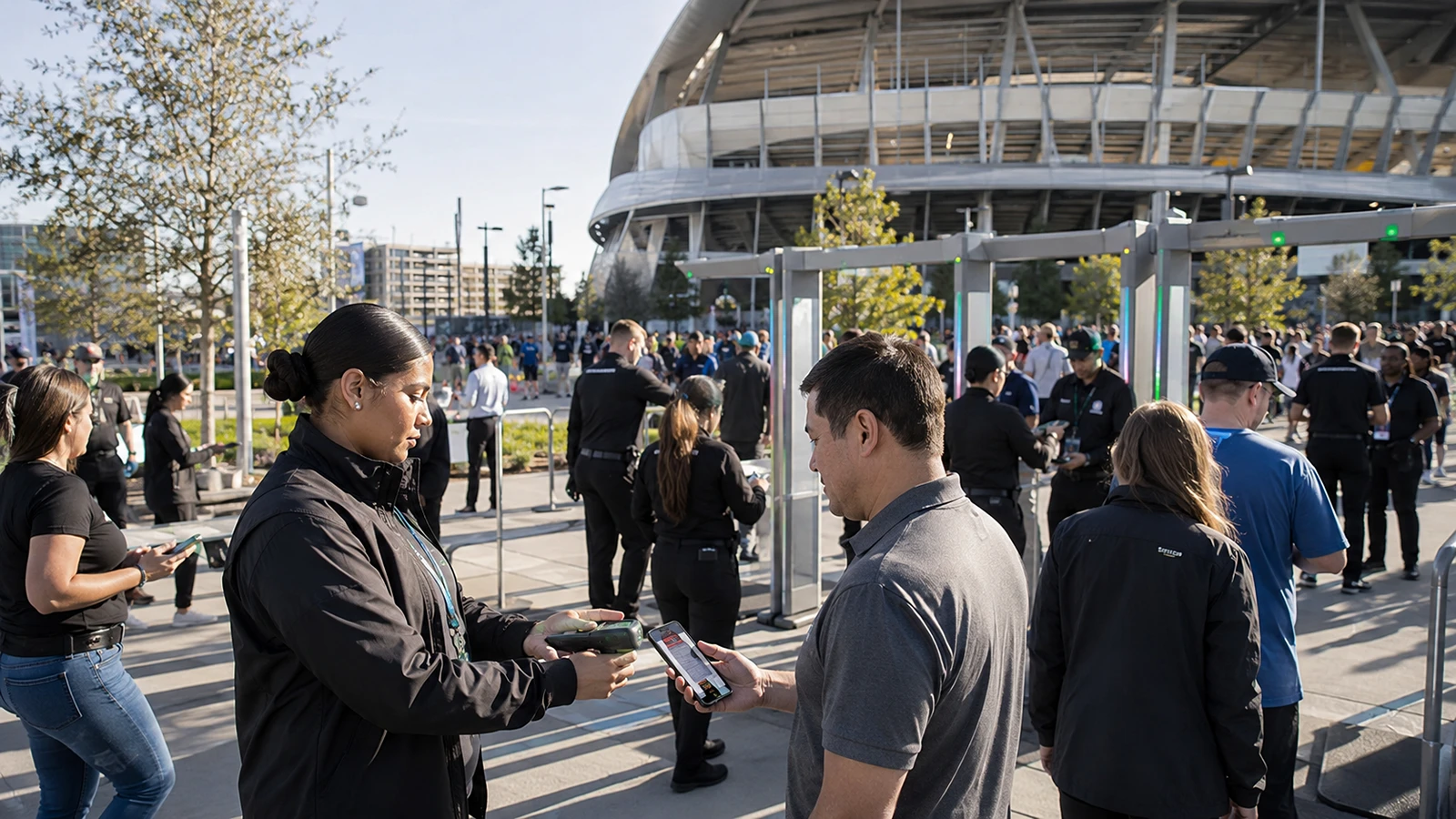
Referrals may work for small gatherings, but they rarely scale for high-pressure service windows. Many planners compare in-house hiring to temp agencies for catering staff. Understanding stadium event flow can also inform how you structure coverage zones before your team ever arrives on-site.
When evaluating temp agencies for catering staff, confirm:
- Verified banquet and buffet experience
- Written same-day replacement process
- On-site captain or supervisor availability
- Credential and food handler verification before arrival
- Performance tracking tied to past events
Union venues often require documented check-in procedures. Early compliance verification prevents delayed service starts.
How Many Catering Staff Do You Need for Large Events?
Most large events require one server per 30 to 35 guests, plus floaters to absorb peak traffic and maintain service speed.
Headcount depends on service style and guest movement patterns, not just total attendance. Research on attendee flow management shows that understanding movement patterns reduces congestion and service delays in high-traffic environments.
Planning benchmarks:
- Under 100 guests: 1 server per 25 to 35 guests
- 100 to 300 guests: 1 per 30 guests plus at least one floater
- 300 to 600 guests: zone teams with a 1 per 35 ratio and two floaters
- 600+ guests: layered supervision and dedicated VIP coverage
A detailed catering staff checklist should track zones, floaters, and break coverage so your event catering team maintains speed under load. For events that also require dedicated guest-facing support beyond the dining floor, pairing catering coverage with a VIP sponsor lounge staffing structure keeps premium experiences consistent from entry to service.
Example Scenario: Surge Management in Action
At a 450-guest corporate awards dinner, attendees were released from a keynote at the same time. Without a proactive staffing structure, buffet congestion would have escalated immediately.
Instead, the team implemented:
- Two roaming floaters assigned to high-traffic buffet stations
- One captain is monitoring congestion and redirecting bar staff temporarily
- Defined catering staff roles that prevented overlap and confusion
Service stabilized within minutes, and wait times remained controlled across all zones.
This illustrates why learning how to find catering staff is not only about total numbers. It is about building an event catering team structured to absorb peak traffic without a visible breakdown.
Key Planning Considerations
Before finalizing staffing numbers, confirm:
- Guest release timing from sessions or ceremonies
- Service format and table distribution
- Bar volume and specialty stations
- Union or credential verification requirements
- Backup replacement policies from temp agencies for catering staff
Accurate ratios combined with clear catering staff roles create resilience during peak windows. When staffing is engineered around movement patterns, service remains steady even when pressure intensifies.
What Catering Staff Roles Are Essential for Smooth Service?
Understanding catering staff roles is central to how to find catering staff who can perform under pressure. Clear role definition prevents duplication, missed coverage, and supervisory overload during peak service windows.
An effective event catering team operates within defined zones and responsibilities, with accountability assigned before guests arrive.
Core Catering Staff Roles
1. Captain or Floor Supervisor
- Oversees zone assignments and pacing
- Adjusts coverage in real time
- Manages communication between kitchen and floor
- Handles escalations and VIP coordination
2. Floor Waitstaff
- Assigned by zone or table cluster
- Responsible for guest communication and table flow
- Monitor dietary needs and service timing
3. Buffet Attendants
- Control replenishment cycles
- Maintain presentation and sanitation
- Manage line movement and congestion
4. Beverage and Bar Staff
- Manage bar production speed
- Monitor inventory and specialty drink timing
- Coordinate with floor staff during surges
5. Floaters
- Cover breaks and sudden guest surges
- Reinforce high-traffic stations
- Absorb congestion before it impacts service flow
6. Prep and Plating Support
- Maintain steady output from kitchen to floor
- Assist with course transitions and reset timing
Why Defined Roles Prevent Service Breakdown
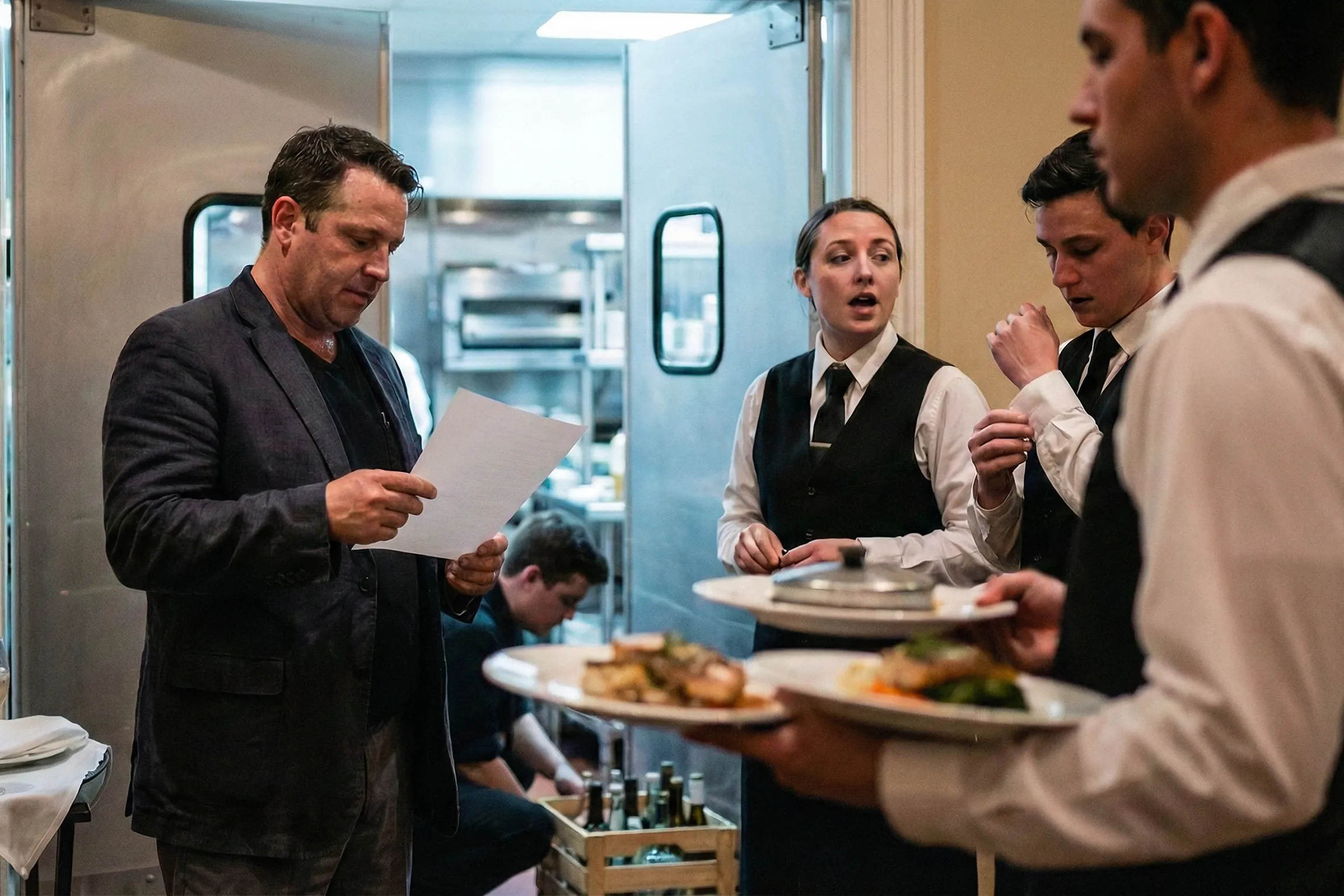
Without defined catering staff roles:
- Supervisors leave oversight to run plates
- Buffet stations stall due to unclear ownership
- Break coverage overlaps, reducing floor presence
- VIP needs go unmanaged
A structured catering staff checklist should clearly document each role, assigned zones, and reporting structure. When evaluating temp agencies for catering staff, confirm that assignments are role-specific, not general placement.
Role Clarity and Accountability
High-pressure environments require layered accountability. Each member of your event catering team should know:
- Their assigned zone
- Who they report to
- When breaks occur
- What backup protocol activates during a surge
When planners approach how to find catering staff strategically, they focus on role structure first, then headcount. Clearly defined catering staff roles create operational stability and protect service quality when guest volume peaks.
How Should You Schedule Catering Staff for Peak Service Windows?
Schedule catering staff with overlapping shifts, staggered breaks, and early compliance checks to prevent peak-time slowdowns.
Guest behavior has shifted. Conference sessions are often released at once, creating sharp surges.
To stabilize your event catering team:
- Overlap shifts during peak meal periods
- Stagger short breaks to avoid simultaneous slowdowns
- Confirm early arrival for credential checks
- Secure backup coverage through temp agencies for catering staff
In many markets, labor documentation must be verified before shift start. Build those confirmations into your catering staff checklist.
What Is the Fastest Way to Structure Catering Staff for High-Pressure Events?
Structure catering staff by confirming guest flow, setting ratios, defining roles, assigning floaters, and verifying credentials early.
Use this practical framework:
- Confirm guest count, service style, and peak release times
- Set staffing ratios based on flow, not appearance
- Vet temp agencies for catering staff with written replacement policies
- Define catering staff roles and assign at least one floater per zone
- Finalize a catering staff checklist covering arrival, supervision, and compliance
For large-scale events where catering intersects with brand presence and floor activation, reviewing trade show ambassador strategies can sharpen how your team navigates guest interaction under pressure. This process keeps your event catering team proactive instead of reactive.
Final Insights
Learning how to find catering staff for high-pressure events means protecting timing, supervision, and accountability when it matters most. Strong execution relies on realistic staffing ratios, clearly defined catering staff roles, structured peak scheduling, vetted temp agencies for catering staff, and a documented catering staff checklist that keeps coverage tight and service steady. If your upcoming conference, gala, or large-scale reception requires experienced professionals with layered oversight and reliable backup coverage, request a customized staffing plan and quote today to ensure your event catering team is structured to perform before doors open.
Ready to elevate your next event?
Join thousands of event planners who trust EventStaff.com for reliable, professional staffing solutions.
Trusted by event professionals nationwide
1k+
Events Staffed
2 million+
Guests Served
97%
Positive reviews