
CEO Excerpt
Having overseen large-scale events across the country, I know catering staff cost is controlled at the planning stage through paid hours, clear ratios, and early oversight.- CEO, Event Staff
Catering staff cost is calculated by defining the right headcount, converting that headcount into total paid hours, applying role-based hourly rates, and adjusting for overtime risk and venue labor rules. For professional event planners, this structured approach is what separates predictable budgets from last-minute labor overruns.
At its core, catering staff cost includes all compensated time for setup, active service, breakdown, briefings, and supervision. It is not limited to the visible service window. Accurate catering staff planning requires modeling when staff clock in, how long they remain on-site, and how venue constraints affect shift length.
Experienced planners follow a disciplined framework:
- Start with proven catering staffing ratios based on guest count and service style
- Convert roles into total paid hours, including setup and strike
- Apply tiered hourly rates by position and skill level
- Run a detailed catering labor cost calculation that accounts for overtime thresholds and minimum shift requirements
- Add a contingency buffer before you hire catering staff
This method ensures catering staff cost reflects operational reality rather than optimistic assumptions. Whether you are managing a corporate dinner, conference, or multi-city program, labor accuracy is determined during planning, not during service.
Strong catering staff planning protects more than the budget. It safeguards service timing, guest experience, and compliance across venues with different labor standards. The sections below break down exactly how to model, test, and control catering staff cost with confidence.
Executive Summary
Catering staff cost is calculated by multiplying staffing ratios by paid hours and role-based rates, then adjusting for overtime and venue rules. This guide shows event planners exactly how to model labor accurately and prevent budget overruns.
Why Does Catering Staff Cost Matter for Event Success?

Catering staff cost directly affects service speed, guest experience, overtime exposure, and overall event budget stability.
Catering staff cost is not just a budget line. It controls whether the service runs smoothly or unravels under pressure. When catering staff planning is rushed, small timing gaps turn into overtime, delayed meal drops, and stressed crews.
A structured catering labor cost calculation helps you avoid:
- Overstaffing that inflates catering staff costs with idle paid hours.
- Understaffing that slows service, stretches timelines, and triggers OT.
- Last-minute scrambles when you need to hire catering staff at premium rates.
- Inconsistent coverage when catering staffing ratios are guessed, not planned.
Strong planning protects both the budget and execution. The same discipline that prevents labor overruns also protects the guest experience, a principle that applies across every large-scale format, as covered in this breakdown of staffing cuts costs.
What Changes the Math in 2026
In 2026, catering staff cost is shaped less by guest count alone and more by labor regulations, venue policies, and scheduling oversight. With rising salaries and wages, planners who rely only on traditional catering staffing ratios often underestimate total paid hours and overall labor exposure.
Key Shifts Affecting Catering Staff Planning
1. Venue Minimum Shifts
Many hotels and convention centers enforce four-hour minimums, even if active service lasts only two hours. This directly increases catering staff costs before guests arrive.
2. Overtime Threshold Sensitivity
Long programs, delayed load-ins, or extended networking sessions can push staff past standard hourly limits, expanding your total catering labor cost calculation.
3. Regional Wage Variability
When you hire catering staff across multiple cities, local labor markets influence hourly rates and compliance rules, altering your projected catering staff cost.
4. Tighter Scheduling Oversight
Corporate clients and finance teams now review paid hours more closely. Catering staff planning must clearly justify setup time, breakdown windows, and supervision coverage.
Why Early Modeling Matters
Catering staff cost now depends heavily on shift structure rather than just headcount. A disciplined catering labor cost calculation that factors in minimum shifts and overtime exposure prevents unexpected labor expansion later.
Planners who confirm these variables early maintain control over both cost and execution.
What Factors Affect Catering Staff Cost the Most?
Catering staff cost is driven by guest count, service style, paid hours, staff skill level, venue constraints, and overtime exposure.
Even with the same headcount, the total changes when the timing and layout change. A clean catering labor cost calculation starts by naming the drivers so you can price labor realistically.
Key factors to model in catering staff planning:
- Guest count and room layout: Travel distance between kitchen, bar, and tables directly affects pacing, coverage zones, and total labor demand.
- Event duration: Paid hours extend beyond active service time to include setup, briefing, and breakdown, which increases total staffing cost.
- Service type: Plated dinners require tighter catering staffing ratios than buffet or reception formats to maintain synchronized delivery.
- Skill level: Captains and senior bartenders command higher rates but reduce service delays, errors, and overtime risk.
- Load-in and strike constraints: Limited dock access, union rules, or compressed teardown windows can add paid hours and expand staffing needs.
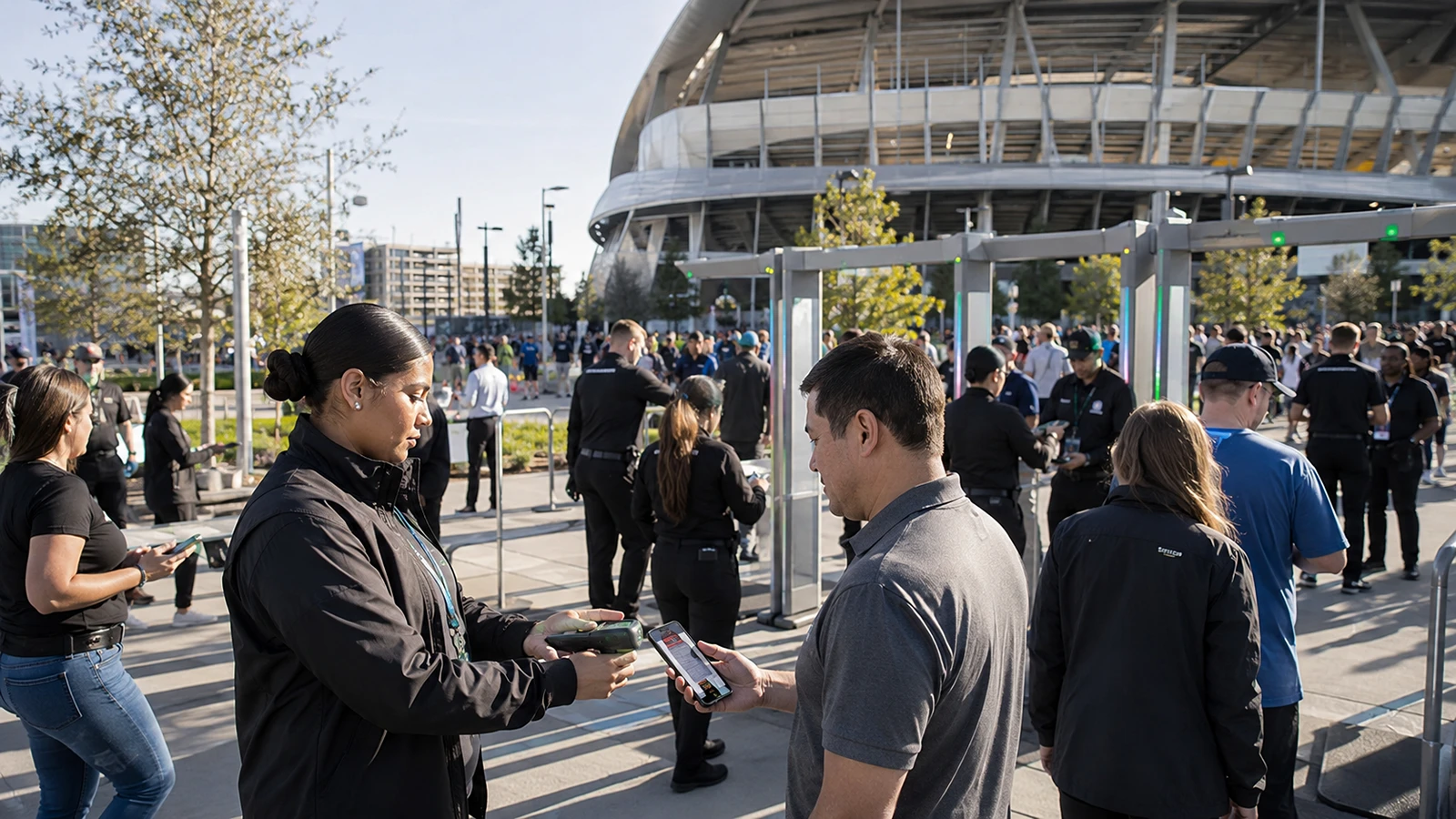
Understanding how venue layout affects crew positioning is equally important; planners working stadium or arena formats encounter this firsthand, and the lessons translate directly to banquet and convention catering. The dynamics explored in this piece on stadium event flow offer useful context for any planner modeling walk distances and crew coverage.
How Many Catering Staff Do You Need?
Most events require one server per 10 to 15 guests, adjusted for service style, layout, and timing complexity.
Catering staff cost starts with disciplined headcount planning. Use catering staffing ratios as a baseline, then pressure test them against service flow and venue logistics.
Baseline catering staffing ratios:
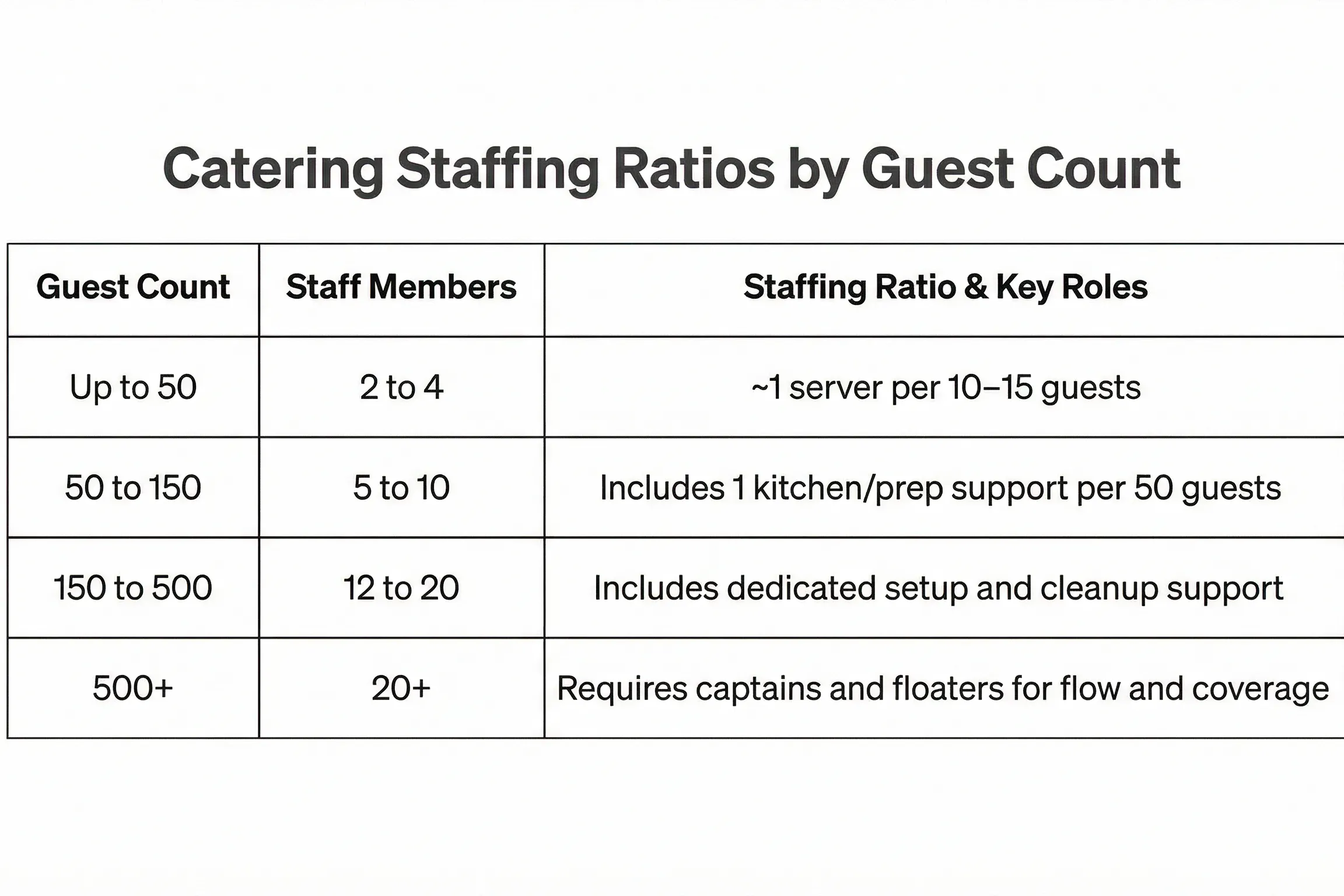
Requires captains and floaters for flow and coverage.
According to Galley Solutions, labor costs for catering operations typically run between 25% and 35% of total revenue, and that figure covers not just event staff but also kitchen prep time, administrative planning work, and owner time. That range compounds fast when headcount is planned loosely, and overtime enters the picture.
Effective catering staff planning ensures you hire catering staff based on workload, not optimism.
How Do You Perform a Catering Labor Cost Calculation?
Catering labor cost calculation multiplies defined roles by paid hours and rate bands, then adds overtime exposure and a 10 to 15 percent buffer.
The catering staff cost becomes predictable when you follow the same structure every time. Consistency removes guesswork and protects your budget.
Step-by-step catering labor cost calculation:
- Step 1: Define roles
Identify all required positions, including servers, bartenders, captains, runners, setup crew, and cleanup crew. - Step 2: Estimate paid hours
Calculate total compensated time, including setup, active service, breakdown, and pre-shift briefings. - Step 3: Apply rate bands
Assign hourly rates by skill level, noting that experienced staff increase total catering staff cost quickly. - Step 4: Check overtime risk
Review shift length and weekly totals to prevent long programs from breaking standard catering staffing ratios. - Step 5: Add a 10 to 15 percent buffer
Build contingency into catering staff planning to protect budget stability before you hire catering staff.
For corporate events and trade expos where catering runs alongside general programming, this same calculation should be synchronized with your broader staffing model. Planners who have navigated overlapping service windows in expo settings will recognize the challenge; this resource on trade show staffing breaks down how compressed timelines affect crew scheduling across shared spaces.
What Does Catering Staff Cost Look Like for 150 Guests?
For a 150-guest plated dinner, catering staff cost often centers around 13 team members working 8 paid hours each, totaling 104 labor hours before any buffer is applied.
This is where theory turns practical. When you lay the schedule out against the event timeline, the numbers become easier to defend internally.
Sample Staffing Model
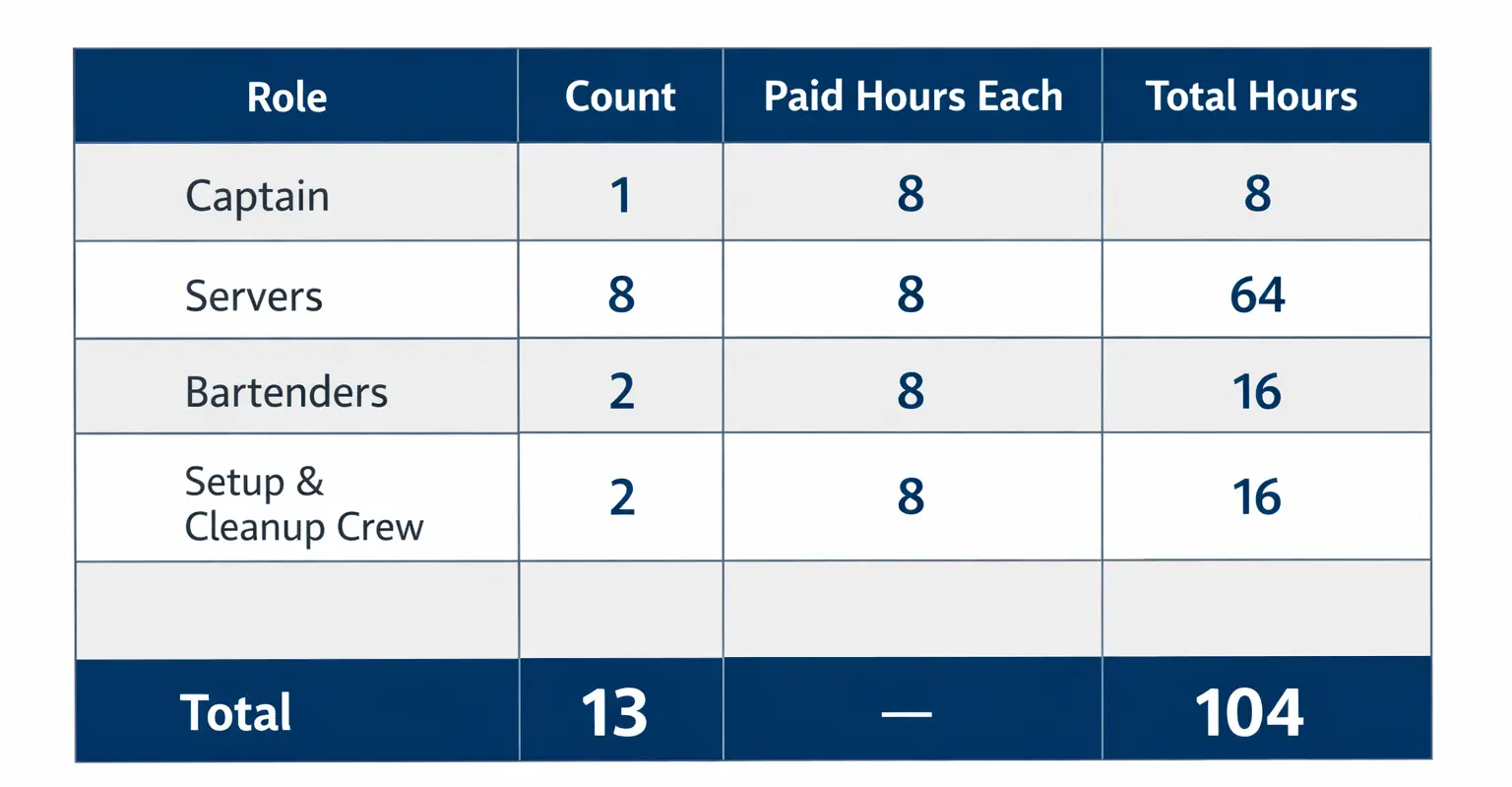
Paid hours typically include:
- 2 hours setup
- 5 hours active service
- 1 hour breakdown
From there, complete your catering labor cost calculation using role-based rates, then apply a 10 to 15 percent buffer. Strong catering staffing ratios and disciplined catering staff planning protect stability before you hire catering staff.
How Can You Reduce Catering Staff Cost Without Hurting Service?
You reduce catering staff cost by improving structure and timing, not by cutting critical roles or weakening catering staffing ratios. Strategic catering staff planning focuses on efficiency, flow control, and supervision discipline.
When you hire catering staff with a clear labor model, cost control becomes operational rather than reactive.
Practical Adjustments That Protect Service and Budget
1. Use a Floater During Peak Windows
Instead of overstaffing the full shift, assign one versatile floater to support bars, food stations, or bussing during high-volume periods. This keeps baseline headcount lean while protecting service flow.
2. Stagger Call Times
Schedule setup crews earlier and release them once service stabilizes. Avoid keeping the full team clocked in during low-activity networking periods. This adjustment directly reduces total paid hours in your catering labor cost calculation.
3. Cross-Train Staff
Train early-shift team members to transition into service support roles. This reduces the need to hire catering staff for isolated tasks and improves coverage without increasing headcount.
4. Assign a Strong Captain
An experienced supervisor maintains pacing, enforces catering staffing ratios, and prevents service drag that leads to overtime. While captains increase hourly cost, they often reduce total catering staff cost by protecting shift discipline.
5. Confirm Venue Constraints Early
Review dock access, union rules, and breakdown timing before finalizing schedules. Catering staff planning becomes unstable when venue restrictions are discovered too late.
What Most Planners Underestimate About Labor
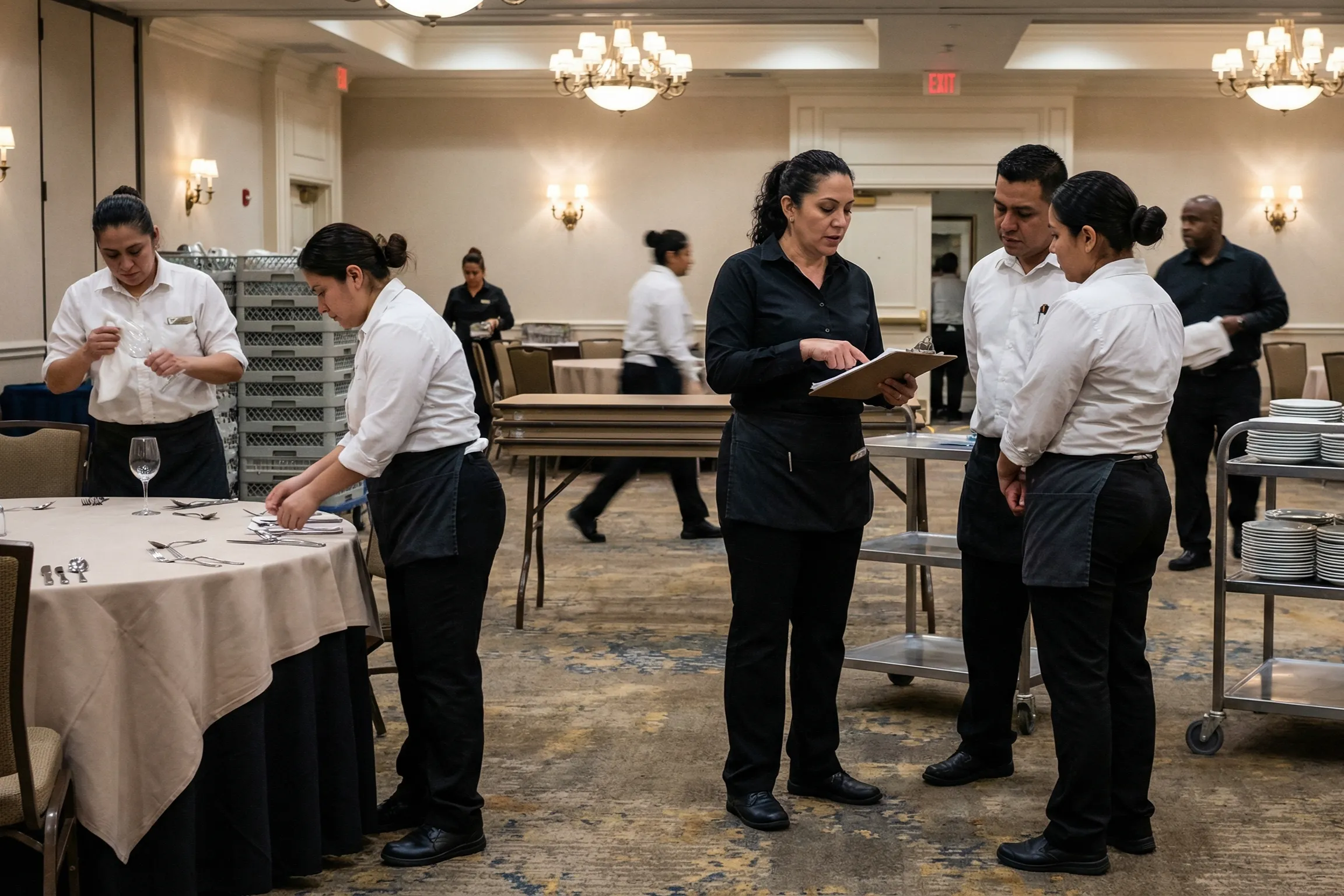
Catering staff cost does not usually increase because of headcount changes. It increases because of the shift expansion.
In a recent 300-guest corporate dinner held in a union hotel venue, a one-hour delay in dock access pushed setup into a fifth paid hour. The venue enforced four-hour minimum shifts and overtime after eight hours. The result was an 18 percent increase in total catering staff cost without adding a single team member.
The headcount stayed the same.
The timing changed.
Why Shift Structure Matters More Than Headcount
A disciplined catering labor cost calculation must account for:
- Load-in sequencing and dock access windows
- Venue minimum shift requirements
- Overtime thresholds
- Service pacing delays
- Extended networking or program overruns
When catering staff planning focuses only on catering staffing ratios, planners underestimate how quickly paid hours expand.
If you hire catering staff without pressure-testing the timeline, small operational delays compound across every team member on shift. Even a one-hour extension across 15 staff members becomes 15 additional paid hours.
The most reliable way to protect catering staff cost is to model timeline risk early, confirm venue rules in writing, and build contingency into your labor plan before contracts are finalized.
How Can You Control Catering Staff Cost with Confidence?
You control catering staff costs by standardizing your catering staff planning before contracts are finalized. A disciplined catering labor cost calculation prevents overtime exposure, venue minimums, and timeline drift from inflating your budget. Start with realistic catering staffing ratios, convert headcount into total paid hours, apply role-based rates, and review overtime thresholds carefully. Confirm venue rules and minimum shifts early, then add a 10 to 15 percent contingency before you hire catering staff. When labor is modeled early and consistently, approvals become easier, and execution remains stable. Before locking final numbers, request a staffing cost review to validate your assumptions and protect your budget. A proactive approach ensures your catering staff costs reflect compliance, coverage, and operational reality rather than optimistic scheduling.
Ready to elevate your next event?
Join thousands of event planners who trust EventStaff.com for reliable, professional staffing solutions.
Trusted by event professionals nationwide
1k+
Events Staffed
2 million+
Guests Served
97%
Positive reviews