
CEO Excerpt
From my experience, gameday staffing is not just extra event labor. It is a core operational layer that keeps stadiums stable during the most intense crowd surges. When gameday staff is placed strategically and supported by crowd management staffing, venues maintain safe flow, reduce congestion, and protect the game day experience for thousands of guests., Daniel Meursing, CEO of Event Staff
Introduction
Gameday staffing is a critical component of stadium operations that ensures safe, efficient, and enjoyable experiences for guests. Properly deployed gameday staff manage crowd flow, stabilize entry points, and guide attendees during high-density moments before kickoff, at halftime, and during post-game exits.
For stadium teams, event producers, and agencies, understanding how to plan and position gameday staffing is essential. This guide explains the roles of gameday staff, how crowd management staffing prevents bottlenecks, and the best strategies to deploy staff where they are most needed. By aligning staffing with predictable peak traffic waves, venues can maintain smooth operations, reduce congestion, and protect the fan experience.
Executive Summary
Gameday staffing keeps stadium operations stable during entry surges, halftime congestion, and post-game exits by placing trained staff where crowd pressure builds first. This guide explains what gameday staff do, where they should be deployed, and how crowd management staffing helps prevent bottlenecks before they disrupt the venue.
What Is Gameday Staffing in Stadium Operations?
Gameday staffing is temporary event staff deployed across stadium zones to stabilize entry lines, guide guests, and manage crowd flow during peak game day traffic.
Gameday staffing is the staff coverage that keeps stadium operations stable during predictable crowd surges before kickoff, at halftime, and during exit. Even a well-run venue can break down quickly when gates back up, concourses compress, or guest questions pile up in the wrong area.
Strong gameday staffing helps control flow, support guests, protect access points, and reduce friction before small delays become operational problems. For venue teams, producers, and agencies running stadium events, the goal is simple: place the right staff in the right zones so the venue stays organized, safe, and manageable during high-density moments.
Key Gameday Staffing Roles for Stadium Operations: Gate, Concourse, and Crowd Management Staff
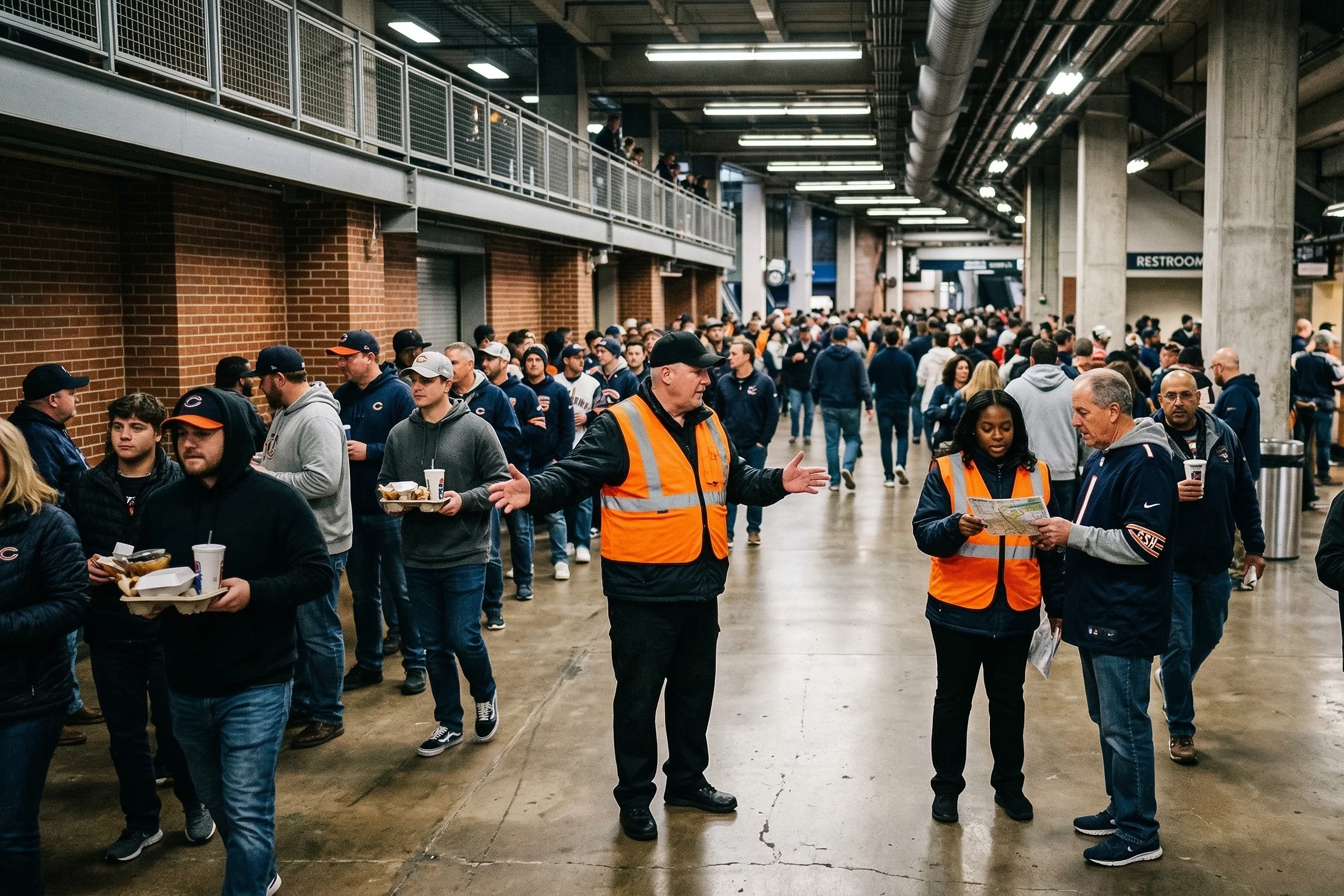
Gameday staffing includes specific roles designed to stabilize stadium operations during peak traffic waves. Assigning staff strategically ensures that entry points, concourses, seating areas, and VIP zones remain organized and safe.
Primary Gameday Staff Roles:
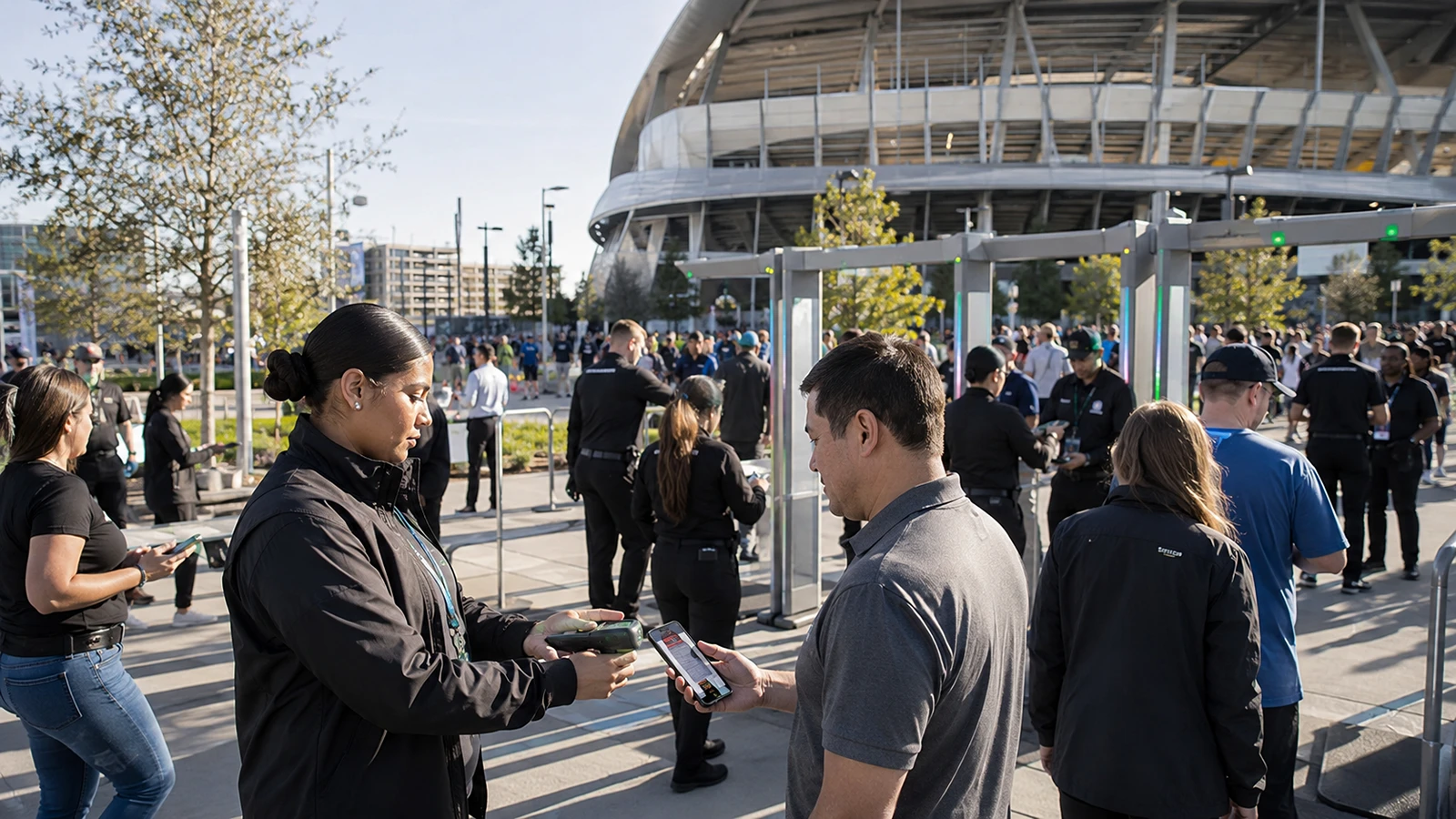
- Gate Assistance Staff: Stabilizing Entry Queues Before Kickoff
- Organize ticketing and security lines
- Direct guests to the correct entry lanes
- Prevent bottlenecks at gates
- Organize ticketing and security lines
- Concourse Wayfinding Staff: Guiding Guest Movement
- Assist with navigation near restrooms, concessions, and intersections
- Monitor congestion points and redirect overflow
- Support guest questions and issue routing
- Assist with navigation near restrooms, concessions, and intersections
- Seating Section Assistants: Smooth Guest Placement
- Help attendees locate seats efficiently
- Handle seating-related concerns or ticket issues
- Maintain section flow during halftime or peak arrivals
- Help attendees locate seats efficiently
- VIP and Hospitality Staff: Managing Access and Service
- Verify credentials and manage entry to restricted areas
- Assist in sponsor activation zones or hospitality suites
- Verify credentials and manage entry to restricted areas
- Floaters and Zone Leads: Quick Response to High-Density Areas
- Move between zones to relieve congestion
- Monitor crowd density and redeploy staff as needed
- Coordinate with on-site leads for operational updates
- Move between zones to relieve congestion
Strategic deployment of these roles ensures that stadium operations remain stable even during surges in guest traffic. Well-planned gameday staffing reduces delays, prevents frustration, and enhances the overall fan experience.
Where Should Gameday Staff Be Positioned Inside a Stadium?
Gameday staff are positioned at entry gates, concourses, seating sections, VIP areas, and activations to guide guests and prevent congestion.
Strategic gameday staffing placement ensures that the most critical stadium zones remain stable during crowd surges.
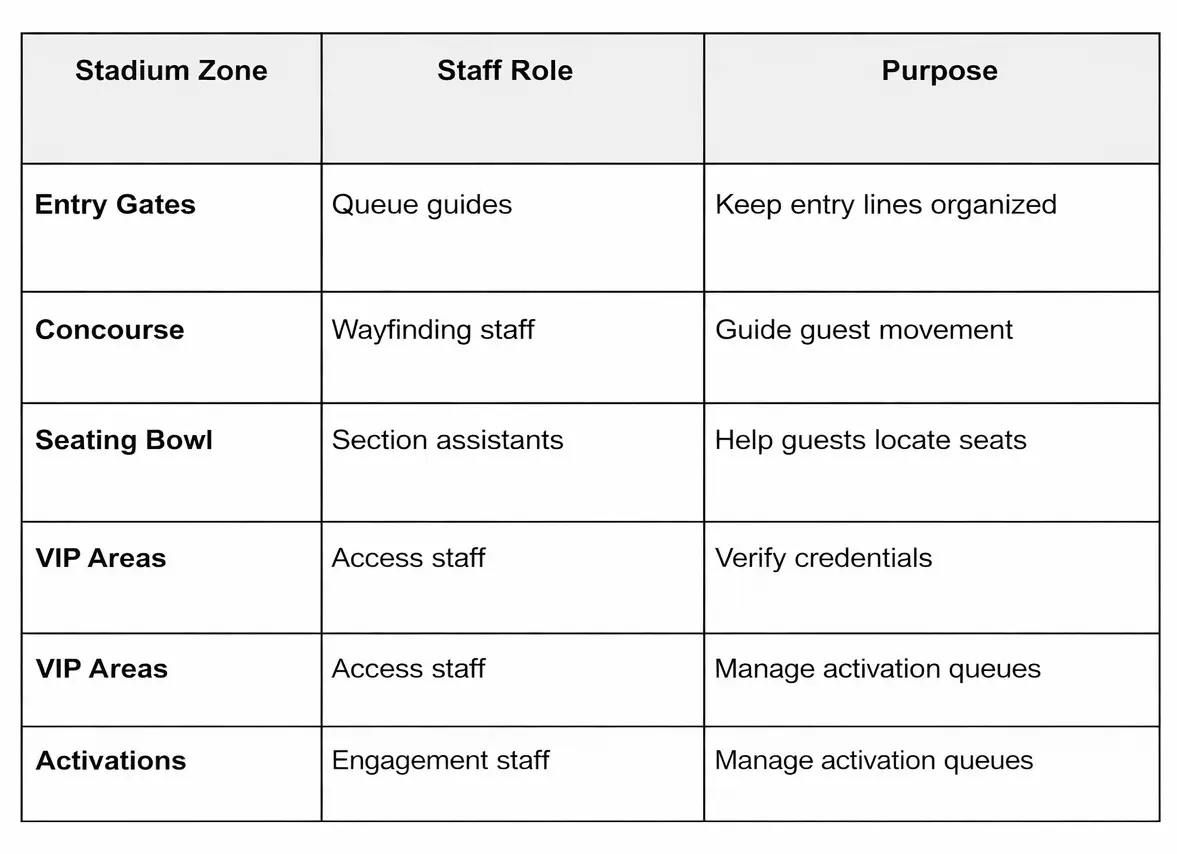
Typical zone placement includes:
Entry gates
- Line pacing and queue guidance
- Guest direction for ticketing or security lanes
- Credential and access support
Concourse circulation
- Wayfinding at intersections
- Coverage near restroom and concession merges
- Guest assistance for navigation
Seating bowl
- Section guidance
- Issue routing for misplaced seating
Strategic gameday staffing placement helps stadium operations teams respond quickly when crowd density rises in specific zones.
Which Gameday Staff Roles Prevent Operational Delays?
Floaters, zone leads, and queue support staff reduce delays by stabilizing lines, guiding guest movement, and responding quickly to congestion points.
Certain gameday staff roles prevent small disruptions from becoming long lines or guest complaints. In stadium environments, quick response roles help stabilize movement before problems spread across zones.
Key friction-reducing roles include:
- Floaters who support gates, concourses, or activation queues when crowd pressure rises
- Zone leads who monitor density and redeploy staff quickly
- Queue support staff who maintain line structure and prevent spillover
Many stadium operations teams plan roughly one event staff member for every 1,000 to 1,500 attendees in concourse guidance roles to maintain stable pedestrian flow. Under NFPA 101, assembly occupancies are required to provide at least one trained crowd manager for every 250 occupants, making structured staffing a compliance baseline, not just an operational preference.
Including these roles in gameday staffing plans allows venue teams to absorb sudden traffic spikes without disrupting the rest of the stadium.
What Does Crowd Management Staffing Do on Game Day?
Crowd management staffing controls guest flow, protects walking lanes, and prevents queues from blocking concourses, exits, and vendor access points.
Crowd management staffing focuses on stabilizing movement patterns in high-density environments. Instead of reacting after congestion forms, these teams guide guests and maintain lane structure before walkways become blocked. Understanding the psychology behind how crowds move in compressed environments helps staffing teams anticipate where pressure will build, a principle explored in depth in the psychology of stadium crowd flow.
Effective crowd management staffing focuses on:
- Keeping concourse walkways clear during peak movement
- Redirecting overflow lines before they block circulation paths
- Protecting emergency access lanes and staff corridors
- Coordinating with venue operations when density increases
- Knowing when crowd control begins and the response model needs to shift
Activation queues and restroom merges are among the most common concourse congestion points during halftime at large stadium events. Research tracking 95 stadium service locations at Ohio State found that restrooms account for 60 percent of all queue formation zones, followed by concession stands at 30 percent, making concourse staffing around those two areas the highest-leverage placement during halftime surges.
Example Scenario
At a 50,000-seat stadium, halftime can push thousands of guests toward concessions at the same time. Without crowd management staffing, these lines can spill into the main concourse and slow pedestrian traffic across the venue.
Queue guidance staff and floaters keep lines structured so guests waiting for food do not block primary walking paths.
Strong gameday staffing anticipates these pressure points and places staff where congestion is most likely to occur.
Why Should Gameday Staffing Focus on Peak Traffic Waves?
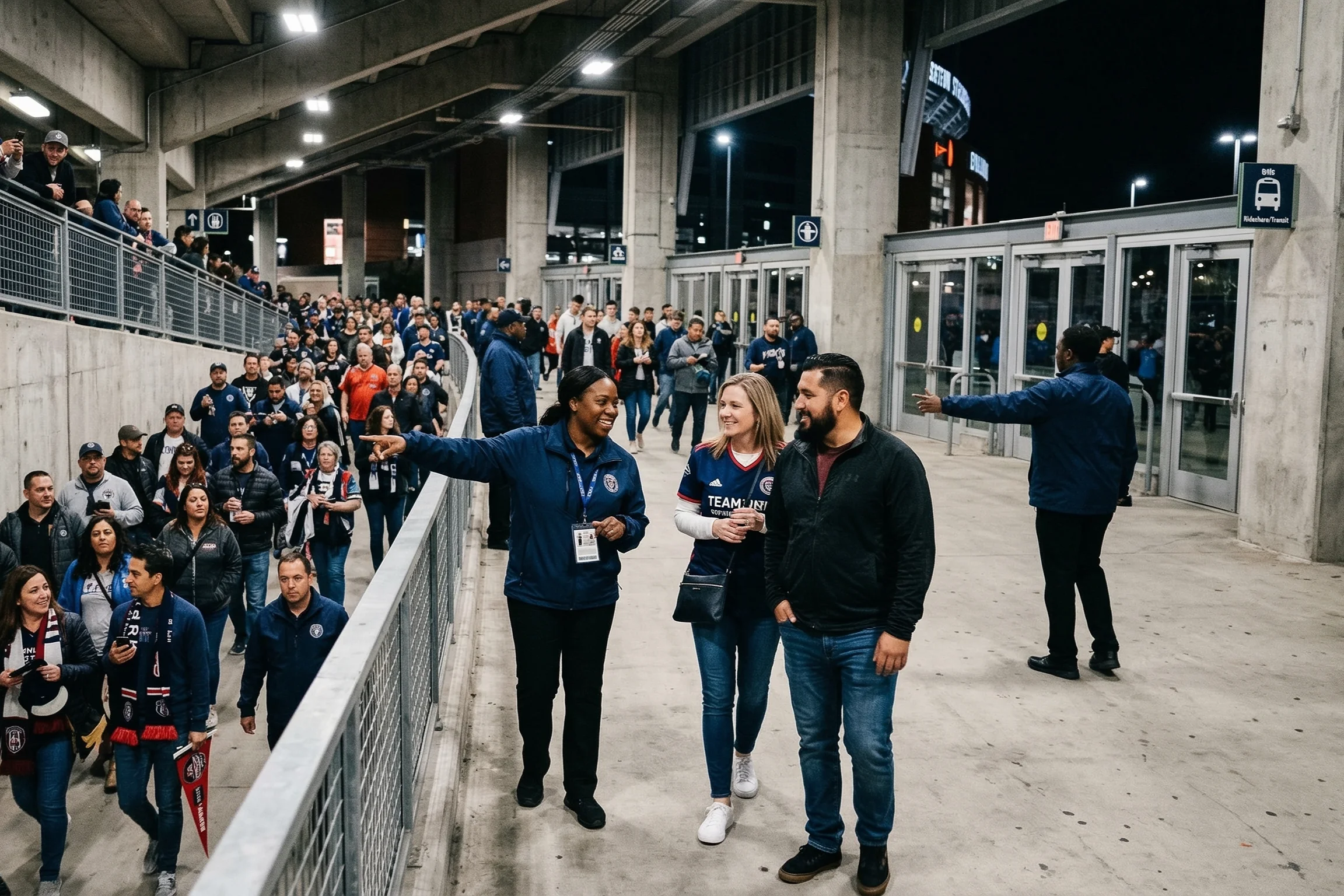
Stadium traffic arrives in waves before kickoff, halftime, and exit, so gameday staffing must be planned around surge moments rather than average attendance.
Stadium operations are shaped by traffic waves rather than steady guest flow. The highest pressure typically occurs during three predictable windows.
Pre-game arrival
- Gate congestion and ticketing questions
- Security screening delays
Halftime surge
- Concession lines merging with restroom traffic
- Concourse compression
Post-game exit
- Stairwell and ramp congestion
- Rideshare pickup confusion
At many large stadiums, 60–70% of attendees arrive within the final 45 minutes before kickoff, which creates the highest pressure on entry gates. The same wave-based demand patterns that shape entry lane staffing at festivals apply directly to stadium gates, where scanner throughput and queue depth interact during tight arrival windows.
Effective gameday staffing plans combine baseline coverage with surge staffing so gameday staff can stabilize flow during the busiest moments.
How Should Gameday Staff Be Organized During Stadium Events?
Clear chains of command help gameday staff respond faster to congestion, guest issues, and operational changes during stadium events.
Gameday staffing works best when every team member knows who they report to and how updates are communicated. Without a clear command structure, small problems take longer to resolve.
A typical structure includes:
- One on-site lead for the full staffing team
- One zone lead managing each stadium area
- Floaters reporting to zone leads rather than venue operations
- Clear escalation paths for guest issues or congestion
This structure allows gameday staff to redeploy quickly when density increases.
How Do You Choose the Right Gameday Staffing Partner?
The best gameday staffing partners understand stadium crowd flow, provide trained supervisors, and deploy staff by zone to support safe guest movement.
Large stadium events require staffing teams who can operate in high-density environments and follow venue procedures.
When evaluating a provider, stadium teams should check whether they can:
- Assign gameday staff by zone and role
- Provide backup coverage for callouts
- Deploy supervisors and zone leads on site
- Operate within venue credentialing requirements
- Support crowd management staffing in congestion zones
When staffing partners understand stadium operations, gameday staffing becomes an operational support layer rather than just extra labor.
What Information Is Needed to Request Gameday Staffing?
Providing detailed event information helps staffing partners deliver the right number of gameday staff for each stadium zone and peak traffic window. Clear operational details allow for effective planning of both baseline and surge staffing.
Essential Information to Include:
- Event Details: Type, date, and stadium location
- Expected Attendance: Total number of guests and peak arrival times
- Zones Requiring Coverage: Gates, concourses, seating sections, VIP areas, activations, and exits
- Staff Roles and Headcount: Number of staff per zone and specific responsibilities
- Shift Times and Break Schedules: Coverage duration for peak waves and downtime planning
- Credentialing or Uniform Requirements: Access passes, ID verification, and attire expectations
- On-Site Operations Contact: Point of contact for coordination and communication
Providing this information early allows staffing partners to plan effectively, deploy crowd management resources efficiently, and ensure that all high-density areas are adequately supported.
What Happens When Gameday Staffing Is Built Around Surge Windows?
Gameday staffing is essential for maintaining safe, efficient, and enjoyable stadium operations. By strategically deploying trained staff across gates, concourses, seating areas, VIP zones, and activation spaces, venues can prevent congestion, stabilize crowd flow, and protect the fan experience during peak traffic waves. Integrating crowd management staffing with surge-focused deployment ensures that high-density areas are continuously monitored and supported. Clear chains of command, experienced zone leads, and floaters ready to respond make operations predictable and manageable. Partnering with a qualified gameday staffing provider allows stadium teams to plan ahead, allocate the right number of staff per zone, and maintain compliance with safety standards. Early planning, zone-specific deployment, and a focus on peak waves create a seamless experience for both staff and guests. Ready to keep your stadium operations seamless on game day? Contact our team to schedule a custom gameday staffing plan tailored to your venue, peak traffic waves, and guest experience goals. Ensure safety, efficiency, and an unforgettable fan experience with professional event staff.
Ready to elevate your next event?
Join thousands of event planners who trust EventStaff.com for reliable, professional staffing solutions.
Trusted by event professionals nationwide
1k+
Events Staffed
2 million+
Guests Served
97%
Positive reviews