
CEO EXCERPT
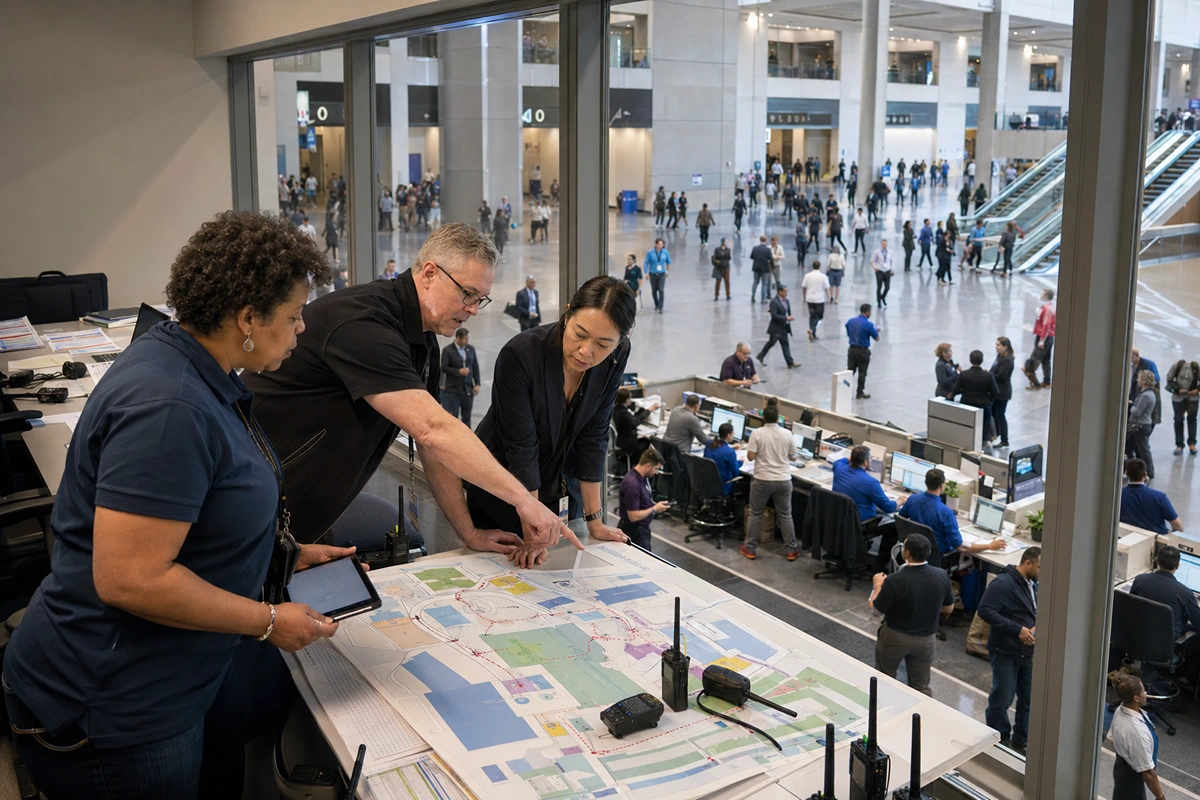
“I have seen flawless agendas fall apart simply because the lobby was understaffed for 20 minutes. At EventStaff, I insist on a 'pressure-first' approach. We don’t ask, ‘how many people do you need?’- we ask, ‘where are your bottlenecks?’ That shift in thinking is how we secure the guest experience for Fortune 500 partners.”- CEO Event Staff
When staffing a conference, planners should prioritize check-in throughput, session ownership, directional control, and clear escalation coverage in that order.
Conferences don’t fall apart because of a lack of people. They fail because staff are standing in the wrong places when pressure peaks. Registration surges, sessions release at the same time, speakers need support, and hallways compress. If those moments aren’t staffed first, even the best agenda drifts.
This guide breaks down the conference event staff priorities that protect multi-room schedules, highlights the high-risk moments planners often underestimate, and provides a practical framework for deploying staff where timing, flow, and guest experience are most at risk.
Executive Summary
Conference event staff is what keeps a multi-room agenda on time when arrivals surge, hallways compress, and speakers need quick fixes. Prioritize check-in throughput, room ownership, and escalation coverage first - because labor pressure makes “we’ll add a few more people” the expensive option. Strategic staffing prevents late starts and reduces line backups before they begin.
What Conference Event Staff Actually Includes

Conference event staff is not a generic labor pool. It is a system designed around timed pressure.
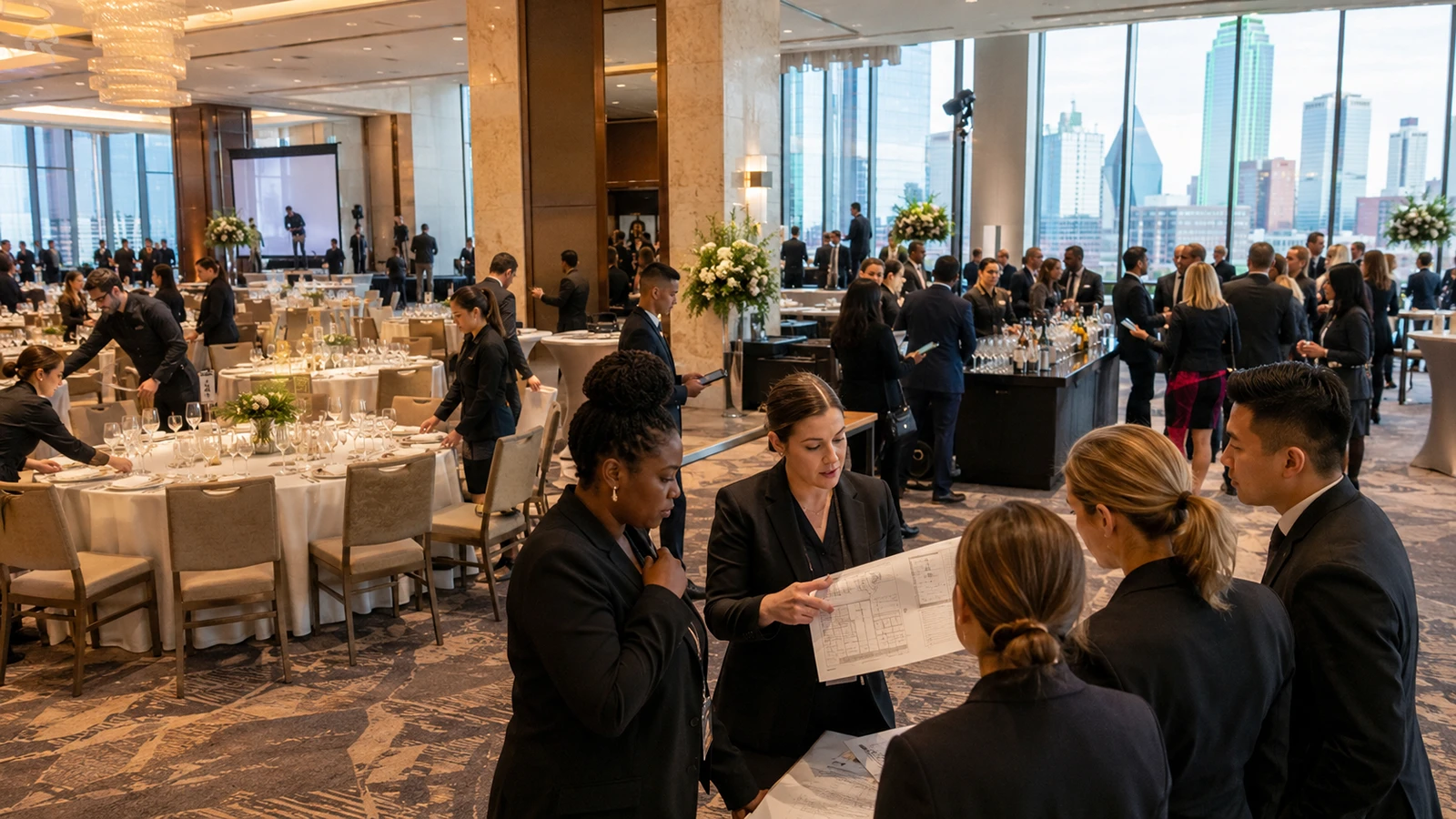
Registration surges. Sessions are released simultaneously. Speakers need last-minute support. Each moment creates a failure point if no one owns it. That’s why conference staffing must be prioritized around movement and timing, not evenly distributed roles.
At a functional level, conference event staff includes credentialing, room coverage, directional guidance, speaker support, and issue escalation. What separates conference staffing from general event staffing is timing density. A single delay at registration can cascade into multiple late sessions. General events absorb drift. Conferences don’t.
With higher labor costs, tighter union role definitions, and limited flexibility to reassign staff mid-shift, prioritization is no longer optional. BLS data shows compensation costs for private industry workers rose 3.5% from June 2024 to June 2025, which means inefficiency now compounds both cost and risk at the same time. Conference event staff protect the schedule only when pressure points are staffed first and owned clearly.
Conference Event Staff Priorities
Planners ask what matters most. The short answer is simple. Event staff for conferences should be prioritized in this order:
- Check-in and registration coverage
- Room monitors for every active session block
- Directional staff at decision points
- A clear issue-resolution lead
- Floaters who plug gaps during breaks
Here’s the rule of thumb seasoned leads use: protect time first. Registration, transitions, and room timing get staffed before anything else. Every other role supports those three. These priorities matter most because conferences tend to fail at predictable moments.
The Four High-Risk Moments Conferences Must Staff First
Every conference has the same stress points. Ignore them, and the event feels chaotic no matter how strong the agenda is.
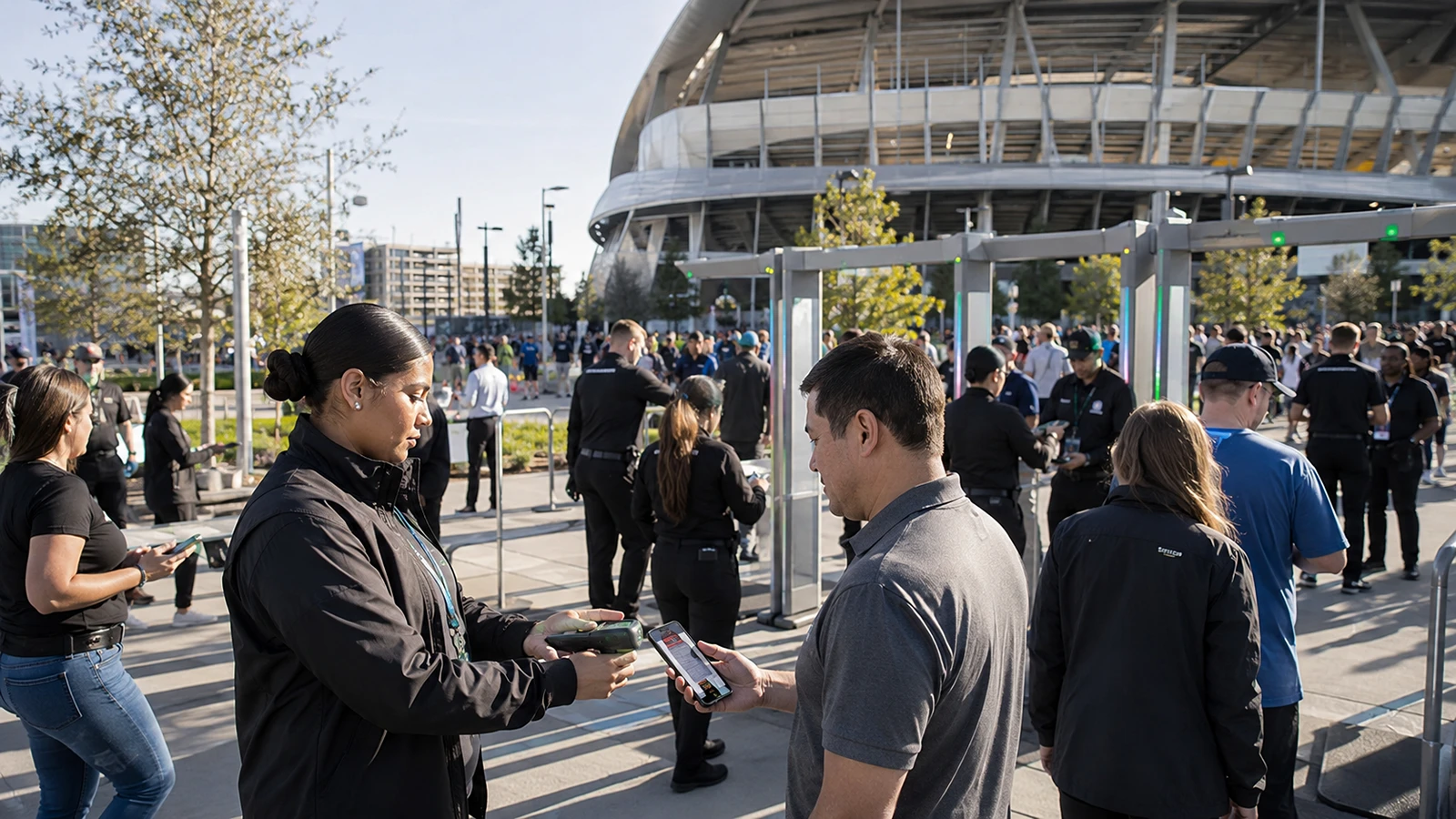
Peak arrival windows are the first risk. Most attendees arrive within a narrow 45-60 minute window. Without enough conference registration staff, badge fixes stall the main line and pull attention away from issue resolution. This pressure is rising: Cendyn’s 2025 meetings industry planner survey reports 65% of planners anticipate higher attendance. Watch for the early warning sign: if the line stops moving for more than 60 seconds, your staffing ratio is off.
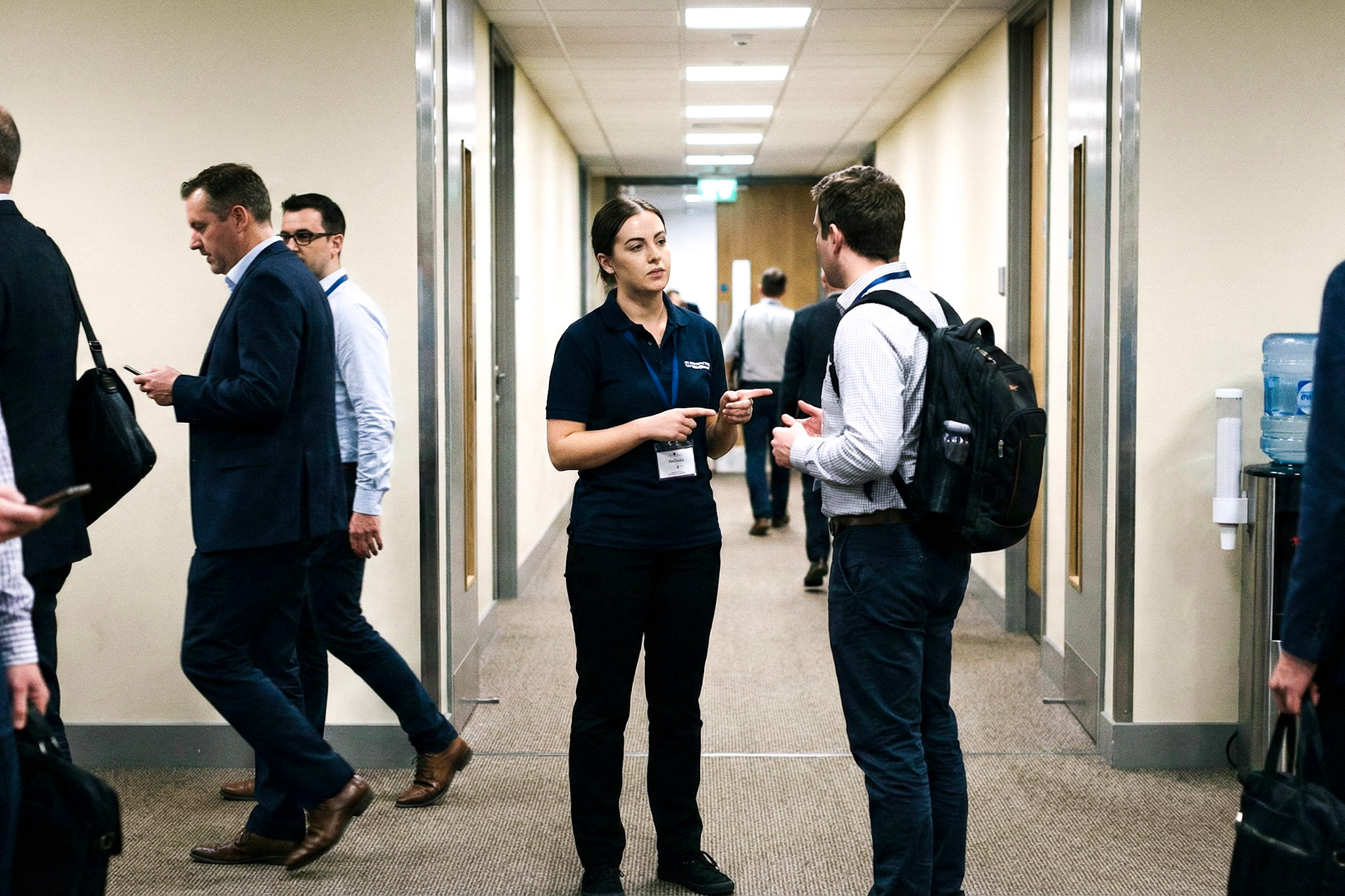
Next comes session movement. Hallways compress, questions spike, and speakers wait. Without intentional session transition staffing, even small delays stack across multiple rooms. The red flag here is speakers waiting outside locked rooms because no one has the key or schedule.
Lunch and break releases follow. Crowd surges aren’t solved by more bodies, only by correct placement. Directional coverage matters more than headcount here.
Finally, end-of-day exits and networking rushes. VIP confusion spikes, and small misses create outsized brand damage.
Case insight:
At a 900-attendee corporate conference, check-in staffing was evenly distributed across four desks. When badge corrections spiked, the main line stalled and sessions started late. After introducing a dedicated issue desk and one line manager, check-in throughput increased by 42%, and all sessions started on time without adding headcount.
Role Breakdown: What Matters Most On-Site
Once priorities are clear, conference event staff roles must be assigned based on ownership under pressure, not convenience.
These roles matter most because they protect timing and flow when conditions change:
- Registration Teams: Scan, correct, and triage so the primary line keeps moving.
- Event Room Monitors: Own start times, speaker needs, and headcounts.
- Directional Staff: Control movement at decision points, not empty corridors.
- Line Managers: Separate fast scans from problem cases before lines stall.
- Floaters: Absorb pressure during breaks and unexpected gaps.
- Supervisors: Coordinate escalation before small issues ripple across the agenda.
Staffing Priority by Conference Size
As conference size increases, priorities stay the same, only control structures change.
Small conferences (100–300 attendees) need a tight check-in core and consistent room coverage. Mid-size events (300–800) require a conference staffing mix with dedicated issue triage and floaters to absorb break pressure. Large conferences (800–2,000+) need zoning with clear leads per area. At this volume, you aren't just managing people; you are managing flow control.
As scale increases, conference event staff effectiveness depends less on headcount and more on control. Zone ownership reduces radio chatter and decision lag, which protects timing. ASA reports staffing firms employed an average of just under two million temporary and contract workers per week in Q3 2025 - so you’re competing for the same experienced labor everyone else wants.
Where Conference Staffing Breaks Down

Conference staffing breaks down when priority roles are underweighted, and low-impact areas are overstaffed.
The same failures repeat: too few staff at check-in, no issue desk to protect throughput, no room ownership so sessions drift, no floaters to absorb breaks, and weak signage that forces staff to repeat answers all day.
Another common mistake is staffing evenly across the venue. Pressure isn’t even. Conference check-in and transitions require heavier coverage early, while quieter areas can wait.
The fixes are simple and preventive. Add an issue desk. Assign room owners. Build floater coverage. Upgrade signage. These large-scale staffing changes cost less than recovering from visible delays.
Staff for Pressure, Not Guesswork
Strong conference event staff planning starts before headcount is locked. It starts with identifying where pressure will peak and assigning ownership before problems surface.
If you’re planning a multi-room conference and want staffing built around check-in throughput, session transitions, and escalation coverage, we offer a pressure-mapped staffing review that defines roles, ratios, and backups before doors open.
Request a conference staffing consult, and we’ll map the right coverage for registration, rooms, and flow control so your agenda holds when pressure spikes.
Staffing Deployment and Next Steps
Well-prioritized conference event staff don’t just fill shifts. They stabilize timelines, contain risk, and protect attendee trust, especially when you’re juggling multi-day programming, supervision layers, and real compliance constraints. If you want coverage built around pressure points and backups, you can Get a Quote and we’ll scope out the right roles for registration, rooms, and transitions without overstaffing.
Ready to elevate your next event?
Join thousands of event planners who trust EventStaff.com for reliable, professional staffing solutions.
Trusted by event professionals nationwide
1k+
Events Staffed
2 million+
Guests Served
97%
Positive reviews