
Executive Summary
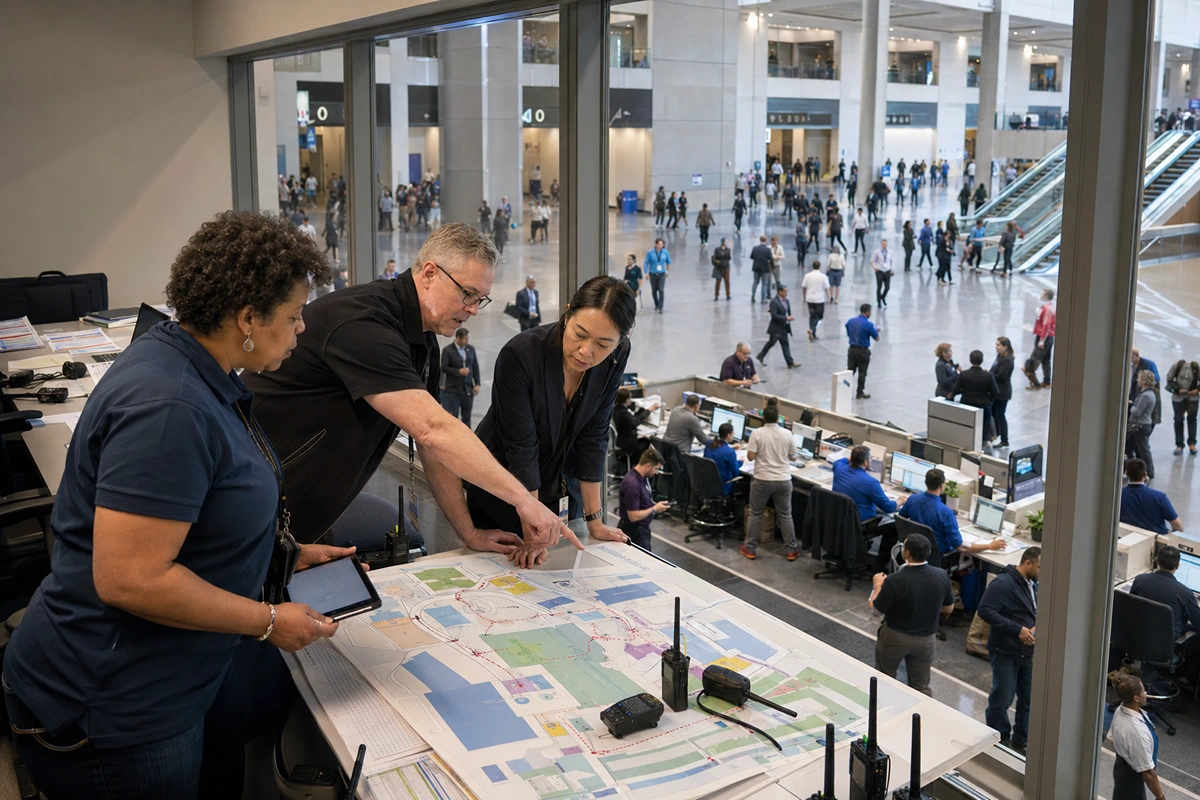
High-attendance events do not fail because too many people showed up. They fail because movement, staffing, and access points were not designed to handle the pressure those people create, especially when entry, programming, and exits overlap in the same window.
Introduction
Planning a crowd management plan for events is not just about meeting safety requirements. It is about ensuring your event runs smoothly when attendance peaks, movement slows, and pressure builds across multiple zones at the same time.
High-attendance events rarely fail because of crowd size alone. They fail when crowd flow planning, staffing structure, and control systems are not aligned with real-world crowd behavior. People do not move evenly. They gather, pause, and create pressure in predictable areas, which quickly leads to congestion if not managed proactively. The global crowd management and event security market was valued at USD 1.18 billion in 2024, a figure that reflects just how urgently the industry has prioritized structured, professional crowd management.
Without a structured plan, small delays at entry points or decision zones can escalate into larger operational issues within minutes. This guide focuses on building a practical, execution-ready crowd management plan for events that works under real conditions, not just on paper.
CEO Excerpt
A crowd management plan is not a safety checkbox, it is an operational system that determines whether your event holds up under real pressure. The difference between a controlled event and a reactive one is almost always visible in the first 20 minutes. The teams that get it right plan the structure before the crowd arrives, not after the floor starts to slip. - CEO Event Staff
What a Crowd Management Plan for Events Does and What It Prevents
A crowd management plan for events is not a static document. It is a working system that actively controls how people move through your venue.
At its core, it manages entry and exit flow, directs movement between zones, and ensures that queues, pathways, and high-density areas remain stable even during peak periods. It also defines how staff respond when pressure begins to build.
Without this structure, events become reactive. Issues such as overcrowding, blocked pathways, and uncontrolled surges often begin as small disruptions and escalate quickly. Understanding how this fits into the broader staffing ecosystem is just as important as our guide on career paths in crowd management services, which breaks down the professional roles that make these systems function under real pressure.
A well-designed plan prevents:
- Dangerous crowd density and compression
- Entry and stage bottlenecks
- Delays caused by poor movement coordination
The difference lies in anticipation. Strong plans identify where problems will occur and address them before they become visible.

When High-Attendance Events Fail Without a Crowd Management Plan
Most high-attendance events do not fail suddenly. They fail when multiple pressure points build at the same time and there is no system in place to manage them.
This typically happens when entry flow overlaps with internal movement, or when several attractions draw attention simultaneously. In these situations, even a well-organized event can lose control if crowd flow planning and event crowd control staffing are not properly aligned.
Early warning signs are often visible but overlooked. Queues begin forming in unintended areas, guests hesitate at key decision points, and staff shift from guiding movement to reacting to issues.
Some common indicators include:
- Guests repeatedly asking for directions
- Congestion forming near food, restrooms, or stages
- Staff unable to manage both flow and disruptions simultaneously
The first phase of the event, especially the initial entry window, plays a critical role. If flow is not controlled early, recovery becomes significantly harder later. This mirrors what our 2026 festival staffing guide identifies as one of the most critical operational risks at large-scale events: gate breakdowns that cascade into venue-wide congestion when the plan is not built around pressure moments.
Crowd Risk Zones You Must Plan For in High-Attendance Events
Every effective crowd management plan for events is built around identifying and controlling high-risk zones. These are areas where crowd pressure naturally builds due to behavior patterns and spatial constraints.
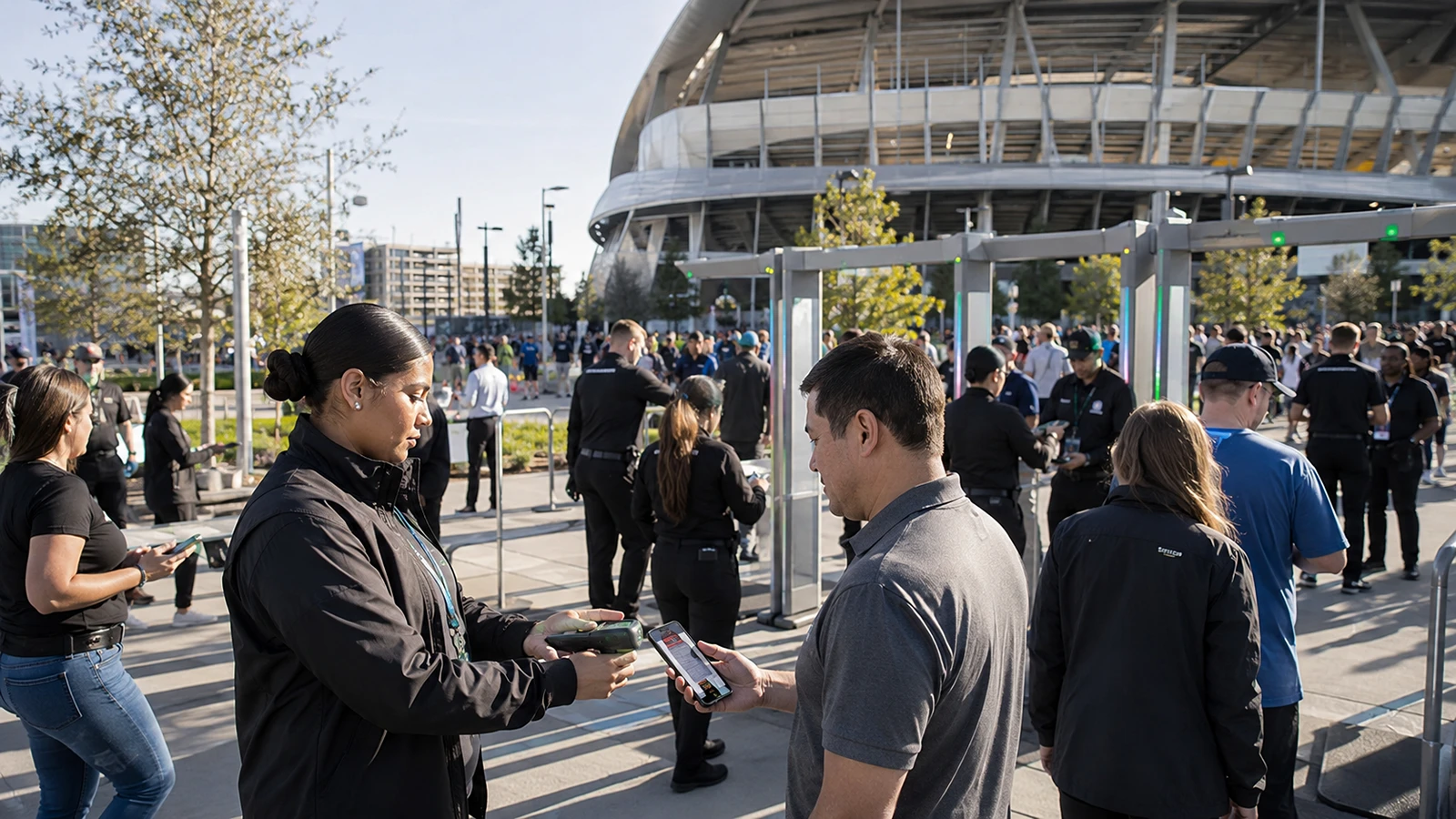
Entry and security zones act as the first pressure point. Delays here quickly cascade into larger issues inside the venue. Registration areas often create early congestion, especially when queues extend into main pathways.
Stages and attractions increase dwell time, which leads to crowd compression if movement is not managed. Food areas and restrooms experience predictable peak congestion, often within short time windows. Emergency exits, while rarely used, must remain clear at all times and require strict control.
More than 68% of event organizers are now integrating AI-driven surveillance, and nearly 72% of stadiums have implemented IoT-based monitoring solutions precisely because these zones can deteriorate rapidly when pressure converges simultaneously.
The key mistake is planning these zones in isolation. In reality, pressure often builds across multiple zones simultaneously. A strong plan considers how these areas interact and ensures that crowd flow remains balanced throughout the venue.
Event Crowd Control Staffing Ratios by Attendance
Effective event crowd control staffing ensures that your crowd management plan performs as intended during high-pressure situations.
Staffing requirements vary based on attendance size, but the goal remains the same: maintain consistent control across all active zones. Smaller events may require basic flow management, while larger events demand continuous monitoring and intervention.
As attendance increases, staffing must scale accordingly. High-attendance events, especially those exceeding 15,000 people, require tighter ratios to manage constant crowd pressure and dynamic movement. The U.S. crowd management and event security market is projected to grow from $368.5 million in 2024 to $3.52 billion by 2037, a CAGR of 19.2% driven in large part by the growing expectation for professionally staffed, ratio-compliant event environments.
In addition to base ratios, staffing should be increased in situations where risk is higher, such as events with alcohol service, mixed audience types, or complex venue layouts with limited pathways.
Even a relatively small staffing gap in a high-density area can lead to significant disruption, as remaining staff are forced to divide their attention between controlling flow and responding to issues.
Internal Team vs Professional Crowd Management Services
Choosing between internal teams and professional crowd management services depends on the complexity and scale of your event.
Internal teams can handle smaller events where movement is predictable and pressure builds gradually. In these scenarios, basic coordination and clear role assignment are often sufficient.
However, as events grow in size and complexity, internal teams may struggle to maintain consistent control. Overlapping schedules, multiple active zones, and rapid crowd buildup require a more structured and experienced approach.
Professional crowd management services bring defined systems, trained personnel, and real-world experience in handling high-attendance environments. Their value lies not just in additional manpower, but in their ability to anticipate and manage pressure before it escalates. The outsourced crowd management segment is expected to account for 54% of the U.S. market share by 2037, as event organizers increasingly rely on specialized firms that can provide complete security coverage while allowing internal teams to focus on core event operations.
Crowd Flow Planning for Events: How to Control Movement Before It Breaks Down
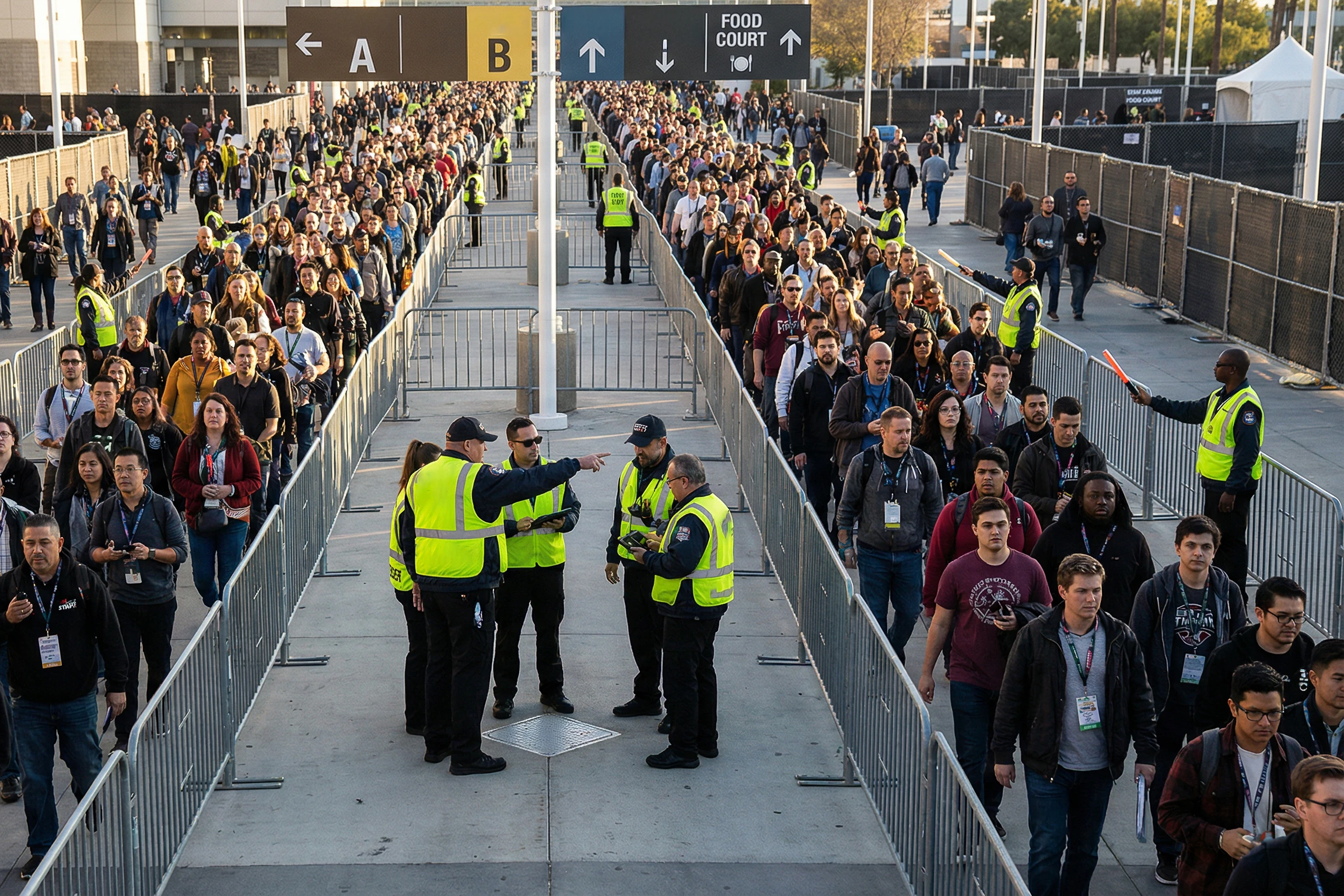
Effective crowd flow planning is essential for maintaining stability during peak periods. Crowd movement is not random. It follows predictable patterns that must be actively managed.
Attendees tend to cluster near entrances, slow down at decision points, and gather around attractions. These behaviors create pressure that builds quickly, especially when multiple zones reach peak activity at the same time.
Breakdowns usually begin with a small delay. Movement slows, density increases, and within minutes, pathways can become fully congested. This is directly relevant to how hospitality staff elevate the guest experience. Teams positioned at the right flow points prevent the cascade that begins with a single hesitation point.
To maintain control:
- Design one-directional pathways in high-traffic areas
- Separate entry and exit routes before the event begins
- Position signage ahead of decision points
- Assign staff to known bottlenecks in advance
If attendees are left to decide where to go during peak moments, the system is already under strain.
Communication and Escalation Protocols
A strong crowd management plan for events depends on clear and immediate communication. Delays in decision-making often turn manageable situations into larger disruptions.
Common issues include unclear roles, delayed escalation, and overloaded communication channels. These problems reduce response speed and create confusion during critical moments.
To avoid this, communication systems must be defined before the event. Teams should operate on assigned channels, with clear escalation triggers and authority levels. This connects directly to the principles outlined in our guide on understanding cultural sensitivity in large-scale event planning, where communication failures carry additional consequences across multilingual or internationally diverse audiences.
Typical escalation triggers include the following:
- Entry delays exceeding acceptable limits
- Queue spillover affecting main pathways
- Noticeable slowdown in high-traffic zones
When responsibilities are clearly defined, teams can act quickly without waiting for approval, which is critical during peak pressure.
Example Crowd Management Plan for a High-Attendance Event
Consider a large outdoor event with 12,000 attendees, multiple zones, and overlapping schedules. In this scenario, a structured staffing model is essential.
The team is typically divided into entry control, zone management, stage monitoring, and a mobile float team that responds to dynamic pressure. Supervisors oversee coordination and handle escalation decisions. This model mirrors the zone-ownership approach detailed in our festival staffing planning guide, where converting site zones into clearly owned roles is the single most reliable way to prevent floor breakdowns.
This structure works because it balances fixed coverage with flexibility. While key zones remain consistently monitored, the float team allows for rapid response wherever pressure begins to build.
This approach ensures that crowd movement remains controlled even as conditions change throughout the event.
Crowd Management Checklist for Events
Before the event begins, your crowd management plan for events should be fully validated and clearly understood by all teams involved.
Every critical element, from venue layout to staffing and communication, must be confirmed in advance. Any gaps or uncertainties at this stage can lead to issues during execution.
Key areas to verify include:
- Venue capacity and choke points
- Staffing assignments and coverage
- Defined crowd flow pathways
- Communication channels and protocols
- Escalation procedures and authority levels
If any part of the plan is unclear, it increases the likelihood of reactive decision-making during peak periods.
Data Plan for Smarter Future Events
An effective crowd management plan for events does not end when the event concludes. Continuous improvement depends on capturing and analyzing real event data.
Tracking crowd density, peak congestion times, queue durations, and movement patterns provides valuable insights into how the event performed under pressure. Intelligent crowd management technologies now include AI-powered crowd analysis tools, real-time digital communication platforms, and advanced sensors with predictive analytics, all of which generate data that event teams can use to refine future planning.
This data can then be used to refine staffing strategies, improve crowd flow planning, and redesign high-risk zones for future events.
Over time, this approach leads to more predictable outcomes and stronger operational control.
Plan for the Moment When Your Event Is Under Pressure
A crowd management plan for events is truly tested when your event reaches peak load. This is when entry lines grow, sessions overlap, and movement slows across multiple zones. If your plan cannot handle that moment with confidence, it is not complete. Strong execution depends on clear crowd flow planning, the right event crowd control staffing, and structured systems that operate effectively under pressure. For high-attendance events, professional crowd management services provide the expertise and control needed to maintain safety and flow when it matters most. Request a tailored crowd management plan based on your event size, venue, and risk profile.
Ready to elevate your next event?
Join thousands of event planners who trust EventStaff.com for reliable, professional staffing solutions.
Trusted by event professionals nationwide
1k+
Events Staffed
2 million+
Guests Served
97%
Positive reviews