Thank You

Our team will contact you within 25 minutes, talk soon!
Oops! Something went wrong while submitting the form.
+
Entry staffing for live events
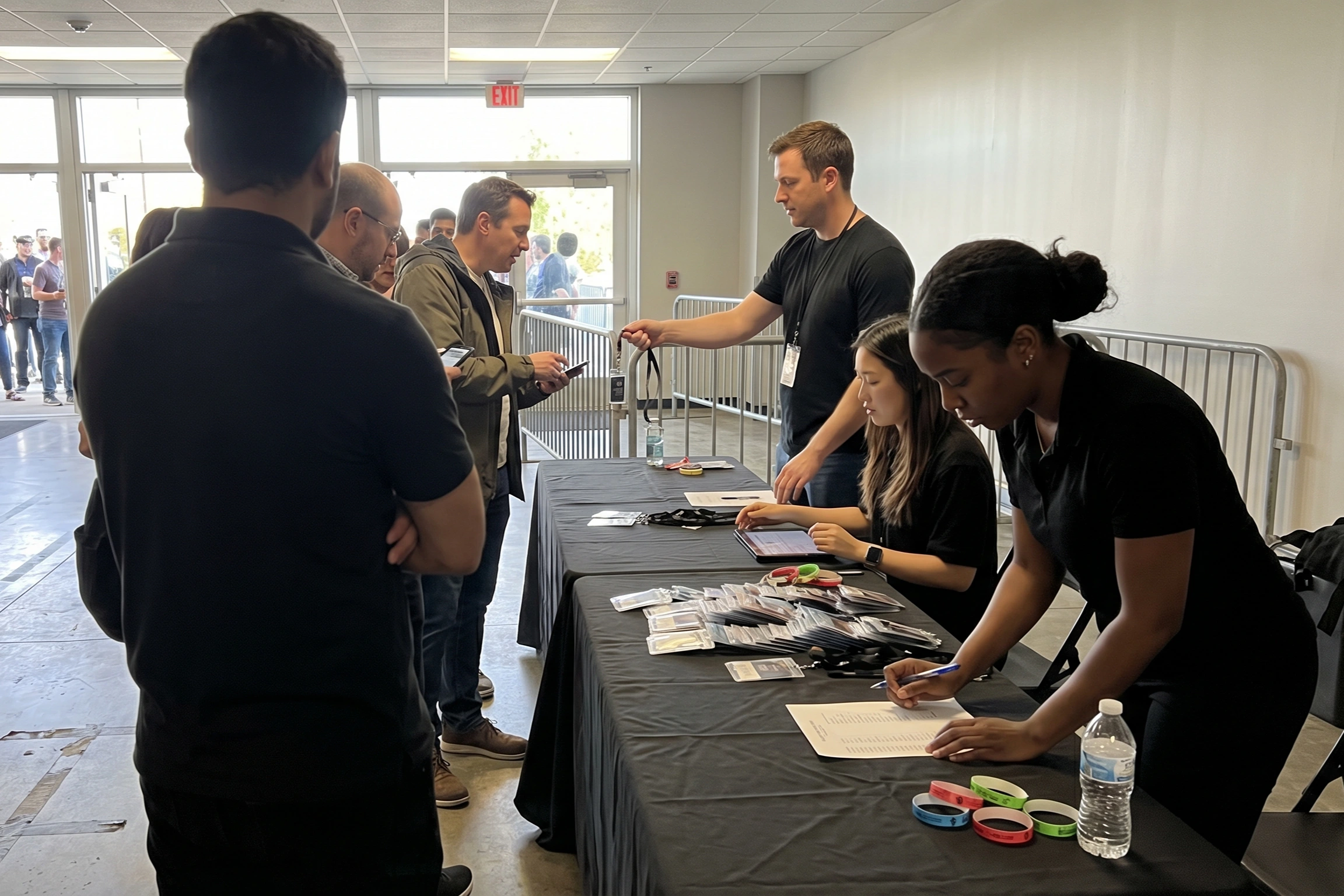
Check-in staff own guest processing at the entrance, including list lookup, credential distribution, approvals, and exception handling. They protect flow by giving the arrival team a dedicated place to manage the event check in process instead of letting longer conversations spill into the main admission lane.
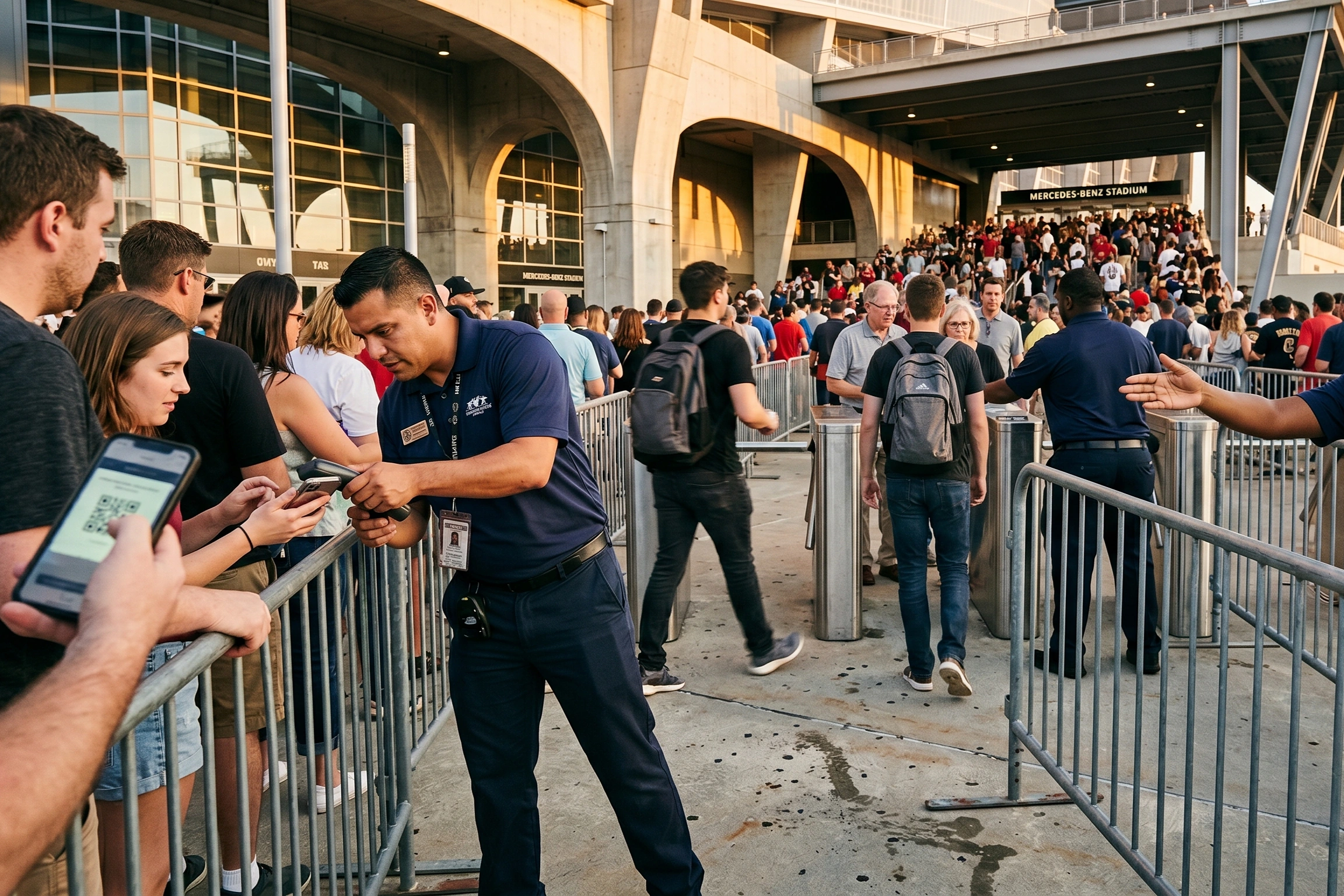
Ticket checkers own fast validation at the door, keeping scan lanes moving and access rules consistent across entry points. They protect throughput by enforcing the right entry logic without turning the active entry lane into a help desk.
.webp)
.webp)


Check-in staff mainly own the processing side of the entrance, where guest records, credentials, approvals, and exception handling need a controlled workflow. Their space is built for resolution, not rapid validation, and can include a staffed check-in point that feels more like structured arrival support than simple front-door coverage.
Ticket checkers mainly own the front edge of admission, where guests present tickets and access rules are enforced at speed. Their space is designed for movement, consistency, and fast decision-making.
Shared zones sit between validation and processing, where guests are redirected out of the fast lane and into the right next step. These are the handoff spaces that keep entry organized under pressure.

We run the event registration process by separating guest processing from live validation. Check-in staff handle list lookup, approvals, badge issue, wristbands, and exception resolution at a dedicated point, while ticket checkers stay focused on fast entry control. That split matters because the entrance performs better when longer conversations are moved away from the active lane. It keeps arrival pressure contained, protects throughput, and gives guests a clearer path whether they need a quick scan or a more involved check-in step.
Yes. We provide event registration staff for guest lookup, credential distribution, manual approvals, and issue handling, and we can also staff a more visible arrival point that functions like front desk event staff when the event needs a polished first-contact experience. The exact setup depends on the entrance design, guest type, and how many exceptions are expected. Some events need a simple processing station, while others need a more structured welcome-and-resolution point that supports the broader arrival operation.
A dedicated guest check in desk becomes useful when the entrance is doing more than simple admission. If guests are collecting badges, confirming names, resolving invite issues, or being manually approved, those tasks need a controlled processing point. Ticket checkers should not be pulled into those longer interactions because their job is to keep the door moving. By giving check-in staff a separate station, the event protects both entry speed and decision accuracy instead of forcing every arrival need into one overloaded queue.
When buyers ask what does a ticket checker do, the practical answer is simple: a ticket checker validates tickets, enforces entry rules, catches duplicates or wrong-day entries, and keeps the active lane moving at speed. If someone is reviewing a ticket checker job description, that role should stay centered on validation discipline and throughput control. Check-in staff handle a different layer of work, including list lookup, credentials, approvals, and guest exceptions. One role protects admission speed, while the other protects processing accuracy around it.
The cleanest setup separates the event check in process from event ticket scanning even when both happen at the same entrance. Guests who only need validation should move through ticket checkers in dedicated scan lanes, while guests who need badges, approvals, list help, or exception handling should be redirected to check-in staff nearby. That prevents the door from becoming a catch-all station for every arrival issue. It also creates clearer role ownership, better line discipline, and a more stable entrance experience from opening rush through late arrivals.
Join thousands of event planners who trust EventStaff.com for reliable, professional staffing solutions.
Trusted by event professionals nationwide
Events Staffed
Guests Served
Positive reviews

