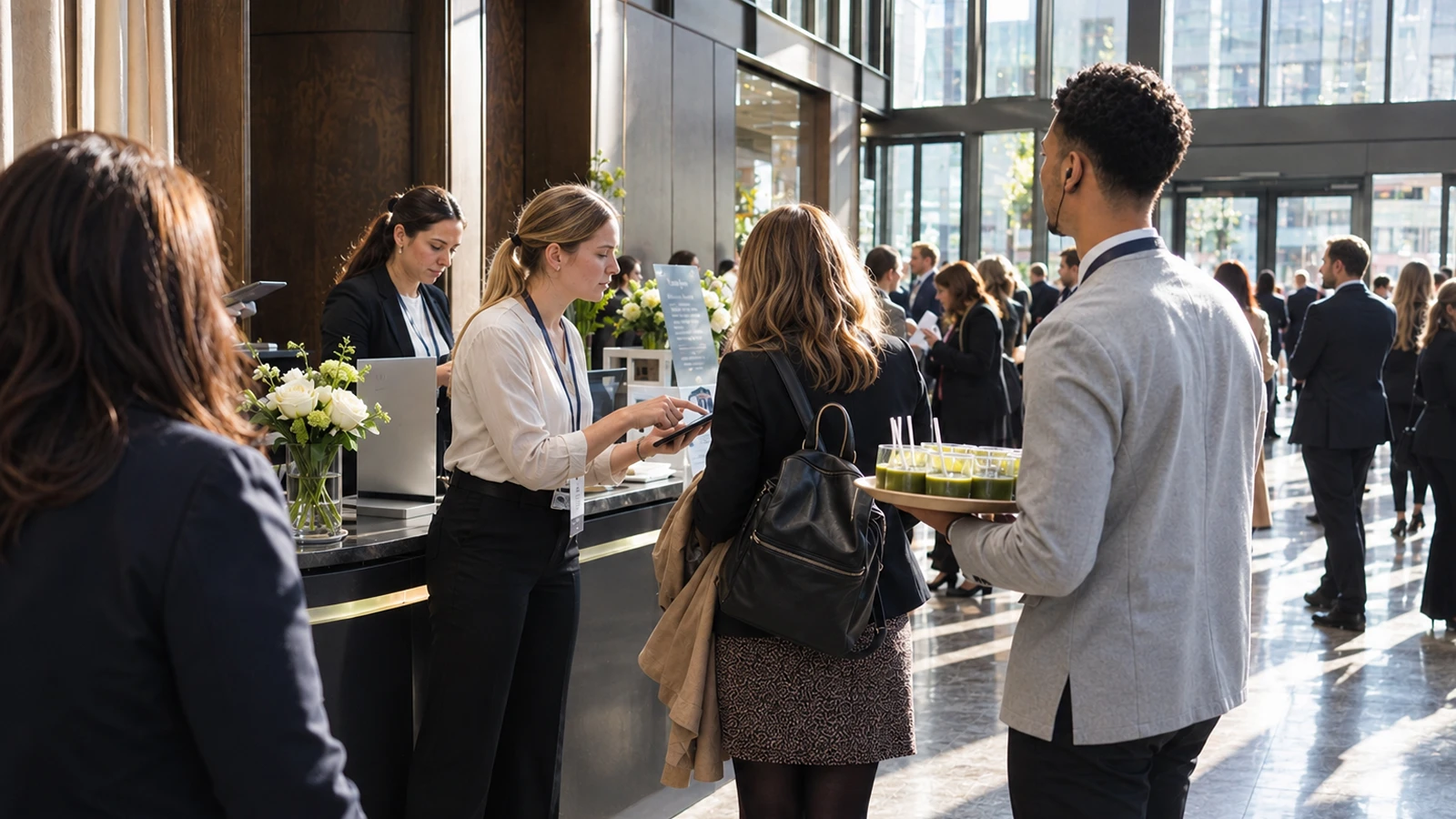

Queue management becomes a front-of-house priority when 2,000 guests arrive by subway for a large New York event. The risk is not just a long line. It is the pressure that line puts on your entrance, VIP access, sidewalk space, check-in speed, security team, and overall guest experience.
In New York, arrival pressure can build within minutes. Guests move through the same stations, sidewalks, corners, and building entrances as commuters, tourists, residents, and nearby event crowds. MTA reported that New York City Transit averaged more than 4 million weekday riders in September 2024, with October 2024 becoming its strongest ridership month since the pandemic, according to MTA New York City Transit ridership data.
For large events, subway crowding should be part of the staffing plan before doors open.
CEO Excerpt
“Large events in New York require staffing plans that match how guests actually arrive. Subway timing, sidewalk pressure, and access points all affect the first impression. When trained staff are positioned early, guests move with confidence and planners gain control. That is how strong staffing protects both the experience and the schedule.” - Eventstaff
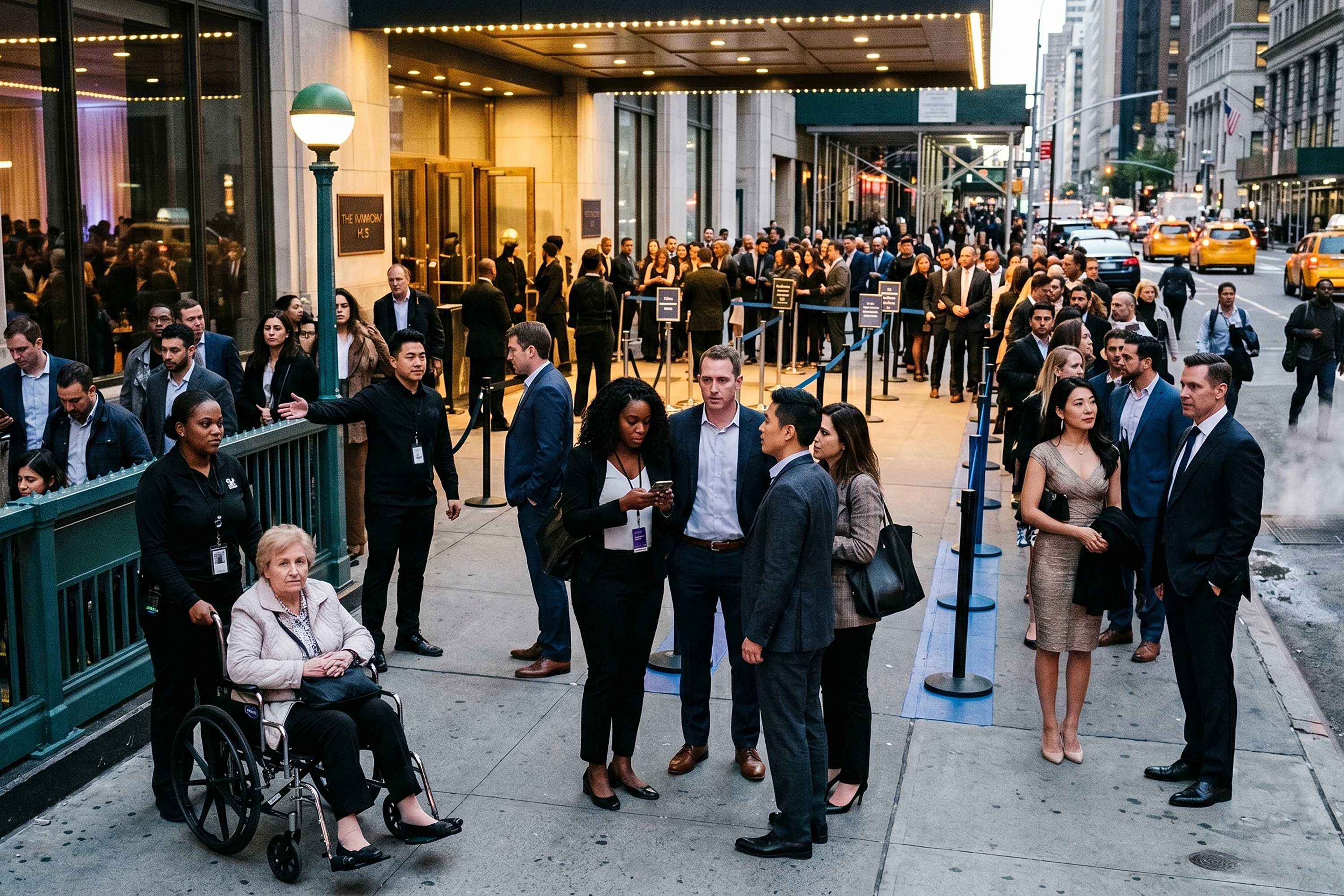
Why Queue Management Starts Before Check-In
Most entry problems begin before guests reach the scanner, badge table, or security point. They begin when people exit the subway and cannot immediately tell where to go.
That confusion usually shows up in small but damaging ways:
- Guests stop on the sidewalk to check tickets or texts.
- VIP guests cannot find their separate entrance.
- ADA access is unclear until guests are already near the wrong lane.
- General admission guests follow the largest visible crowd.
- Security starts answering wayfinding questions instead of focusing on screening.
Strong queue management gives guests direction before they have to ask for it. Staff help people choose the right lane, prepare tickets, understand access points, and keep moving without blocking the people behind them.
For planners, this protects the first impression. A premium venue and strong production plan can still feel poorly managed if arrival feels confusing.
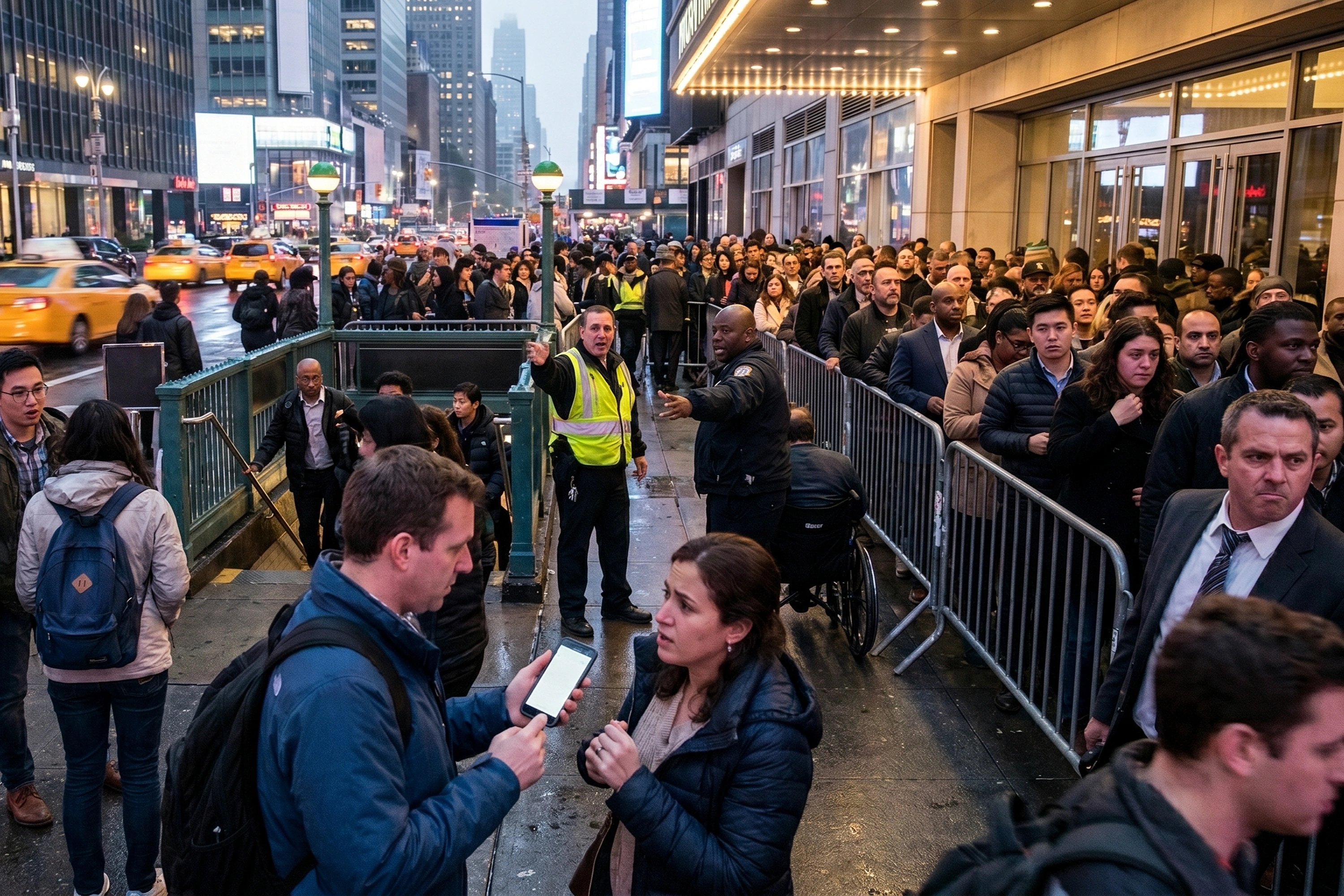
Subway Crowding Makes Small Delays Bigger
Subway crowding creates wave arrivals. Guests often reach the venue in groups because they exit the same trains, use the same staircases, cross the same corners, and follow the same route from the station.
That pattern is common near event-heavy areas such as Penn Station, Grand Central, Times Square, Union Square, Hudson Yards, Lower Manhattan, Barclays Center, Williamsburg, Dumbo, Long Island City, and Flushing.
A few small gaps can quickly become visible:
- One unclear sign sends guests toward the wrong door.
- One ticket issue slows the fastest lane.
- One missing staff member turns a corner into a waiting area.
- One blocked entrance affects guests, pedestrians, neighboring businesses, and building staff.
The NYC Street Activity Permit Office manages events on streets, sidewalks, and pedestrian plazas while protecting city, community, and public interests, which shows how seriously public-facing event space must be handled in New York, especially in dense areas with heavy foot traffic..
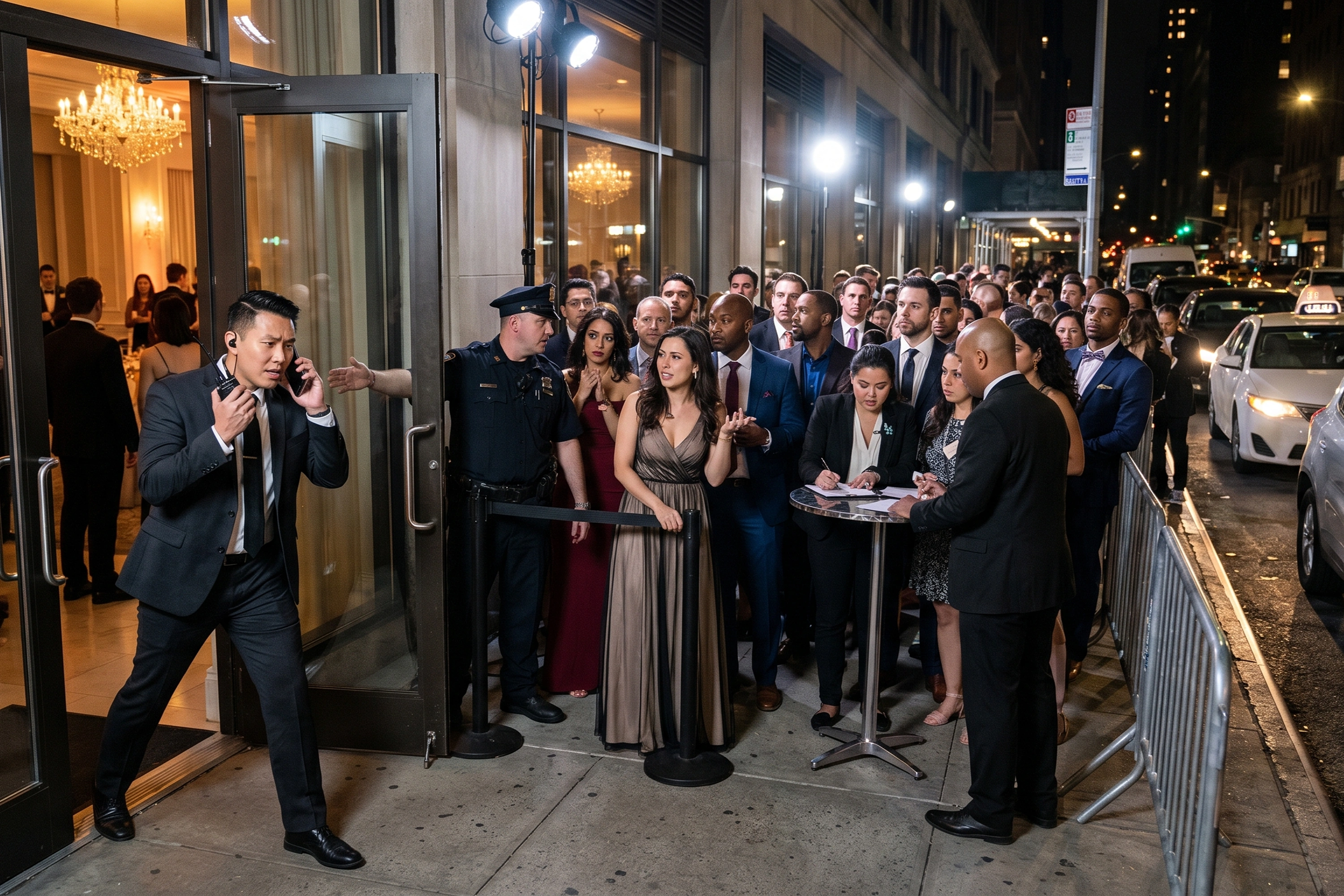
What Poor Queue Management Costs You
Poor queue management creates problems your guests can see and your internal team has to fix.
The first cost is guest confidence. When people do not know where to stand, which entrance applies to them, or why one line is moving faster than another, the event feels less organized before they enter.
The second cost is staff distraction. Security teams get pulled into basic directions. Check-in staff answer questions that should have been handled earlier. Producers and planners may have to step outside instead of managing the client, room, sponsor needs, or run of show.
The third cost is reputation. VIP guests expect premium handling from the first touchpoint. Sponsors and executives notice when arrival looks crowded. Guests usually remember how the event felt when they arrived, not why the line formed.
For corporate events, galas, luxury launches, fashion events, premieres, conferences, and sponsor activations, arrival quality has real business value.
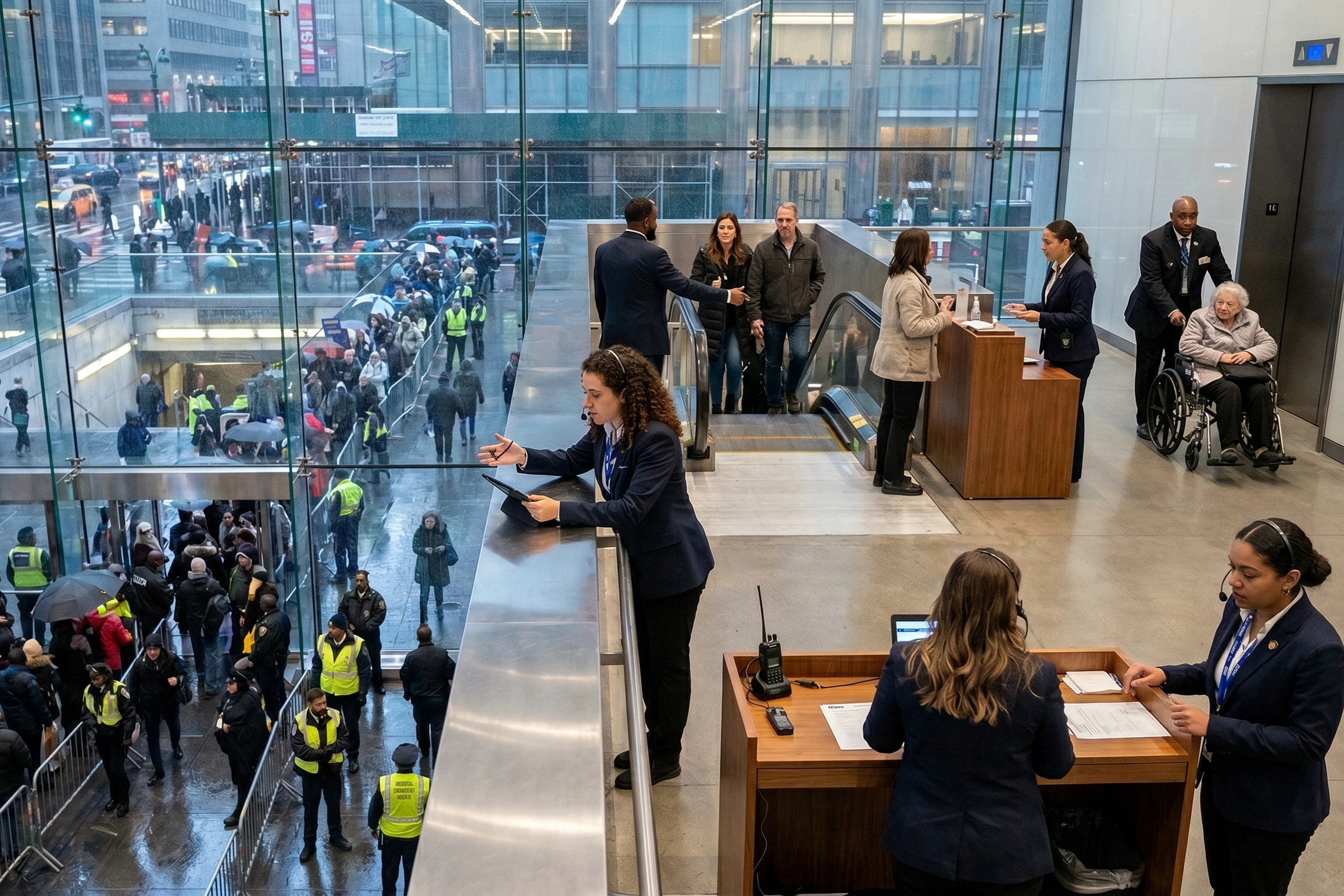
How Trained Staff Control the Arrival Surge
The practical fix is not just “more staff at the door.” It is better staff placement across the full arrival path.
For a 2,000-person New York event, queue management support may include:
- Directional staff near subway-facing approaches to guide guests before they cluster at the wrong corner or doorway.
- Greeters before the official line to answer quick questions, confirm access type, and help guests prepare tickets or credentials.
- Line managers at lane splits to keep VIP, general admission, ADA, press, sponsor, staff, and vendor routes separated.
- Check-in staff focused on entry so scanning, verification, wristbands, badges, and credentials keep moving.
- Issue-resolution staff away from the main lane so ticket problems, missing names, app issues, and credential questions do not slow everyone behind them.
- Supervisors watching the full approach to move staff when one subway arrival sends a sudden wave from one direction.
This is where trained event staff create measurable value. They reduce hesitation, keep access types clean, and prevent small arrival problems from becoming the event’s first visible failure.
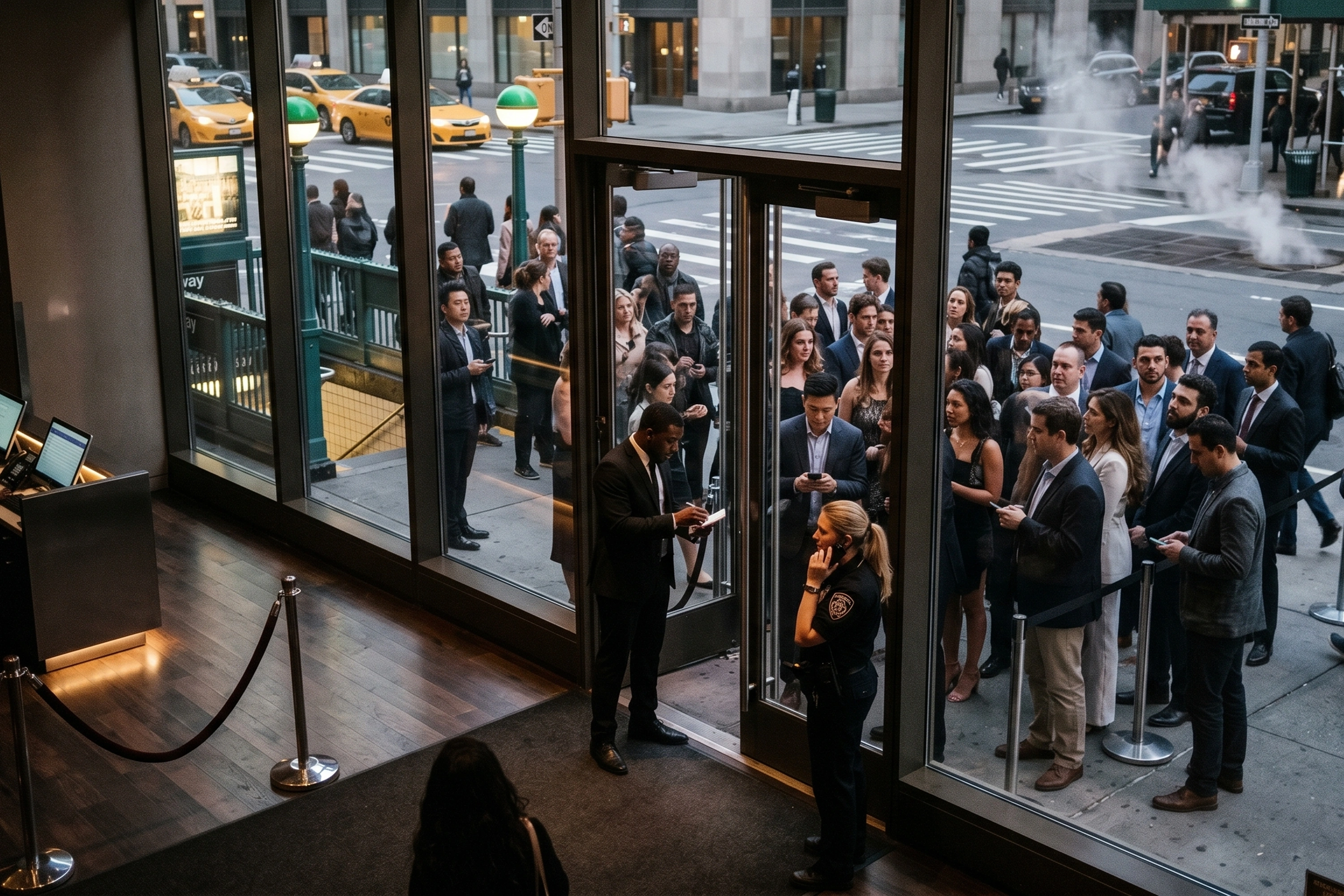
Why Staffing Only the Door Creates Risk
Many event teams place most of their people at the official check-in point because that is where entry happens. For a smaller event, that may be enough. For 2,000 guests arriving by subway, it leaves too many decision points uncovered.
The check-in table can only process guests who reach the correct place with the right ticket, QR code, wristband, badge, or name confirmation ready. It cannot manage the corner where people first stop. It cannot keep VIP guests out of the wrong lane. It cannot prevent ADA guests from being routed too late.
Good queue management covers the whole arrival path:
- Subway-facing side of the block
- Main sidewalk approach
- Lane split
- VIP entrance
- ADA access point
- Issue-resolution area
- Main check-in zone
A staff member placed before the line can often save more time than an extra person added behind the table after confusion has already built.
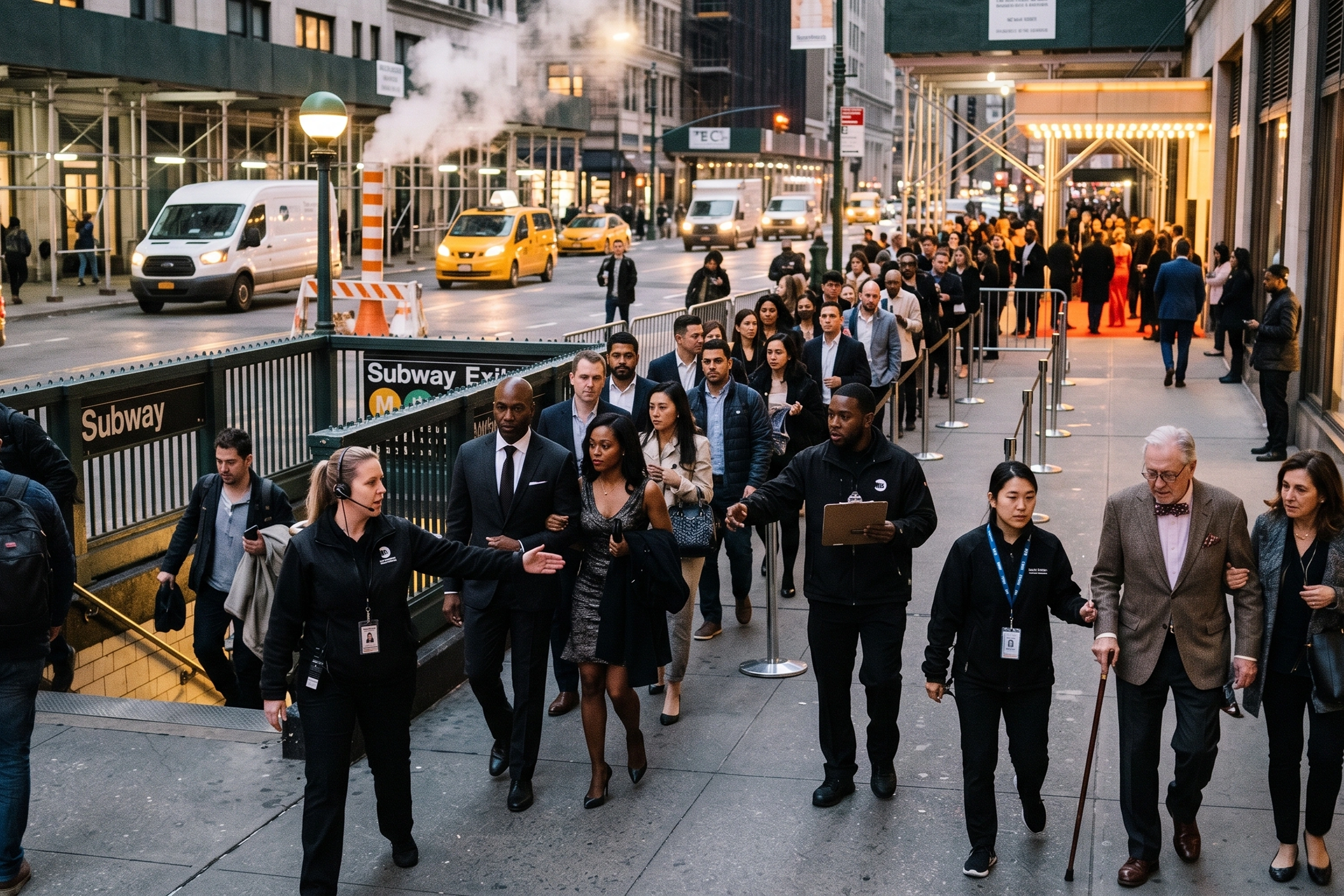
When to Book Queue Management Support
Dedicated queue management support should be considered when several pressure factors are present at once.
You should take it seriously if your event includes:
- 1,000 or more guests
- A venue near major subway stops
- Multiple ticket types or access groups
- Limited sidewalk space
- VIP, sponsor, executive, or press arrivals
- A tight door time or run of show
- A brand-sensitive audience
This is especially important for luxury launches, corporate receptions, entertainment premieres, fashion events, galas, and investor-facing conferences. Guests may accept a short wait when the line is clear, staffed, and moving. They are far less forgiving when no one can tell them where to go.
New York’s visitor volume adds to the pressure. The Mayor’s Office reported nearly 65 million visitors in 2024, the city’s second-highest total in history, according to NYC tourism and visitor data from the Mayor’s Office. Your event is operating inside a city that is already busy.
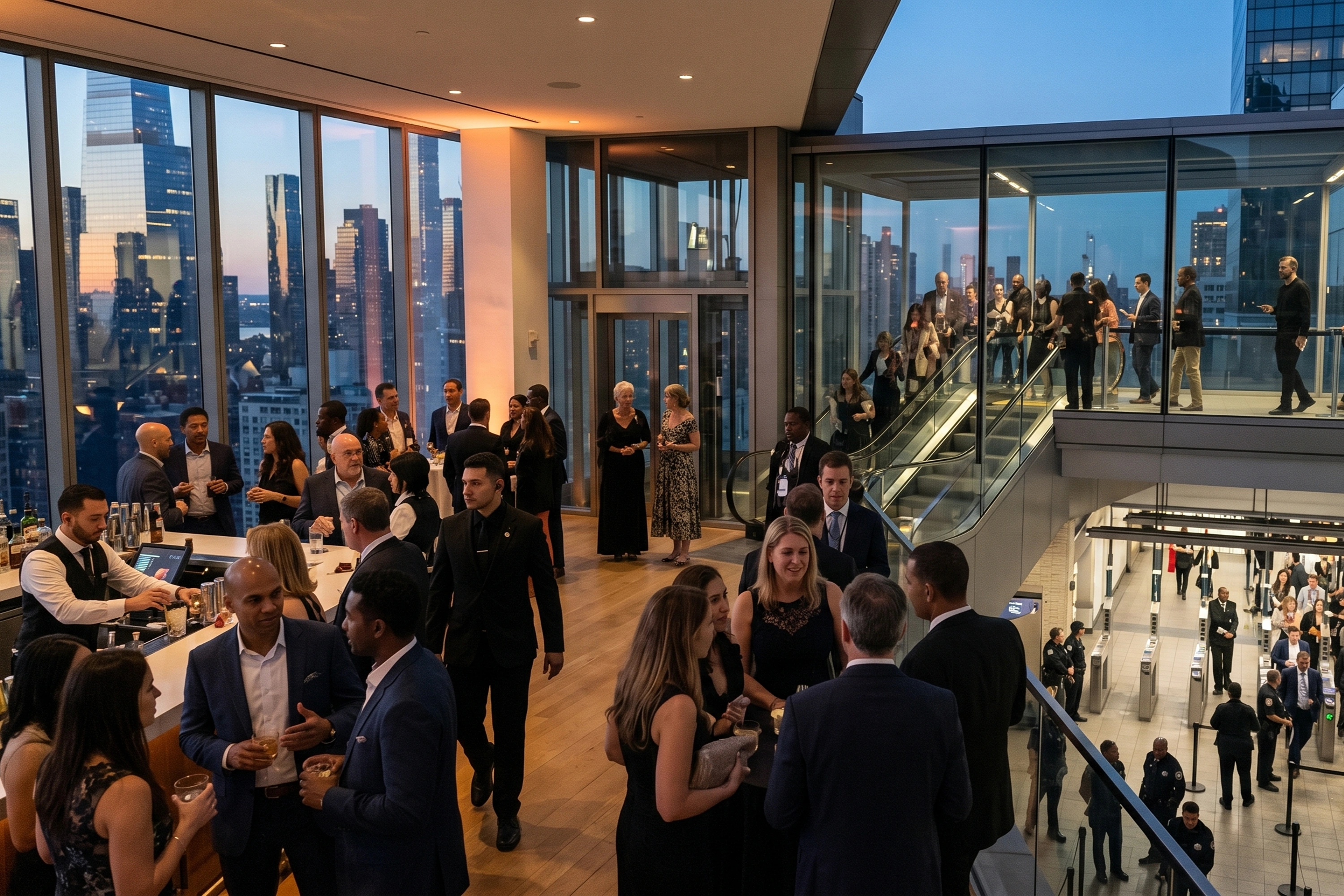
How Eventstaff Helps You Control the First 20 Minutes
Eventstaff helps large event teams plan for the moment arrival pressure becomes visible. That starts with the venue layout, access points, subway approaches, guest profile, ticketing setup, VIP expectations, ADA needs, staff call time, and door schedule.
From there, the staffing plan is built around where pressure is most likely to form. Guests need direction before the first line gets crowded. VIPs need separation before they reach general admission traffic. ADA access needs clear guidance before guests have to search for help. Check-in needs enough support to stay focused on entry, not sidewalk repair.
The value for planners is practical:
- Guests know where to go.
- Security stays focused.
- VIP access feels intentional.
- Check-in keeps moving.
- The venue entrance feels controlled.
- Your internal team stays available for the client, production schedule, sponsors, and room management.
Queue management gives you more control over the first 20 minutes, which often shapes how the rest of the event feels.
Bottom Line
Queue management should be planned early for any large New York event with subway-heavy arrivals. When 2,000 guests move toward the venue in waves, the right staff placement protects the sidewalk, the entrance, VIP access, check-in pace, and event schedule.
Subway crowding is part of New York event planning. Trained event staff help turn that pressure into a cleaner arrival, a stronger first impression, and a smoother start for everyone inside.
Ready to elevate your next event?
Join thousands of event planners who trust EventStaff.com for reliable, professional staffing solutions.
Trusted by event professionals nationwide
1k+
Events Staffed
2 million+
Guests Served
97%
Positive reviews