
A NYC street festival can feel organized inside the event footprint while still creating pressure on the sidewalk around it. A food vendor line stretches sideways, a merch table draws a crowd, or an entry point slows down near the curb, and suddenly queue management becomes visible to everyone walking past the event. In New York, that includes attendees, residents, tourists, storefront customers, delivery workers, families, and pedestrians who never planned to stop.
That is why pedestrian traffic flow matters so much at street festivals. When a queue blocks the sidewalk, the issue affects the public space around the event, the vendor experience, and the way the festival is perceived from the street.
CEO Excerpt
“Festival staffing has to respect both the event and the street around it. When a line starts blocking normal sidewalk movement, the issue becomes visible to guests, pedestrians, vendors, and city partners. Good staffing keeps the experience welcoming while protecting the flow that makes the festival work.”- Daniel Meursing, CEO, Eventstaff
.webp)
Why NYC Street Festival Lines Spill Over Fast
Street festival queues grow quickly because they often start in spaces that were never built as controlled waiting areas. A food stall, sponsor booth, ticket table, sampling station, or activity tent may attract attention faster than staff can shape the line. Once guests start forming their own queue, the line usually follows the easiest open space, which may be the sidewalk rather than the planned festival lane.
New York’s street festival environment makes that harder to manage. The city’s Street Activity Permit Office issues permits for street festivals, block parties, farmers markets, commercial or promotional events, and other activities on city streets, sidewalks, and pedestrian plazas while protecting the interests of the city, the community, and the general public. That context matters because festival organizers are not only managing guests inside an event zone. They are operating inside an active public environment where normal movement still matters.
A street festival in Manhattan, Brooklyn, Queens, or the Bronx may sit beside storefronts, apartment entrances, curb cuts, bus stops, subway exits, and crosswalks. People may be trying to shop, pass through the block, reach work, meet friends, or move around the event entirely. When a queue spills sideways, the event starts competing with the street instead of fitting into it.
The pressure often builds before anyone realizes the line has become a problem. A few people wait near a booth, others join behind them, and then the shape of the queue begins blocking the route pedestrians expect to use. At that point, the festival needs live staff intervention, not just another sign.
How Queue Management Protects the Festival Footprint
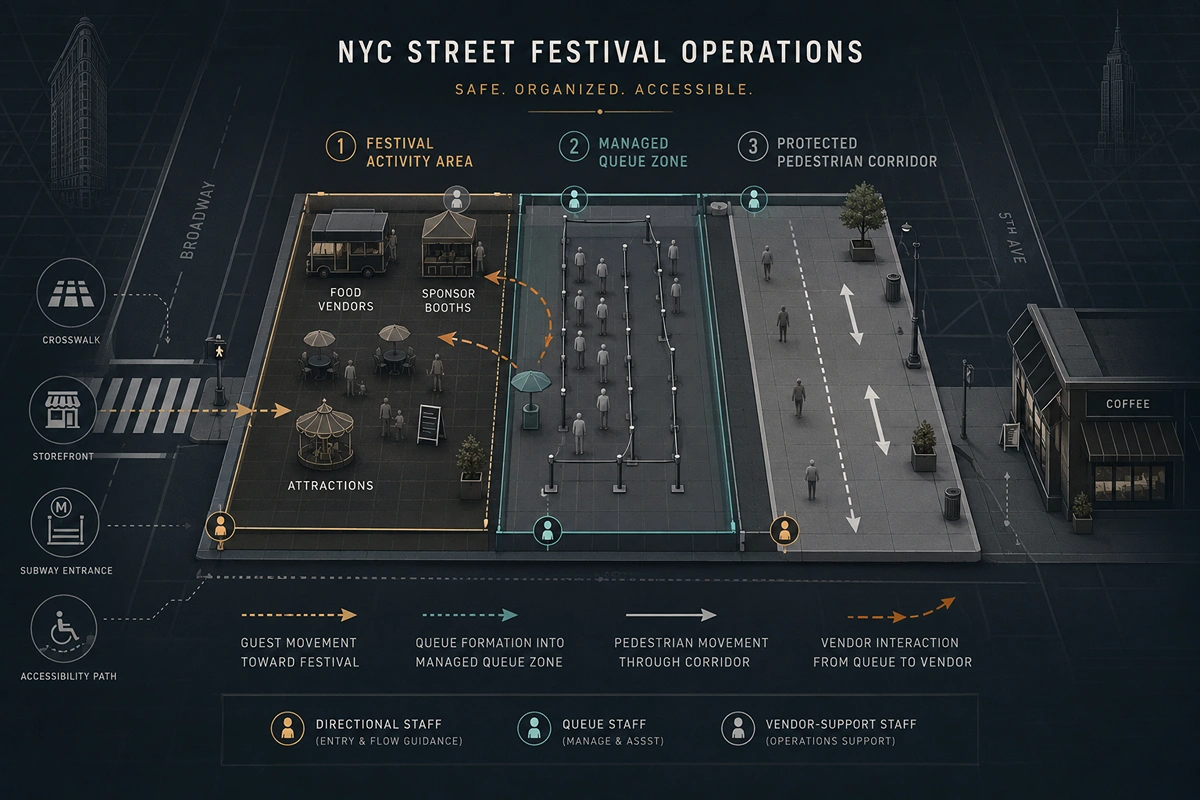
Strong queue management keeps a street festival from losing control of its most crowded moments. The goal is to shape waiting lines before they spread into sidewalks, storefronts, curb space, or neighboring vendor areas. Staff need to see how the line is forming, where guests are pausing, and whether the queue is creating pressure for people who are only trying to move through the block.
For festival staff, this means more than telling people where to stand. A trained team can angle the line away from the sidewalk, create a clearer waiting zone, identify where overflow should go, and separate active queues from general browsing. They can also communicate with booth operators when a vendor, sample station, or attraction is creating more demand than expected.
Good queue management also protects the vendor experience. A popular food stall or activation can lose momentum if the crowd around it becomes confusing, crowded, or frustrating. Guests may abandon the line, neighboring vendors may get blocked, and pedestrians may begin pushing through waiting guests because there is no visible route around the congestion.
This is where staffing creates order without making the festival feel rigid. At a successful NYC street festival, the line should be clear enough for guests to understand and flexible enough to fit a busy public street. Staff help maintain that balance by keeping people moving, answering quick questions, and adjusting the queue before it creates a larger public-facing issue.

Where Pedestrian Traffic Flow Starts to Break
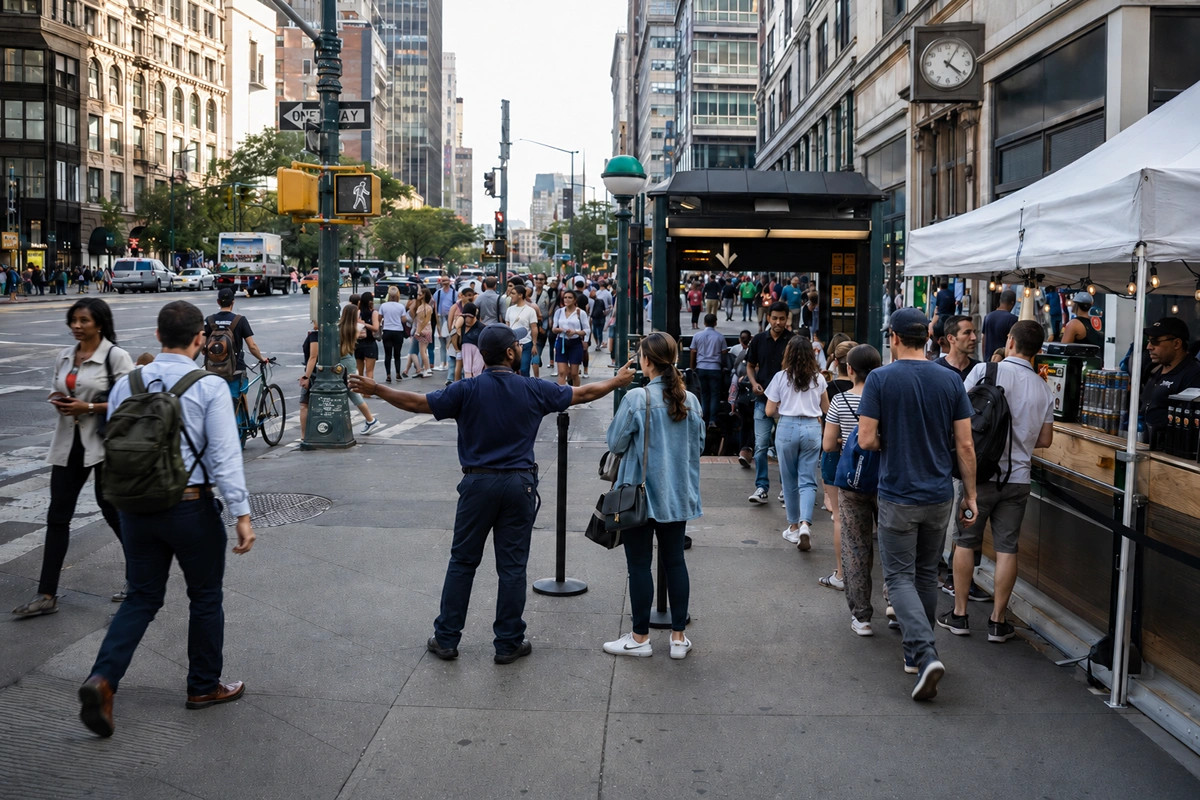
Pedestrian traffic flow starts to break when festival activity blends into normal sidewalk movement. NYC DOT’s Pedestrian Mobility Plan describes New York as a city of pedestrians who rely on an interconnected network of sidewalks and street crossings to travel comfortably around the city. A blocked sidewalk at a street festival affects that movement, especially when the event is running through an already busy commercial or residential corridor.
The booth line turns sideways.
Many street festival queues begin at a booth facing the pedestrian path, then expand sideways because guests follow the shape of the table or tent. Once that happens, the line can block people who are trying to pass through the block. Staff need to catch that shift early and redirect the queue into a cleaner waiting pattern.
The crowd gathers near a crosswalk.
Corners are natural pause points because people stop to decide where to go, wait for friends, check their phones, or look down the festival route. If a vendor line or entry point sits near that corner, the crowd can interfere with curb movement and crosswalk access. Staff positioned near those edges can keep attendees from clustering where movement needs to stay open.
The overflow becomes hard to read.
When a sidewalk is crowded, pedestrians may not know who is waiting, who is browsing, and who is simply passing through. That confusion slows pedestrian traffic flow because people hesitate, cut through lines, or stop in the wrong place. A visible staff presence helps turn a loose crowd back into an understandable route.
These issues matter because sidewalk pressure changes how the festival feels from the outside. Even if the event is well programmed, a blocked walkway can make it look underplanned. For organizers, that can affect guest comfort, vendor satisfaction, neighborhood perception, and communication with city or site partners.
Why NYC Festivals Need Local Queue Planning
NYC street festivals are different from fenced event grounds because they happen inside neighborhoods that continue to function during the event. A fair along a Manhattan avenue, a Brooklyn food festival, a Queens cultural event, or a Bronx community festival may bring attendees into a route that local residents and businesses still need to use. That means the staffing plan has to account for both festival guests and ordinary city movement.
Street events are often held on curb lanes, public sidewalks, or public streets that interfere with or obstruct the regular public use of that location, according to New York City’s street event permit information. That does not make sidewalk pressure unusual, but it does mean organizers should plan for it before the event opens. A busy vendor queue should never be treated as a surprise once the block is already full.
Local conditions also change from one borough and neighborhood to another. A Manhattan street fair may have heavy tourist and commuter movement, while a Brooklyn neighborhood festival may involve more families, strollers, cyclists, and storefront traffic. A Queens cultural festival may have multilingual guest needs and strong food-vendor demand, while a festival near a major subway stop may see quick waves of arrivals that gather near entry points.
That is why a staffing plan should consider more than where the booths sit. It should account for sidewalk width, subway exits, curb cuts, bus stops, vendor placement, attraction demand, crosswalks, accessibility needs, and the places where guests naturally pause. In New York, a queue that is acceptable for five minutes can become a serious movement issue once the next wave of attendees reaches the block.
How Eventstaff Helps Keep Festival Lines Moving
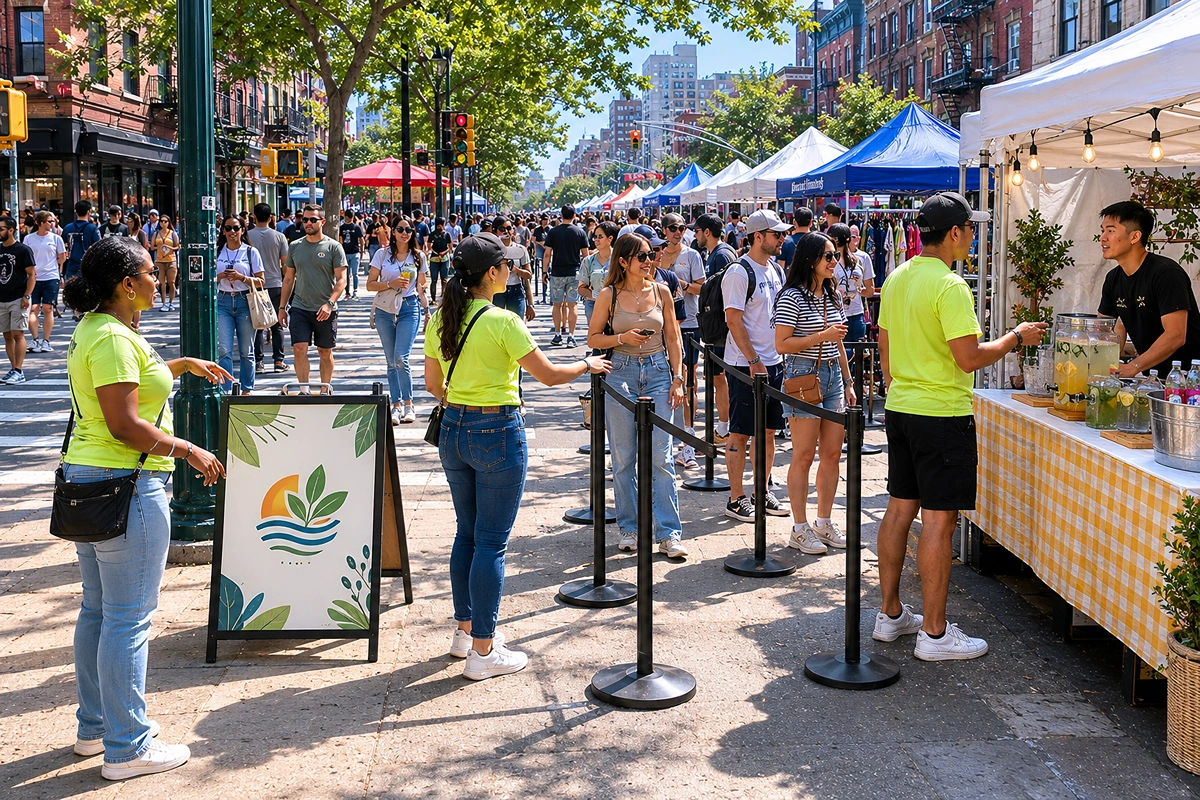
At Eventstaff, we help festival organizers protect both the guest experience and the public-facing movement around the event. Our trained festival staff understand how to shape queues, direct attendees, support vendors, and keep movement clear without making the atmosphere feel harsh or over-managed. For NYC street festivals, that balance matters because the event has to feel welcoming while still respecting the sidewalk around it.
Our festival staff can be placed at entry points, popular vendor zones, sampling stations, merch areas, photo moments, sponsor booths, or high-demand attractions. They help attendees understand where the line begins, where it continues, and where pedestrian space needs to remain open. When the crowd grows, staff can adjust the line shape before it reaches a storefront, curb, crosswalk, or neighboring booth.
We also give organizers a clearer way to respond when demand changes during the day. If one vendor suddenly draws a larger crowd, our staff can help reset the queue, support communication with the booth team, and notify the site lead before the line affects the larger festival route. That protects queue management while keeping the rest of the event moving.
The value is practical. Guests spend less time guessing where to stand, pedestrians can continue moving through the area, vendors avoid blocked visibility, and organizers maintain better control of the block. Strong staffing keeps the event approachable while preventing one crowded queue from shaping the public’s view of the entire festival.
Bottom Line
A NYC street festival queue becomes a larger operational problem when it starts blocking the sidewalk. Strong queue management protects the festival footprint, supports vendors, and keeps the public-facing experience organized. With trained festival staff, Eventstaff helps organizers maintain pedestrian traffic flow, guide attendees clearly, and prevent one crowded line from affecting the movement and perception of the entire block.
Ready to elevate your next event?
Join thousands of event planners who trust EventStaff.com for reliable, professional staffing solutions.
Trusted by event professionals nationwide
1k+
Events Staffed
2 million+
Guests Served
97%
Positive reviews