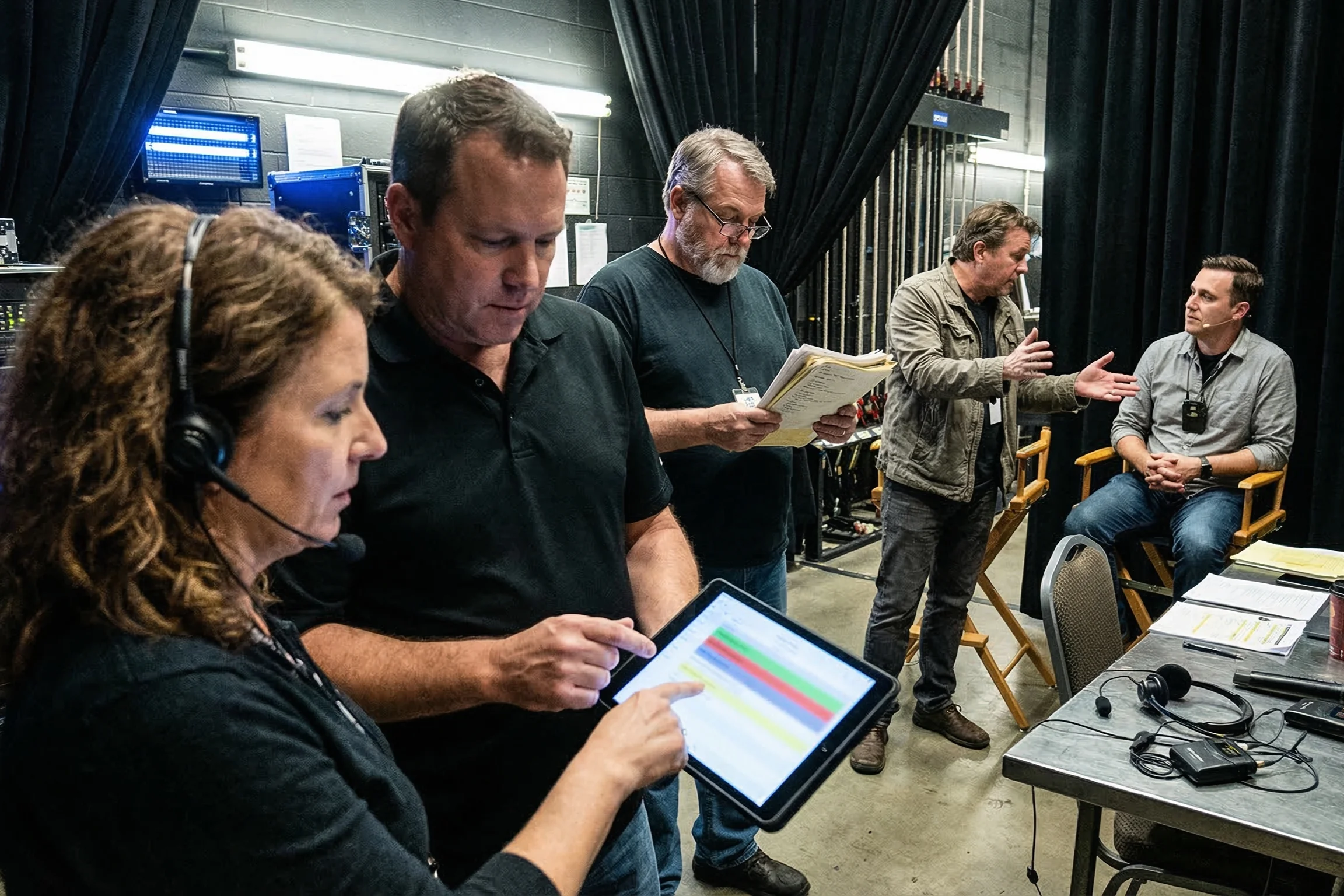

Line management matters fast when badge pickup at Javits starts slowing buyers before they reach the show floor. Trade expos are built around buyer movement, exhibitor ROI, sponsor visibility, and scheduled conversations. If the first serious wave of attendees gets stuck at registration, the issue spreads beyond the line.
The real risk is commercial. Buyers arrive ready to compare vendors, scan categories, attend demos, and start meetings. Exhibitors have teams in place, products ready, and expectations set. Poor opening-hour flow can make a well-promoted trade expo feel weaker than it actually is.
CEO Excerpt
“Trade show staffing is about protecting the business value of the floor. At a venue like Javits, badge pickup has to move buyers toward exhibitors, not hold them back. When trained staff manage lines, access points, and attendee questions early, the show opens with more confidence and stronger commercial energy.” - CEO, Eventstaff

The First Buyer Rush Is Where Exhibitors Start Judging the Show
Exhibitors judge a trade expo quickly. They look at aisle traffic, booth conversations, badge quality, and how soon serious buyers reach the floor. If the first hour feels slow, concern starts early, even when attendance is strong.
That first buyer rush matters because it creates confidence across the floor:
- Booth teams see movement early.
Early traffic tells exhibitors that buyers are active, engaged, and reaching the floor instead of waiting near registration. - Sales conversations start on time.
Buyers who reach booths quickly are more likely to keep scheduled demos, category walks, and planned meetings. - Sponsors get visible traffic.
Sponsored lounges, floor activations, entry placements, and hosted experiences rely on steady movement from the start. - Show managers avoid early complaints.
When exhibitors see thin aisles during opening hour, they often raise concerns before the real cause is clear.
Line management protects that first impression by keeping badge pickup from becoming the bottleneck between buyer intent and booth traffic.

Badge Pickup Can Quietly Block Buyer Intent
Buyers usually arrive with a plan. They may want to visit specific booths, compare suppliers, attend a product launch, meet a sales rep, join a keynote, or check in before a hosted-buyer appointment. Every unnecessary delay reduces the energy they bring into the floor.
Badge lines become a larger problem when different attendee types are forced into the same path. Pre-registered buyers, onsite registrants, exhibitors, speakers, press, sponsors, VIPs, and staff often need different answers. If no one separates those groups early, the fastest attendees get slowed by the most complicated issues.
Trade show staffing should protect that buyer journey. Registration desks handle records, badge printing, corrections, and access confirmation. Staff around the registration area should keep buyers moving, questions filtered, and slow issues away from the main flow.
Where Trade Show Staff Make the Difference
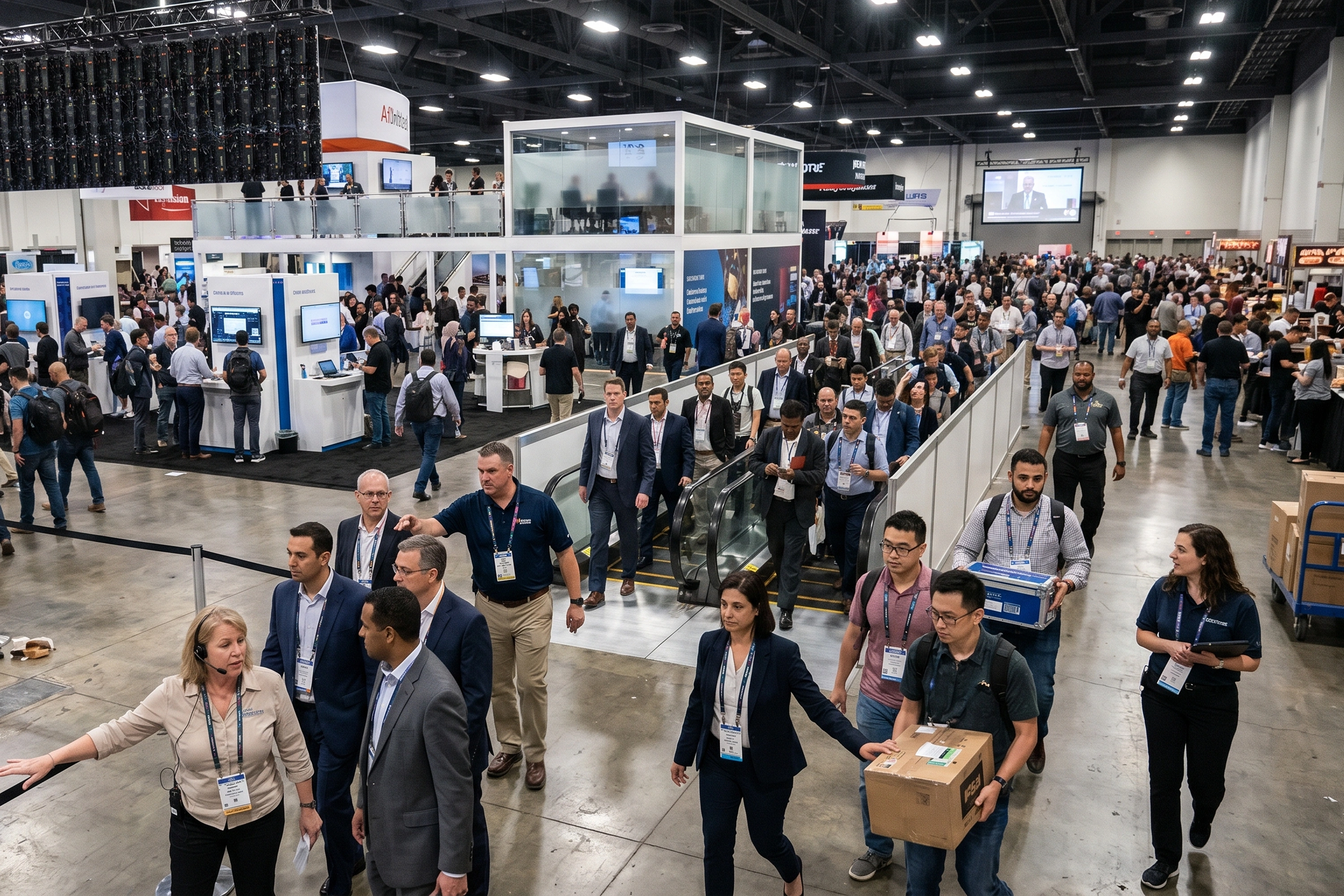
Trade show staff are valuable because they support the full movement system around registration, not only the badge counter. Their job is to reduce hesitation before it turns into crowding and to make sure the right people reach the right place quickly.
At a Javits trade expo, staff can be positioned around:
- Registration approaches.
Staff can direct buyers, exhibitors, speakers, press, and VIPs before they enter the wrong lane. - Badge pickup lanes.
Staff can keep pre-registered attendees, onsite registration, and issue-resolution traffic from merging together. - Floor entrances.
Staff can help buyers move from badge pickup to the right hall, aisle, pavilion, or meeting area. - Information points.
Staff can answer common questions without forcing attendees back toward the registration desk. - Sponsor and VIP check-in areas.
Staff can protect premium access so key guests do not get absorbed into general attendee flow.
Strong trade show staffing gives registration staff room to process badges while dedicated floor-facing staff protect buyer movement.

Why Javits Raises the Stakes for Trade Expos
Javits is designed for major shows, which means the opportunity is large and the arrival pressure can be large too. Its official venue information notes that the expansion added a new exhibit hall and 200,000 square feet of meeting space, giving organizers significant capacity for large-scale events through Javits Center venue information.
That scale matters for line management. A trade expo at Javits may involve several halls, escalator movement, lobby decision points, exhibitor access needs, freight and setup timing, conference sessions, hosted-buyer meetings, and overlapping attendee categories.
New York’s visitor market adds another layer. NYC Tourism reported nearly 65 million visitor arrivals in 2024 and an estimated $79 billion in economic impact through NYC Tourism 2024 visitor data. A Javits event sits inside that busy travel and business environment, so buyer movement has to be managed with precision.
The Staff Roles That Protect Booth Traffic
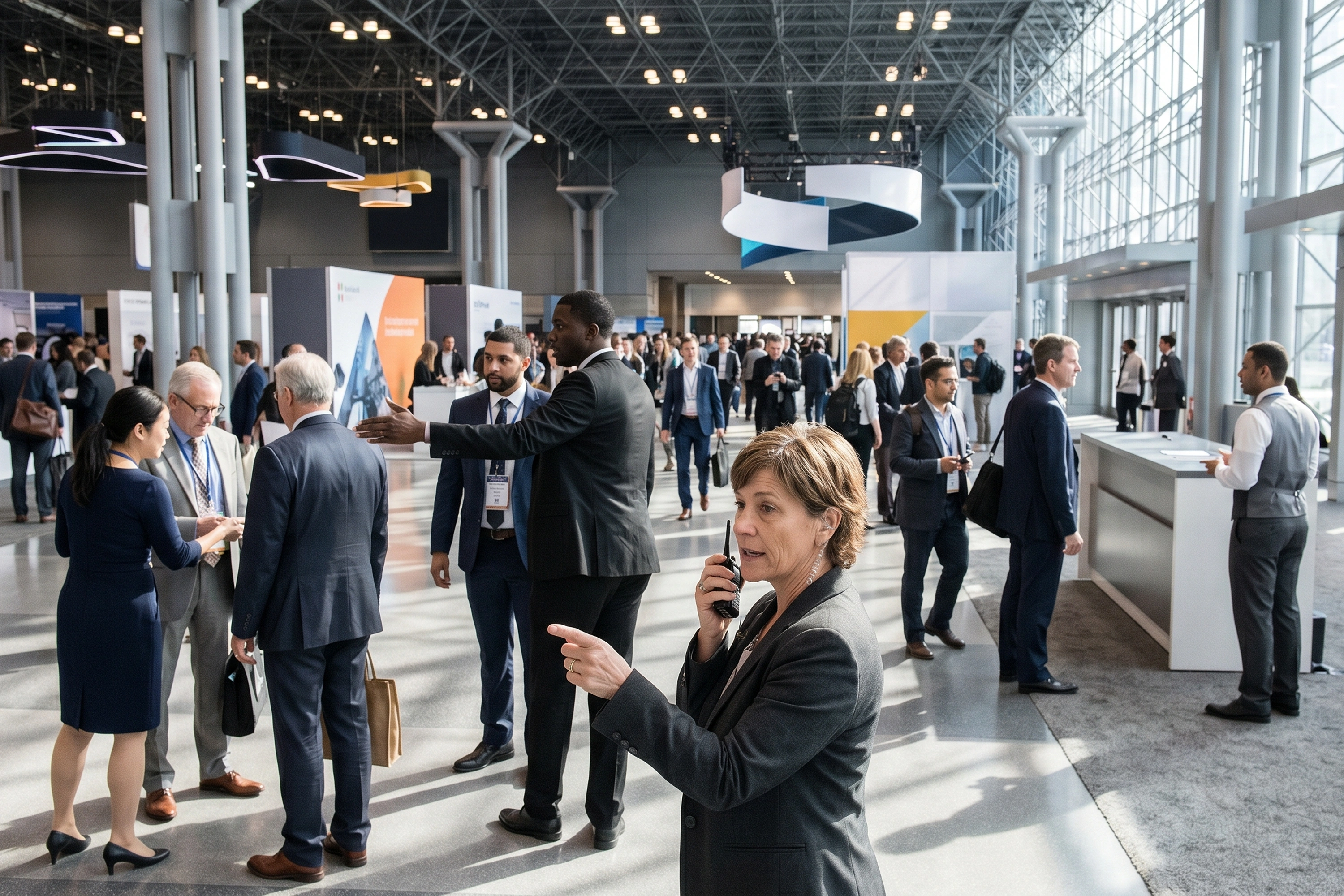
A strong trade show staffing plan should match the pressure points of the expo. The goal is to help buyers reach the floor faster while keeping exhibitors, sponsors, and show teams confident.
Useful roles include:
- Badge line staff.
They keep badge pickup moving by helping attendees prepare confirmations, IDs, QR codes, company details, or registration emails before they reach the counter. - Buyer flow staff.
They guide buyers toward the right hall, category zone, pavilion, meeting area, or floor entrance after registration. - Exhibitor support staff.
They help exhibitors reach access points, service desks, booth areas, and staff entrances without getting trapped in attendee badge traffic. - Information desk staff.
They answer common questions about halls, sessions, restrooms, sponsor areas, floor maps, and meeting locations so registration does not become the help desk. - VIP and sponsor routing staff.
They keep premium guests, sponsors, executives, media, and hosted buyers moving through the intended access path. - Issue-resolution staff.
They move name changes, missing confirmations, badge errors, payment questions, and access problems away from the fastest lane. - Supervisors.
They watch the full registration and floor-entry zone, then shift staff when one badge area, entrance, or attendee category starts backing up.
These roles support the commercial rhythm of the expo. Buyers move. Exhibitors engage. Registration stays focused. Sponsors see activity where they expect it.

What Happens When Trade Show Staffing Is Too Thin
Thin staffing usually shows up as confusion before it shows up as a formal complaint. Buyers ask exhibitors where to go. Exhibitors ask show managers why traffic feels light. Sponsors wonder why branded areas are quiet. Registration staff become the default answer point for every operational question.
The cost can be felt across the event:
- Buyer access slows down.
Attendees with clear intent spend valuable time waiting instead of walking the floor. - Exhibitor confidence drops.
Booth teams judge the show by visible traffic, especially during the opening window. - Registration gets blamed.
The registration team may be processing correctly, but poor surrounding staff coverage makes the whole system feel slow. - Show managers lose focus.
Internal teams get pulled into line movement, attendee questions, sponsor concerns, and exhibitor complaints.
CEIR is widely recognized for exhibition-industry research, including attendee and exhibitor engagement resources through CEIR exhibition research. For trade expos, that focus on engagement is important because every avoidable delay keeps buyers away from the floor where engagement happens.

When to Add Line Management to Your Trade Show Staffing Plan
Line management should be added before the show when opening-hour movement has commercial value. Waiting until badge lines build means your team is correcting the problem in front of buyers, exhibitors, and sponsors.
Add dedicated support when your expo includes a large first-hour arrival window, heavy badge pickup, hosted-buyer meetings, multiple attendee categories, major exhibitors, VIP buyers, media arrivals, sponsored check-in areas, or keynotes scheduled close to opening.
The staffing plan should also be stronger when exhibitors have made major booth investments. Those teams are paying for space, travel, buildout, samples, demos, and sales staff. They expect buyer traffic to reach them cleanly, especially during the first active window of the day.
How Eventstaff Supports Trade Expo Flow
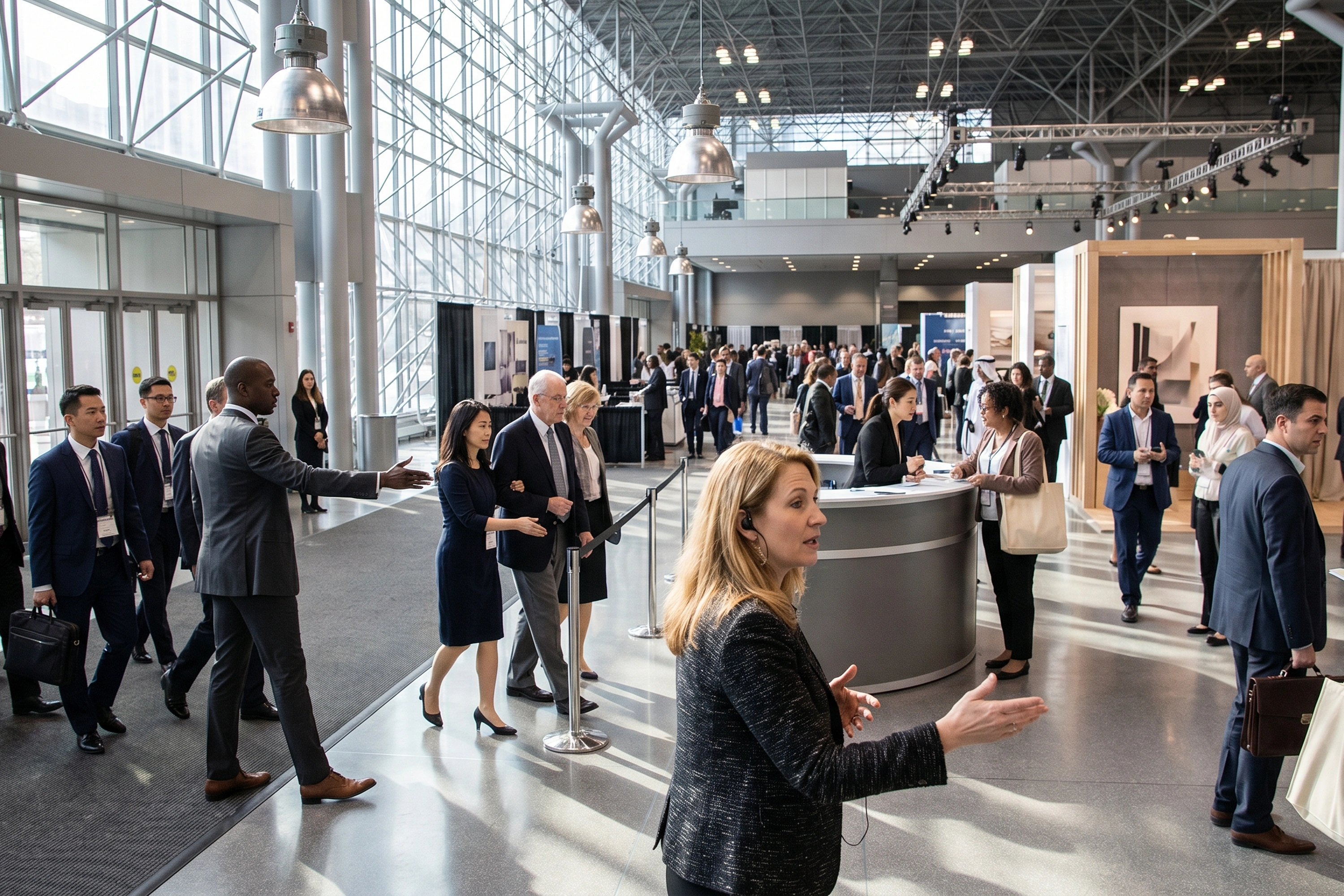
Eventstaff supports trade expos by placing trained staff where buyer movement can slow down. That includes registration approaches, badge pickup areas, floor entrances, exhibitor support points, sponsor check-ins, VIP routes, information desks, and issue-resolution areas.
The result is practical. Buyers get to booths faster. Exhibitors see stronger early movement. Registration teams stay focused on badge accuracy. Sponsors get better visibility. Show managers spend less time fixing line problems and more time protecting the event experience.
For Javits trade expos, line management should support the larger goal of trade show staffing: helping buyers reach exhibitors while intent is high.
Bottom Line
Line management should be part of the trade show staffing plan when badge pickup can slow the first buyer rush. At Javits, the goal is not simply to keep lines neat. The goal is to protect buyer access, exhibitor confidence, sponsor visibility, and opening-hour floor momentum.
When trained staff manage badge lanes, attendee questions, floor entry, and issue resolution, buyers reach booths faster and the trade expo starts with stronger commercial energy.
Ready to elevate your next event?
Join thousands of event planners who trust EventStaff.com for reliable, professional staffing solutions.
Trusted by event professionals nationwide
1k+
Events Staffed
2 million+
Guests Served
97%
Positive reviews