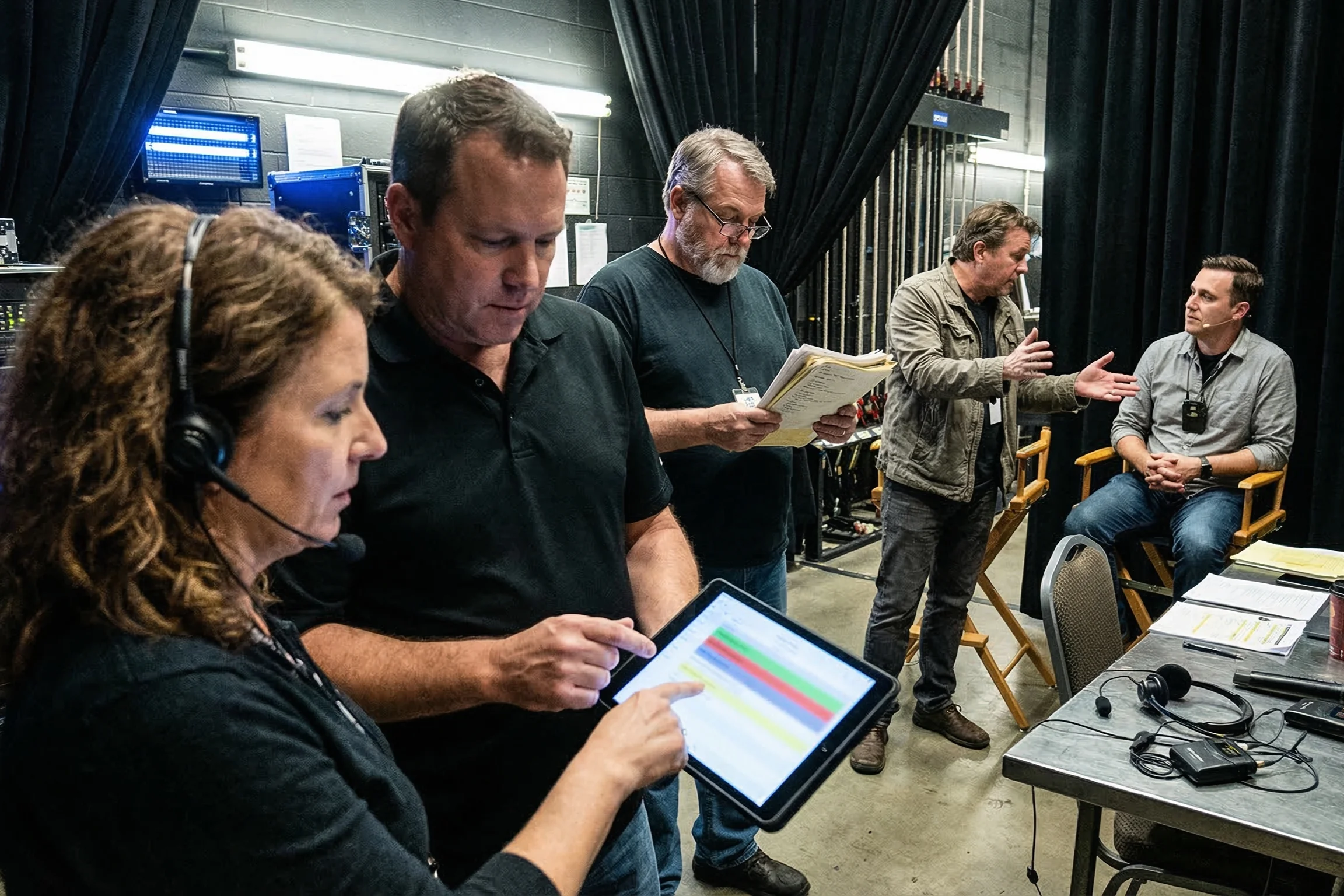

Graduation arrivals move differently from ordinary event arrivals because families rarely come in simple single-file streams. They arrive with grandparents, siblings, children, flowers, cameras, mobile tickets, accessibility needs, and the emotional pressure of making it inside before the ceremony begins. At Lincoln Center, that makes guest services visible from the first entrance interaction.
The challenge is not only that many people arrive at once. It is that graduation families pause, regroup, ask questions, take photos, search for the right door, and look for reassurance at the same time. Strong entry management helps families feel guided before small arrival issues turn into visible entrance congestion.
CEO Excerpt
“Graduation staffing has to account for emotion, timing, and family movement at the same time. Families are not just entering a venue. They are trying to reach a once-in-a-lifetime moment without confusion or stress. Good staffing helps the ceremony feel organized before guests ever sit down.”- Daniel Meursing, CEO, Eventstaff
Why Graduation Entrances Crowd So Quickly
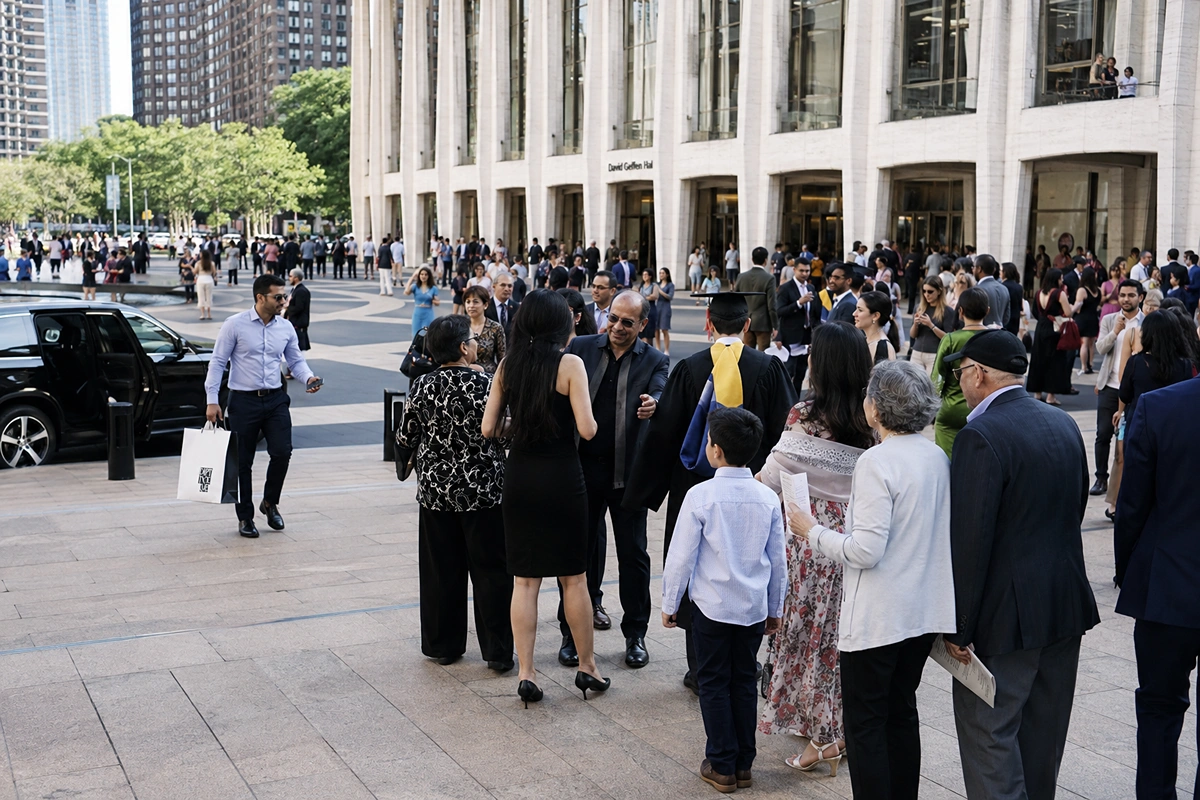
Graduation entrances crowd quickly because family groups move in layers. One person may have the tickets, another may be arriving from a rideshare, grandparents may need a slower route, and siblings may be trying to meet everyone outside before walking in together. Those small delays are normal for commencements, but they can make an entrance feel overloaded when hundreds of families arrive within the same ceremony window.
The pressure is sharper in New York because graduation guests are also moving through an active pedestrian environment. NYC DOT’s Pedestrian Mobility Plan explains how New Yorkers depend on sidewalks and street crossings as part of the city’s connected movement network . Around a major venue, that means graduation arrivals have to fit into sidewalk movement that may already include residents, tourists, students, rideshare drop-offs, and people passing through the area.
Families also behave differently from conference or stadium guests. They stop for photos because the moment matters, they wait for relatives because entering separately feels wrong, and they ask more questions because no one wants to miss the procession or the graduate’s name. A few paused groups near the entrance can make the entire arrival path feel slower than it actually is.
That is why graduation staffing has to begin before the door. If staff are only positioned at the final ticket checkpoint, the most important questions may already be blocking the line. Families need direction earlier, when they are still deciding where to stand, which door to use, and how to keep the group together.
How Guest Services Shape the First Family Impression
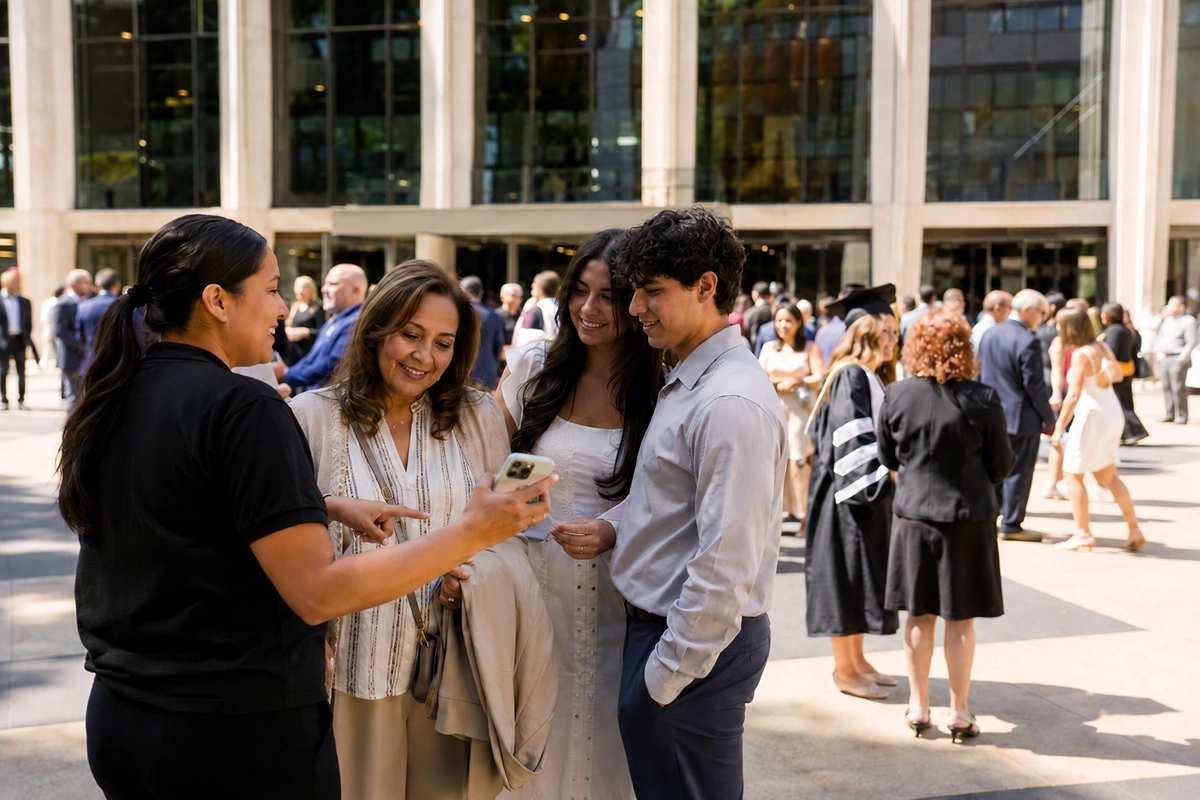
For commencements and graduations, guest services begins before anyone reaches a seat. It starts when a parent asks where to enter, when an older relative needs a clear route, when a child needs to stay with the group, or when a family is unsure whether their mobile ticket is ready. These interactions shape how prepared the event feels before the ceremony begins.
Strong guest services gives families a human point of contact at the exact moment they need clarity. Staff can greet guests, answer directional questions, help manage entrance lines, identify accessibility needs, and guide families toward the correct door. The tone matters because graduation guests are often proud, emotional, and time-sensitive.
Good staffing also protects the school, institution, or organizer from being pulled into every front-door issue. Without enough support, internal teams may get stuck answering ticket questions, pointing people toward entrances, helping separated family members, or calming guests who are worried about timing. Those teams should be focused on graduates, faculty, speakers, VIP guests, and ceremony operations.
At Lincoln Center, the first family impression should feel calm and respectful. Guests may have traveled across the city or across the country for this moment, and they expect the entrance experience to match the importance of the day. When staff provide clear help early, families enter with more confidence and less stress.

Where Entry Management Starts to Break
Entry management starts to break when too many guests need to be collected at the same entrance point. Graduation guests are not simply waiting to enter. They are solving family logistics, checking phones, confirming tickets, helping older relatives, and trying to stay together before the ceremony begins.
Families stop near the doors.
Graduation guests often wait just outside the entrance until the full family is together. One person may still be parking, another may be coming from the subway, and someone else may have the tickets. If staff do not redirect that pause away from the entry lane, the doorway starts filling before the official line is even backed up.
Ticket questions slow the easy entries.
One unclear mobile ticket, wrong entrance, missing QR code, or confused guest can hold up everyone behind that group. Trained staff support entry management by separating quick-moving families from those who need help. That keeps the main line moving while giving guests with questions the attention they need.
Accessibility needs appear during the busiest window.
Graduations often include older relatives, guests using mobility aids, and families who need a calmer route into the venue. MTA’s Access-A-Ride information is a useful reminder that accessible travel planning is part of how many New Yorkers and visitors reach important public events. Staff who recognize those needs early can help families avoid the heaviest entrance pressure.
When these issues overlap, the entrance becomes the emotional pressure point of the ceremony. No family wants to feel rushed, lost, or unsure on graduation day. Strong staffing helps keep the experience organized without making guests feel processed or ignored.
Why Lincoln Center Graduations Need Local Entry Planning
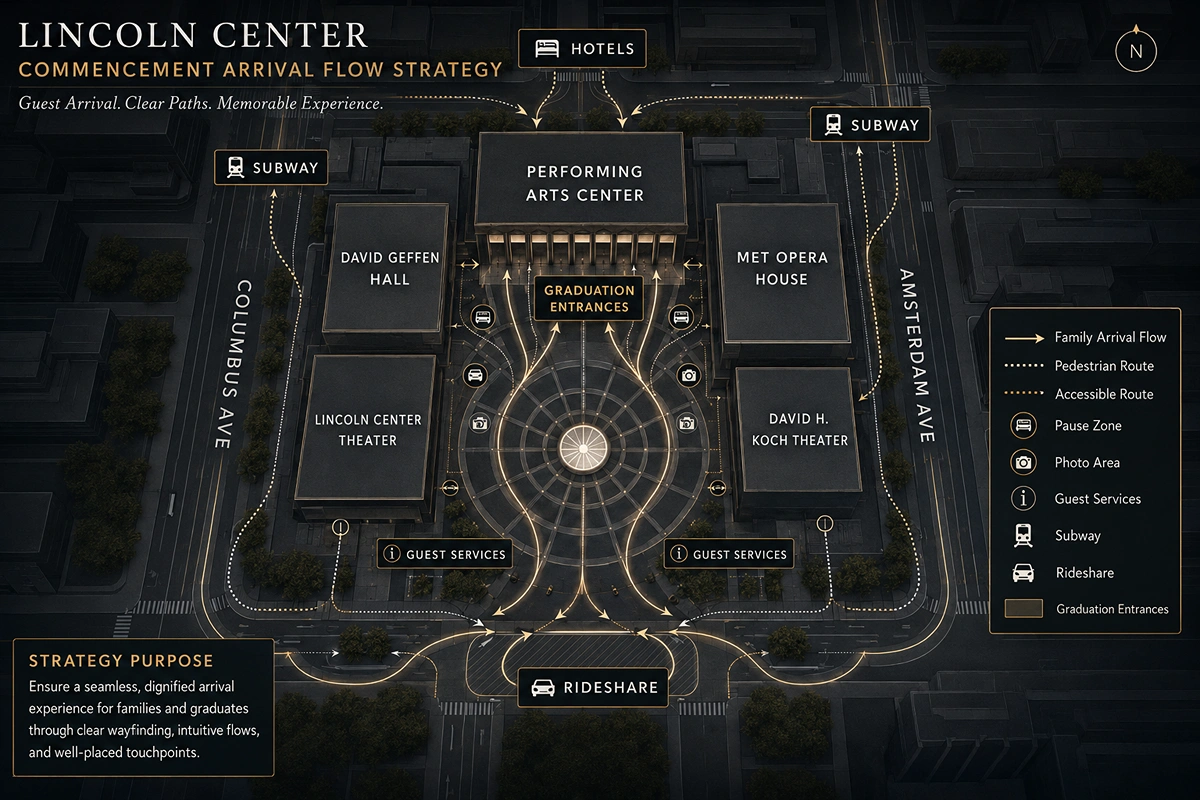
Lincoln Center graduations need local planning because the campus is both iconic and active. Guests may approach from Columbus Avenue, Amsterdam Avenue, West 62nd Street, West 65th Street, subway stops, rideshare areas, nearby parking, hotels, or restaurants. Some may know the campus well, while others may be visiting Lincoln Center for the first time because of the graduation.
The campus also includes multiple venues, entrances, plazas, and gathering points. Lincoln Center’s accessibility information notes the campus location on Manhattan’s Upper West Side between West 62nd and 65th Streets and Columbus and Amsterdam Avenues, with accessible entrances shown on its campus map. For graduation organizers, that means families may arrive from different directions and still expect fast confirmation once they reach the entrance area.
The local setting encourages natural pauses. Families want photos, graduates may meet relatives outside, and guests often stop to orient themselves before moving to the correct door. Those pauses are part of the graduation experience, but they need to be guided so they do not block entrance lines, accessible movement, or family groups still trying to enter.
A strong staffing plan should account for where families arrive, where they pause, where they ask questions, and where they need to be redirected. At Lincoln Center, guest services should be placed before the pressure point, not only at the final scan. That gives guests answers before confusion reaches the doorway.
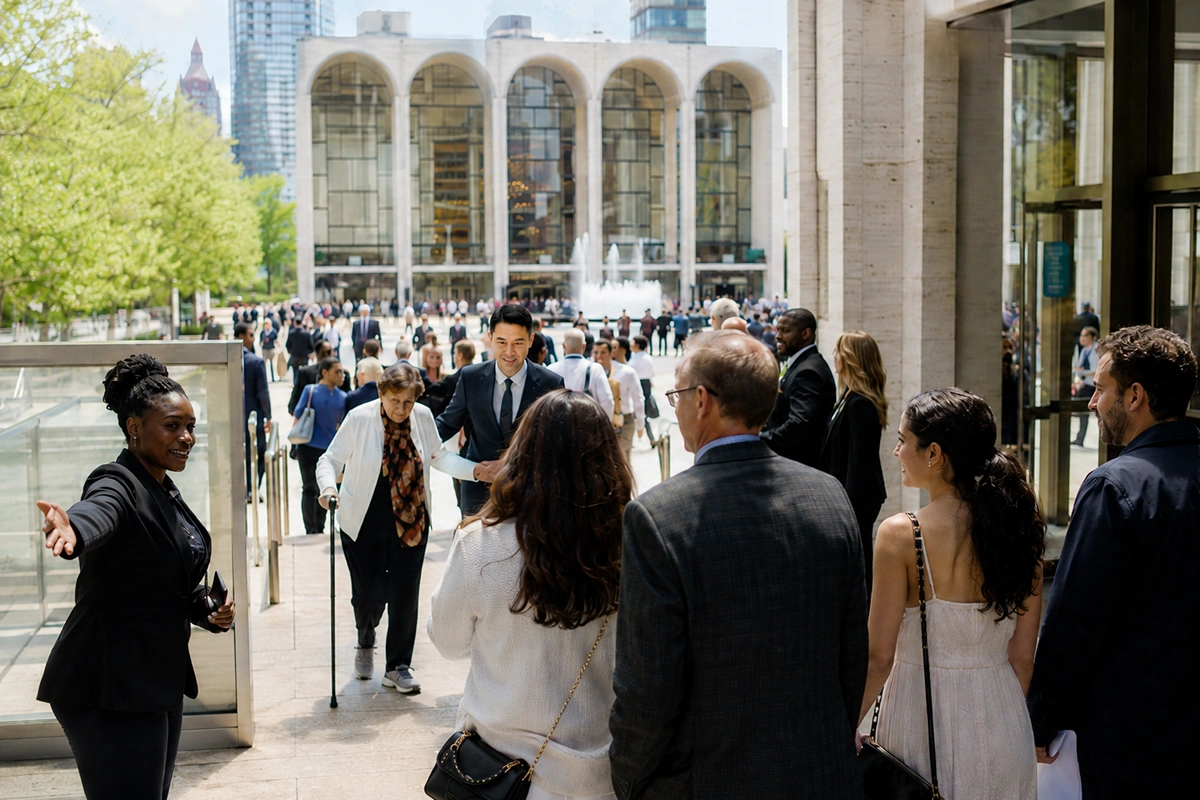
How Eventstaff Supports Graduation Arrival Flow
At Eventstaff, we help commencement and graduation organizers manage the arrival experience with trained event staff who understand how families move on ceremony days. Our staff can support guest services, entrance guidance, line direction, accessibility routing, ticket-question triage, VIP or faculty guest movement, and front-of-house coordination. The goal is to make the arrival feel clear, respectful, and prepared.
Our graduation event staff can be positioned before the entrance, along approach paths, near accessible routes, at ticket-question points, and around family pause areas. They help guests understand which line to use, where to wait, how to keep movement clear, and when to move toward the door. That improves entry management while keeping the experience calm for families.
We also help organizers protect their internal teams. School staff, ceremony coordinators, and production leads should not spend the busiest arrival window solving every guest question near the door. With trained staff managing arrival support, those teams can stay focused on graduates, faculty, speakers, timing, and the ceremony itself.
The value is practical and emotional. Families feel guided, older guests receive clearer support, entrance lines move with less friction, and the ceremony begins with more control. For a Lincoln Center graduation, that first impression matters because the day already carries high expectations before anyone steps inside.
Bottom Line
When graduation families flood Lincoln Center entrances at once, guest services becomes central to the ceremony experience. Families need clear direction, patient support, accessible routing, and calm answers before they reach the door. With trained graduation event staff, Eventstaff helps organizers improve entry management, protect entrance flow, and give families the confident arrival experience the day deserves.
Ready to elevate your next event?
Join thousands of event planners who trust EventStaff.com for reliable, professional staffing solutions.
Trusted by event professionals nationwide
1k+
Events Staffed
2 million+
Guests Served
97%
Positive reviews