

EDC is approaching fast, with EDC Las Vegas scheduled for May 15 to May 17, 2026, and that timing matters in a city that already runs at a high event tempo. Las Vegas welcomed 38.5 million visitors in 2025, Harry Reid International Airport handled nearly 55 million passengers, and the Las Vegas Convention Center is projecting a post-pandemic high of 1.23 million attendees across 48 conventions in 2026. In other words, this is a market already shaped by dense arrivals, high guest expectations, and nonstop event movement. That is why EDC staffing matters as a topic right now. It is not only about one festival weekend. It is about what large events in Las Vegas require when entry, flow, service, and overnight continuity all start carrying pressure at the same time.
CEO Excerpt
“When a festival date gets close in Las Vegas, staffing stops being a background decision. The biggest strain always shows up first at the busiest touchpoints. Entry, movement, service, and reset all have to work together. That is where experienced event teams make the biggest difference.” - CEO, Eventstaff
.webp)
Why Las Vegas Makes EDC Staffing a Real Market Topic
Las Vegas gives this topic more relevance than a standard festival market would. The city is not built around occasional event spikes. It is built around continuous guest movement, destination attendance, and high-pressure operating conditions across conventions, nightlife, live entertainment, and major public events.
- Las Vegas is a volume market before a major festival even arrives.
By the time EDC comes onto the calendar, the city is already managing constant travel flow, convention traffic, hospitality demand, and large-format event activity. That makes festival staffing here a market conversation, not just a one-weekend logistics question. - Guest expectations in Las Vegas are higher than in many other event cities.
People arrive expecting fast service, visible organization, and a polished environment. When a festival feels slow at entry, crowded in movement zones, or strained at service points, guests notice it quickly because the city trains them to expect smoother execution. - That is why EDC staffing works as a broader Vegas lens.
The topic gives planners, venues, and brands a timely way to think about where large events in Las Vegas typically feel strain first. The value is not in retelling EDC. The value is in understanding what EDC-scale pressure reveals about how this market behaves.
Why the Timing Matters Right Now
The timing is part of the article’s commercial value. EDC is close enough that the conversation shifts from general festival planning to immediate staffing readiness.
- Approaching event dates make staffing decisions more practical and less theoretical.
Once a festival is near, planners are no longer asking what support could be useful in a perfect world. They are asking where pressure is most likely to show up first and which roles need to be in place to keep the event feeling controlled. - EDC is the kind of event that sharpens attention on pressure zones.
A festival of this scale naturally brings focus to travel flow, guest arrivals, access points, high-density walkways, concessions, and overnight reset. Even without turning this into a case study, it is clear why the event becomes a strong reference point for large-event planning in Las Vegas. - That timing matters more in Vegas because the market already runs hot.
Staffing windows tighten faster in cities where events compete for talent, guest expectations are premium, and operational gaps become visible quickly. As a result, a near-term event like EDC tends to bring broader staffing questions to the surface across the market.
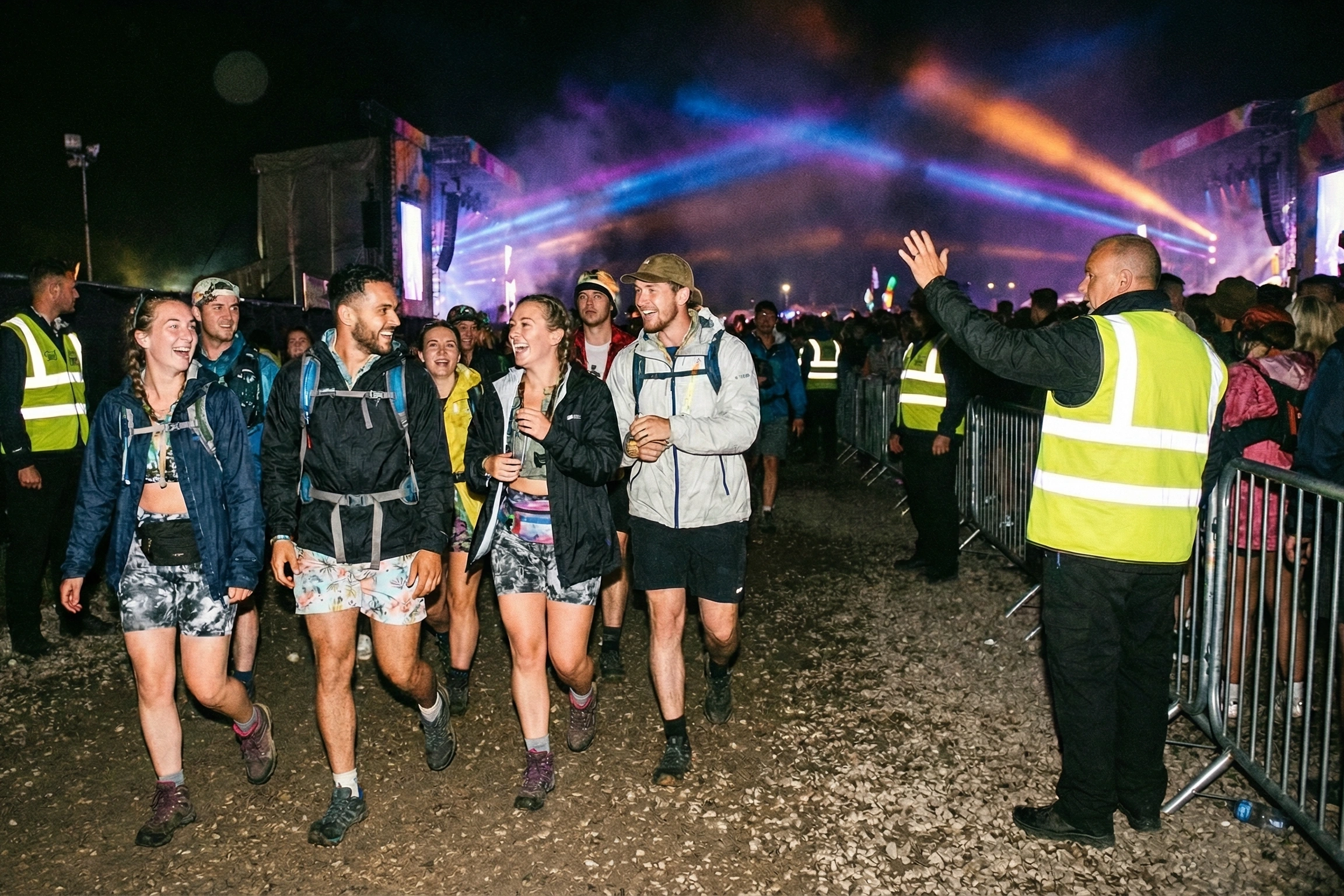
Where Large Festivals Feel Pressure First
The biggest mistake in festival planning is assuming pressure spreads evenly. It rarely does. Large events usually start feeling strain where guests pause, wait, redirect, queue, or look for clarity.
Entry lanes and ticket scanners
Entry is one of the first places where large festivals either feel controlled or start feeling strained. That is why ticket scanners matter so much in the discussion around EDC staffing.
- Ticket scanners help protect pace, not just access.
At scale, scanning is not merely about checking whether a pass is valid. It influences how quickly lines move, how confident guests feel at arrival, and whether the event starts with momentum or hesitation. - Slow entry creates downstream pressure almost immediately.
When guests stack up outside the gate, that delay does not stay isolated. It compresses arrivals, shifts crowd timing inside the venue, and can create bigger service and movement surges later in the guest journey. - This is where front-of-house staffing becomes more layered.
Ticket checkers, check-in staff, greeters, and ushers all support different parts of the same pressure point. In Las Vegas, where guests often arrive from hotels, shuttles, rideshare zones, and parking routes at different times and with different expectations, that layered support matters more.
Movement corridors and crowd control marshals
Once guests are inside, pressure often moves from access to circulation. This is where crowd control marshals become one of the most useful keywords and one of the most commercially relevant service concepts.
- Crowd pressure usually builds where movement becomes less obvious.
Guests slow down at crossover points, high-density walkways, concession-adjacent areas, and places where traffic flows in more than one direction. These are the zones where small hesitation can start affecting the whole feel of a site. - Crowd control marshals support flow before visible disruption starts.
Their value is not only in reacting after congestion appears. Their real value is in helping people move clearly, queue cleanly, and understand where to go before a dense area starts looking uncertain or unmanaged. - This matters in Las Vegas because event optics matter here.
Guests notice when movement feels intuitive and calm, and they notice when it does not. In a market known for high guest expectations, crowd-flow support influences perceived quality as much as it influences operations.
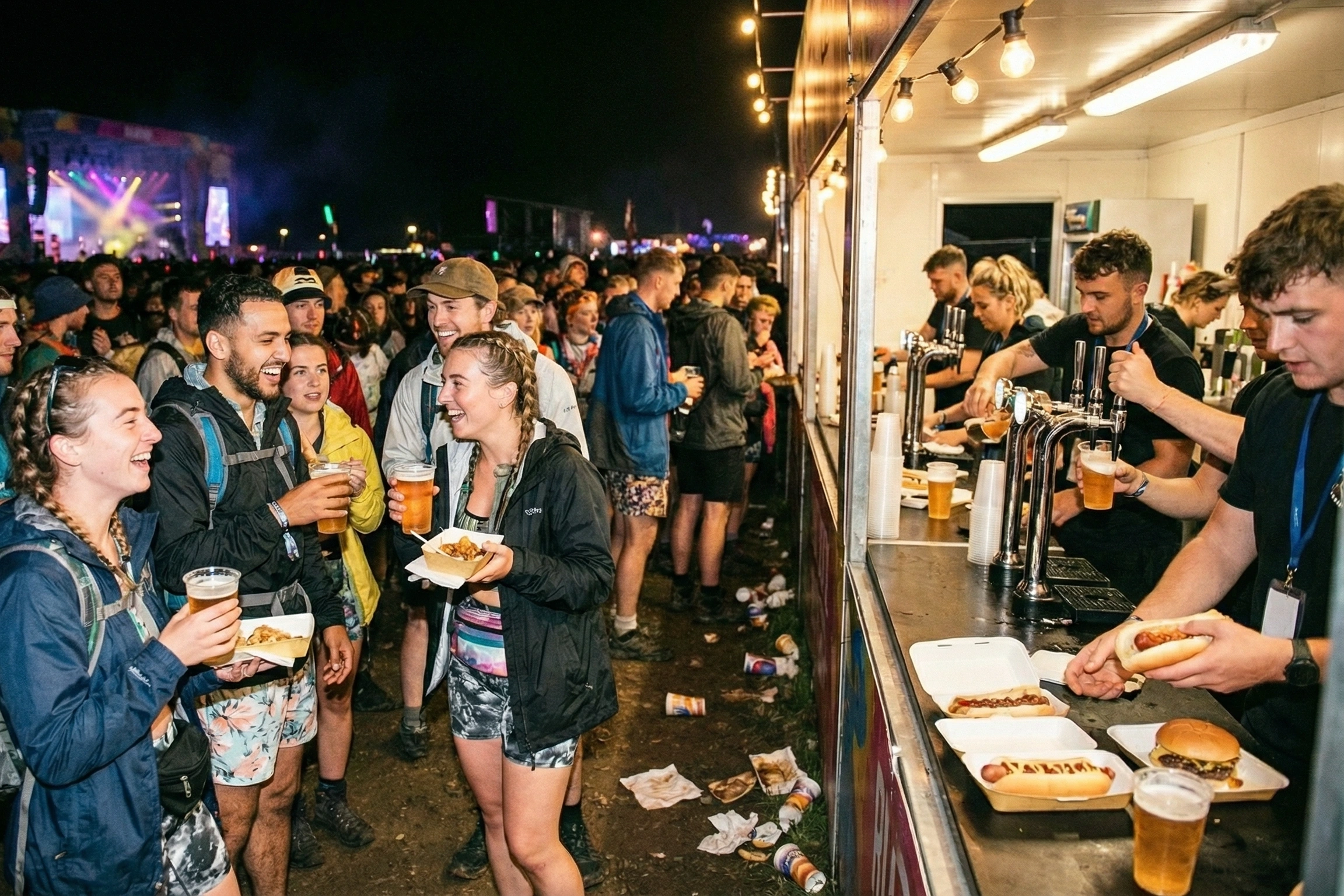
Service zones and high-volume concession staff
Food and beverage pressure is one of the fastest ways for a large event to start feeling operationally heavy. That is why high-volume concession staff belongs naturally in this article.
- Concession lines affect more than food service.
They also affect guest patience, walkway space, nearby circulation, and how efficiently the event appears to be running. If service points start backing up, the consequences spread outward into other parts of the site. - High-volume concession staff protect both speed and perception.
At busy festivals, fast-moving service helps reduce visible bottlenecks while also keeping guests from feeling like too much of the event is spent waiting. That matters even more in Las Vegas, where the market is shaped by choice, convenience, and service visibility. - This is where service roles become operational roles.
Waitstaff, event servers, bussers, and bar-support teams do more than serve. In high-volume environments, they help preserve order around one of the most predictable pressure points in the guest journey.
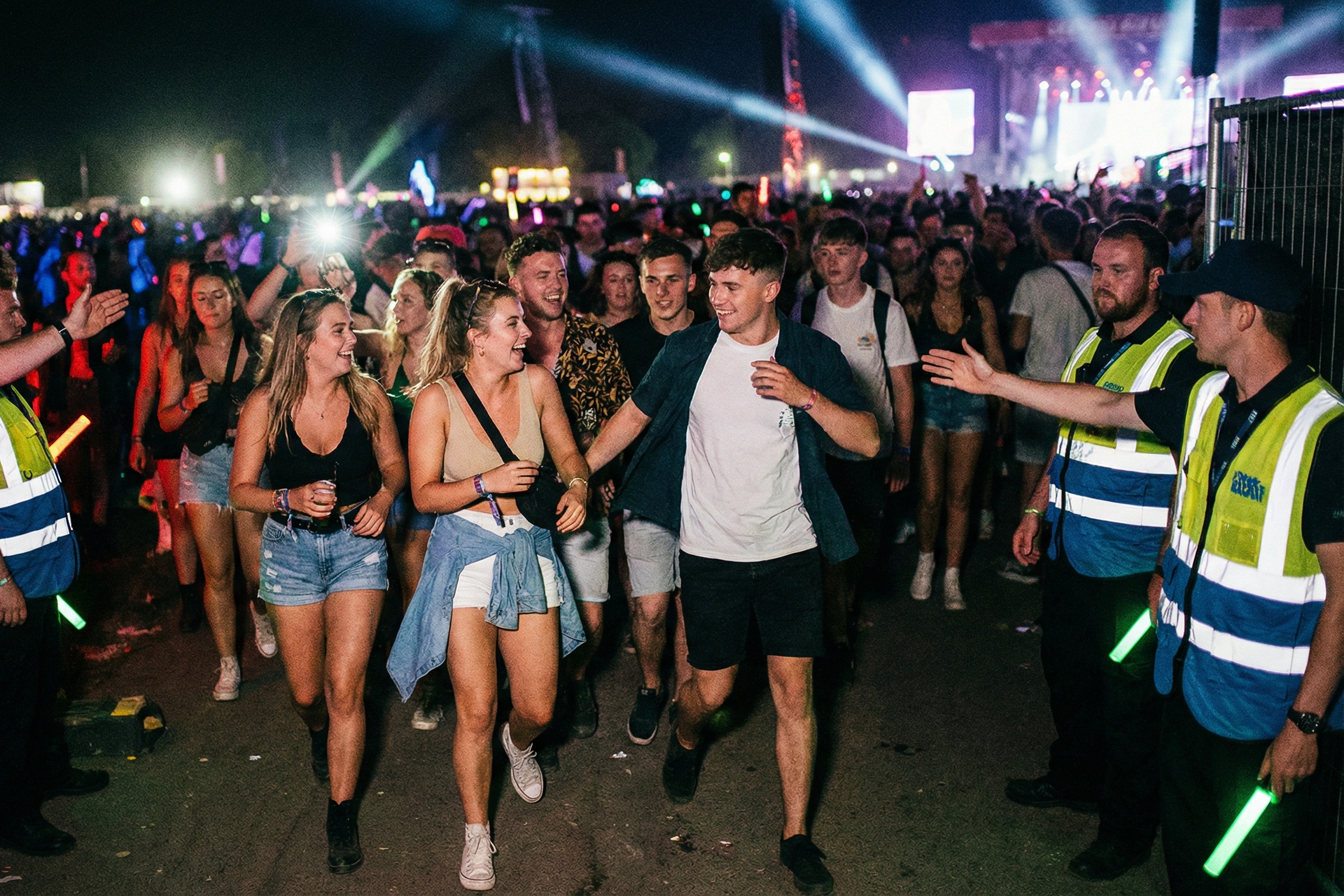
Visible control and large-scale security teams
The keyword large-scale security teams should be used carefully here, but it still has a place in the article when framed properly.
- Large events need visible structure, not just back-end planning.
Guests respond to what they can see. If access points, lines, and shared spaces feel organized, the event feels calmer. If those zones feel uncertain, guests interpret that quickly even if the event plan looks fine on paper. - Security sits inside a wider support environment.
Security may own certain responsibilities, but the broader guest-facing system also includes line guidance, directional clarity, admissions support, and staff presence that makes spaces easier to read. That is where event staffing and wider site control naturally connect. - This framing works better for Event Staff.
The point is not to present the company as a security vendor. The point is to show that at major festivals, visible order often depends on multiple staffing layers working together across the same guest-facing zones.
Overnight reset and festival cleanup crews
The keyword festival cleanup crews works best when tied to continuity rather than simple cleanup.
- Multi-day festivals have to reopen strong, not just close each night.
Guests judge the next day’s experience based on how ready the site feels when they arrive. If reset has been weak, the event can start feeling tired much earlier than it should. - Cleanup affects presentation, movement, and readiness at once.
Overnight work shapes how clear circulation areas feel, how quickly service points come back online, and whether the venue looks prepared for another full day of guest volume. - This matters more in Las Vegas because polish is part of the market expectation.
In a city where presentation and pace influence how quality is perceived, overnight continuity becomes part of the guest experience rather than a hidden back-of-house task.
How Eventstaff Fits This Kind of Festival Environment
Eventstaff understands how pressure behaves at large festivals and large events.
- Event Staff fits best when the plan is built around touchpoints, not vague coverage.
Large events need support where guests first experience friction. That means entry, routing, service zones, and high-density traffic areas need staffing that feels purposeful rather than generic. - The value comes from combining service types without making the event feel cluttered.
Entry support, guest guidance, hospitality staffing, concession staffing, and continuity support all serve different functions. The goal is to make them work together so the event feels organized, not overrun with personnel. - That is why EDC staffing is a useful planning lens.
It highlights the reality that major festivals do not rely on one role category. They rely on multiple support layers that protect flow, service speed, guest confidence, and site continuity at the same time.
What Las Vegas Planners Can Take From This
For planners, venues, promoters, and brands in this market, the main takeaway is straightforward. Large events in Las Vegas should be staffed around pressure zones, not broad headcount assumptions.
- Start with where guests are most likely to experience friction.
Entry, crossover corridors, busy service points, and overnight reset periods tend to affect the event earliest. Staffing that ignores those pressure zones often looks sufficient on paper but weak in practice. - Think about movement and service as linked systems.
A slow concession zone can influence walkway flow. A weak entry process can compress guest arrival timing. A poor overnight reset can affect how prepared the event feels the next day. These are not separate issues at large festivals. - Use staffing to protect visible confidence.
In Las Vegas especially, the event has to feel controlled in public. Guests do not see org charts or internal plans. They see whether arrival makes sense, whether movement feels intuitive, and whether service feels like it can keep up.

Final Words
As EDC gets closer, EDC staffing becomes a timely way to talk about a bigger Las Vegas reality. Large festivals rarely feel pressure everywhere at once. They feel it first at entry, in movement corridors, around concession zones, at visible control points, and during overnight reset.
- That is what makes this a useful Vegas-market conversation.
The city is already built around volume, destination attendance, and high guest expectations. A major approaching festival simply makes those dynamics easier to see. - It also shows why staffing has to be layered.
Ticket scanners, crowd control marshals, high-volume concession staff, visible site support, and festival cleanup crews all influence how stable the event feels once guest volume rises. - For Event Staff, that is the real angle.
The opportunity is not to tell the story of one event. It is to show how large festivals in Las Vegas hold together when staffing is built around real pressure points instead of generic assumptions.
Ready to elevate your next event?
Join thousands of event planners who trust EventStaff.com for reliable, professional staffing solutions.
Trusted by event professionals nationwide
1k+
Events Staffed
2 million+
Guests Served
97%
Positive reviews