
CEO Excerpt
"In Las Vegas, the sheer scale of the Strip builds friction into every arrival. We design staffing models that account for that reality to keep the timeline stable. To truly secure a Vegas event, you must anticipate a 15% drop-off before doors even open." — CEO Event Staff
A backup staffing plan isn’t optional in Las Vegas; it’s operational insurance.
More than most cities, Las Vegas event staffing is exposed to compounding risk no-shows, access delays, credential bottlenecks, and Strip congestion that stack within minutes. On the Strip, a single staffing gap doesn’t stay isolated. It turns into a guest-facing failure fast.
For high-visibility events, a backup staffing plan in Las Vegas determines whether the disruption stays invisible or becomes public.
Backup staffing plan decisions matter more in Las Vegas than in almost any other event market. The city’s volume, logistics friction, and schedule volatility mean one missed call time can cascade into stalled check-ins, thinned demos, and visible guest disruption within minutes. Staff Vegas like a normal city, and you won’t notice the mistake until guests do.
This matters most for planners and operations leads running high-visibility events where a ten-minute staffing gap becomes a guest-facing problem.
I’ve seen this pattern repeat:
- One person misses the call time
- The lead starts floating
- Check-in slows, demos thin out
- The client starts asking questions you don’t want yet
At that point, you’re not solving staffing. You’re managing optics.
Executive Summary
Las Vegas event operations require a robust backup staffing plan due to unique logistical friction, high-volume convention surges, and multi-venue complexities. This guide outlines why standard staffing models fail on the Strip and how to build a recovery-focused roster that protects guest experience when chaos hits.
Vegas Isn’t a Normal Event Market
.webp)
Backup staffing plan logic breaks when planners assume Vegas behaves like LA, Chicago, or Dallas. It doesn’t. Vegas stacks pressure from every angle at once.
Here’s what’s actually happening on the ground:
- Load-ins start earlier than expected
- Activations run longer than scheduled
- Staff walk farther just to get to their position
- Energy burns before guests even arrive
Operationally, Vegas staffing equals travel time + access clearance + energy management. A standard mega-resort walk from employee parking to a ballroom can eat up 25 minutes of “safe” buffer time. When one variable slips, the entire system feels it. Plan differently, and you stabilize flow before guests ever experience friction.
Convention Surges Create Citywide Staffing Pressure
During CES, NAB, or WSOP, Las Vegas event staffing demand spikes everywhere at the same time. Booths, registration desks, activations, nightlife, hospitality. Same labor pool. Same people.
What that looks like in practice:
- Staff double-book themselves
- Agencies run at full capacity
- Cancellations increase quietly, then all at once
This is where a backup staffing plan stops being insurance and becomes a control system. Teams with standby coverage keep operating. Teams without it scramble.
During peak convention weeks, Las Vegas absorbs tens of thousands of additional temporary workers across hospitality, security, and event operations. According to Las Vegas Convention and Visitors Authority (LVCVA) reporting, citywide traffic and access delays can increase by 30–40% during major convention periods, compressing arrival windows and increasing late call times.
Dropouts don’t happen at 9 a.m. when you still have options. They happen right before doors, when agencies are already redeploying their strongest people across multiple trade show staffing commitments. During peak weeks, controlled overbooking is common, shifting risk downstream to the client. Even when staffing looks solid on paper, Vegas still finds ways to break timing.
What This Looks Like in Reality
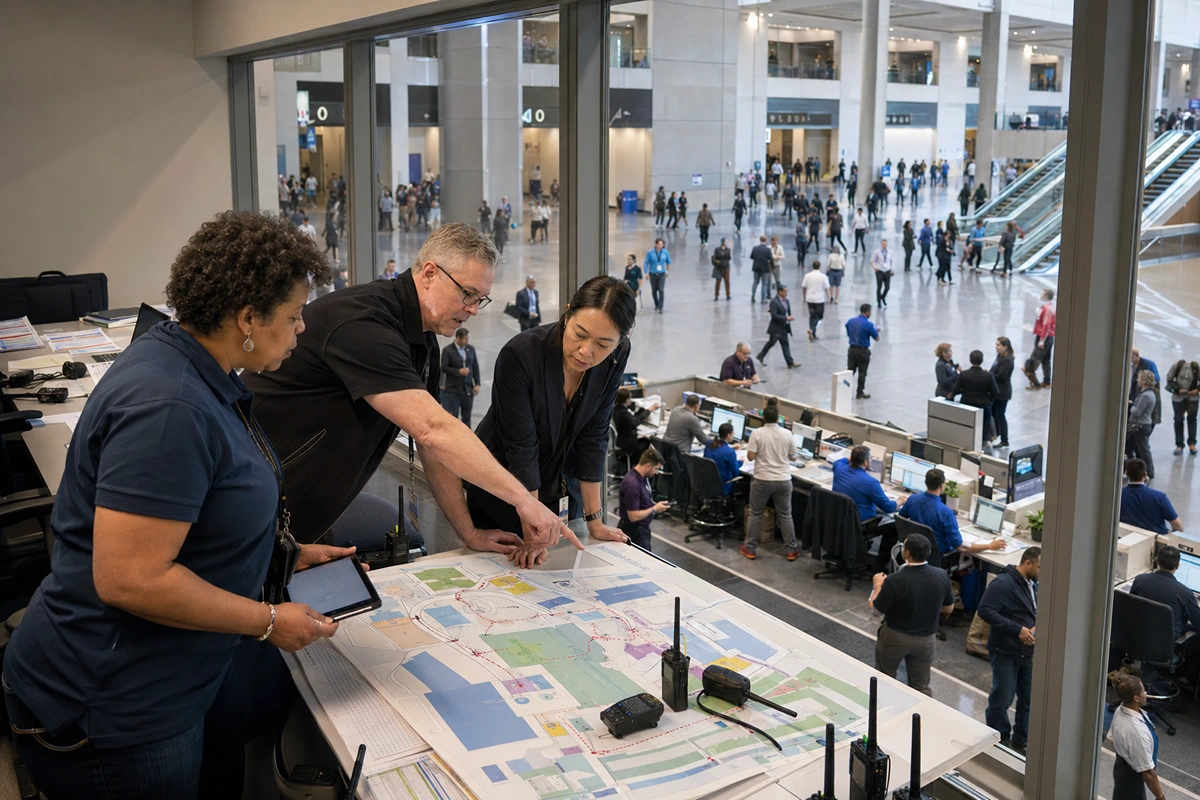
During a CES activation at a Strip property, a brand lost two ambassadors minutes before doors due to badge delays and rideshare congestion. Because standby staff were positioned within the same resort zone, replacements were deployed and briefed within 22 minutes, before guest flow peaked.
The client never noticed the gap.
Without zone-based standby coverage, the brand would have faced stalled demos and missed lead targets during its highest-traffic hour.
Strip Logistics Make “On Time” Harder Than It Sounds
People hear “15 minutes late” and shrug.
In Vegas, I treat that like a systems failure, because it never stays fifteen minutes.
A backup staffing plan matters because Strip arrival friction stacks fast:
- Long walks inside properties
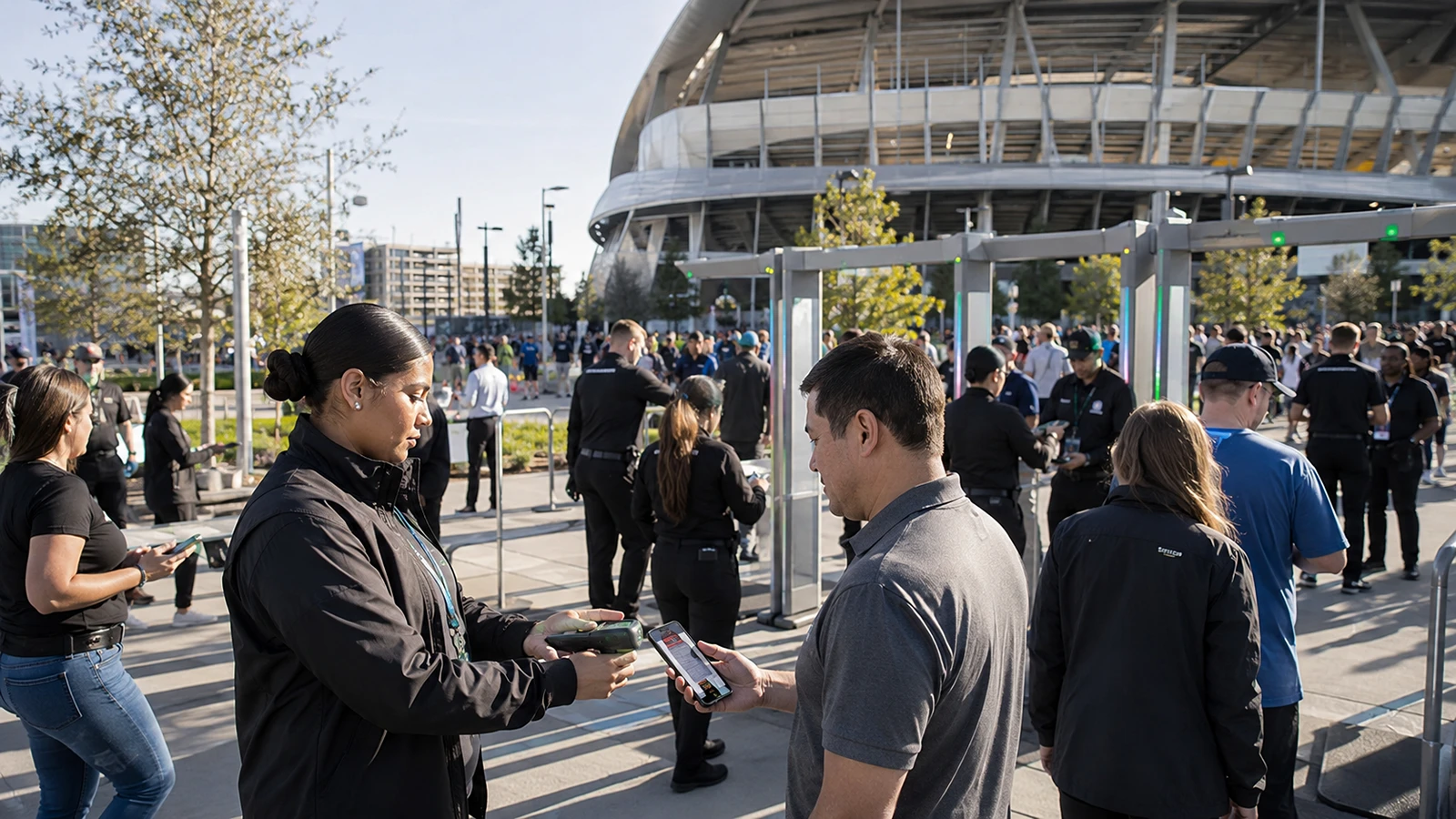
- Controlled entrances and badge checks
- Parking delays that compound
- Rideshare congestion at peak windows
In event staffing Las Vegas, arrival timing is a throughput variable, not a courtesy. One late staffer can create a full-hour bottleneck downstream. Plan for friction, and guests barely notice. Ignore it, and you start compressing roles mid-shift.
Multi-Venue Events Slow Replacement Speed
.webp)
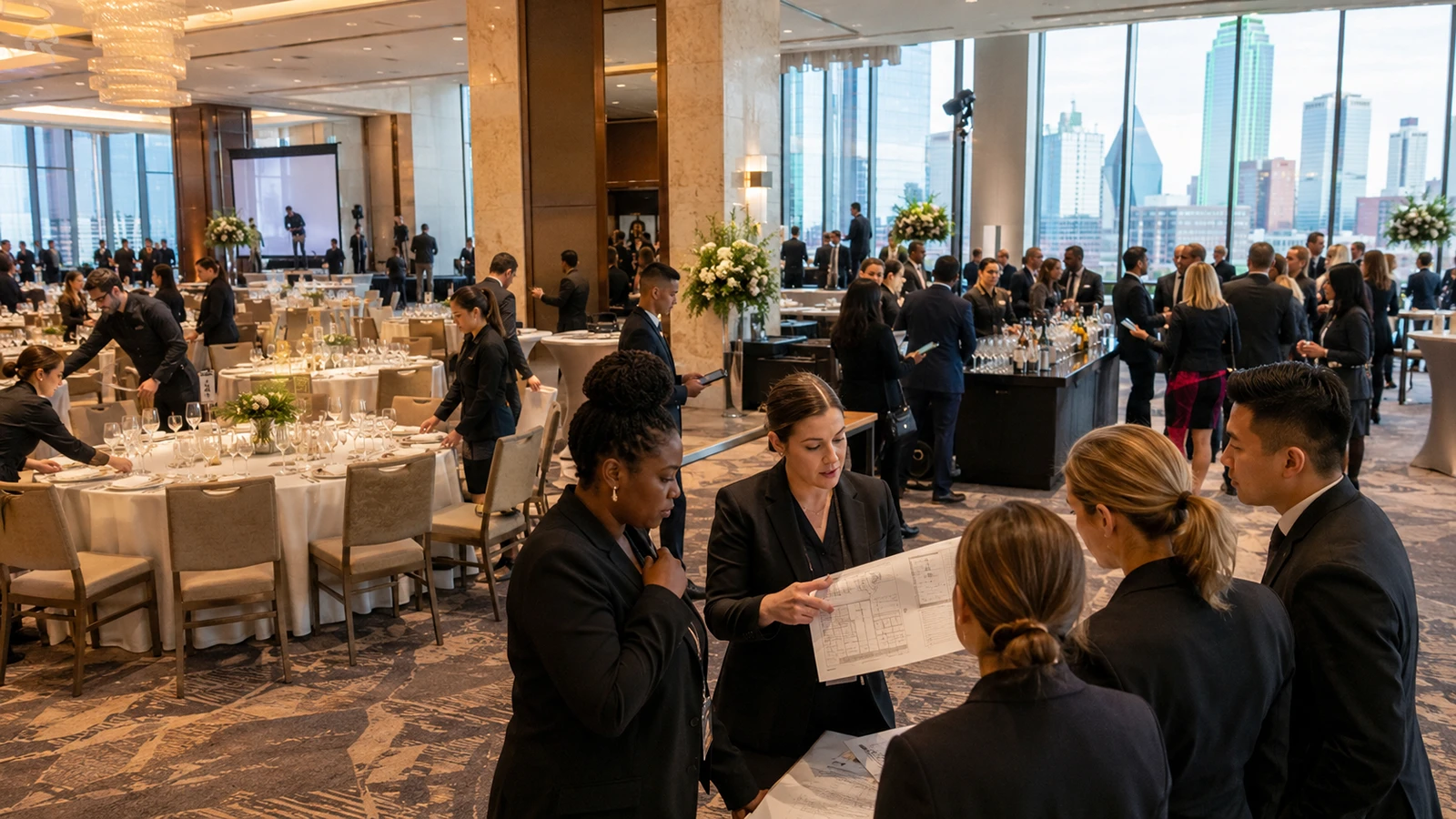
Vegas conferences rarely live in one place.
Ballroom briefing. Expo hall shift. Offsite afterparty. Sometimes all in one day.
That’s where Las Vegas staffing challenges multiply:
- Replacements need re-credentialing
- Travel time between properties explodes
- Leads lose visibility across zones
A functional backup staffing plan accounts for where backups physically sit, not just who they are. Standby staff near zones move faster. When this breaks, it’s usually the team lead absorbing the delay while the agency and venue are still aligning.
And replacements don’t just arrive late.
They arrive unbriefed.
Pointed at the wrong entrance.
Missing credentials.
That’s how you lose another twenty minutes without realizing it.
Long Shifts Increase Dropouts and Performance Decay
Vegas shifts run long. Early setups bleed into late teardowns. Night activations test stamina in ways planners underestimate. Strictly following OSHA heat guidelines reinforces that environmental fatigue is a real safety and performance factor in desert climates.
Fatigue shows up as:
- Late arrivals
- Staff disappearing mid-shift
- Low-energy engagement
- Sloppy uniform compliance
A robust Vegas no-show plan addresses both absence and performance decay. Backup coverage allows leads to rotate staff proactively, maintaining high energy levels throughout the shift. Often, the real operational risk is not the missing person but the exhausted staffer at hour nine whose engagement has faded.
Prevention Signal: If radios go quiet or leads stop reporting small wins mid-shift, fatigue is already setting in.
Last-Minute Change Is the Standard
Security rules shift. Outdoor activations react to the weather. Crowd surges force layout changes.
In Las Vegas event staffing contingency plan terms, flexibility matters as much as attendance. A backup staffing plan that supports redeployment protects the guest experience when plans change on site.
- Security perimeter changes
- Activation footprint shrink/expansion
- Unexpected VIP movement
The win here is adaptability without panic.
Replacement Speed Is Slower Than You Expect
In most cities, dispatching a replacement is straightforward. In Vegas, travel time is unpredictable and access slows everything. According to local LVCVA traffic data, navigation times within major resort corridors can double during peak convention hours.
That’s why standby event staff Las Vegas must be closer than planners expect.
The operating rule is simple.
Speed beats quantity.
A tight backup staffing plan prioritizes arrival speed over general availability. This focus on dispatch velocity ensures coverage lands exactly when the timeline demands it.
Not every event feels this pressure equally, which is where risk-based planning actually matters.
Events That Need the Strongest Backup Coverage
Not every event carries equal risk. Backup staffing plan intensity should scale by format.
High-risk formats include:
- Trade shows and expo booths (high visibility failure)
- Strip brand activations
- Conference registration staffing (bottleneck risk)
- Street teams and mobile activations
- Multi-day conventions
- Nightlife activations
These formats absorb change poorly. Planning backups here reduces cost volatility, protects flow, and ensures experiential staff elevate the consumer interaction regardless of last-minute roster changes. For a deeper dive into preventing issues, read how to prevent operational bottlenecks using professional mitigation strategies.
What a Vegas Backup Staffing Plan Must Include
If you only steal one idea from this section, take this:
Don’t plan backups as extra people.
Plan them as time-to-recovery.
A real backup staffing plan includes:
- Standby roster with role coverage
- Backup lead or floater per zone
- 15–30–60 minute replacement timeline
- Clear comms channel
- Pre-credentialed access plan
- Uniform and kit duplication
- Escalation ladder
The agency should own rosters and credentials; the client should own escalation decisions. This is how operators stay calm when pressure hits.
The Vegas 15–30–60 Recovery Rule
A backup staffing plan works when recovery is staged.
- 15 minutes: compress roles and stabilize flow
- 30 minutes: standby dispatch begins
- 60 minutes: replacement onboarded and briefed
Protect check-in, lead capture, demos, and line management first. Everything else follows.
Common Mistakes and Fast Fixes
Brands skip backups. They fail to brief standbys. They forget access credentials. They assume budget savings by cutting floaters, only to pay triple for emergency recovery.
These Las Vegas staffing challenges are preventable:
- Pre-credential backup staff
- Pre-brief on message and capture tools
- Keep a floater per zone
A smarter structure solves these challenges more effectively than simply increasing headcount.
Yes, if the timeline is tight. For high-stakes corporate events, even a 10-minute service gap disrupts the agenda. We recommend one standby for every ten active staff members. This ensures that if a server gets stuck in Strip traffic or security, your service flow remains seamless and the guest experience is never compromised by a missing pair of hands.
Final Thought
Las Vegas exposes weak staffing models faster than any other market. A disciplined backup staffing plan reduces risk, stabilizes cost, and protects guest experience when timelines collapse.If your staffing partner can’t clearly explain their standby logic, zone coverage, and 15–30–60 recovery timeline, you’re carrying unnecessary risk onto the Strip. Get a quote for Vegas staffing that includes standby coverage, zone floaters, and real replacement speed before your next activation tests your plan in front of guests.
Ready to elevate your next event?
Join thousands of event planners who trust EventStaff.com for reliable, professional staffing solutions.
Trusted by event professionals nationwide
1k+
Events Staffed
2 million+
Guests Served
97%
Positive reviews