
Introduction
Concert staff are trained personnel who assist with guest flow, wayfinding, seating guidance, and operational support at live music events, ensuring large crowds can move smoothly throughout a venue.
When the right concert event staff are in place, entry lines move faster, crowd congestion stays under control, and guests find their seats or amenities without confusion. When staffing is misaligned, even well-produced shows can feel chaotic.
With live music revenues reaching $33 billion globally in 2023 a 25% increase from the previous year professional concert operations have become essential. This guide explains how concert staff support the event timeline, which roles matter most, how concert event staff jobs differ by venue zone, and how to approach concert staff hiring without operational surprises.
This guide explains:
- what concert staff do across the live event timeline
- which concert event staff roles prevent the most operational friction
- how concert event staff jobs vary by venue zone and venue type
- practical concert staff hiring guidance and staffing ratios
- a concert staff hiring checklist that helps operations teams request the right staffing coverage from the start
Understanding how concert staff support guest flow, venue operations, and crowd movement helps venue operators, promoters, and production teams build staffing plans that keep live events running smoothly.
CEO Excerpt
A well-structured concert staffing plan helps venues and event teams maintain operational control during high-attendance live events. With trained staff supporting entry flow, guest direction, and zone-based coverage, organizers can reduce congestion, improve attendee movement, and create a smoother concert experience from doors open to final exit. - CEO Event Staff
Executive Summary
Concert staff play a critical role in managing guest flow, reducing congestion, and maintaining operational control at live events. By assigning concert event staff based on venue zones and peak pressure points, organizers can improve entry efficiency, navigation, and overall guest experience. This guide explains key concert event staff roles, staffing ratios, and common planning mistakes to avoid. With a structured concert staff hiring approach, event teams can ensure smooth execution from doors open to final exit.
Concert Staff and What They Do Before Doors Open
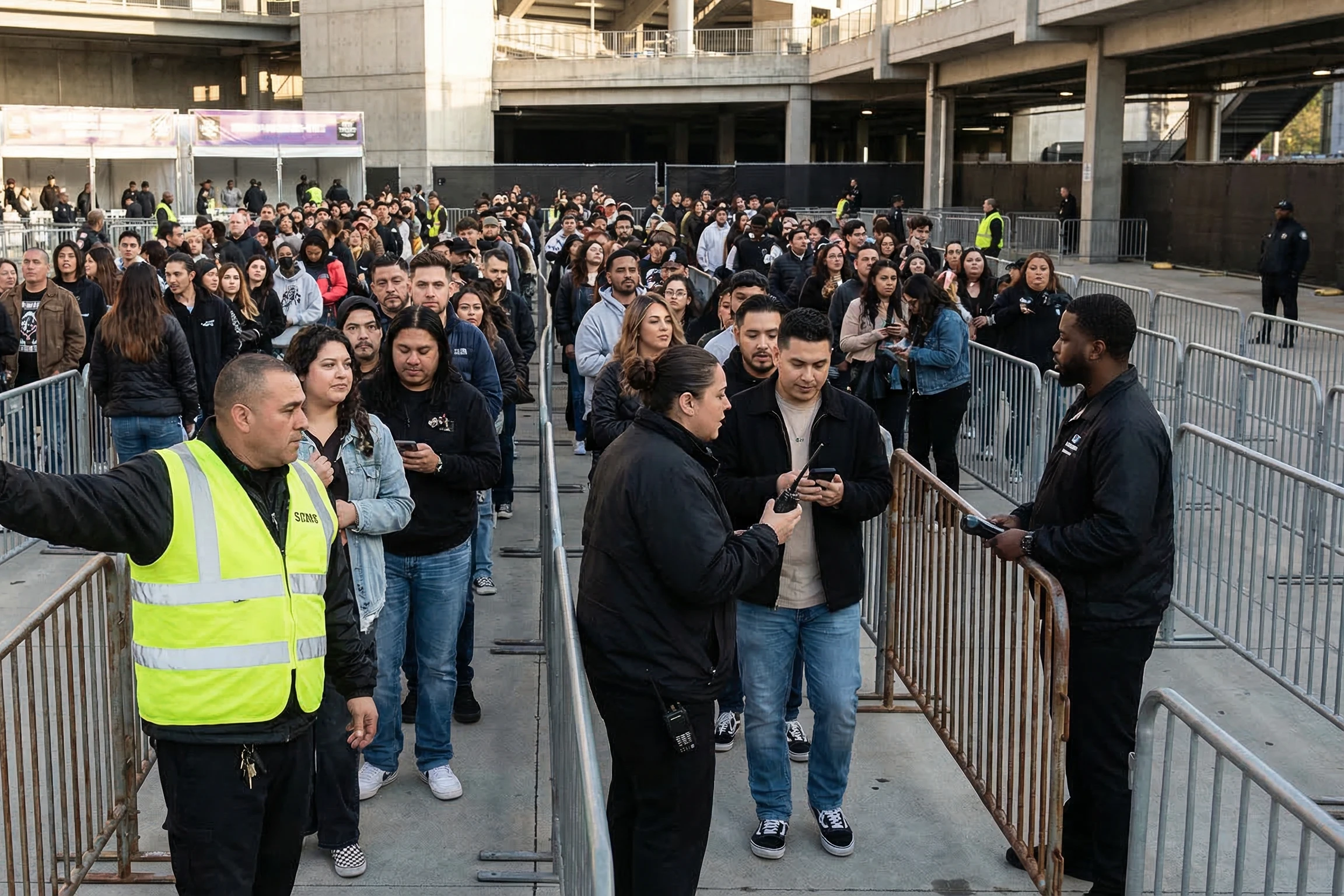
Before doors open, concert staff set the foundation for guest flow by preparing entry lanes, confirming staff positions, and eliminating confusion before crowds arrive. Most operational issues during entry begin with poor pre-door preparation.
Key responsibilities before entry include:
- Queue and lane setup support to guide guests into organized entry lines
- Wayfinding and signage checks so guests understand where to enter
- Staff check-in and credential verification before positions are assigned
- Zone assignments and briefing for each staff member
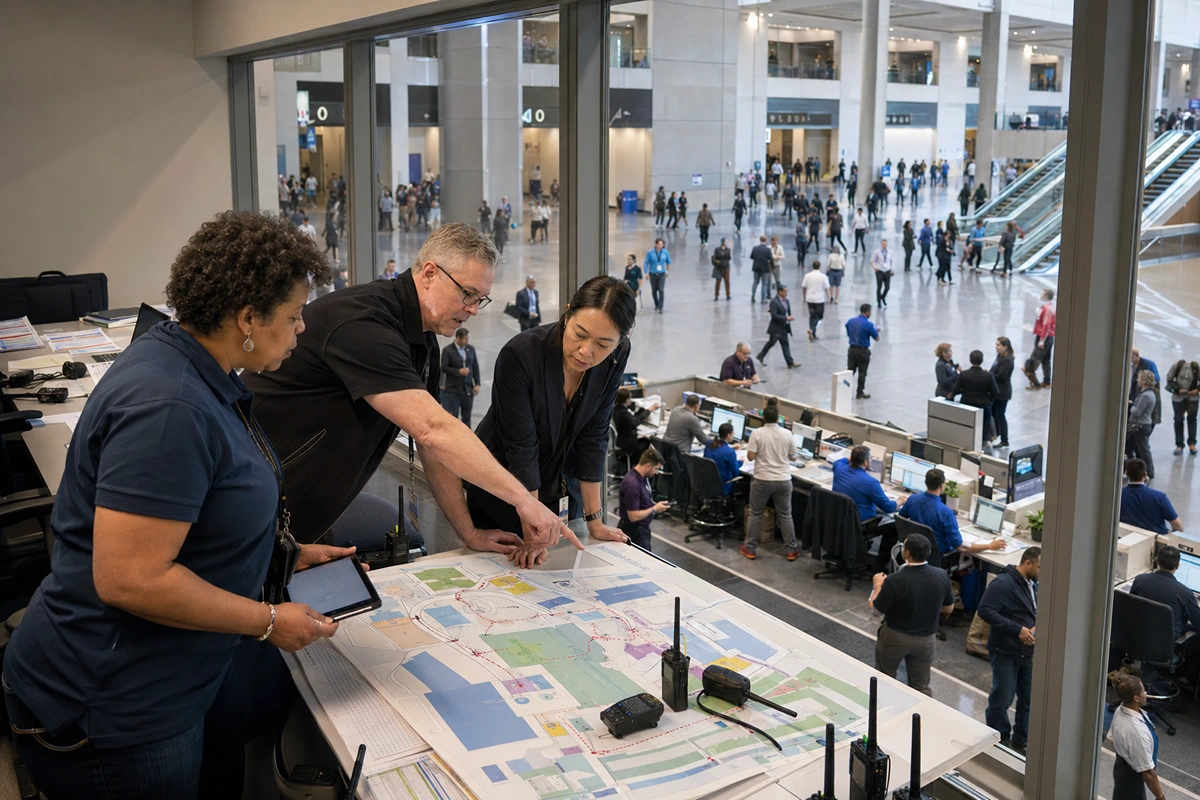
- Communication setup between zone leads and operations teams
Concert operations teams often identify "no-fail moments" during this stage, including the doors-open surge and early VIP arrivals.
Operational reality: If pre-door setup is sloppy, guest frustration starts before the show even begins. Clear lanes, trained staff positioning, and coordinated communication make entry smoother and reduce pressure on security and scanning teams.
Concert Event Staff Roles That Keep Guest Flow Stable
Concert event staff roles work best when assigned by zone, because each area of the venue experiences different types of pressure. Understanding the psychology of stadium crowd management helps operators position staff more effectively.
When staffing plans reflect these zones, teams can respond faster to congestion, guest questions, and operational issues.
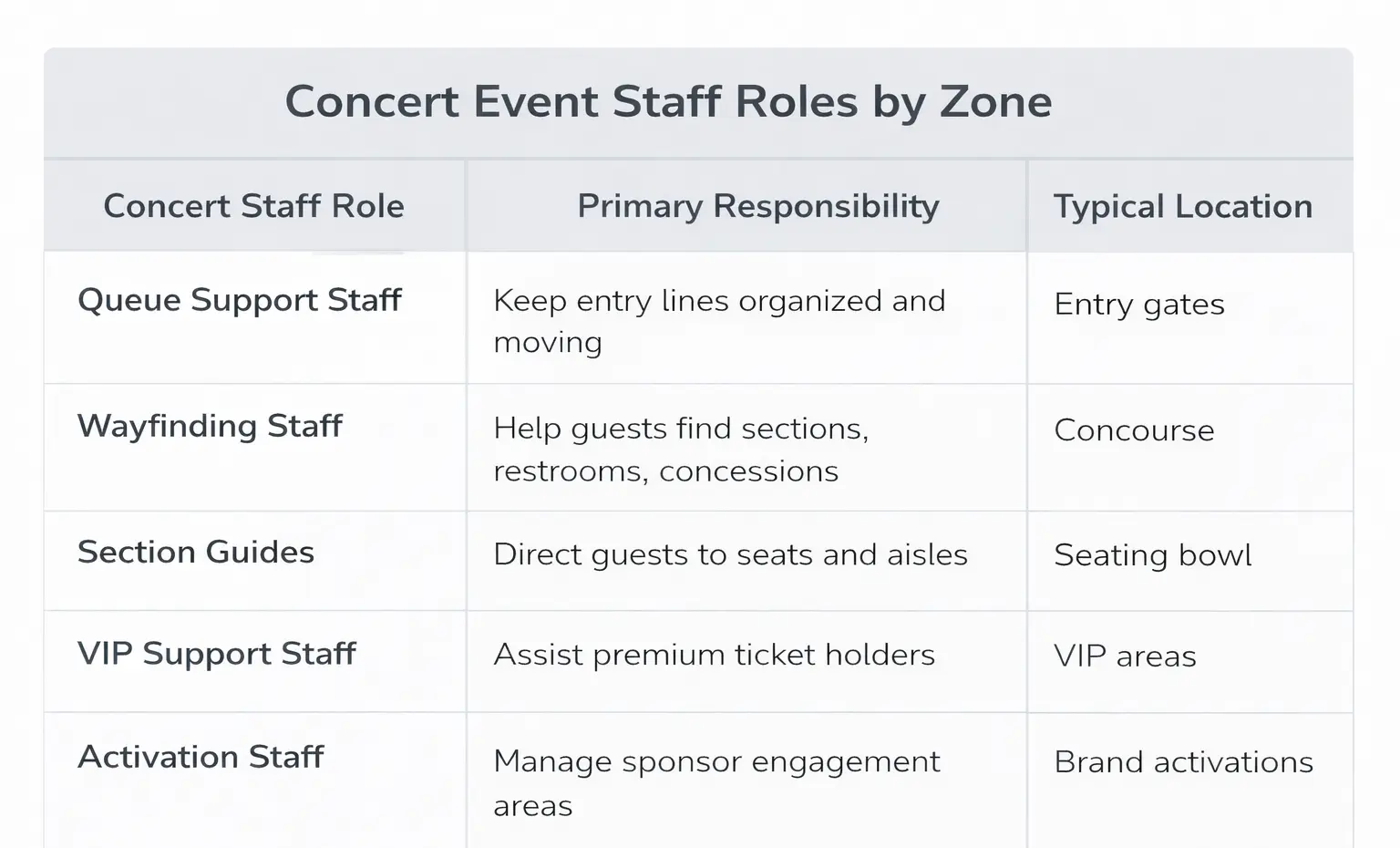
Entry and Checkpoints
- Queue pacing and line guidance
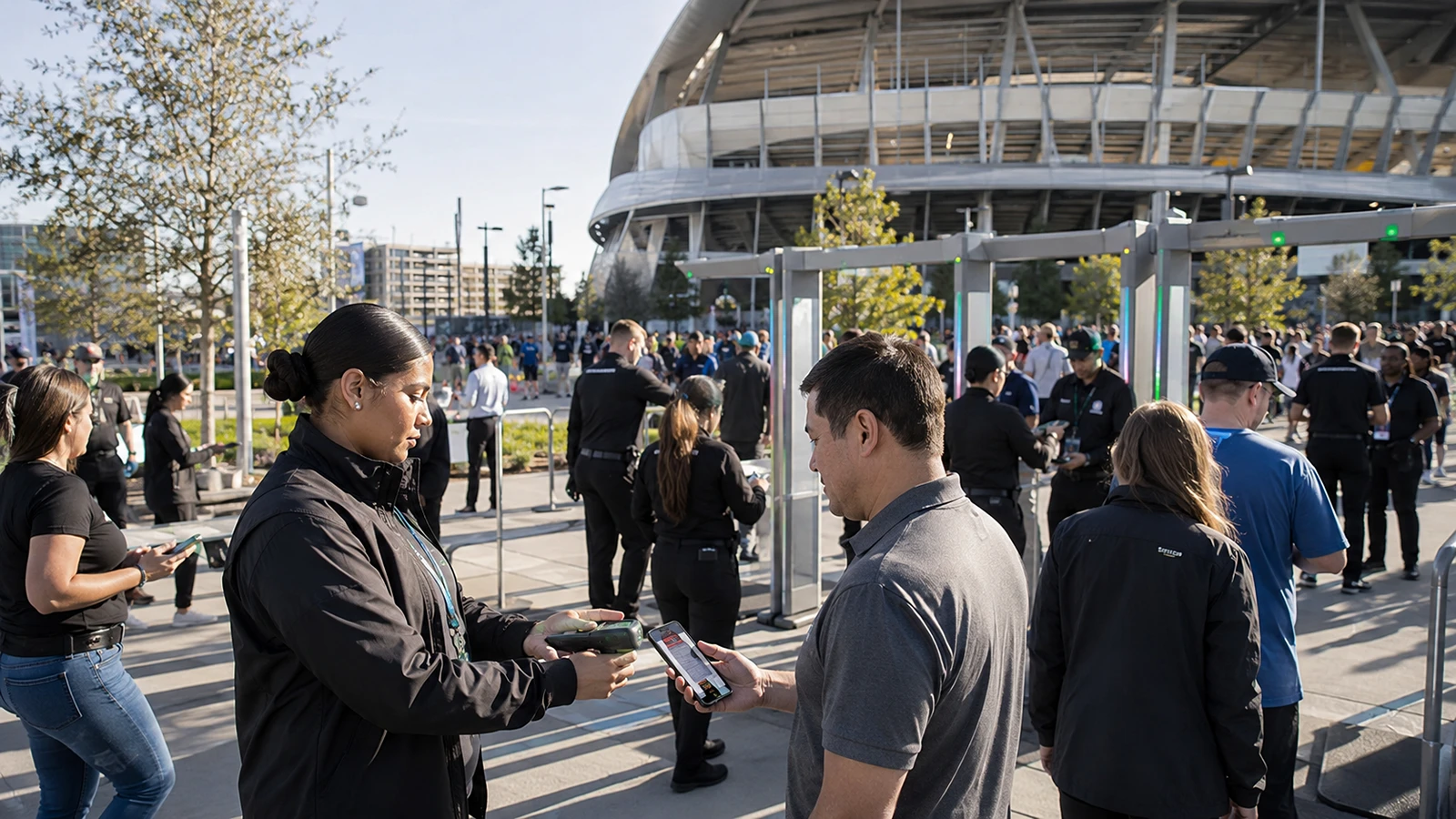
- Ticket scan assistance and triage support
- Bag-check lane coordination
- Guest questions and quick direction
Concourse and Circulation
- Wayfinding assistance for restrooms, concessions, and sections
- Monitoring high-traffic intersections
- Preventing congestion near entry points and stairways
Seating Bowl and Floor Access
- Section guidance and access control support
- Aisle clearing and seating direction
- Escalating guest issues to supervisors
VIP and Premium Areas
- Premium entrance support
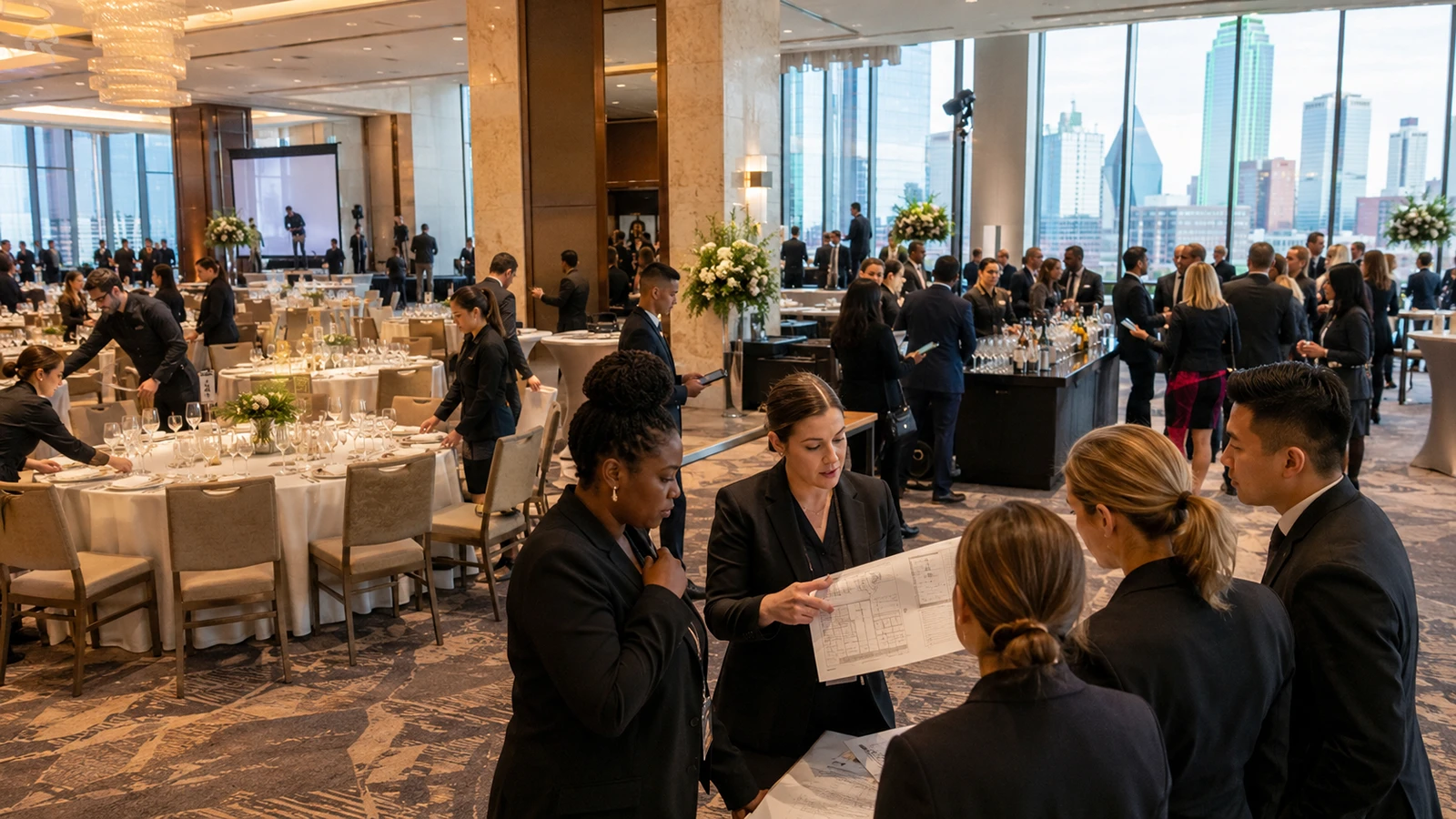
- Guest guidance inside lounges or hospitality areas
- Credential checks and direction to seating areas
Brand Activations
Concert venues often host sponsor activations. Staff help by:
- Managing engagement queues
- Preventing activation lines from blocking walkways
- Supporting brand interaction areas
For venues running sponsor experiences, dedicated brand activation staffing prevents activation lines from disrupting guest flow.
Concert Staff vs Security at Live Events
Concert staff and security teams serve different but complementary roles during live events.
Concert staff focus on guest movement and operational support, including:
- managing entry queues
- providing wayfinding assistance
- guiding guests to sections or amenities
- helping prevent congestion in concourses
Security teams focus on safety and enforcement, including:
- bag checks and screenings
- credential verification
- incident response
- enforcing venue policies
Most large concerts rely on both teams working together, with concert staff supporting the guest experience while security ensures the venue remains safe and compliant.
Concert Event Staff Roles That Reduce the Most Complaints
Some roles matter more than others during peak moments.
The following positions prevent the most common guest frustrations.
- Entry queue support staff at lane merges where lines combine
- Floaters who fill coverage gaps when crowds surge
- Zone leads who can redeploy staff quickly during unexpected pressure
These positions rarely appear in basic staffing plans but often make the biggest difference in guest experience.
Concert Event Staff Jobs and How to Match Them to Venue Type
Concert event staff jobs change depending on the venue size, layout, and guest flow patterns. A staffing plan that works for a theater will not work for a large arena. According to 2025 industry data, the U.S. concert and event promotion industry reached $56 billion in revenue in 2024, with 53.1% of event organizers reporting increased attendance.
Small Venues and Theaters
Smaller venues require fewer staff but greater role overlap.
Staff may handle:
- guest direction
- entry support
- seating assistance
Teams must react quickly because fewer staff are available to absorb problems.
Arenas
Arenas create large crowd waves and multiple pressure points. With approximately 45% of concert venues in North America capable of supporting over 20,000 attendees, proper staffing becomes critical.
Common needs include:
- larger entry staffing teams
- additional concourse wayfinding staff
- floor access monitoring
- multiple zone leads
These environments also benefit from crowd management staffing to stabilize guest movement during entry and exit.
Outdoor Concerts and Festival-Style Shows
Outdoor shows introduce additional complexity. The U.S. music festival market generated $3.4 billion in 2025, with over 800 major festivals held annually.
Staff may need to manage:
- longer walking corridors
- open venue layouts
- weather adjustments
- temporary signage and navigation support
Operational focus often shifts toward wayfinding and directional staffing across wide spaces. For large-scale outdoor events, festival staff are trained to adapt to dynamic crowd movements.
Concert Staff Hiring and the Most Common Planning Mistakes
Most concert staffing issues happen before the event begins, usually because staffing requests are too vague or based on headcount instead of operational roles.
Common planning mistakes include:
- Requesting staff numbers without defining roles
- Ignoring entry surge waves
- Understaffing sponsor activations
- Failing to include floaters for unexpected pressure
- Unclear communication hierarchy
Fix these problems by planning around failure points rather than averages.
Operational improvements include:
- Building staffing around peak entry windows
- Assigning staff by zone instead of generic headcount
- Including at least one lead per major zone
- Adding floaters who can shift positions quickly
Concert operations teams often discover that one additional floater can prevent multiple operational disruptions.
Concert Staff Hiring Timeline and When to Book
Booking earlier improves reliability and role alignment, especially for complex shows. With 55% of concerts selling out in 2023, early staffing planning has become essential.
Recommended timelines:
Book earlier when:
- the show is sold out
- the venue has multiple entry gates
- VIP movement is expected
- brand activations will generate queues
Providing operational details early helps staffing partners match the right personnel.
Helpful information includes:
- run of show timeline
- venue layout or gate map
- zone-based role requirements
Even urgent requests are easier to fill when staffing partners receive clear operational context.
Concert Staff Ratios: How Many Staff Do You Need?
General staffing ratios provide a starting point for planning concert event staff jobs based on venue size and event complexity.
Basic ratio guidelines:
- Entry gates: 1 queue support staff per 100-150 guests during peak arrival (first 30 minutes)
- Concourse wayfinding: 1 staff member per major intersection or high-traffic zone
- Section guides: 1 staff member per 200-300 seated guests
- VIP areas: 1-2 dedicated staff per premium zone
- Floaters: 1 floater per 500-750 total attendance
These ratios increase for:
- sold-out shows with compressed entry windows
- venues with complex layouts or multiple levels
- events with brand activations requiring dedicated staffing
- outdoor festivals with dispersed amenities
Zone-based planning produces more accurate staffing counts than simple attendance-to-staff formulas.
Concert Staff Hiring Checklist That Gets Better Matches
The best concert staffing requests clearly explain where staff will work and what they will do.
Use the following template when requesting staffing support.
Concert Staffing Request Template
- Venue name and address
- Show date and doors-open time
- Expected attendance
- Entry wave timing
Zones needing coverage
- entry gates
- concourse areas
- floor access
- VIP sections
- activations
- exits
Roles and headcount per zone
- queue support
- guest direction
- activation staffing
- floaters
Operational details
- shift start and end times
- uniform or credential rules
- onsite point of contact
Identify key "no-fail" moments
- doors open
- main act start
- encore
- exit rush
Zone-based requests consistently produce better staffing matches than generic headcount requests.
Mini Examples of Concert Staff Outcomes
These examples show how the right staffing mix improves guest flow without complicating operations.
Entry Stabilization
Outcome: shorter entry lines and smoother lane flow during doors-open surge
Example scenario:
At a 15,000-attendee arena show with three main entry gates, congestion began forming 30 minutes before doors opened.
Staffing adjustments included:
- 6 queue support staff across lane merges
- 2 floaters managing overflow lines
- 1 zone lead coordinating with ticket scanning teams
The result was faster lane turnover and reduced entry delays during peak arrival windows.
Activation Queue Control
Outcome: higher guest engagement without blocking walkways
Staffing mix:
- engagement staff
- queue management support
Exit Flow Recovery
Outcome: cleaner exits and fewer choke points
Staffing mix:
- directional staff at stairwells
- corridor merge coverage
- exit guidance teams
These small adjustments can significantly improve the overall concert experience.
Build a Concert Staffing Plan That Works
Concert staff are the operational backbone of live events, keeping guest flow smooth from entry to exit. When concert event staff are planned by zone and aligned to peak moments, venues can handle large crowds without congestion or delays. The key is placing the right roles in the right locations at the right time. Request Concert Staff for Your Next Event Share your venue layout, guest count, and timeline to get a clear, zone-based concert staffing plan that ensures smooth flow from doors opening to final exit.
Ready to elevate your next event?
Join thousands of event planners who trust EventStaff.com for reliable, professional staffing solutions.
Trusted by event professionals nationwide
1k+
Events Staffed
2 million+
Guests Served
97%
Positive reviews