
CEO Excerpt
"Signage is passive; staff are active. In complex venues, event wayfinding staff act as the venue’s nervous system, detecting density spikes and redirecting flow before a bottleneck ever has the chance to form." - CEO, EventStaff
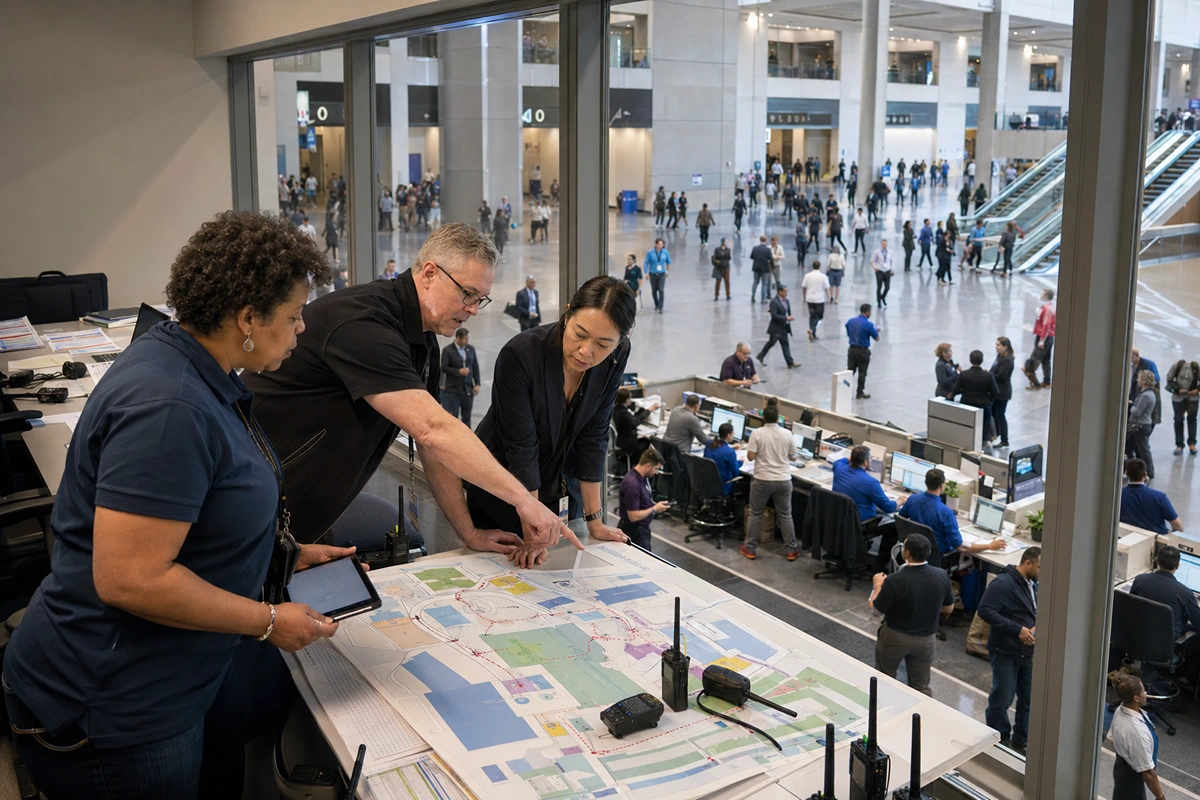
Event wayfinding staff are the only variable that prevents gridlock when static signage gets blocked by density. At conferences exceeding 1,500 attendees, a simple five-second hesitation at an escalator landing ripples into a full corridor collapse. Signs don't adapt to that friction. You need active personnel to issue verbal cues before the flow stops entirely. It’s about protecting throughput.
Executive Summary
Event wayfinding staff are the only reliable defense against navigation failure in venues exceeding 1,500 attendees, where static signage loses visibility under density. By actively shaping crowd flow and managing decision points, professional wayfinding teams prevent cascading delays that disrupt session timing and compromise ADA compliance.
The Breaking Point of Static Signage
Event wayfinding staff solve a breakdown that signage, apps, and maps cannot once an event passes a basic density and complexity threshold. At conferences with above roughly 1,500 attendees, or in venues with multiple elevation changes and parallel programming, navigation errors stop being a UX annoyance and turn into an operational risk.
You can feel the moment it happens on-site. Guests hesitate. Someone stops short. Another guest turns around to recheck a sign. That’s when counter-flow starts forming. ADA paths get obstructed. Session start times quietly erode. Human navigation control interrupts that chain before it compounds across the floor.
Signs Aren’t Enough in Crowded or Multi-Level Venues
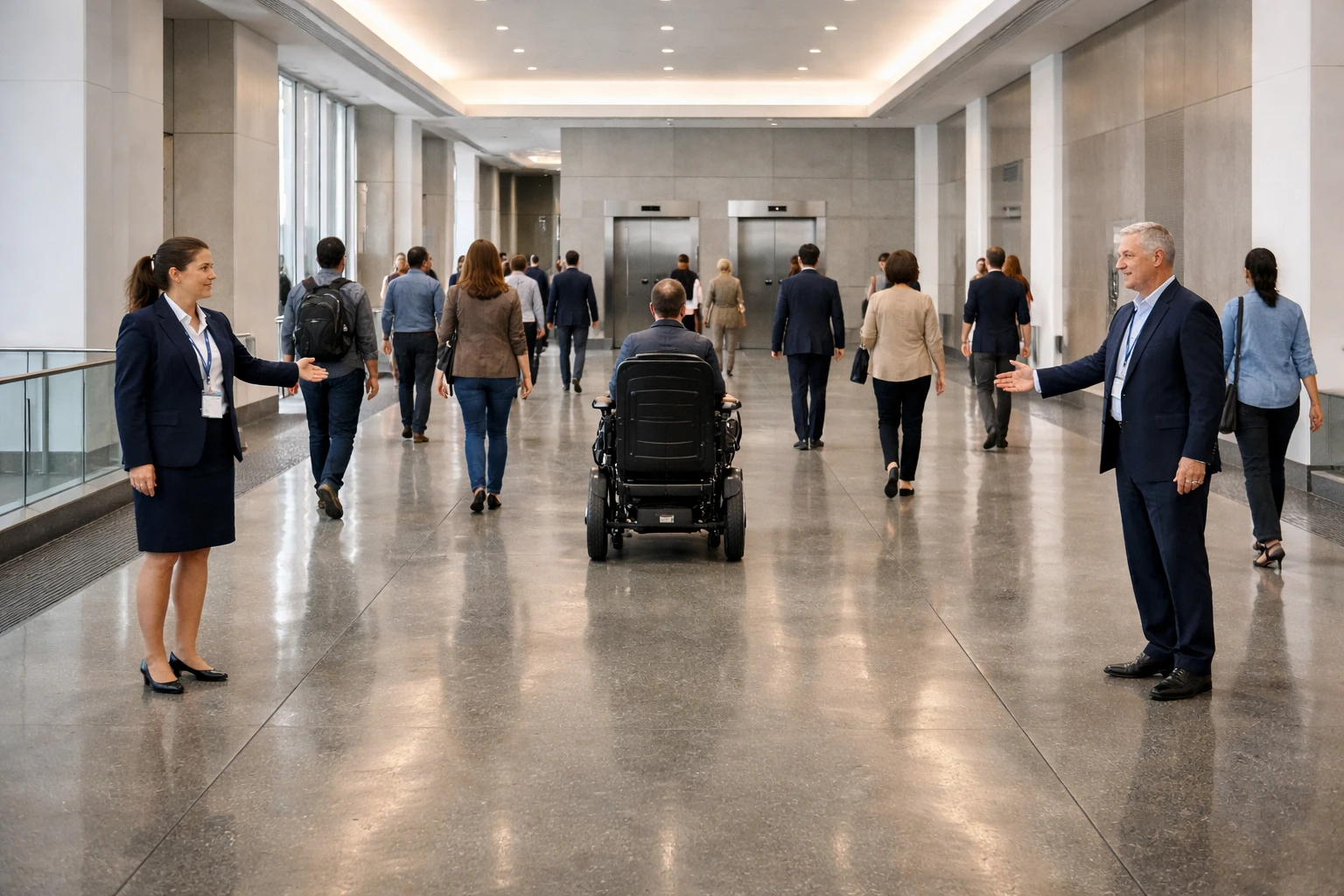
In live environments, guests don’t navigate the way planners imagine during pre-production. They don’t pause to read maps mid-transition. They move fast, follow motion, and copy the biggest visible flow. This behavior creates friction at escalator landings, hallway forks, and ballroom cross-corridors, any junction where three destinations compete inside a 10–15 foot sightline.
Without event wayfinding staff, guests pause to orient themselves. In union venues with fixed aisle widths, a five-second hesitation can trigger a full corridor slowdown. One guest stops, another stacks behind them, and throughput collapses.
Wayfinding staff are positioned where signage statistically fails. They issue short, early cues:
- “Hall C straigh”
- “Breakout wing left”
- “Elevators behind you”
Delivered early, those cues prevent stopping behavior entirely. Guests keep walking. Corridor capacity holds. For a deeper dive into how human behavior impacts movement, read our analysis on Stadium Event Flow. This proactive redirection turns static layouts into live routing systems.
Apps and Digital Signage Fail During Peak Traffic
Event apps assume stable conditions. Peak traffic windows are the opposite. Wi-Fi degrades during session changeovers, QR codes disappear behind bodies, and digital signs lose visibility once queues form. At that moment, technology loses authority.
This is where event wayfinding staff step in. They aren’t placed at information kiosks; they are deployed at active decision points.
- Corridor density spikes? Staff redirect immediately.
- An entrance backs up? Staff split flow toward secondary routes.
- A guest is lost? Staff escort instead of troubleshooting.
Most planners underestimate how often this happens. Interventions peak during the first 8 to 12 minutes of every transition window. That window decides whether arrivals distribute smoothly or stack at doors.
Wayfinding Staff Protect Session Timing and Room Flow
Late arrivals don’t just inconvenience speakers; they create noise at doors and push door teams into crowd control instead of access management. Once timing slips, AV resets shorten and catering schedules compress.
Event wayfinding staff protect timing upstream by guiding guests toward correct rooms before doors open and separating overflow early. This gives room monitors space to do their actual job. In large conferences and expos, saving two to three minutes per session prevents delays that ripple into evening load-outs. This is why experienced planners budget wayfinding as operational insurance, because they know Hidden Staffing Costs far outweigh the investment in proper flow control.
Wayfinding Staff Reduce Bottlenecks and Counter-Flow
.webp)
Bottlenecks form fastest where opposing streams collide: elevator banks, escalator landings, and hallway crossovers. Once counter-flow starts, signage loses authority. Event wayfinding staff prevent this by shaping movement early, assigning verbal lanes, introducing short holds, and redirecting guests while momentum still favors compliance.
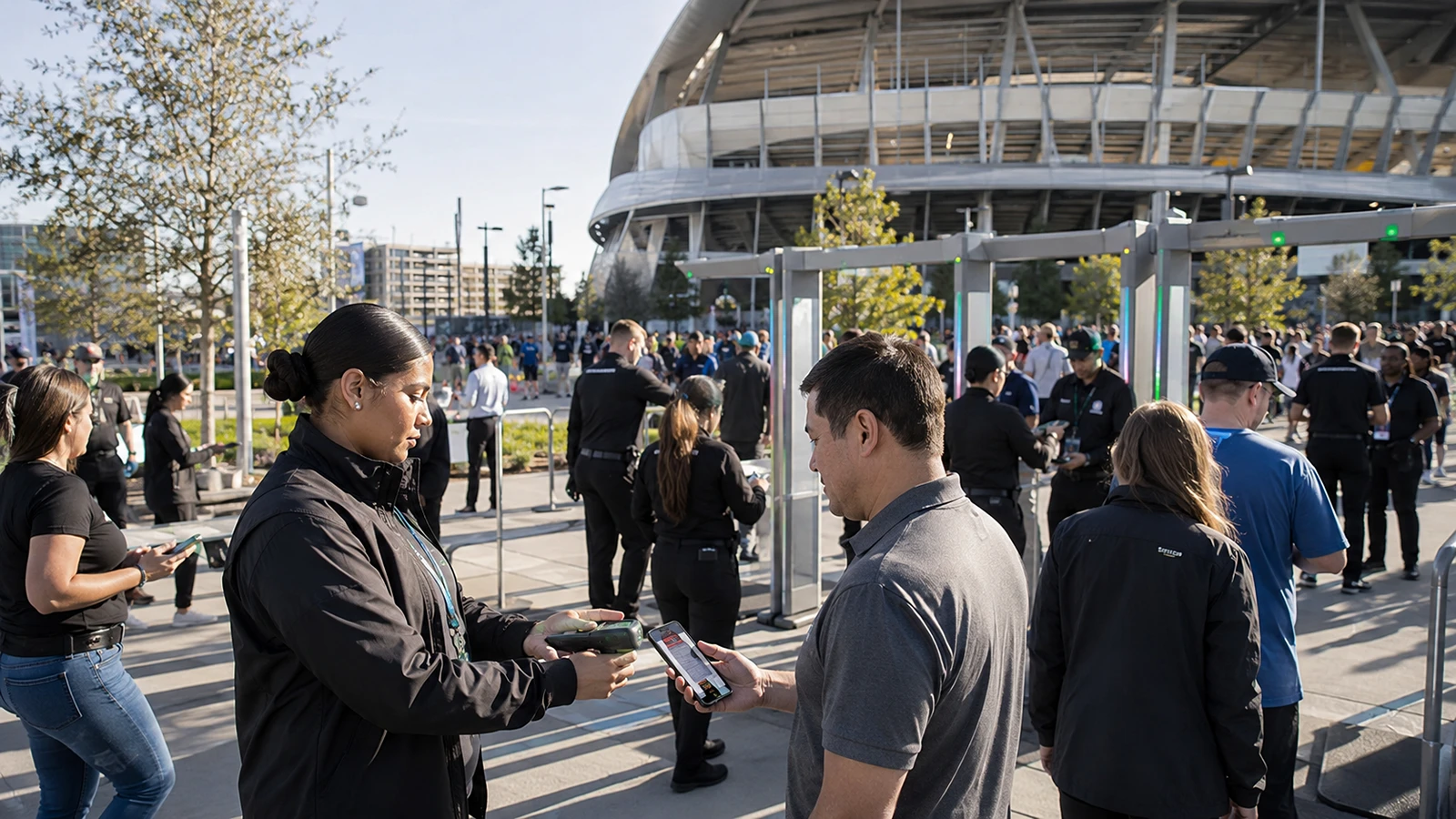
In festivals and tourism-heavy districts, staff also manage exterior ingress. Ride-share drop-offs and street crossings intersect before guests hit the doors. Without intervention, confusion moves inside. This is where guest navigation staff deliver real stability.
Why EventStaff Wayfinding Staff Outperform Volunteers
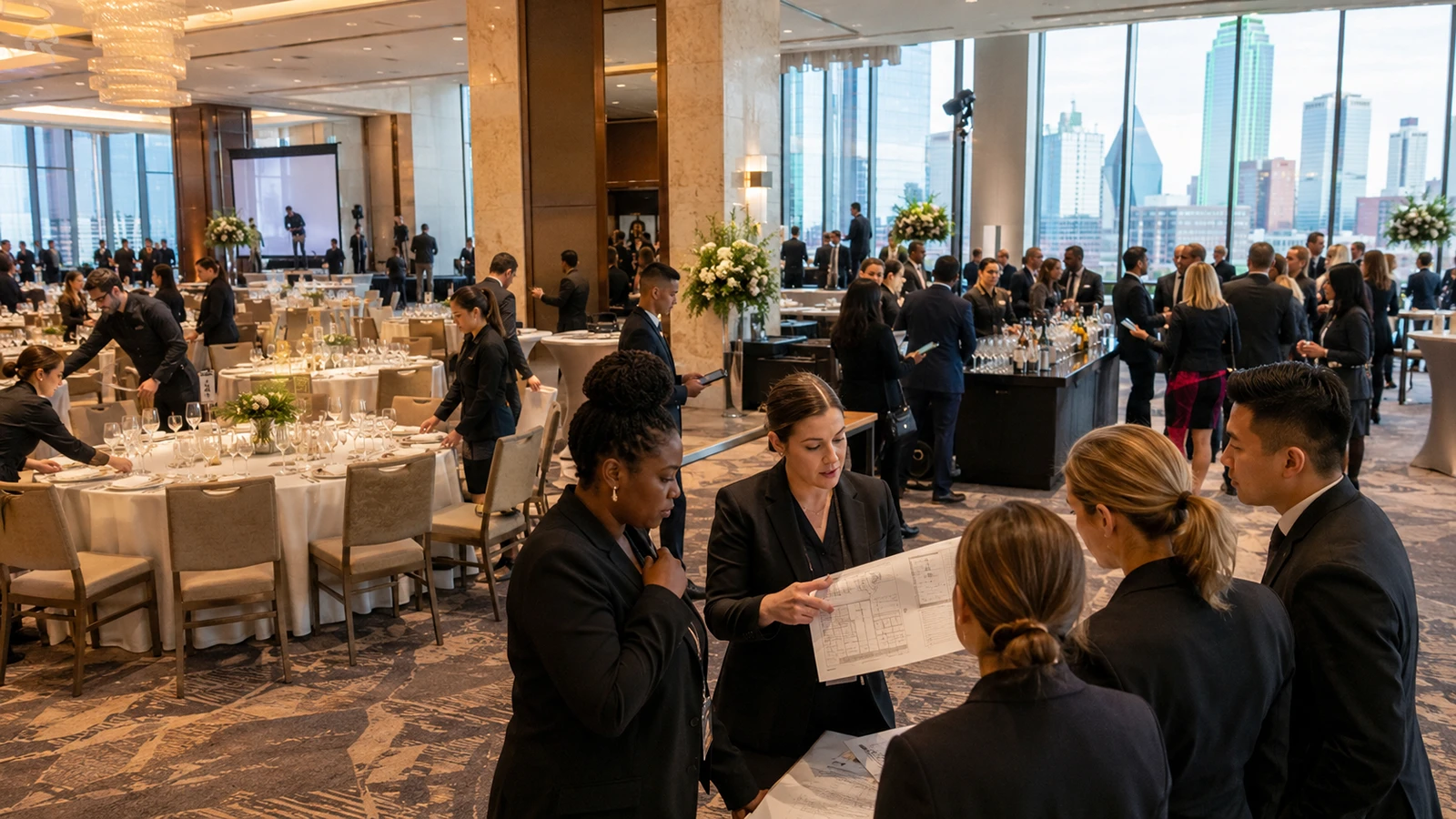
Volunteers help, but they are rarely trained to detect density risk or manage ADA routing under pressure. EventStaff trains wayfinding teams to anticipate failure points. Staff study venue maps in advance, understand session timing patterns, and coordinate with floor leads in real time. They know when to escalate reroutes and when to defer to security.
This training allows conference navigation support to function as part of the operations plan, not as ad hoc assistance. Deployment flexes with transition waves, resulting in calmer hallways, fewer complaints, and predictable session starts.
When Wayfinding Staff Become Non-Optional
If your event includes multi-level venues, 30-minute session turnovers, or complex ADA routing, event directional support becomes mandatory. It acts as the control layer that keeps all other staffing functions effective. For federally compliant accessibility standards, we align our training with ADA.gov guidelines to ensure equitable access for all attendees.
Conclusion: The Operational Payoff
Wayfinding staff don’t replace signage or apps; they activate them. They turn static planning into live execution, ensuring door teams stay focused and guests stay confident. You feel the payoff immediately on-site when hallways remain clear and sessions start on the minute. EventStaff deploys trained teams who keep guests moving and operations stable. If your event depends on a predictable flow, you can Get a Quote right now to secure a staffing plan designed around real movement patterns, not assumptions.
Ready to elevate your next event?
Join thousands of event planners who trust EventStaff.com for reliable, professional staffing solutions.
Trusted by event professionals nationwide
1k+
Events Staffed
2 million+
Guests Served
97%
Positive reviews