
Weddings rely heavily on structured service flow, and the wrong team can disrupt pacing, clutter tables, slow transitions, and weaken the guest experience. These issues often emerge when planners underestimate how service style, staffing ratios, and venue layout influence execution. High-performing event waitstaff prevent these problems by maintaining timing, communication, and guest interaction standards from start to finish.
Executive Summary
This short guide walks planners through the most important considerations when hiring wedding waitstaff, focusing on the skills, training, and oversight needed for a smooth reception. It explains the traits that distinguish professional wedding serving staff, clarifies why supervisor-level leaders are essential, and offers strategic questions that help filter inexperienced teams. Whether you’re coordinating a ballroom reception or a multi-area outdoor wedding, these guidelines ensure you hire banquet servers who can deliver polished, reliable service.
Core Requirements When Hiring Wedding Waitstaff
.webp)
Even though service styles vary across weddings, the fundamentals remain the same: your team must move with intention, protect your timeline, and maintain guest comfort at every stage of the reception. When hiring wedding waitstaff, look for individuals who can handle pacing, communication, and coordination with kitchen and bar teams.
Professional event waitstaff understand how to maintain clean table rotations, guide guests politely, and manage subtle details such as wine pours, toast timing, or dietary-specific service. They are trained to avoid disruptions during speeches, dances, and transitions, moments where inexperienced teams often slow down the reception. For planners dealing with complex cultural traditions or specific ritual timings, viewing our guide on quintessential Jewish wedding can provide deeper insight into how staff must adapt to religious requirements.
Supervisor-Level Staff: The Backbone of a Smooth Wedding
.webp)
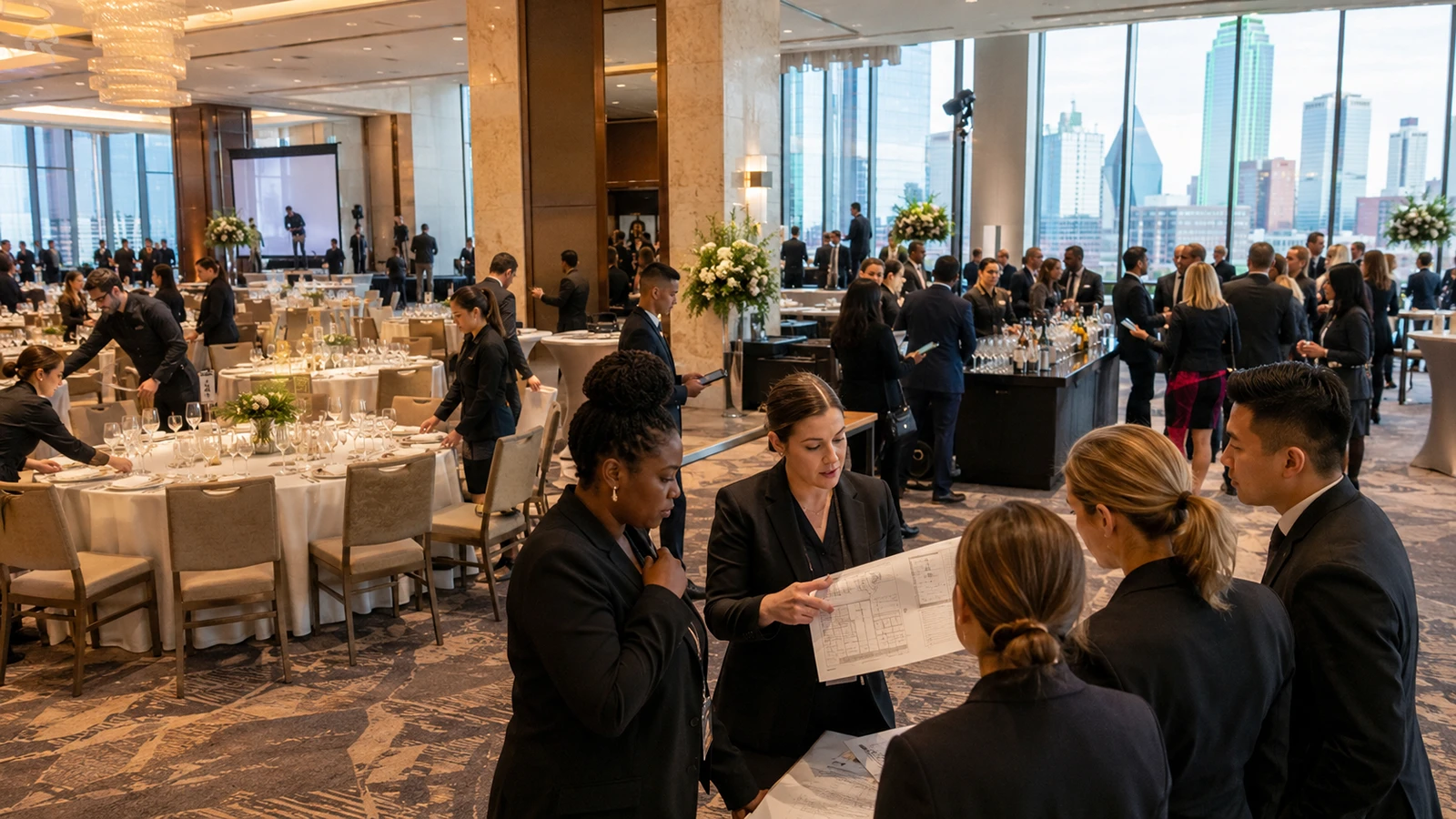
Supervisor-level staff, banquet captains, leads, or floor supervisors, are essential when you hire banquet servers for weddings. They align servers, runners, and bar teams with the event timeline, ensuring every segment transitions cleanly. Their presence prevents issues from spreading, such as delays during plate drops, slow buffet replenishment, crowded aisles, or uneven service quality among different tables.
Supervisors also coordinate with planners, DJs, photographers, and catering managers, creating a unified communication loop that protects the schedule. Their experience allows them to correct problems before guests ever notice them. Understanding flow is critical; read more about movement dynamics in our article on psychology of event flow, which applies to high-traffic wedding receptions as well.
Questions to Ask Before Hiring Wedding Waitstaff
Before committing to any provider, ask the following high-impact questions:
- Are the servers properly insured?
Insurance protects your event and venue from unexpected incidents during service. - What banquet-style training do the servers have?
Look for training in plate sequences, carrying techniques, timing control, and guest etiquette protocols. These skills help you avoid the common pitfalls of inexperienced wedding serving staff. - How do you handle last-minute changes or staff substitutions?
A reliable provider will have a vetted backup pool trained to the same standards. - Do servers have wedding-specific experience?
Weddings require emotional awareness, discipline, and attention to timing that general restaurant servers may not have. For more on general wedding etiquette standards, reviewing resources from Vogue Weddings can help set your expectations for staff behavior.
CEO Excerpt
“Service teams shape the guest experience in ways décor and catering alone cannot. When we staff weddings, we focus on precision, timing, and guest comfort. Our servers are trained to anticipate needs before guests raise a hand because flawless service is the one thing people remember long after the night ends.”
CEO, Event Staff.
How EventStaff Trains High-Performance Wedding Teams
EventStaff prepares servers through training in synchronized service execution, tray stability, coordinated pacing, and discreet guest interaction. Supervisors learn timeline reading, problem-spotting, crisis prevention, and communication loops that eliminate bottlenecks. This system ensures that every team we deploy, whether in a ballroom, outdoor marquee, or multi-area venue, performs with consistency, polish, and confidence.
Secure Your Reception Flow
Your service team influences the experience long before the first plate is served. When you’re hiring wedding waitstaff, choose a team trained to anticipate needs, maintain schedule integrity, and create seamless guest interactions. If you’d like a deployment strategy tailored to your venue and service format, our operations team can build a custom plan.
Ready to elevate your next event?
Join thousands of event planners who trust EventStaff.com for reliable, professional staffing solutions.
Trusted by event professionals nationwide
1k+
Events Staffed
2 million+
Guests Served
97%
Positive reviews