
CEO Excerpt
"Planners often staff for the guests but forget to staff for the environment. A real outdoor event staffing plan must account for weather, hydration, and perimeter control. Ignoring these isn't just a risk; it's an operational failure."- CEO Event Staff
When planning an event, it's easy to focus on the visible roles: ticket scanners, ushers, and brand ambassadors. But for outdoor events, this is a critical mistake. Indoor venues are controlled environments; outdoor venues are active, unpredictable variables.
Relying on indoor logic fails to account for heat, wind, uneven terrain, and sudden weather shifts. A team that isn't prepared for these variables isn't just inefficient; it's a liability. Missing the core support roles in your outdoor event staffing plan can directly lead to service breakdowns, safety incidents, and a poor guest experience.
Executive Summary
Stop just staffing for the gate. This is the definitive guide to the hidden outdoor event staffing roles, like weather monitors, hydration crews, and perimeter ushers, that are essential for safety and flow.
The essential outdoor event staffing framework (core + environmental roles)
Effective outdoor event staffing is a two-layer system. It's not just about who is at the gate; it's about how you manage the entire footprint.
Layer 1: Attendee Flow Roles
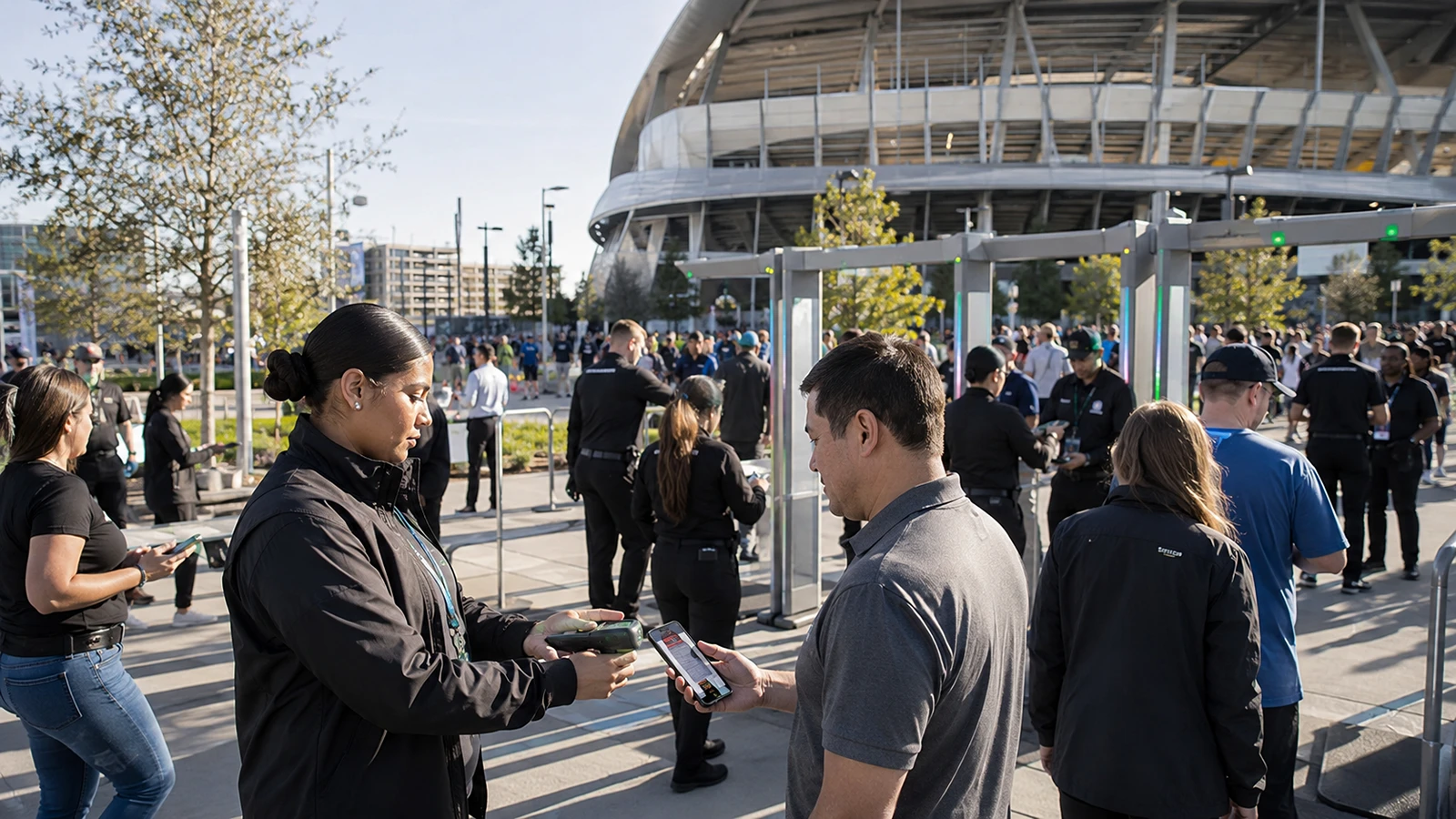
These are your standard guest-facing positions: greeters, registration, ushers, and concession staff. They manage the guest's journey.
Layer 2: Environmental Safety Roles
These are the non-obvious roles that manage the environment itself: weather monitors, hydration crews, and perimeter staff. This layer is what makes professional outdoor event staffing different.
Your staffing ratios must be dictated by the environment. An indoor event doesn't have a wind-speed threshold, a lightning-strike radius, or a heat-index trigger. A proper outdoor event staffing plan accounts for all three.
Overlooked roles for outdoor events that prevent disruptions
These are the roles that prevent small problems from becoming event-ending disasters. Great outdoor event staffing plans build these in from the start.
Water crew & hydration runners
For any event with a high heat index, this team is a mobile safety unit. They roam crowds with water, specifically targeting areas far from fixed water stations. They follow CDC heat guidelines to spot early signs of heat exhaustion.
Heat-relief team
This is the fixed-position support crew. They manage cool zones, misting tents, and mobile fan placements, providing guests with a clear, safe place to recover from high temperatures.
Weather monitors
This is not a manager with a phone app. A dedicated weather monitor is trained to use professional tools to track wind speed, lightning distance, and air-quality shifts based on official weather guidance. They provide the data for your command center to make critical go/no-go decisions.
Mobile restroom attendants
For multi-hour events, this is a guest-experience lifesaver. This team manages sanitation, restocking, and odor control for portable restroom banks, preventing a major attendee pain point.
Perimeter ushers
This team manages the "soft" borders of your event. They control crowd drift, watch for fence-line integrity, and are trained to guide attendees during an emergency evacuation, keeping routes clear.
Weather triggers that change staffing instantly
Your outdoor event staffing plan must be dynamic. When certain triggers are hit, the team's deployment must change immediately.
Wind-speed triggers
At 20–25 mph, light signage and pop-up tents become dangerous. Staff must be redeployed to secure these structures or move attendees away from them.
Lightning-distance trigger
The "30-30" rule is a start, but a professional plan has an 8–10 mile lightning radius trigger. When a strike is detected within this range, all outdoor event staffing pivots to shelter-in-place protocols.
Heat-index thresholds
When the heat index exceeds 85°F, your outdoor event staffing plan must activate its heat-relief protocols. This includes deploying more hydration runners and placing medical spotters in dense crowd zones.
Traffic-flow map: how outdoor event staffing should move with the environment
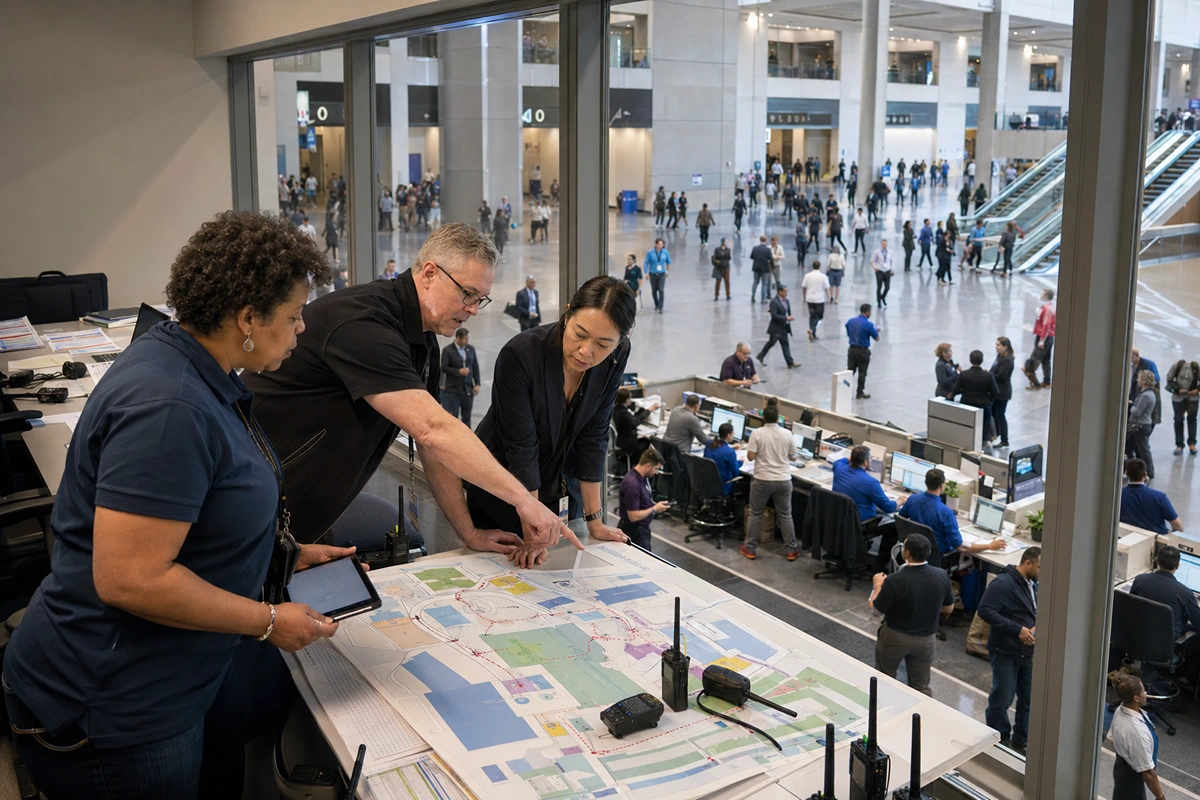
A flow map is essential for effective outdoor event staffing. It shows how attendees move between key points and where your staff should be.
Map the flow
The map logic is simple: trace the guest journey from entry $\rightarrow$ activation zones $\rightarrow$ food lines $\rightarrow$ restrooms $\rightarrow$ exits. Place staff at the bottlenecks between these zones.
Add roaming problem-solvers
These are floaters trained for outdoor contingencies. They aren't fixed to one spot but move through the crowd, solving small problems (spills, lost items, attendee questions) before they require a supervisor.
Reduce crowd density
A smart flow map, informed by event flow psychology, does more than just place staff. It helps you design an environment that cuts wait times and reduces crowd density by 15–30%.
Fast Estimate Box (simple for outdoor roles)
When building your outdoor event staffing budget, don't forget these ratios.
Quick ratios
- 1 hydration runner per 200–250 guests (in high heat)
- 1 weather monitor per 1 outdoor site
- 1 perimeter usher per 150 ft of fence line
Example: 5,000-Person Outdoor Festival
- Standard Staff: 50 (Ushers, Gates, Stage)
- Overlooked Roles:
- +20 Hydration Runners (1 per 250)
- +1 Weather Monitor
- +15 Perimeter Ushers (for 2,250 ft fence)
- Total Outdoor Event Staffing: 86
This estimate shows how a robust outdoor event staffing plan requires a significant, dedicated team to manage the environment, not just the guests.
When to scale outdoor event staffing for festivals, brand activations, and city events
Your base plan must scale based on the event's specific variables.
Crowd-mix factors
The "who" of your audience matters. An event with alcohol zones requires a different security posture. An event with many children or elderly guests requires more medical spotters and clear, accessible pathways.
Brand activations
A static event is easier to manage. Brand activations create high-traffic "hot spots" that require dedicated mobile staffers to manage queues and engagement during peak intervals.
Medical and ADA support
For large events, your outdoor event staffing plan should include mobile medics and ADA mobility escorts. This is especially true when staffing for festivals, where terrain can be a major barrier.
Build Your Outdoor Team
Event Staff trains teams specifically for outdoor guest flow, heat-risk management, weather monitoring, hydration distribution, and perimeter control. For large-scale outdoor event staffing needs over $5k, request a scope call to build the right crew for your environment.
Ready to elevate your next event?
Join thousands of event planners who trust EventStaff.com for reliable, professional staffing solutions.
Trusted by event professionals nationwide
1k+
Events Staffed
2 million+
Guests Served
97%
Positive reviews