
CEO Excerpt
"A 10-minute break seems small until it's the 10 minutes your VIPs arrive to an empty registration desk. Great events run on great logistics, and break rotation is logistics. It's the unseen system that prevents a small gap from becoming a total service failure."- CEO Event Staff
Let's be blunt: a tired event staffer is an error-prone event staffer. Scheduling proper breaks isn't just about being nice; it's about performance. Structured rotations can reduce service errors, keep lines moving, and prevent those dreaded 'zombie-stare' moments at the check-in desk. This guide gives you the practical models, coverage tactics, and (yep) the legal rules to effectively schedule event staff breaks and keep your guests happy and your team fresh.
Your rotation strategy will, of course, shift. A gala is not a trade show, and a trade show is not a corporate summit. But the logic is always the same: coverage first, compliance second, comfort always.
Need this handled for you? Learn more about event staff scheduling services and how our supervisors manage rotations at scale.
Executive Summary
Scheduling event staff breaks isn't just a nice-to-have; it's performance control. A tired, hangry team makes mistakes. This guide shows you how to build compliant rotations that keep every zone covered, reduce errors, and ensure your team (and your event) survives a 10-hour day.
Event Staff Breaks: Why They Matter Operationally and Legally
Here's the "why." First, it's about performance. Planned rest reduces fatigue, improves attentiveness, and prevents the kind of service lapses that end up in angry tweets.
Second, it's the law. According to OSHA, worker fatigue is a real safety issue, leading to more errors and incidents, making how you schedule event staff breaks a core safety issue. Build your breaks into your staffing ratios from the start, not as a panicked afterthought when your lead usher looks faint.
The 4-, 6-, and 8-Hour Rotation Models
This isn't complicated. Here’s the basic math for how to schedule event staff breaks for most events:
4-hour events
One 15-minute rest per staff member, staggered by zone.
6-hour events
One 30–45 minute meal plus one short rest, timed away from guest surges.
8-hour events
Two short rests and one main meal, spaced every three to four hours.
The key to all of these is the wave-based rotation. You don't send everyone at once (obviously). You rotate small, manageable groups while the rest of the team covers their active areas, then switch.
How to Plan Break Rotations Without Losing Coverage
This is the "how." The goal when you schedule event staff breaks is to make the break invisible to the guest. Here’s the playbook:
Rotate by zones or functions
Do not rotate whole departments. Sending all "Registration" staff at once is a recipe for disaster. This is a key part of why workforce planning defines success.
Create handoff windows
Allow five to ten minutes so coverage overlaps. The staffer coming on break arrives before the staffer leaving for break actually walks away.
Assign floaters
Use a ratio of roughly one per 10–12 staff to step in during breaks.
Avoid breaks during peak times
Do not schedule event staff breaks during arrivals, seating, keynote speeches, or main service cues.
Track rotations with a checklist
Use a simple checklist or scheduling app. It just needs to show who is out, who is next, and which zone is covered.
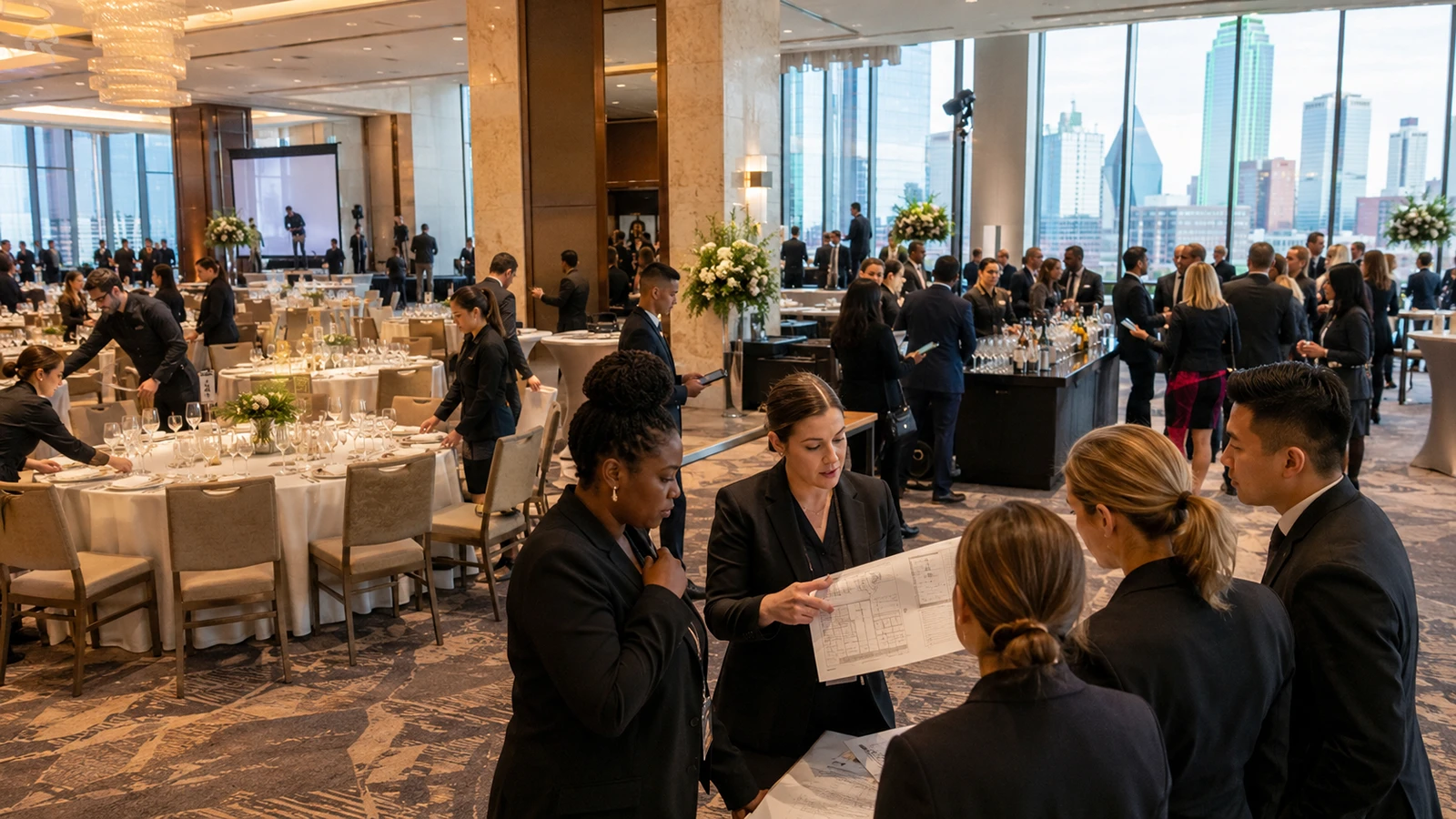
Real-World Example: At a recent 500-guest product launch, the crew ran rotations in groups of three every 25 minutes, with one floater per zone. The result? Every station stayed covered. Service was delivered on time, start to finish.
How Supervisors Track and Enforce Break Compliance
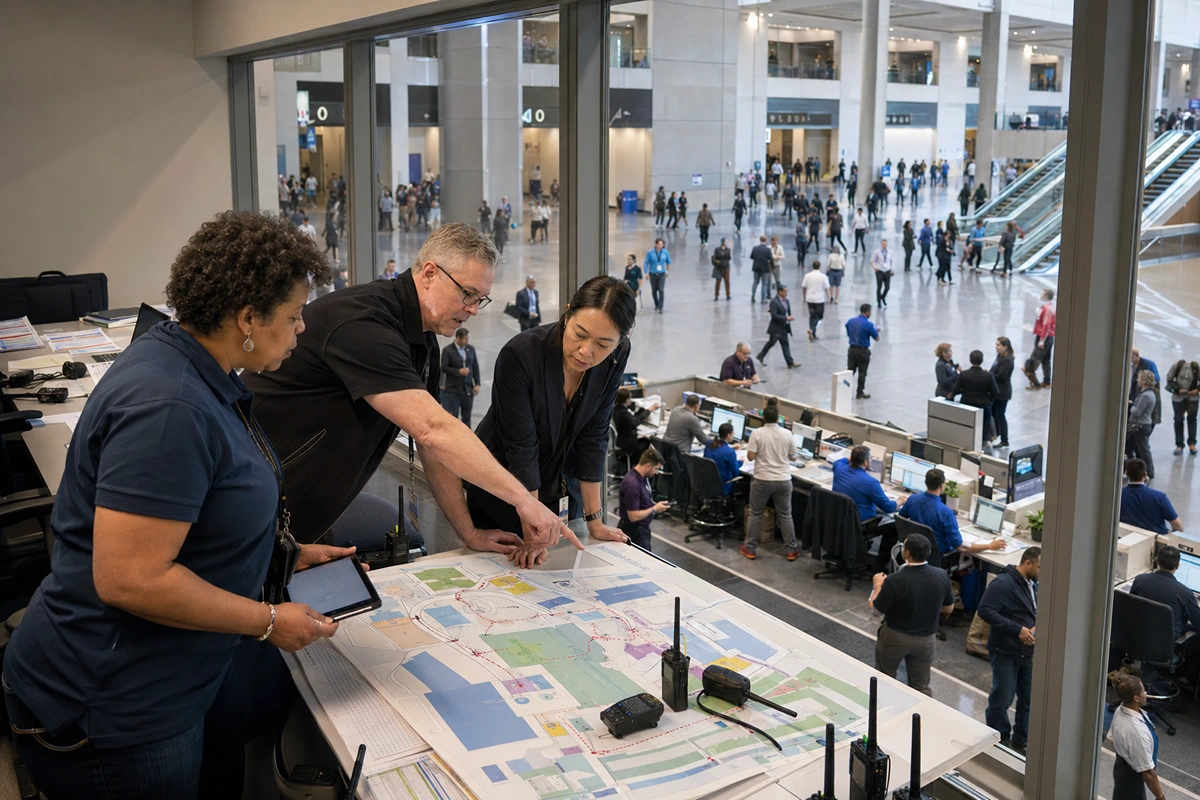
A plan to schedule event staff breaks is useless without enforcement. A good supervisor runs this like air traffic control:
Appoint a Break Captain
Assign a lead per zone to time rotations and confirm handoffs.
Use radio confirmations
Use time stamps for each start and end. ("This is Zone A, sending three for break." "Copy, Zone A, you are covered by Floater 1.")
Keep a live roster
A simple spreadsheet works. It should show who is active, who is on break, and who is next.
Supervisors must verify on-time returns
They must also adjust coverage if a peak wave hits unexpectedly.
Compliance and Labor Law Considerations
And now, the part that keeps the lawyers happy. While the U.S. Dept. of Labor provides federal guidance, break laws are a patchwork of state and local rules that directly impact how you schedule event staff breaks.
Many states (looking at you, California) require one 10–15 minute rest for every four hours worked, plus a 30-minute meal after five. Add in union rules, and it gets complex. Always confirm local and venue requirements, and keep records.
Service Continuity Checklist for Event Managers
Use this checklist to make sure your plan to schedule event staff breaks is foolproof:
Before Event
Label all zones and assign a designated backup (floater) for each.
During Rotations
Require a verbal handoff and supervisor acknowledgment before anyone leaves their post.
Floater Duty
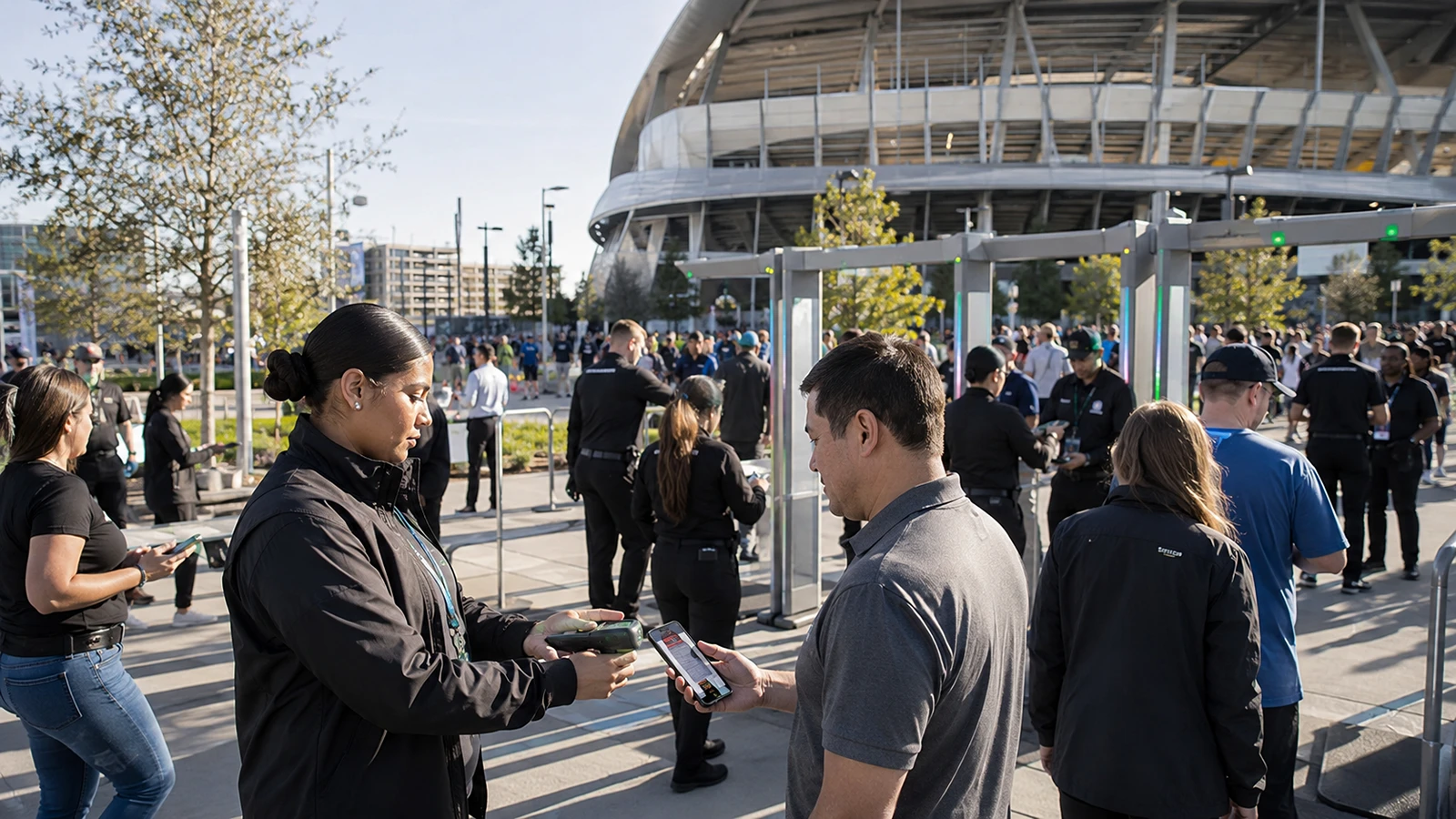
Floaters monitor not just the post, but also hydration and energy levels, especially for outdoor events or long shifts.
After Rotation
Staff check back in with the supervisor, who marks them "complete" on the log. This prevents overlaps or gaps in your break schedule.
Common Break Rotation Mistakes to Avoid, With Fixes
We’ve seen all of these happen. Avoid them.
Mistake: Sending the whole department at once.
Fix: Stagger roles with 5-10 minute overlaps.
Mistake: "Trusting everyone" to take their break.
Fix: Use radio confirmations and a written log. Trust, but verify.
Mistake: Ignoring schedule drift when events run long.
Fix: Add one rest break for every two extra hours, minimum.
Mistake: Overlapping breaks with guest-facing moments.
Fix: Move rotations outside arrivals, meals, and stage transitions. This disrupts the guest journey and shows a misunderstanding of the psychology of event flow.
Mistake: Too few floaters at peak times.
Fix: Hold one floater per 10–12 staff. Don't skimp on this.
Quick Estimate Example
For a six-hour gala with thirty staff, run three waves of ten, supported by two floaters. Each rotation lasts about thirty minutes, with five minute overlaps at handoff. This pattern is a smart way to schedule event staff breaks efficiently, maintain full coverage, and keep teams fresh.
Feeling like this is a lot to manage? You're not wrong. Professional teams manage rotations so you don’t have to. EventStaff supervisors handle timing, hydration, and compliance while maintaining full zone coverage, letting you focus on the client experience.
Let Our Supervisors Manage Your Rotations
EventStaff supervisors manage real-time scheduling, compliance tracking, and coverage optimization in major U.S. markets. Whether your program runs six-hour galas or twelve-hour trade floors, we protect service continuity and legal compliance. Request a custom staffing rotation plan for your next conference or multi-day activation.
Ready to elevate your next event?
Join thousands of event planners who trust EventStaff.com for reliable, professional staffing solutions.
Trusted by event professionals nationwide
1k+
Events Staffed
2 million+
Guests Served
97%
Positive reviews