
Interactive vs Experiential Marketing Effectiveness: When Each Fails and How to Do It Right
Executive Summary
Interactive vs experiential marketing effectiveness comes down to one thing: reach vs impact. Interactive marketing scales easily and drives 5–15% participation, while experiential marketing delivers stronger engagement (20–40%) but depends on execution and trained staff. Most events underperform because they choose one approach when they actually need both, or execute the right one poorly. Interactive tools lose engagement quickly, and experiential activations fail when staffing and coordination are weak. The strongest events combine both interactive captures attention, while experiential turns it into a real brand connection. The real risk isn’t choosing wrong; it’s executing without clarity.
Interactive vs Experiential Marketing: What Actually Drives Event Results?
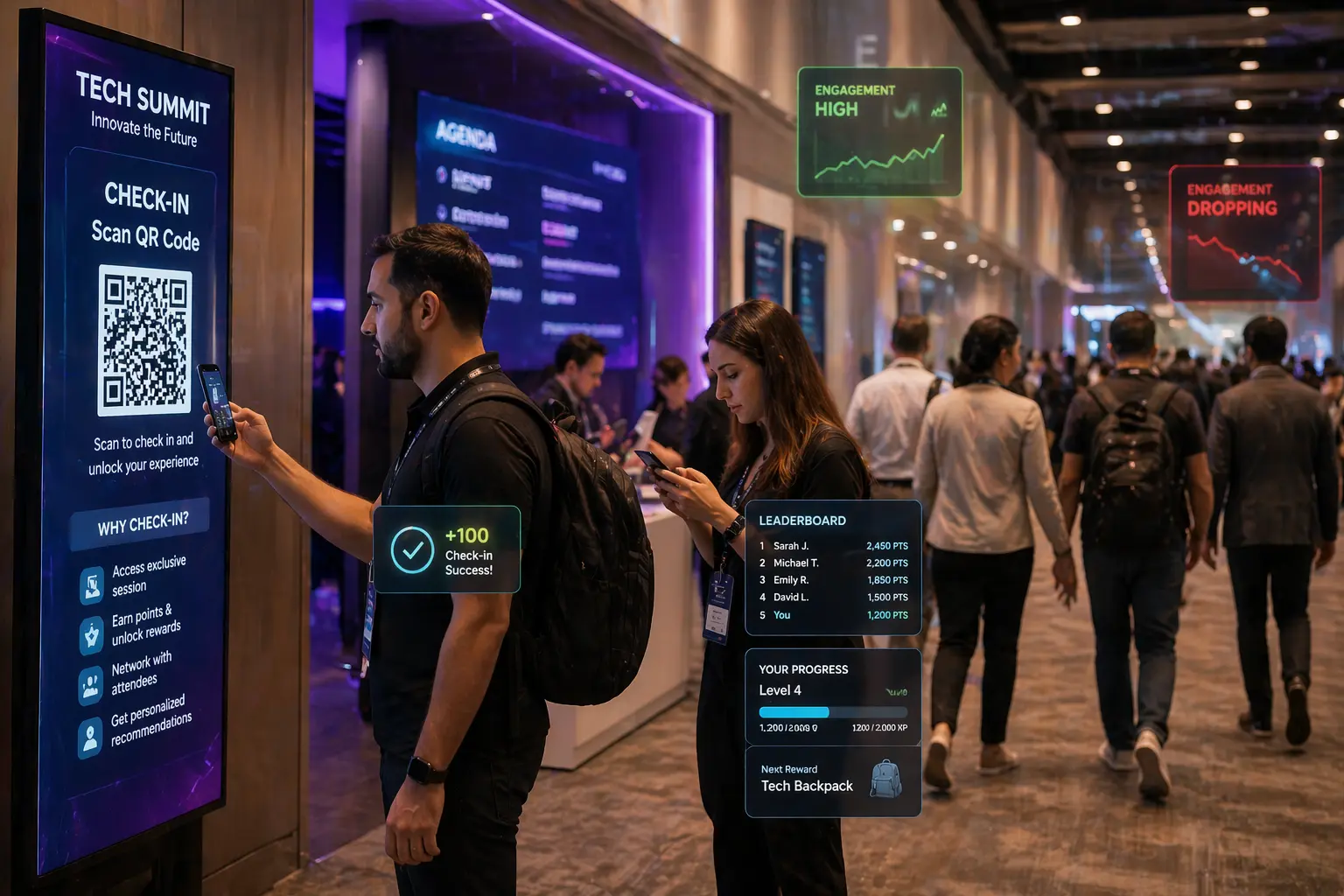
Interactive and experiential marketing are often treated as interchangeable strategies, but they deliver very different outcomes.
Interactive tools are designed to scale quickly and capture attention. Experiential activations, on the other hand, are built to create deeper, memorable brand interactions.
The challenge isn’t choosing one over the other. It’s understanding how each performs in real event conditions and where most teams get it wrong.
In this guide, we break down how both approaches work, where they fail, and how to combine them for stronger engagement and brand impact.
Quick Decision Framework for Interactive vs Experiential Marketing Effectiveness
Use this:
- Need a scale with low staffing? → Go interactive (5–15% participation if simple)
- Need strong brand experience? → Go experiential (20–40% with trained staff)
- Running a launch or premium event? → Use both
- Limited budget? → Choose one and execute well
Quick reality: Most teams know the right choice—they just overthink execution.
CEO Excerpt
The mistake isn’t choosing between interactive and experiential. The mistake is treating them like interchangeable tools instead of understanding what each one actually does. One drives attention. The other builds perception.-Daniel Meursing
What Interactive Marketing Actually Does
When comparing interactive marketing vs experiential, interactive often looks easier.
It includes:
- AR filters
- gamified check-ins
- digital engagement tools
The benefit is scale. You can reach thousands without adding staff.
But here's the issue with interactive vs experiential marketing effectiveness: Engagement drops fast.
What most people miss: Interactive doesn't fail because of tech. It fails because there's no reason to keep using it.
What happens:
- Guests try it once
- Interest fades quickly
- Engagement becomes forgettable
Example: At a conference, a gamified check-in works early, then usage drops within an hour.
Numbers:
- 5–15% participation (good UX)
- 2–5% (confusing setup)
According to experiential marketing industry statistics, interactive engagement without experiential reinforcement typically plateaus within the first 60 minutes of an event.
Interactive works for reach and data. It does not create memory.
What Experiential Marketing Actually Does
Now look at interactive vs experiential marketing effectiveness from the experiential side.
Experiential marketing is:
- product demos
- staffed activations
- physical brand moments
This is where guests actually feel your brand.
But it depends entirely on execution.
If done right:
- strong engagement
- memorable interactions
- better brand perception
If done poorly:
- confusion
- slow service
- negative impression
Hidden cost: One bad interaction can undo multiple good ones.
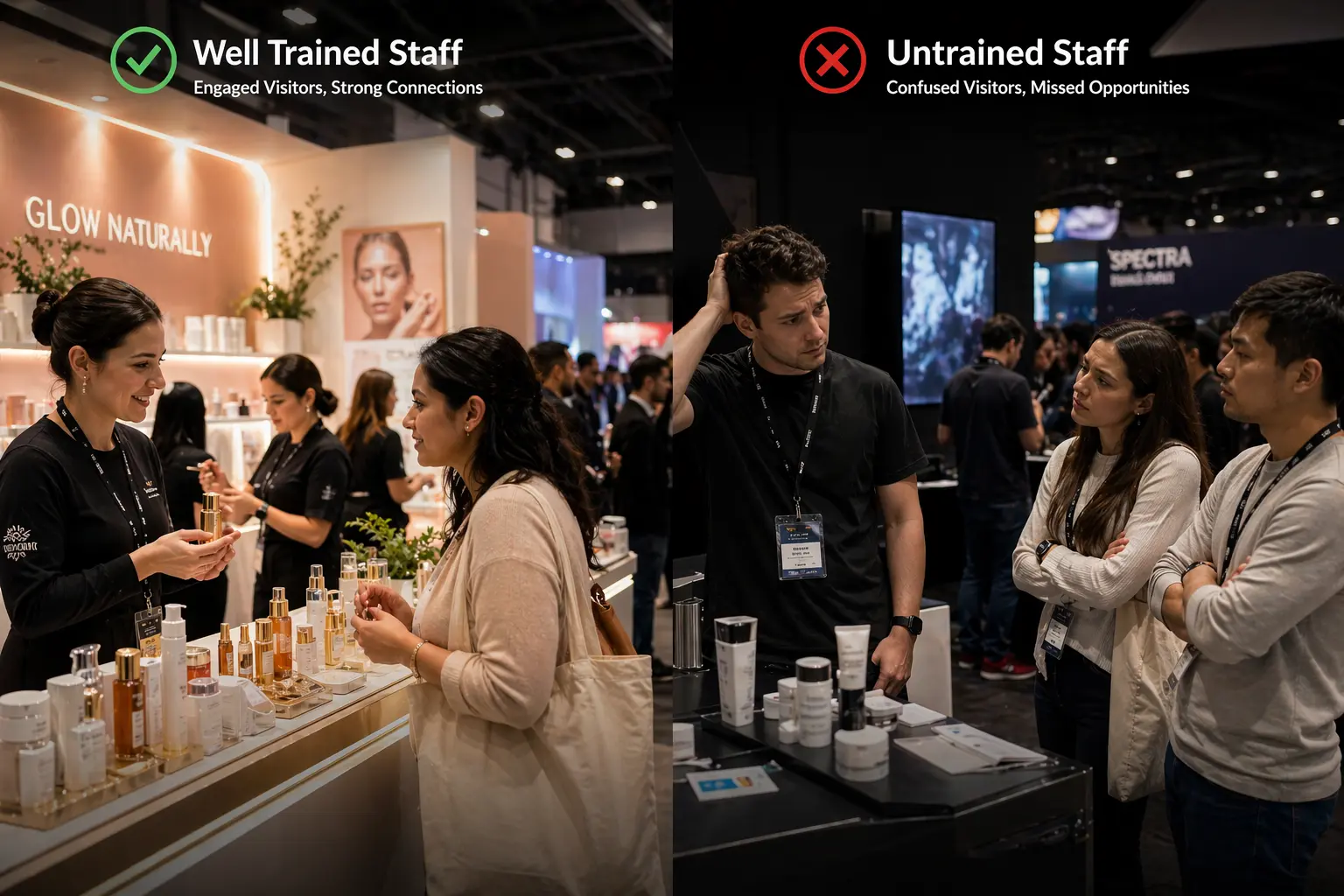
Example: Two identical activations:
- trained staff → smooth, engaging
- untrained staff → slow, frustrating
Numbers:
- 20–40% engagement (trained)
- <10% (unprepared)
Research on experiential marketing effectiveness shows that professionally trained staff increases attendee engagement by 3–4x compared to under-prepared teams. Experiential marketing works only when staffed properly.
What Happens When You Use Both
This is where interactive vs experiential marketing effectiveness improves.
Strong events combine both.
Example: Product Launch
- Interactive captures engagement
- Experiential creates a real connection
Example: Festival
- Interactive drives sharing
- Experiential builds memory
Pro insight: Interactive gets attention. Experiential creates meaning.
Results:
- single approach → 15–25% engagement
- combined → 40–60% engagement
According to beyond-the-digital-noise research, brands that integrate interactive and experiential elements see 2.5x higher brand recall than single-channel approaches.
Where Events Go Wrong
Interactive fails when:
- confusing UX
- no incentive
- no monitoring
Result: low usage, wasted space
Experiential fails when:
- poor staff training
- weak coordination
- low-quality hires
Result: brand damage
Both fail when:
- not integrated
- budget split poorly
Common mistake: Trying to do both without doing either properly.
Final verdict:
For interactive vs experiential marketing effectiveness:
- Interactive = reach
- Experiential = impact
- Both = strongest results
Focus on:
- clear goal
- proper execution
- realistic planning
Avoid:
- weak integration
- poor staffing
- overcomplicated tools
What matters most: execution.
How Do You Measure Effectiveness?
Measuring success depends on your objective:
- Interactive marketing metrics: participation rate, data capture, repeat engagement
- Experiential marketing metrics: dwell time, interaction quality, brand recall
- Combined strategy: engagement depth + conversion actions
Top-performing events don’t just track volume. They track how long people stay, what they do, and what they remember.
Conclusion
Interactive vs experiential marketing effectiveness isn't about picking one.
Interactive marketing vs experiential marketing solves different problems. One helps you reach people. The other makes them remember.
The biggest mistake isn't the choice. It's poor execution.
Because at the end of the event, people don't remember the setup. They remember the experience.
How to Decide What Your Event Needs
When evaluating interactive marketing vs experiential:
For interactive:
- Is it easy within 10 seconds?
- Does it add real value?
For experiential:
- Are staff trained?
- Can they handle real situations?
Final filter:
- Need scale → interactive
- Need impact → experiential
If you need help planning this balance, contact us for a consultation.
Fast takeaway: If you can't execute both well, choose one and do it right.
Ready to elevate your next event?
Join thousands of event planners who trust EventStaff.com for reliable, professional staffing solutions.
Trusted by event professionals nationwide
1k+
Events Staffed
2 million+
Guests Served
97%
Positive reviews