
Festival Staffing Rotation Plans That Stop Day-2 Burnout
Most festival staffing burnout doesn’t happen at the end of the event; it starts on Day 2.
After just one long shift, even experienced teams begin to slow down. Energy drops, service quality slips, and guest interactions become transactional instead of engaging. This is where most festivals quietly lose momentum.
The issue isn’t staffing volume; it’s structure.
The most effective music festival staffing solution isn’t adding more people. It’s designing a rotation system that protects staff energy across all event days. In multi-day event staffing, performance is directly tied to how well recovery time is planned.
Executive Summary
Festival staffing problems usually come from poor rotation planning, not weak teams. In multi-day event staffing, long outdoor shifts, heat, alcohol exposure, and crowd intensity wear staff down quickly. A structured music festival staffing solution with built-in recovery windows helps maintain service quality, guest experience, and staff retention through the final day.
Why Does Festival Staffing Fall Apart By Day 2?
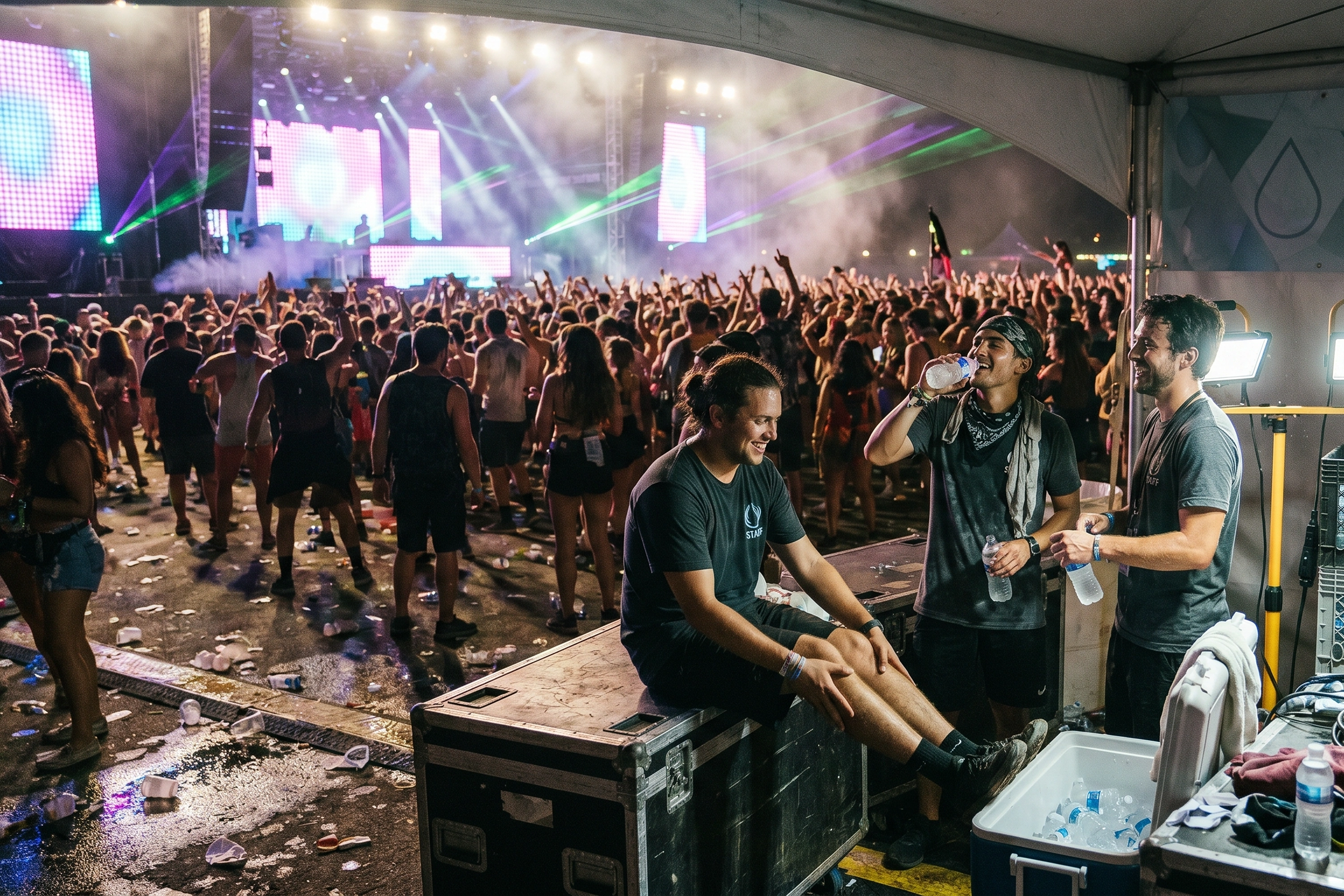
Most planners underestimate how physically repetitive festival staffing becomes.
Your bartenders are standing in the heat for hours. Brand ambassadors repeat the same conversations hundreds of times. Security teams manage nonstop crowd movement. Even experienced multi-day event staffing teams slow down when recovery time disappears.
The problem usually starts when organizers build schedules around coverage instead of endurance. Understanding shift rotation design is critical to maintaining staff performance.
The 16-Hour Mistake
A mid-sized festival scheduled bartenders for 16 consecutive hours to "cover all service needs." According to 2026 festival staffing research, "Runaway overtime and marathon shifts have long been a badge of honor in the events world – but in 2026, that mentality is fading. Festival organizers are learning that crew burnout directly contributes to the staffing crisis by driving people away. The key preventive measure is implementing shift rotations where no one works more than 8–10 hours without a substantial break." By hour 14, mistakes tripled and guest interaction dropped 40%.
A lot of music festival staffing solution discussions focus on headcount:
- Add more bartenders
- Add more greeters
- Add more support staff
But the real issue is usually a shift in structure. When you partner with professional festival staffing agencies, they build rotations into planning from the start.
One exhausted bartender working a double shift often creates more operational problems than one missing bartender.
That is why experienced festival staffing agencies now build rotations directly into scheduling from the beginning instead of treating breaks as secondary.
CEO Excerpt
"We once worked a three-day festival where the staff looked incredible on opening night and completely exhausted by Day 2 afternoon. Guests noticed it before the organizers did. Since then, we've pushed rotation planning early because tired staff changes the energy of an entire festival."- Daniel Muersing
What Is the Ideal Festival Staffing Rotation Structure?
The ideal festival staffing rotation balances three factors:
- coverage consistency
- staff recovery time
- peak-hour performance
Most high-performing festivals use a mix of:
- 6-on, 2-off rotations for core teams
- staggered start times to prevent simultaneous fatigue
- float staff to handle demand spikes
This ensures that no single team absorbs the full operational load across all peak periods.
Why Multi-Day Event Staffing Needs Recovery Time Built In
In multi-day event staffing, staff performance does not decline all at once. It happens gradually.
First, the energy drops. Then conversations become shorter. Service slows down. Staff stop proactively helping guests. Eventually, mistakes start stacking up:
- missed orders
- slower check-ins
- poor crowd communication
- lower lead capture
- shorter guest interactions
Guests may not know why the atmosphere feels different, but they notice it quickly.
When Day 2 Energy Dies
At a 3-day festival, organizers noticed attendance and spending dropped 35% on Day 2 compared to Day 1, not because of lineup changes, but because staff fatigue was visible. Research shows that "Large multi-day festivals like Bonnaroo and Coachella schedule backup crews, bring in fresh crews for day 2 and 3, and schedule staff downtime to combat burnout. Organizers combat accumulated fatigue in multi-day events by rotating staff shifts and scheduling mandatory downtime." Understanding burnout prevention strategies helps you avoid this completely.
The festival that had skipped rotation planning saw guest satisfaction plummet before attendees even realized what had happened.
That is why the strongest music festival staffing solution plans usually include:
- rotating break windows
- staggered start times
- shorter split shifts
- backup float staff
- cooldown recovery areas
Festival staffing works much better when recovery is treated like part of operations instead of a reward staff "earn."
How The 6-On, 2-Off Festival Staffing Rotation Works
One of the most effective multi-day event staffing structures is the 6-on, 2-off rotation model.
Instead of running the same people continuously, teams rotate through scheduled work blocks with protected recovery periods.
A simplified example looks like this:

That structure prevents entire departments from crashing simultaneously.
The biggest advantage is consistency.
Guests experience similar service quality throughout the event, instead of watching the festival staffing energy collapse by the final afternoon. When you work with experienced event staffing teams, they understand these dynamics.
And internally, staff retention improves too. Multi-day event staffing teams are much more likely to return for future festivals when the schedule feels sustainable.
Why Good Music Festival Staffing Solutions Feel Invisible To Guests
The best music festival staffing solution usually goes unnoticed.
Guests are not supposed to think:
- "Wow, these staff rotations are organized."
They just feel:
- lines moving smoothly
- bartenders staying engaged
- security remaining calm
- activations feeling energetic
- staff interacting naturally
That consistency is what good festival staffing protects.
And honestly, festivals that ignore rotation planning usually become obvious by Day 2 evening. You start seeing frustrated staff, slower service, shorter tempers, and guests mentally checking out earlier than expected.
What Strong Festival Staffing Plans Actually Prioritize
The best festival staffing plans are not built around squeezing maximum hours from every worker.
They are built around maintaining guest-facing energy across the entire event.
That usually means:
- realistic shifts
- planned recovery windows
- float coverage
- backup staffing
- rotation flexibility during weather or crowd spikes
Because in multi-day event staffing, energy management is operational planning. And the music festival staffing solution that protects staff longest usually protects guest experience too. Professional brand activation teams excel at maintaining this balance across multi-day events.
Ready to build a festival staffing rotation plan that works? Contact EventStaff to discuss structured rotation systems that keep your festival running strong through Day 3.
Ready to elevate your next event?
Join thousands of event planners who trust EventStaff.com for reliable, professional staffing solutions.
Trusted by event professionals nationwide
1k+
Events Staffed
2 million+
Guests Served
97%
Positive reviews