
CEO Excerpt
"True crowd management isn't about capacity; it's about velocity. When ushers shift from passive greeting to active flow control, they don't just seat guests they secure the schedule. In high-traffic environments, that operational discipline is the only barrier between seamless entry and critical gridlock." - CEO, EventStaff
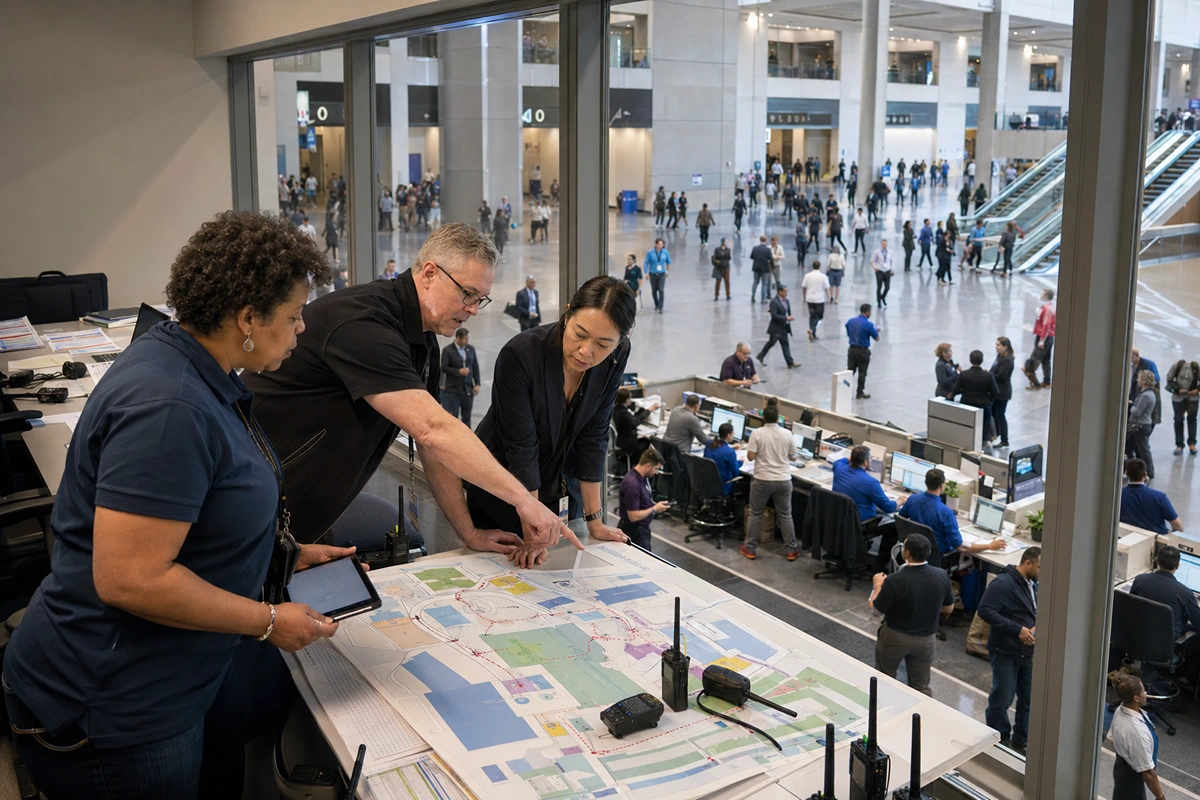
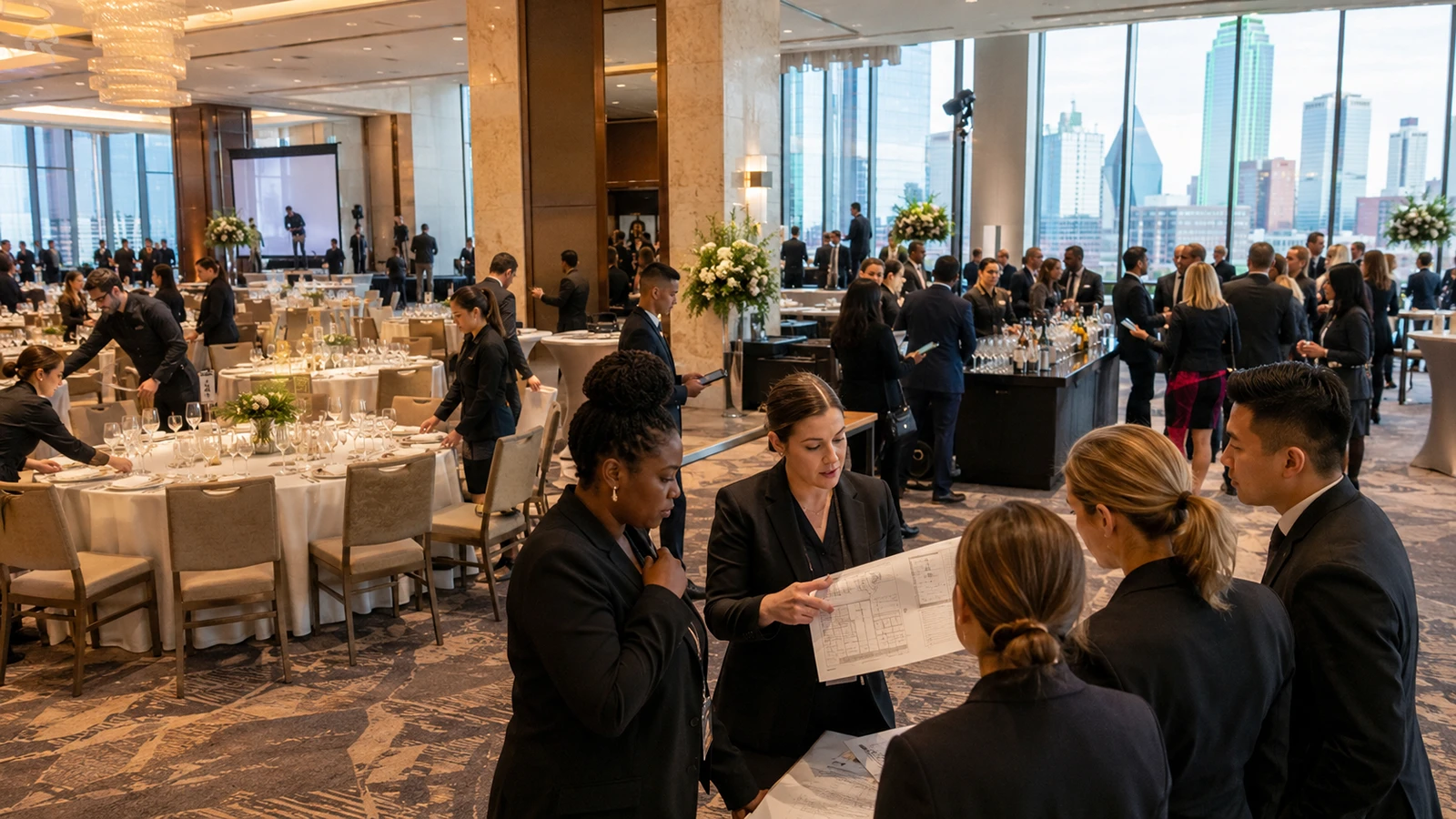
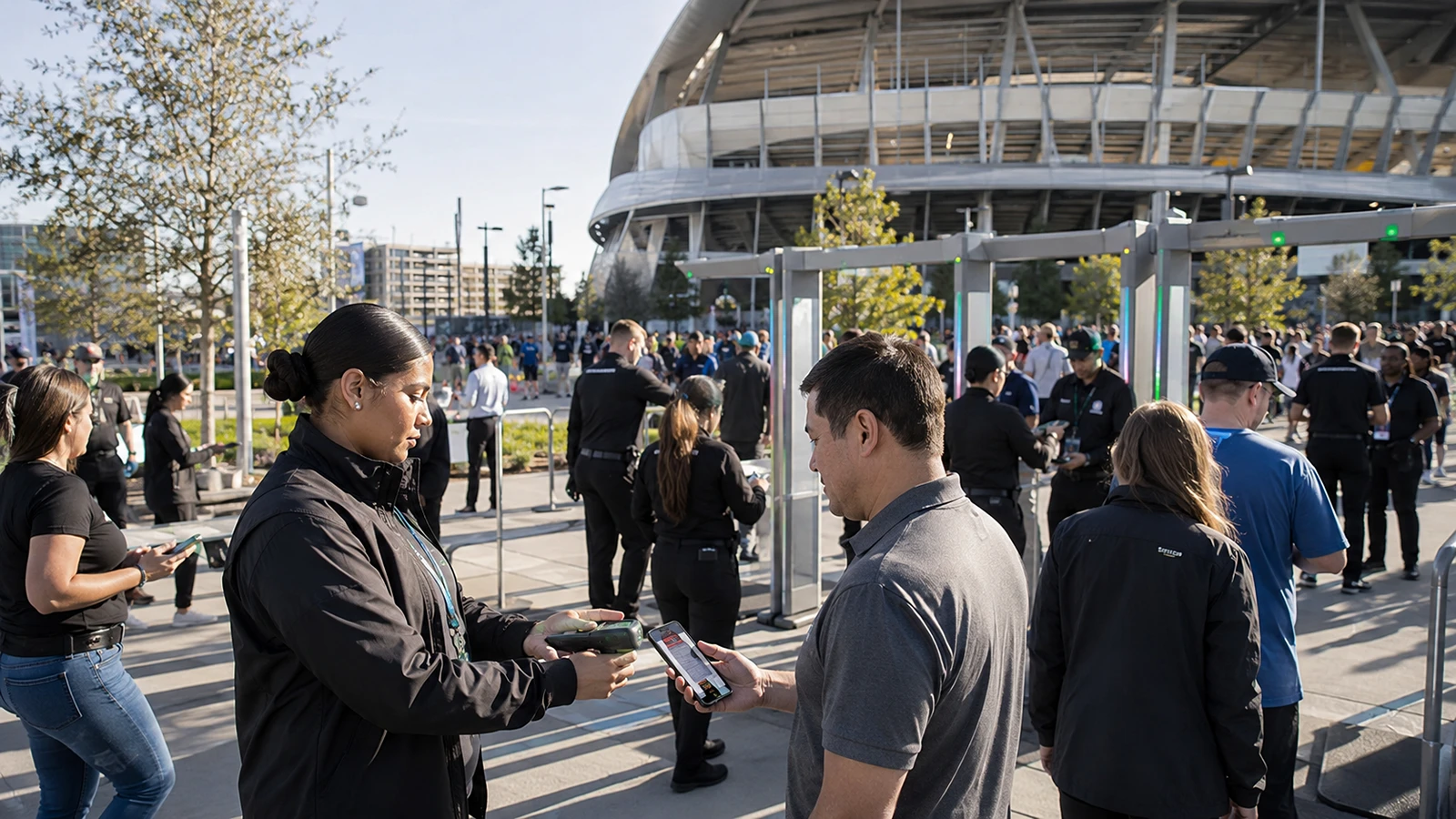
Event usher crowd management determines whether high-traffic sessions move predictably or break down into aisle congestion that delays schedules and triggers compliance issues. When 300 to 3,000 attendees compress into a five-minute entry window, even small timing errors compound into blocked ADA lanes, stalled VIP access, and hallway density that spills into adjacent sessions. Professional ushers regulate pace, sequence entry, and actively control aisle dwell time so movement remains stable under real crowd pressure.
Executive Summary
High-traffic sessions present a unique failure point for event operations: the aisle. This guide examines how professional ushers mitigate congestion through three specific mechanisms: calibrated door timing, continuous aisle intervention, and directional transition routing. By treating entry as a flow-control problem rather than a capacity issue, organizers can reduce dwell time, ensure ADA compliance, and protect session start times against the pressure of compressed arrival windows.
Reason #1: Ushers Set Door Timing and Entry Pace
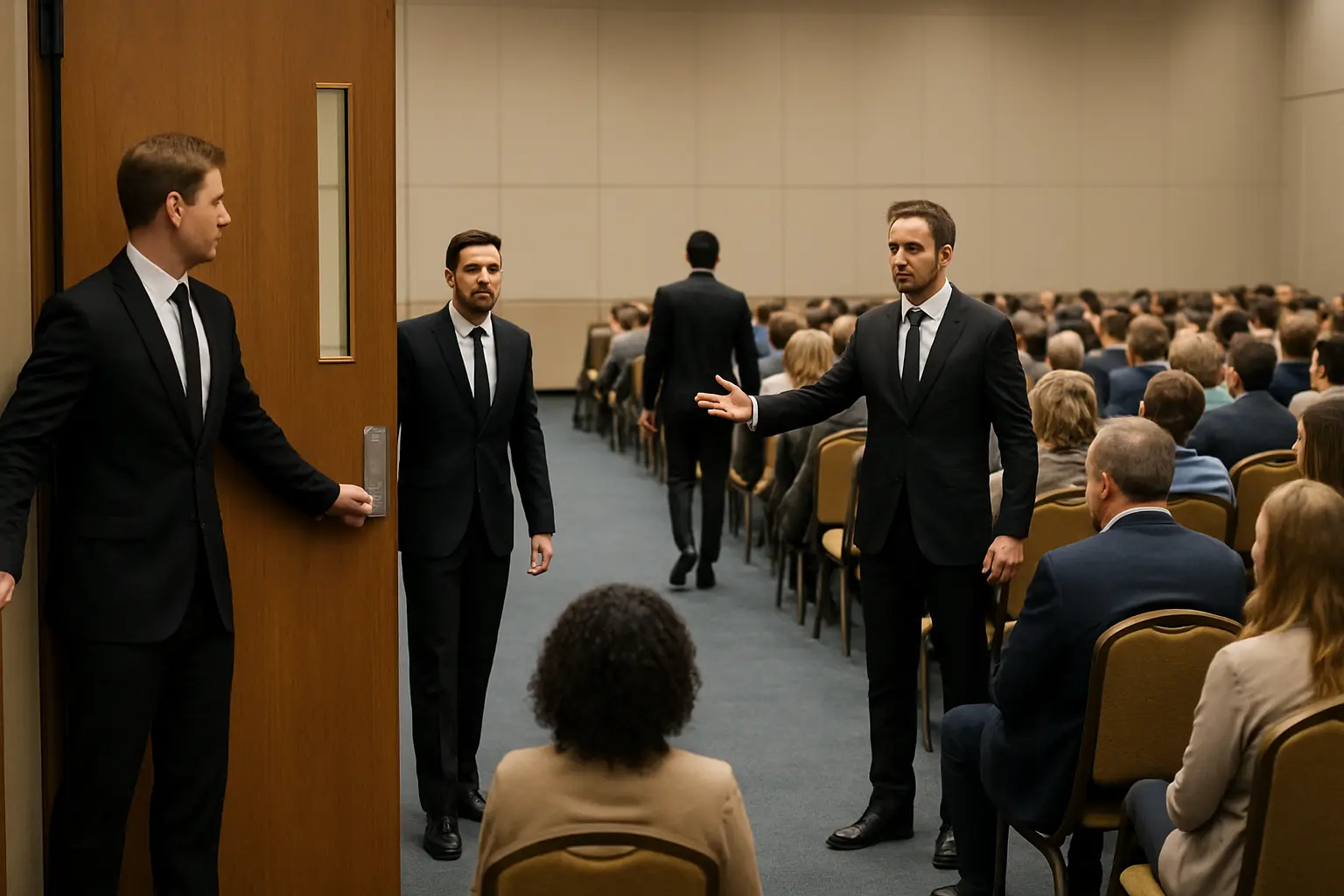
Most aisle congestion forms before guests reach their seats. Opening doors too early pushes arrivals into a space that cannot yet absorb them. Opening too late forces bodies into hallways where density rises past safe thresholds and spills back toward other rooms.
In professional event usher crowd management, door timing is calibrated against seat-fill velocity, not arrival volume. Supervisors delay release until early rows are ready to absorb movement, preventing the first thirty seconds of entry from becoming a stop-and-search zone. A common baseline of one usher per 120 attendees during peak entry allows controlled section loading instead of uncontrolled aisle scanning.
Coordinated release
Conference Staff receive radio or visual cues tied to real seat availability, not clocks. This pacing keeps aisle density below tipping points and stabilizes event usher crowd management during the highest-risk arrival minutes.
Row-by-row guidance
Ushers feed seating sections sequentially so guests never pause mid-aisle to evaluate options. Eliminating these pauses prevents standstills that ripple backward and degrade event usher crowd management across the room. The result is faster seat-fill, fewer pauses, and sessions that start on schedule.
Reason #2: Ushers Keep Aisles Clear for Continuous Flow
Aisles fail when guests pause long enough for movement behind them to stop. Bags placed down, conversations started, or rows scanned mid-aisle extend dwell time beyond three to five seconds, which is often enough for density to lock in.
Professional ushers treat aisle control as continuous intervention. In event usher crowd management, ushers reposition every 30 to 60 seconds during peak movement to interrupt these pauses before they harden into blockages. This aligns with the psychology of event flow, where visual cues dictate attendee behavior.
ADA lanes
ADA routes collapse first because they carry mixed-speed traffic. Door control ushers separate mobility access before general release, routing wheelchairs and companions early to avoid mid-session enforcement escalations that have become more common since 2023. Compliance with ADA accessible seating standards is non-negotiable for modern events.
VIP aisles
VIP rows often sit near center aisles where density spikes fastest. Ushers protect these lanes until adjacent rows are seated, preventing congestion that compromises both access and schedule control.
Aisle sweeps
Short, directive prompts such as “keep moving to the row” maintain momentum without escalation. This preserves accessibility and keeps aisles passable throughout the session.
Reason #3: Ushers Manage Session Transitions Without Gridlock
The highest-risk moment occurs during session overlap. One session exits while another arrives. Without control, opposing flows collide.
In high-traffic session management, ushers phase movement rather than allowing bidirectional flow. Outflow clears first. Inflow waits. Doors become directional, not neutral, protecting event ushers and crowd management during compressed turnover windows.
One-way flow
Temporary one-way routing prevents head-on stops that double aisle dwell time and strain event usher crowd management systems.
Outflow prioritization
Professional ushers hold incoming guests for 60 to 90 seconds while rows clear. That brief delay prevents ten-minute recoveries later and keeps movement predictable across multi-track programs.
How EventStaff Trains Ushers for High-Traffic Control
EventStaff trains conference ushers as flow controllers, not seat guides. Training reflects post-2023 data showing reduced attendee patience and higher stop frequency under schedule pressure.
Ushers drill aisle-integrity checks, controlled release timing, and split-flow transitions by zone rather than by role. Supervisors monitor density visually and intervene before thresholds are crossed. Human–AI scheduling oversight now flags peak congestion windows so staffing ratios adjust in real time, keeping event usher crowd management stable even as volumes fluctuate.
This approach turns ushering into proactive Crowd Management.
Why This Matters for Organizers and Venues
When event usher crowd management fails, consequences escalate quickly. Sessions start late. ADA complaints increase. Fire marshals intervene, citing NFPA 101 Life Safety Codes. Sponsors notice. Recovery requires additional staff and higher cost.
When it works, movement feels invisible. Sessions open smoothly, aisles stay clear, and transitions hold under pressure. Schedules remain intact. Risk drops. This stability is central to creating a safety plan for events that actually holds up in the real world.
That stability is what professional ushers deliver.
Secure Your High-Traffic Sessions with Professional Staff
If your event includes multi-day programming, overlapping sessions, or compressed schedules, aisle control becomes a critical risk surface that demands more than volunteer support. EventStaff provides trained professional ushers with supervisory structure, compliance awareness, and real-time flow oversight to secure your timeline. You can Get a Quote today to secure ushers who maintain clean aisles and stable movement during your most critical high-traffic sessions.
Ready to elevate your next event?
Join thousands of event planners who trust EventStaff.com for reliable, professional staffing solutions.
Trusted by event professionals nationwide
1k+
Events Staffed
2 million+
Guests Served
97%
Positive reviews