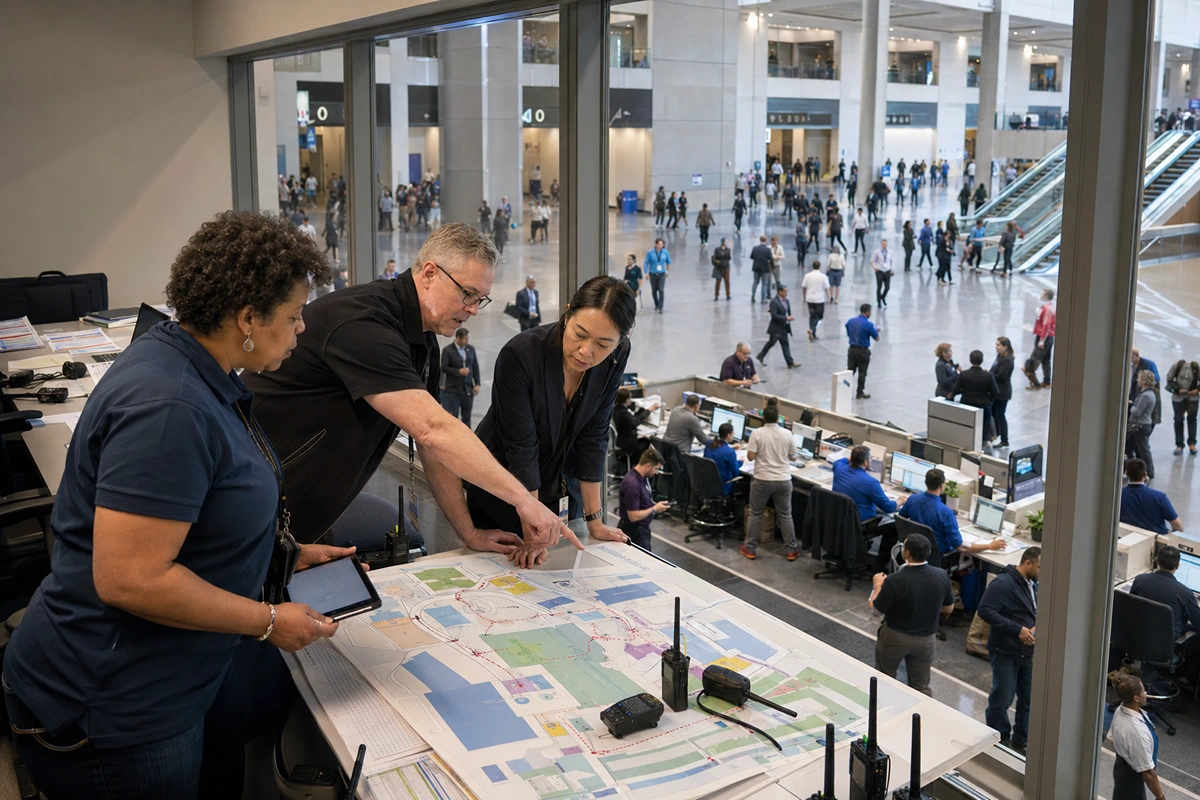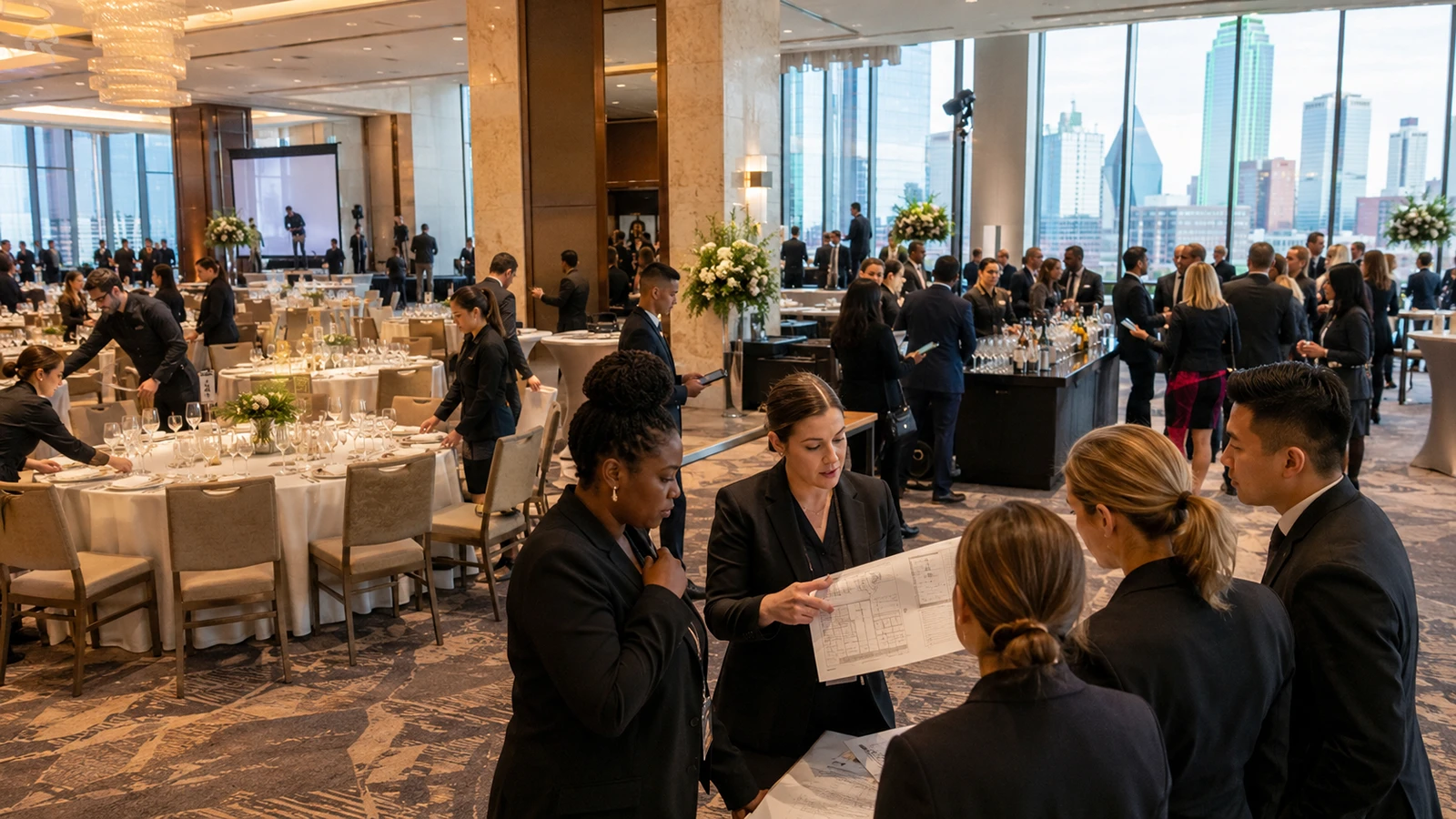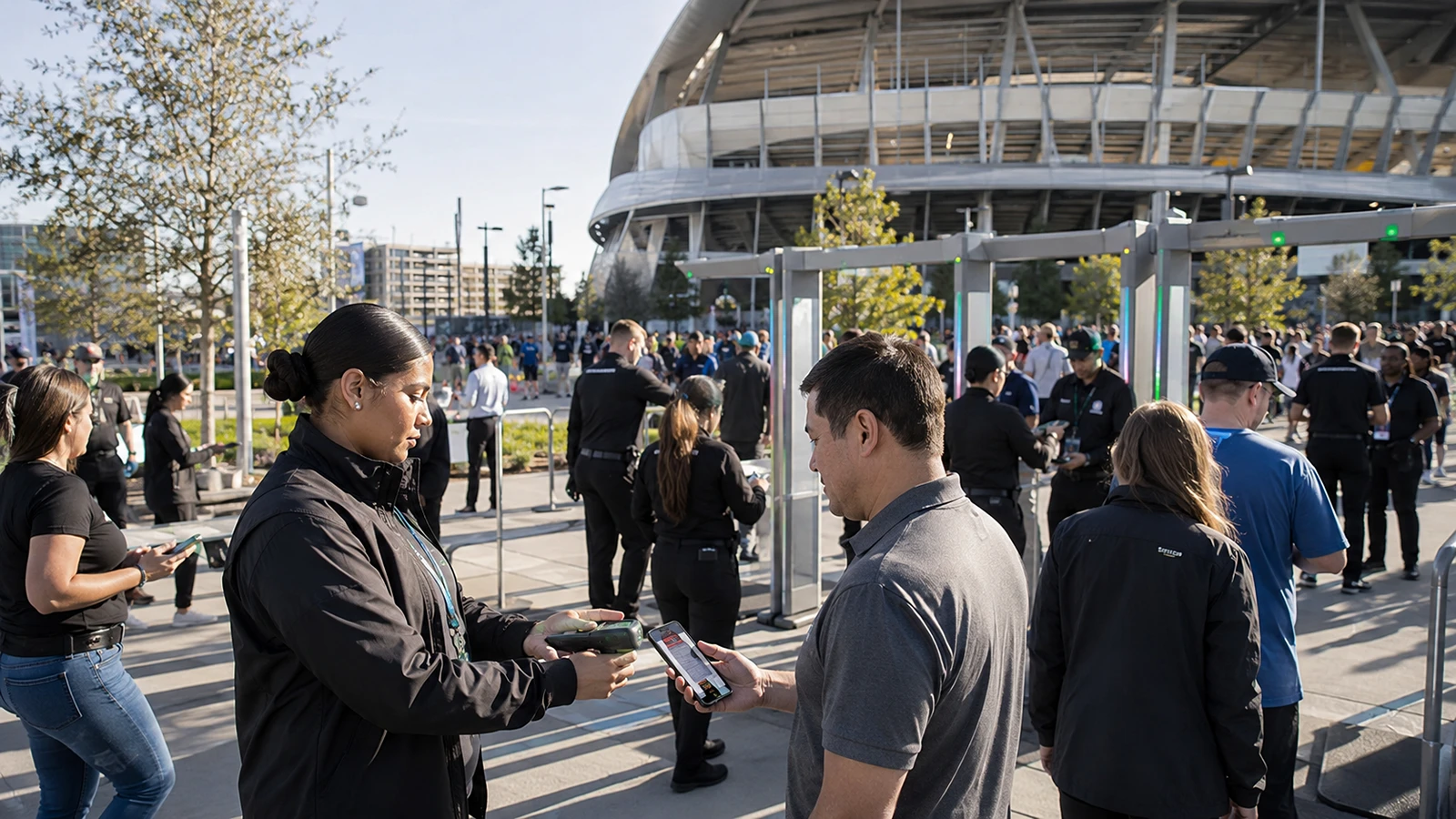

CEO Excerpt
“In a stadium, friction kills recall. If a fan has to wait more than sixty seconds to engage, the brand impression turns negative. My directive to our operational leads is simple: remove the friction. We staff for speed and simplicity because on game day, volume is the only metric that translates to ROI.”- CEO Event staff
Brand activation at sports events delivers higher recall because fans arrive emotionally invested, move through predictable traffic loops, and encounter the same experiences multiple times in a shared, high-energy environment. When executed correctly, these activations do not feel like advertising. They become part of the game-day memory itself.
Unlike conferences or trade shows where attention is split across sessions, meetings, and mobile devices, sports events concentrate focus around anticipation, identity, and peak moments. Fans enter the venue primed for excitement. Their movement follows repeatable paths through gates, concourses, seating areas, and concessions. This creates ideal conditions for brand activation at sports events to generate both repetition and emotional reinforcement without fatigue.
The difference between high recall and background noise is not creative ambition. It is operational execution. Placement, throughput, and staffing determine whether a sports brand activation enhances the fan experience or quietly fails due to congestion, confusion, or low engagement.
This guide explains:
- Why brand activation at sports events consistently outperforms other live marketing environments
- What separates sponsorship signage from true brand activation on game day
- How staffing, placement, and activation format directly influence recall and ROI
- What brands should prioritize to maximize engagement without disrupting venue flow
For event planners, brand managers, and agency teams responsible for performance at scale, this breakdown focuses on what actually works inside stadiums and arenas, and why recall is an operational outcome, not a creative accident.
Executive Summary
Brand activation at sports events delivers higher recall because fans arrive emotionally invested and encounter the same experiences multiple times within a high-volume, shared environment. When activations are designed for speed, placed in repeat-traffic zones, and supported by trained staff, emotion and repetition reinforce memory without disrupting venue flow, making operational execution the primary driver of recall and ROI.
What Brand Activation at Sports Events Actually Means
Brand activation at sports events is not about logos, signage, or passive visibility. It is about participation. The difference matters because participation changes how fans remember a brand and how venues must support the execution.
Traditional sponsorship signage relies on passive viewing. A fan walks past, notices it briefly, or ignores it entirely. A sports brand activation asks the fan to take a small, intentional action. That action might be spinning a wheel, sampling a product, scanning a code, posing for a photo, or engaging with staff for a few seconds. The action is what creates memory.
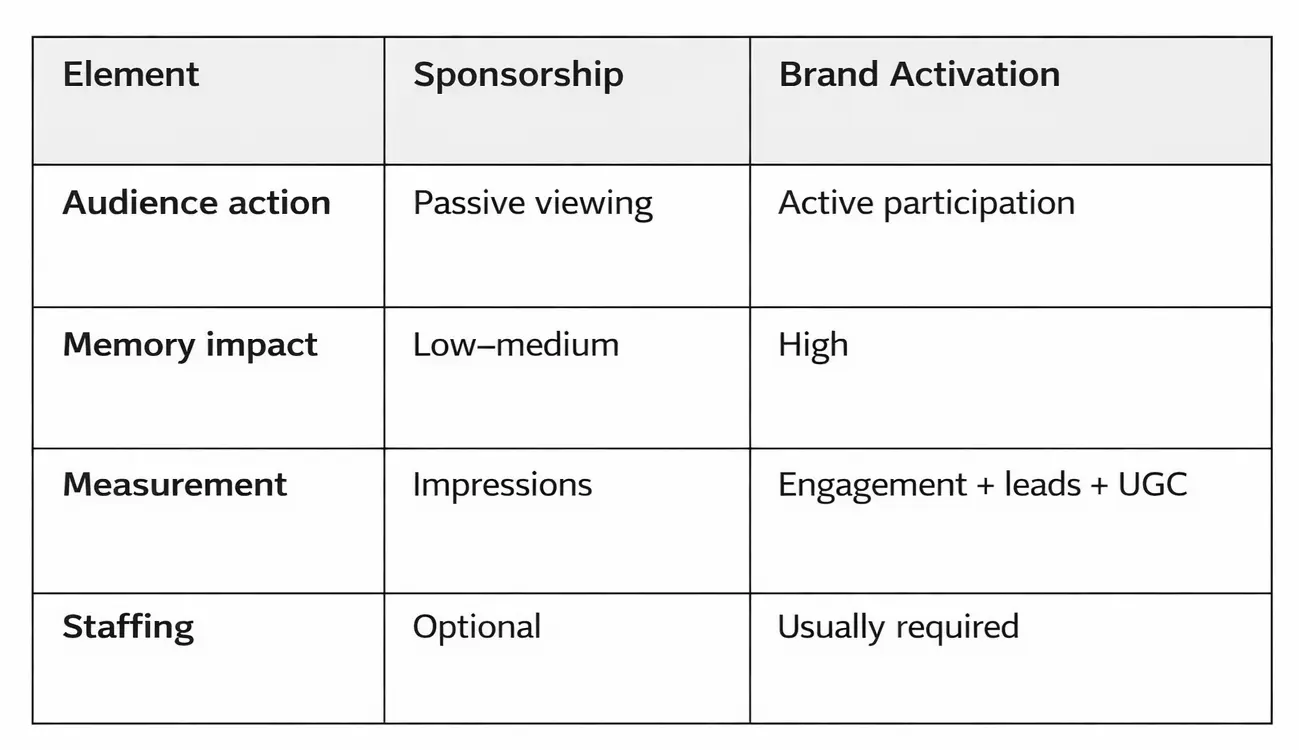
On-site, the distinction is operationally obvious. A concourse activation supported by trained staff will stop traffic and generate interaction. A wrapped pillar or static sign will not. Brand activation at sports events requires staffing, throughput planning, reset timing, and venue compliance. Labor is not an add-on. It is the product.
When teams treat signage like an activation, labor is wasted, and nothing converts. When participation is designed correctly and staffed properly, the activation becomes part of the game-day routine rather than an interruption.
Why Brand Activations at Sporting Events Deliver Higher Recall
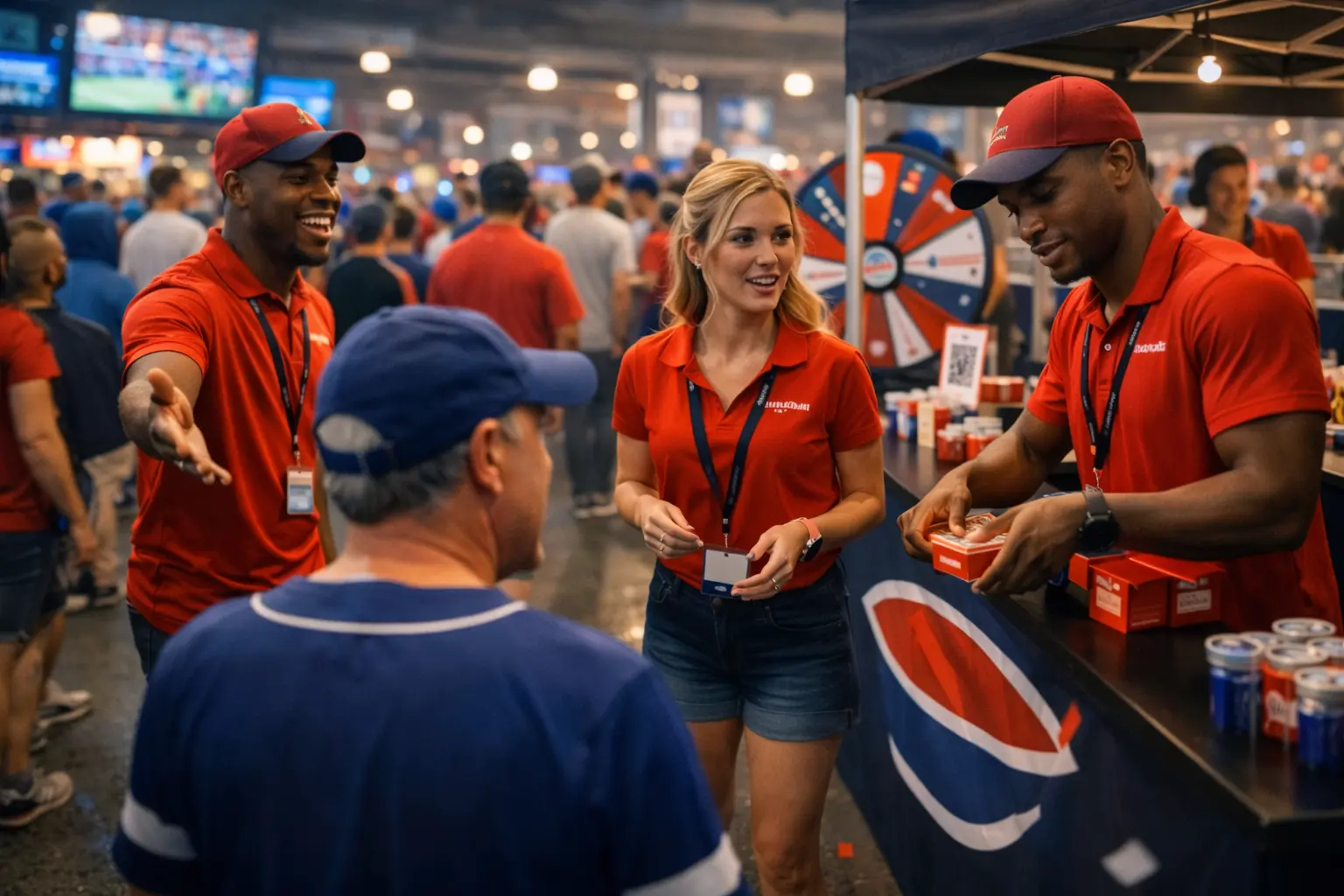
Brand activation at sports events works because the environment does most of the psychological work for you. Stadiums and arenas naturally create the conditions that strengthen memory, provided the activation is designed to move at game-day speed.
There are five reasons recall is consistently higher in sports environments:
- Fans arrive emotionally primed. Excitement, anticipation, and team loyalty are already elevated before gates open.
- Venues create natural repetition. Entry points, concourses, seating sections, restrooms, and exits force fans to pass the same zones multiple times.
- Attention is shared but focused. Fans may use their phones, but they track what others are doing in real time.
- Social proof accelerates participation. When a small group engages, nearby fans follow without prompting.
- Brands attach to peak moments. Wins, close calls, halftime, and surprise giveaways anchor experiences to emotion.
Emotion and repetition are the two most reliable drivers of recall. Sports events deliver both at scale. From an operational standpoint, this means planning for traffic waves rather than averages. According to the 2025 Freeman Report, 92 percent of attendees trust brands more after face-to-face interactions at live events, reinforcing why brand activation at sports events outperforms passive exposure.
The Psychological Memory Drivers at Play
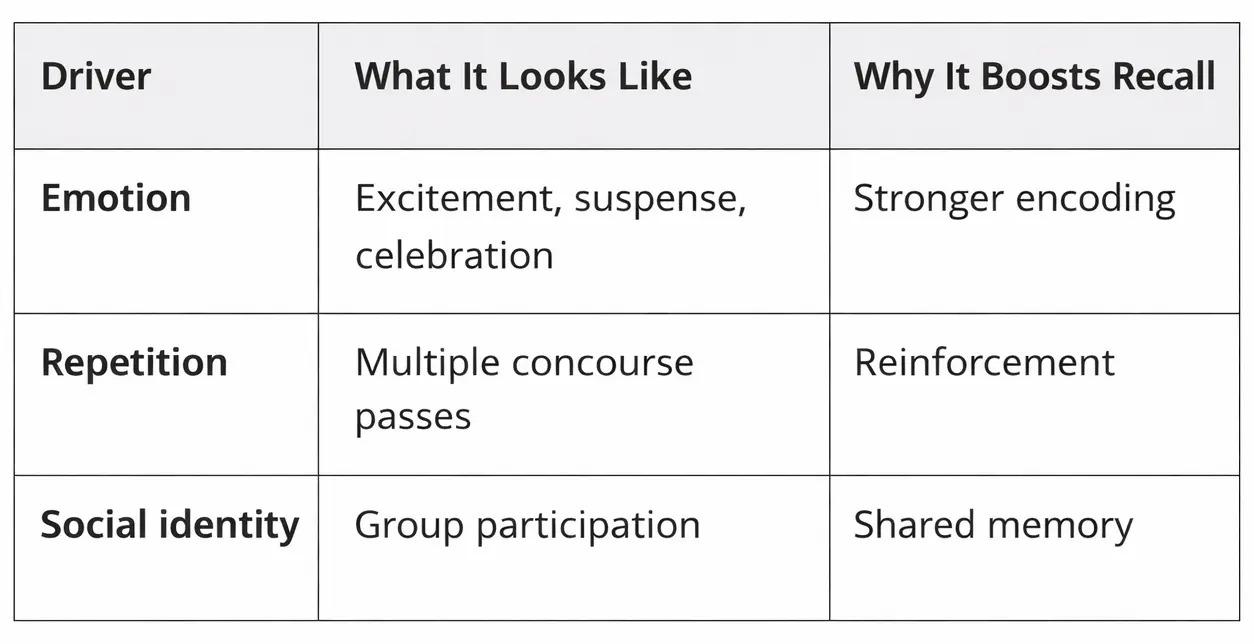
Brand activation at sports events succeeds because it aligns with how memory is formed in high-energy, social environments. Three psychological drivers consistently increase recall when activations are executed correctly on game day.
Emotional Amplification
Sports environments carry built-in stakes. A goal, a close call, or a comeback amplifies emotion in seconds. When a sports brand activation matches that energy through staff presence and pacing, the interaction is encoded more deeply. Emotion strengthens memory formation, but only when the activation feels native to the moment rather than forced.
Natural Repetition
Fans may pass the same stadium brand activation three or four times during a single event without consciously registering the repetition. This spacing reinforces memory without creating fatigue, provided placement respects natural traffic flow. Correct route placement matters more than footprint size in reinforcing recall.
Social Identity and Shared Experience
Teams create in-groups. When friends or families participate together, the activation becomes part of a shared story tied to the game itself. Shared experiences last longer than solo impressions. This is why enterprise brands rely on large-scale staffing logistics to ensure interactions remain consistent and high energy across thousands of fans.
Activation Formats That Actually Work on Game Day
Not every experiential format survives the pace, noise, and density of a stadium. Brand activation at sports events must respect speed, visibility, and limited dwell time to perform at scale.
The formats that consistently work share one trait. They resolve quickly and require minimal explanation.
- Sampling activations perform well, especially for beverages and snacks, because they align with existing fan behavior. Fans are already eating and drinking.
- Fast interactive games work when outcomes are clear in under 30 seconds. Simple spin-to-win mechanics outperform skill-based challenges.
- Photo moments with instant sharing succeed when the reset time is tight, and staff actively manage flow and positioning.
- QR-based rewards convert when redemption is immediate. Delayed value or post-event fulfillment reduces participation.
The rule enforced on site is simple. If the activation cannot be explained in five seconds, it will not scale on a concourse. This applies to every brand activation at sports events plan approved for high-traffic venues.
Complex mechanics slow throughput, attract security attention, and reduce recall. Speed protects both engagement and venue relationships.
Placement Inside the Venue Matters More Than Creative
Entry gates create first impressions, but bottlenecks are real. Staffing ratios must increase here or risk congestion.
Main concourses deliver repetition. This is where stadium brand activation earns its keep, but only if flow is protected. Understanding stadium event flow psychology is essential here to prevent blocking the natural movement of the crowd toward concessions and restrooms.
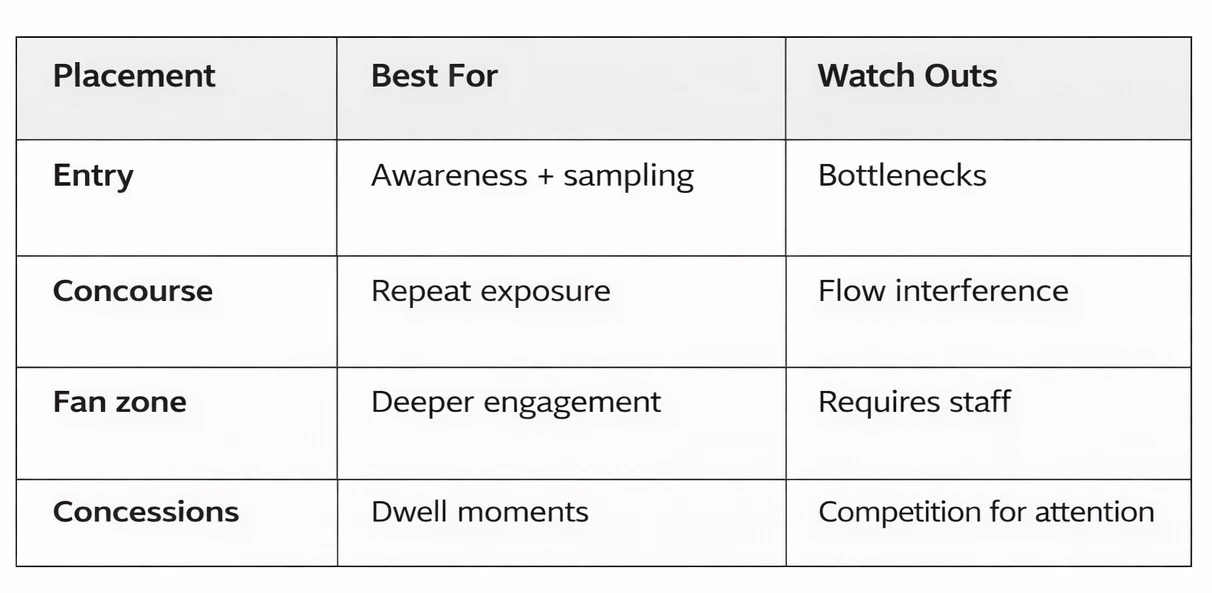
Fan zones allow deeper engagement, longer dwell, and better data capture. They also require more supervision. Near the concessions works because people already pause. You are borrowing dwell time, not creating it. Exit routes reinforce recall. Energy is lower, but memory is fresh.
Placement decisions are operational decisions. Get them wrong, like blocking a fire lane with a queue, and security will shut you down regardless of the concept. Placement determines exposure. Staffing determines whether that exposure converts.
Staffing Is the Hidden Variable
Brand activation at sports events succeeds or fails based on staffing quality and density. Unstaffed or understaffed activations do not fail loudly. They fail quietly. Fans hesitate, confusion builds, and throughput collapses.
Trained activation staff perform four critical functions on game day:
- Invite fans in without stopping flow
- Explain the interaction in one clear sentence
- Manage pace to prevent queues from forming
- Reset continuously so the activation never stalls
Labor costs often push teams to understaff, but understaffing is more expensive than it appears. Lines grow, security intervenes, and the activation is throttled or shut down. If interactions exceed approximately 120 per hour per staffer, quality and engagement drop sharply.
According to Medallia research data, 61 percent of consumers are willing to spend more for personalized experiences, reinforcing the role of trained staff in driving conversion. For brand activation at sports events, staffing is not a line item. It is the control system that protects flow, recall, and measurable ROI.
Unstaffed activations fail quietly. Fans do not stop. Confusion sets in. Throughput collapses.
Common Mistakes That Kill Recall
Most brand activation failures at sports events are visible within the first 30 minutes. The warning signs appear long before performance reports are generated.
The most common mistakes include:
- Overcomplication. Too many steps or messages slow participation.
- Slow throughput. When more than a few people are waiting, fans abandon the activation.
- Irrelevant incentives. Generic giveaways fail to motivate action.
- No capture method. Missed data opportunities reduce ROI.
- No reset plan. Broken or stalled activations stop converting immediately.
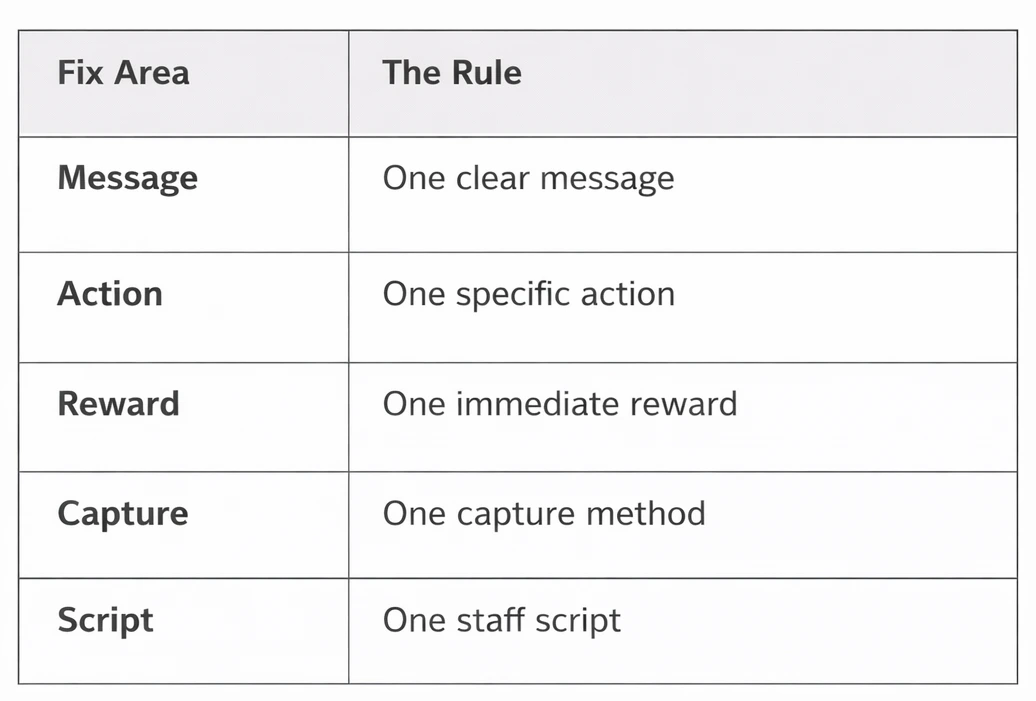
Each of these issues can be corrected with simple operational discipline. Use the checklist below to protect recall on game day.
A Simple Checklist That Protects Recall
At this stage, strategy turns into execution. This checklist exists to protect recall, reduce risk, and ensure brand activation at sports events performs consistently under real game-day conditions.
- Design: Keep the interaction under 60 seconds.
- Flow: Ensure fans encounter the activation at least twice during their movement through the venue.
- Messaging: Use one clear, benefit-driven message.
- Participation: Create visible action that attracts social proof.
- Staffing: Staff for speed, energy, and peak traffic waves.
- Reset: Plan continuous reset cycles to avoid downtime.
- Data: Capture something immediately, even if it is a photo or QR scan.
This framework protects outcomes, not aesthetics. When followed, recall becomes predictable and repeatable rather than dependent on chance.
Staffing Deployment for Game Day
Brand activation at sports events is not driven by novelty. It works because the environment already provides emotion, attention, and movement at scale. The role of execution is to align staffing, placement, and flow so that those conditions translate into measurable recall. On game day, movement is predictable. Energy spikes in waves. Attention rises and falls around key moments. When sports brand activation is supported by trained staff who can invite, explain, pace, and reset continuously, engagement remains high without disrupting the venue. This is what operators optimize for. This is what brands remember. If you are planning a high-traffic or multi-day activation, the difference between success and shutdown is almost always staffing discipline and flow protection. If you are preparing to activate at scale, you can Get a Quote and we will scope the staffing, placement, and throughput required to protect recall and performance from gates open to final exit.
Ready to elevate your next event?
Join thousands of event planners who trust EventStaff.com for reliable, professional staffing solutions.
Trusted by event professionals nationwide
1k+
Events Staffed
2 million+
Guests Served
97%
Positive reviews